
Choosing the Right Payment Term for Your First Chinese Mosquito Swatter Order
2026-08-21
T/T vs L/C vs D/P: Choosing the Right Payment Term for Your First Chinese Mosquito Swatter Order
Yesterday’s article explained how FOB, CIF, and DDP allocate shipping responsibilities — yet none of these Incoterms regulate fund settlement. The selection of proper payment terms determines the allocation of trade risks throughout the entire process, from the factory’s raw material procurement to the arrival of goods at your warehouse. Approximately 90% of small appliance imports from China adopt three mainstream payment methods: T/T (Telegraphic Transfer), L/C (Letter of Credit), and D/P (Documents Against Payment). Though seemingly interchangeable on the surface, they differ substantially in practice.
As a first-time importer placing an order for 5,000 mosquito swatters, your choice of payment term directly impacts your cash flow, risk exposure, and your credibility with Chinese factories given your limited trading track record. This guide comprehensively breaks down the operational mechanisms, service fees, and suitable supplier partnership stages for each payment method.
Core Trade-Offs of All Payment Terms
Every international payment method balances three essential factors:
-
Buyer’s Risk: What if the supplier fails to deliver goods or disappears after receiving payment?
-
Seller’s Risk: What if the buyer rejects goods or refuses payment after shipment?
-
Cost & Operational Friction: Bank charges, document handling fees, processing lead time, and the flexibility of order amendments during production.
T/T is seller-friendly; L/C relies on bank credit and protects both parties via documentary compliance yet involves the most complicated procedures; D/P offers mid-level risk distribution but is rarely optimal for new buyers — this is the core practical takeaway of this guide.
T/T (Telegraphic Transfer): The Default Option and Its Two Common Structures
T/T refers to direct bank-to-bank wire transfers with no documentary requirements, no intermediaries, and no escrow supervision. Funds are cleared within 1 to 3 business days, subject to SWIFT routing conditions. For Chinese small appliance orders valued under USD 30,000, over 80% of transactions adopt T/T as the default settlement method. Different T/T ratio structures apply to distinct scenarios:
30% Deposit + 70% Balance Before Shipment: Industry Standard for New Partnerships
The buyer pays a 30% deposit in advance (typically USD 3,000 to USD 9,000 for a 5,000-unit mosquito swatter order), with the remaining 70% balance settled after production completion and prior to shipment. This structure protects both parties’ interests:
-
The 30% deposit covers the factory’s raw material and labor costs, securing their production investment;
-
The 70% balance reserves leverage for the buyer: full payment is only released after defective goods are rectified and pass pre-shipment inspection.
Always ensure payments are remitted to the official corporate account stated on the Proforma Invoice, rather than third-party trading accounts. A prevalent cross-border fraud tactic involves legitimate proforma invoices issued by qualified manufacturers (e.g., Aofengming Electric Co., Ltd.) with designated recipient accounts registered in Hong Kong, Singapore or other third-party entities. Wire transfer fraud across borders is almost irreversible and non-recoverable.
100% Advance T/T: Not Recommended for First Orders
Some factories request full advance payment, especially for low-value items or first-time buyers with no credit history. This term should only be accepted if you are cooperating with a fully verified, audited supplier on a genuinely small-value order. Full prepayment eliminates all buyer leverage and exposes you to maximum transaction risks.
Sight L/C: Highest Security with Maximum Operational Friction
An L/C is a bank credit guarantee. The buyer’s issuing bank undertakes to settle payment with the factory once the supplier presents shipping documents that fully comply with L/C clauses.
Applicable Scenarios for L/C
-
First-time orders exceeding USD 50,000 with new and unvetted factories lacking established trust;
-
Government, institutional or public tender projects requiring formal bank documentary settlement records;
-
Buyers headquartered in countries with severe currency volatility.
Underestimated Hidden Costs
-
Issuance Fee (charged by the buyer’s bank): 0.125%–0.25% of the L/C value per quarter;
-
Advising Fee (charged by the seller’s bank): Flat rate of USD 100–300;
-
Document Discrepancy Fee: USD 75–150 per discrepancy;
-
Amendment Fee: USD 75–150 per modification.
It is industry normal for 50%–70% of first-time L/C transactions to encounter documentary discrepancies.
D/P (Documents Against Payment): Concealed Hidden Risks
D/P seemingly balances the interests of both buyers and sellers, yet it is rarely ideal for standard trade transactions:
-
Sight D/P: Most manufacturers refuse this term for new buyers;
-
30/60-day Usance D/P: The buyer takes delivery before payment, leaving the factory to bear full accounts receivable risks during transit.
For seasonal products such as mosquito swatters, D/P terms frequently lead to trade disputes. If a factory aggressively proposes D/P for a first order, it usually indicates the supplier is facing tight cash flow pressure.
Five Common Practical Mistakes to Avoid
-
Remitting payment to third-party personal or corporate accounts;
-
Settling the 70% balance prior to passing pre-shipment inspection;
-
Using personal bank accounts instead of official corporate accounts for settlement;
-
Ignoring SWIFT intermediary bank charges;
-
Failing to obtain and verify the SWIFT MT103 transfer confirmation slip.
Optimal Payment Term for New Importers
For your first 5,000-unit mosquito swatter order from China, the 30% deposit + 70% balance against clean pre-shipment inspection T/T term is the most practical and reliable option. After completing smooth second and third orders and building stable supplier trust, you can negotiate more favorable and flexible payment terms.
UV-A Wavelength in Mosquito Killer Lamps
HY-6 USB Mosquito Killer Lamp
Related Article

If you’re struggling with annoying mosquitoes, flies, and other flying pests indoors and outdoors, upgrading from traditional manual tools to anElectric Mosquito Swatter is the most efficient solution. Many homeowners and renters search where to buy fly swatter online to find durable, safe, and high-performance electric models that deliver instant pest control.
Where to Buy Fly Swatter
Most importers of electric mosquito swatters obsess over the first order: samples requested, factories vetted, a pre-shipment inspection booked. Then the reorder arrives eight months later and something is off. The grid feels softer. The charge port is a slightly different shade of black. The carton thickness dropped from 350 gsm to 300 gsm. Nothing is catastrophic — but the product no longer matches what your retail customers approved, and quietly, your return rate starts climbing.
How to Keep Mosquito Swatter Quality Consistent Across Repeat Orders
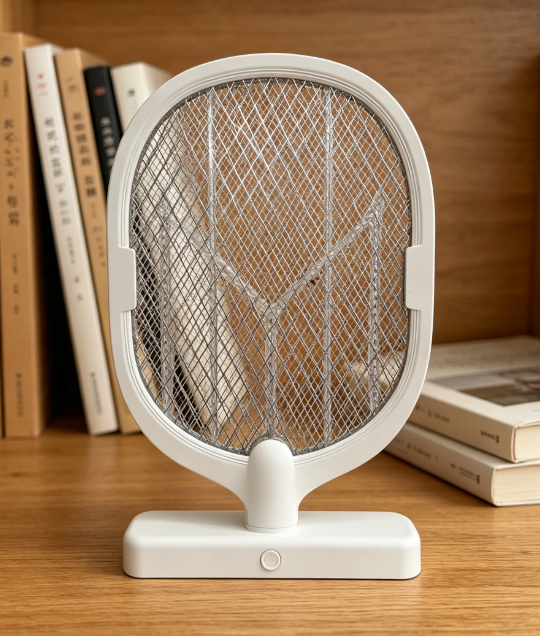
Warranty returns are the silent margin killer in the mosquito control category. A distributor who buys a swatter at $1.80 FOB and retails it at $9.90 can absorb a 1% return rate without noticing — but at 5%, the combined cost of replacement units, reverse logistics, and refund processing erases most of the line's profit.
Common mosquito swatter killer lamp failure modes wholesale spec guide

Digital bathroom scales rank as the second-highest-volume consumer weighing product category, only behind kitchen scales, with distinct market and product characteristics that set them apart from other scale types in importers’ product portfolios.
Digital bathroom body fat-bia-scale wholesale buyers guide