
2026 New Regulations for the Electrical Appliance Industry
2026-01-13
2026 New Regulations for the Electrical Appliance Industry: Safety, Green Development and Intelligence as Core Directions
At the start of 2026, the electrical appliance industry has witnessed the intensive implementation of a number of major new regulations. Ranging from the clarification of home appliances' "service life" to the upgrading of energy efficiency standards, from the optimization of trade-in policies to the adjustment of international market access, these regulations have comprehensively reshaped the development logic of the industry. They not only bring consumers safer and more energy-efficient product experiences but also force enterprises to accelerate technological upgrading. Today, we will sort out the core new regulations that the electrical appliance industry must pay attention to in 2026.
I. Consolidating the Safety Bottom Line: Home Appliances Officially Have a "Service Life"
Older home appliances that are "overused" have long been hidden safety hazards for families. In 2026, this issue has clear solutions. Starting from January 1st, the newly revised national standard "General Rules for Safe Service Life and Recycling of Household and Similar Electrical Appliances" was officially implemented, marking the entry of the home appliance industry into the era of "service life".
The new regulations clearly require that home appliance manufacturers must mark the safe service life on the product or its instruction manual, and this period shall not be less than the "three-guarantee" period of the main components. At the same time, the label must also include risk warnings for overuse, such as circuit aging and fire hazards. It is worth noting that there are clear standards for calculating the safe service life: for ordinary home appliances, it starts from the date of first purchase, while for products that require professional installation (such as air conditioners and water heaters), it starts from the date of completion of first installation.
This new regulation has completely ended the previous ambiguous state of home appliance service life. It not only provides consumers with clear guidelines for replacement but also promotes enterprises to pay more attention to the reliable design of products throughout their life cycle. Previous cases, such as a fire caused by a 12-year-old overused air conditioner in an office in Jinhua, Zhejiang, and a fire caused by a circuit failure of an old refrigerator in Guang'an, Sichuan, have also made the implementation of this safety regulation more practically significant.
II. Upgrading Energy Efficiency Standards: Green and Low-Carbon Become Rigid Requirements
In 2026, the energy efficiency threshold for the electrical appliance industry will be further raised, and a number of green standards will be successively implemented, among which the transformation in the refrigerator industry is the most significant. Starting from June 1st, the new version of "Limited Values and Energy Efficiency Levels for Power Consumption of Household Refrigerators" issued by the State Administration for Market Regulation will officially take effect, which is known in the industry as the "strictest ever refrigerator energy efficiency standard".
The new regulation has three core changes: first, expanding the scope of application to include semiconductor refrigeration appliances with a volume of ≤60L (such as portable camping refrigerators). These products, with an annual output of over 10 million units, will bid farewell to the state of "unrestricted high energy consumption", and it is expected to save 600 million kWh of electricity annually; second, greatly improving energy efficiency indicators. Taking a 500L side-by-side refrigerator as an example, the current first-level energy efficiency standard requires a daily power consumption of 0.92 kWh, while the new standard will reduce it to 0.55 kWh, a 40% decrease in power consumption. The country will save 13 billion kWh of electricity annually, equivalent to the power generation of the Three Gorges Power Station for one and a half months; third, adding practical requirements, including the improvement of volume utilization rate (the available space increases by 50-100 liters under the same size) and the response capability of smart grid signals (which can realize "peak-shifting and valley-filling" refrigeration and reduce electricity bills by more than 5%).
In addition to refrigerators, standards such as "Greenhouse Gases - Quantification Methods and Requirements for Product Carbon Footprint - Room Air Conditioners" and "Household and Similar Electrical Appliances - Health Technical Specifications" implemented on May 1st also put forward higher requirements for electrical products from the perspectives of carbon emission reduction and health safety, promoting the industry's transformation from "energy conservation" to "comprehensive green development".
III. Optimizing Policy Subsidies: Trade-In Focuses on Green and Intelligent Products
As an important measure to expand domestic demand, the 2026 consumer goods trade-in policy has been further upgraded, and its guiding role in the electrical appliance industry has become more prominent. A notice jointly issued by 7 departments including the Ministry of Commerce clarifies that the central government will support the implementation of the policy through ultra-long-term special treasury bond funds, focusing on four key areas: automobile scrapping and replacement, trade-in of 6 types of home appliances (refrigerators, washing machines, TVs, air conditioners, computers, water heaters), purchase of 4 types of digital and intelligent products (mobile phones, tablets, smart watches/bracelets, smart glasses), and smart home products (including aging-friendly products).
Different from the past, the 2026 subsidy policy emphasizes "precision" and "orientation" more: first, narrowing the scope of subsidies to concentrate resources on improving the "subsidy availability rate" of products with wide coverage and strong driving effect; second, tilting the subsidy standards towards green development. Trade-in subsidies for home appliances are only available for products with level 1 energy efficiency or water efficiency, with a subsidy ratio of 15% of the selling price and a maximum limit of 1,500 yuan per unit; third, optimizing the implementation mechanism, establishing a unified national subsidy standard, severely cracking down on behaviors such as "price increase before subsidy" and "fraudulent application for subsidies", while lowering the application threshold for small and medium-sized enterprises to expand the coverage of the policy.
In addition, local governments can use supporting funds to independently determine additional subsidy categories, encouraging priority support for the new generation of intelligent terminals with "AI +", and promoting the popularization of smart home appliances. The policy also clarifies the need to improve the convenience of consumption in rural areas, enabling rural consumers to easily enjoy the benefits of subsidies through the expansion of offline outlets and the inclination of online channels.
IV. Adjustment of International Rules: Export-Oriented Enterprises Need to Pay Attention to the Dynamics of EU New Regulations
For export-oriented electrical appliance enterprises, it is also necessary to pay close attention to the changes in EU rules in 2026. The European Commission launched a consultation on the revision of the eco-design and energy efficiency labeling regulations for central space heaters and water heaters (such as boilers and heat pumps) in December 2025, with the consultation period ending on January 23rd, 2026.
The core directions of this revision include: simplifying the energy efficiency labeling level (adjusting from A+++-D to A-G, which is easier for consumers to understand), adding noise level labels and climate-friendly refrigerant icons, tightening the eco-design requirements for fossil fuel heaters, and adding requirements for spare parts availability and consumer information disclosure. After the implementation of the new regulations, relevant products must pass third-party conformity assessment to enter the EU market, and will need to have energy consumption measurement and display functions in the future. Although the final regulations have not yet been officially released, export enterprises should layout in advance, align with the new requirements to optimize product design, and avoid compliance risks.
Conclusion: New Regulations Drive the Industry Towards High-Quality Development
From the clarification of safe service life to the upgrading of energy efficiency, from policy guidance to international integration, the 2026 new regulations for the electrical appliance industry have formed a complete system of "safety bottom line, green leadership and intelligent empowerment". For consumers, this means safer use guarantees, more energy-efficient product choices and more substantial trade-in benefits; for enterprises, although the new regulations have raised the access threshold, they have also accelerated the clearance of backward production capacity, forcing enterprises to shift from price wars to technological innovation and quality competition.
In the future, with the implementation of various new regulations, the electrical appliance industry will gradually bid farewell to the low-quality and inefficient development model and move towards a new stage of high-quality development centered on technological innovation, green low-carbon and intelligent convenience. Both consumers and enterprises must keep up with the direction of new regulations to grasp the market trend.
Choose the Right Mosquito Swatter
EU Mandates Universal USB Type-C Charger
Related Article

If you’re struggling with annoying mosquitoes, flies, and other flying pests indoors and outdoors, upgrading from traditional manual tools to anElectric Mosquito Swatter is the most efficient solution. Many homeowners and renters search where to buy fly swatter online to find durable, safe, and high-performance electric models that deliver instant pest control.
Where to Buy Fly Swatter
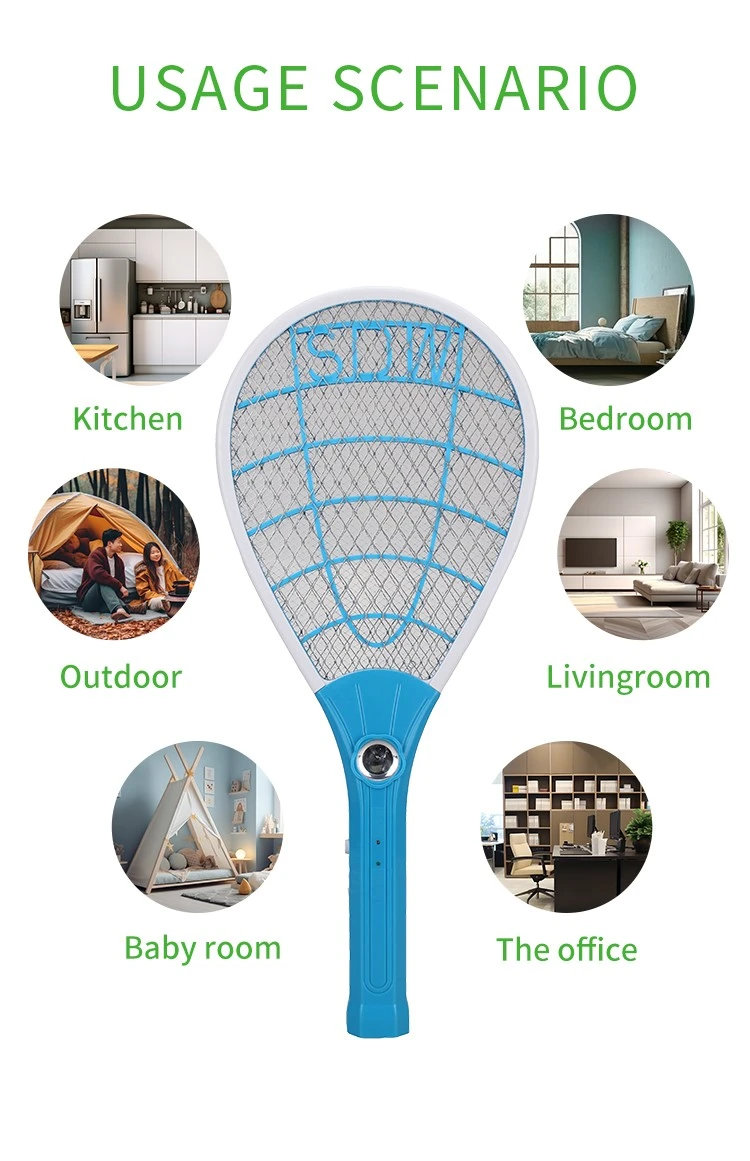
Most importers of electric mosquito swatters obsess over the first order: samples requested, factories vetted, a pre-shipment inspection booked. Then the reorder arrives eight months later and something is off. The grid feels softer. The charge port is a slightly different shade of black. The carton thickness dropped from 350 gsm to 300 gsm. Nothing is catastrophic — but the product no longer matches what your retail customers approved, and quietly, your return rate starts climbing.
How to Keep Mosquito Swatter Quality Consistent Across Repeat Orders
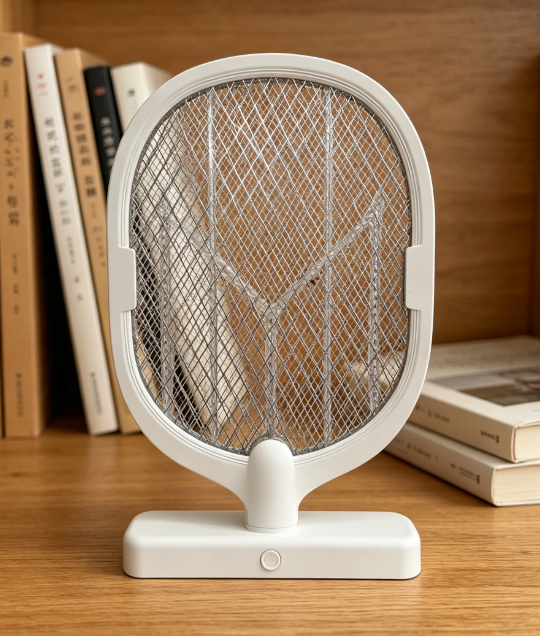
Warranty returns are the silent margin killer in the mosquito control category. A distributor who buys a swatter at $1.80 FOB and retails it at $9.90 can absorb a 1% return rate without noticing — but at 5%, the combined cost of replacement units, reverse logistics, and refund processing erases most of the line's profit.
Common mosquito swatter killer lamp failure modes wholesale spec guide

Digital bathroom scales rank as the second-highest-volume consumer weighing product category, only behind kitchen scales, with distinct market and product characteristics that set them apart from other scale types in importers’ product portfolios.
Digital bathroom body fat-bia-scale wholesale buyers guide