
Common mosquito swatter killer lamp failure modes wholesale spec guide
2026-10-21
The 7 Most Common Mosquito Swatter and Killer Lamp Failure Modes — and the Spec Checks That Cut Warranty Returns
Warranty returns are the silent margin killer in the mosquito control category. A distributor who buys a swatter at $1.80 FOB and retails it at $9.90 can absorb a 1% return rate without noticing — but at 5%, the combined cost of replacement units, reverse logistics, and refund processing erases most of the line's profit. The good news: field failure data across the category is remarkably consistent. A small number of failure modes account for the overwhelming majority of returns, and each one maps to a specific, checkable factory specification. This article breaks down the seven most common failure modes and what to write into your spec sheet to prevent them.
Failure Mode Overview: Where the Returns Actually Come From
Aggregated from after-sales data reported by distributors of battery-powered swatters and plug-in/USB killer lamps, the typical failure distribution looks like this:
|
#
|
Failure Mode
|
Approx. Share of Returns
|
Root Cause
|
|---|---|---|---|
|
1
|
Grid transformer / oscillator circuit failure
|
20–25%
|
Undersized components, moisture ingress
|
|
2
|
Switch or safety interlock wear
|
15–20%
|
Low-grade tact switches, weak spring retention
|
|
3
|
Battery degradation within 6 months
|
15–20%
|
Recycled or low-grade cells, overcharge without protection IC
|
|
4
|
Charge port solder joint fatigue
|
10%
|
Hand soldering without strain relief
|
|
5
|
Mesh corrosion or deformation
|
8–12%
|
Uncoated iron mesh, flimsy frame
|
|
6
|
UV LED lumen depreciation (killer lamps)
|
8–10%
|
Off-brand LEDs, no thermal pad
|
|
7
|
Housing cracks and seal failures
|
8–10%
|
Thin-wall molding, poor drop performance
|
Failure Mode 1: Grid Transformer and Oscillator Circuit Failures
The high-voltage grid of an electric swatter runs on a small oscillator circuit that steps the battery's 3.7V up to roughly 1,500–4,000V. The cheapest builds use undersized transformers and transistors running near their thermal limit; combined with humid-storage corrosion, they fail within weeks. The spec checks are simple and concrete: demand a transformer rated with at least 30% headroom above the working voltage, transistors from a named brand or equivalent (not unmarked generics), and a conformal coating on the PCB to resist humidity. During pre-production sample evaluation, run 500 continuous grid activations on two samples and check for output voltage drop — a quality build holds within 10% of its rated grid voltage throughout.
Failure Mode 2: Switch and Safety Interlock Wear
The activation switch is the most-handled component on the product, and cheap tact switches are rated for 10,000 cycles or less. Heavy-use markets — household daily use in tropical climates — can exceed that within a single season. Specify switches rated for 50,000 cycles, and for swatters with a dual-stage safety button, test that the interlock still prevents grid activation after simulated wear. This is also where the triple-mesh safety design and safety switch standards interact: a worn interlock that allows unintended grid activation is not just a warranty issue but a safety one, so this check belongs in your AQL inspection criteria, not just the sample test.

Failure Mode 3: Battery Degradation and Charge-Port Failures
Two electronics failure modes cluster around the battery. Degradation happens when factories fit reclaimed or off-spec lithium cells without a proper protection circuit board (PCB) — the unit works out of the box but holds half its capacity after 50 cycles. Require name-brand or fully specified cells, a protection IC with overcharge/over-discharge/short-circuit cutoff, and a cycle-life statement in writing (300+ cycles to 80% capacity is a reasonable standard for this category). Charge-port failures are mechanical: micro-USB and USB-C sockets soldered directly to the board with no strain relief crack loose after a few months of daily plugging. The fix costs pennies — a socket with through-hole anchor legs plus a strain-relief groove in the housing — but you must ask for it, because it never appears in the standard build.
Failure Modes 4 and 5: Mesh Corrosion and Housing Integrity
Mesh problems show up in two ways. Corrosion affects uncoated iron mesh, especially when units ship through humid maritime routes or sit in coastal warehouses — the same humidity issue covered in our guide to bulk storage and handling also attacks the product itself; an electroplated or nickel-coated mesh solves it for a marginal cost increase. Deformation is structural: a 0.3mm wire frame flexes on the first drop and shorts the outer mesh layers. Specify frame wire of at least 0.8–1.0mm and a housing drop test of 1 meter onto concrete from three orientations.
Housing failures overlap here. Thin-wall molding below 2.0mm in the handle area cracks at the seam, and poorly sealed battery compartments let moisture reach the PCB. Ask for the wall thickness in the drawing, and for killer lamps destined for bathrooms or outdoor eaves, an IPX4 splash rating minimum.
Failure Mode 6: UV LED Depreciation in Killer Lamps
For mosquito killer lamps, the failure that customers notice isn't a breakdown — it's a lamp that still lights up but catches nothing, because the UV LEDs have depreciated below the output that attracts insects. Off-brand 365nm or 395nm LEDs without proper thermal management can lose 30–40% of their UV output within a year. The engineering difference is a thermally conductive PCB and an LED bin specification from a known manufacturer; the difference at wholesale is typically $0.20–0.50 per unit, and it determines whether your lamp is a repeat-purchase product or a one-time disappointment that poisons your reviews. Our breakdown of UV-A wavelength selection covers the optical side; pair it with an LED lumen-maintenance commitment (LM-80 data or equivalent) from the factory.
Turning Failure Data Into a Spec Sheet: The Buyer's Checklist
Convert the seven failure modes into line items your supplier must confirm before production:
-
Transformer headroom ≥30%; conformal-coated PCB; named-brand transistors
-
Switch cycle rating ≥50,000; safety interlock verified after wear testing
-
Specified cell model with UN38.3 summary; protection IC mandatory; 300-cycle life commitment
-
Charge socket with through-hole anchors and housing strain relief
-
Coated mesh; frame wire ≥0.8mm; 1m drop test passed on 3 orientations
-
Housing wall thickness ≥2.0mm at handle; IPX4 minimum where relevant
-
UV LEDs with thermal pad PCB and LM-80-class lumen maintenance data
Then set a contractual return-rate expectation. A well-specified swatter or lamp should hold field returns under 1–2%; anything above 3% within the first season signals a spec corner was cut somewhere in the seven areas above. The warranty and after-sales terms you negotiate should reference these thresholds so that a return spike triggers a documented root-cause analysis rather than an argument.
None of these checks is expensive — in total they add a few cents to a few tens of cents per unit — but they require a factory with the in-house engineering and testing discipline to honor them consistently. That combination of failure-mode-aware design and production-line QC is precisely what Aofengming Electric builds into its swatter, killer lamp, and scale lines for wholesale customers who cannot afford a return-rate surprise in their first season.
How to Keep Mosquito Swatter Quality Consistent Across Repeat Orders
Digital bathroom body fat-bia-scale wholesale buyers guide
Related Article
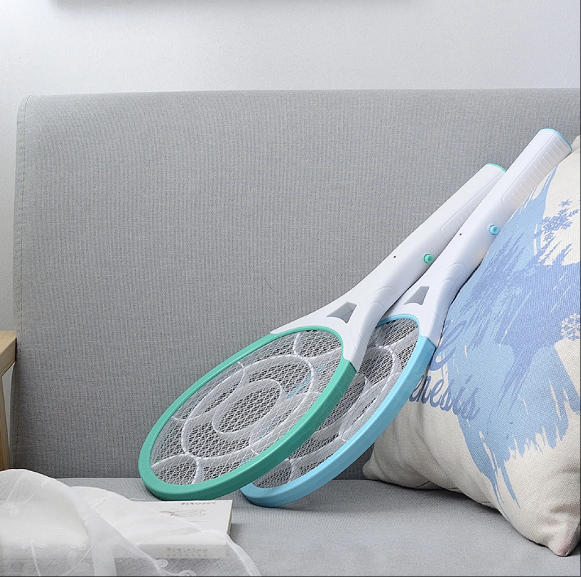
If you’re struggling with annoying mosquitoes, flies, and other flying pests indoors and outdoors, upgrading from traditional manual tools to anElectric Mosquito Swatter is the most efficient solution. Many homeowners and renters search where to buy fly swatter online to find durable, safe, and high-performance electric models that deliver instant pest control.
Where to Buy Fly Swatter
Most importers of electric mosquito swatters obsess over the first order: samples requested, factories vetted, a pre-shipment inspection booked. Then the reorder arrives eight months later and something is off. The grid feels softer. The charge port is a slightly different shade of black. The carton thickness dropped from 350 gsm to 300 gsm. Nothing is catastrophic — but the product no longer matches what your retail customers approved, and quietly, your return rate starts climbing.
How to Keep Mosquito Swatter Quality Consistent Across Repeat Orders

Digital bathroom scales rank as the second-highest-volume consumer weighing product category, only behind kitchen scales, with distinct market and product characteristics that set them apart from other scale types in importers’ product portfolios.
Digital bathroom body fat-bia-scale wholesale buyers guide
Most people prioritize skin sun protection but overlook critical eye care, falling prey to hidden UV traps that damage eye tissues gradually. Ultraviolet rays (UVA and UVB) do not only harm eyes on sunny summer days—they penetrate clouds, reflect off surfaces, and cause cumulative long-term eye issues. Learning how to protect your eyes from UV traps is essential for preventing short-term discomfort and chronic eye diseases.
How to Protect Your Eyes from UV Traps