
3 Methods to Judge if Mosquito Swatter Battery Capacity Meets Standards
2026-05-18
Proven Effective! 3 Methods to Judge if Mosquito Swatter Battery Capacity Meets Standards
As summer arrives, the electric mosquito swatter becomes an essential "mosquito-killing tool" in every household. However, many people encounter a common problem: the battery life of a mosquito swatter that was just bought not long ago is getting worse and worse. Clearly marked with a capacity of 2000mAh, it runs out of power quickly. You suspect the battery capacity is falsely labeled but don’t know how to verify it. Today, I’ll share 3 simple and easy-to-operate methods that allow you to judge if the mosquito swatter battery capacity meets the standards at home, so you’ll never be tricked by merchants again!

I. Intuitive Usage Detection Method (No Tools Needed, Testable Daily)
Without any professional tools, you can quickly judge whether the battery capacity is qualified based on daily usage experience, which is suitable for most ordinary users.
1. Full-Charge Battery Life Test (Most Core): First, fully charge the mosquito swatter according to the instructions—traditional nickel-cadmium (Ni-Cd)/nickel-metal hydride (Ni-MH) batteries usually take 8-12 hours to charge, while lithium batteries take 4-6 hours. After full charging, continuously turn on the electric shock function without interruption, record the time from full charge to inability to shock normally, and judge against the following standards:
• Ni-Cd/Ni-MH batteries (400-1000mAh): The qualified battery life should be 1-3 hours. If it is less than 30 minutes, it is likely that the capacity is falsely labeled or the battery is aging;
• Lithium batteries (1200-3000mAh): The qualified battery life should be 4-10 hours (the higher the capacity, the longer the battery life). If it is less than 2 hours, directly determine that the capacity does not meet the standards.
2. Observation of Discharge Stability: In the full-charge state, observe the spark size and crackling intensity of the mosquito swatter’s electric shock. A qualified battery will have uniform electric shock intensity without obvious weakening throughout the process; if the sparks become smaller, the electric shock becomes weak, or even power cuts off midway just after full charging, it indicates that the battery capacity has attenuated seriously and does not meet the nominal standard at all.
3. Comparison of Charging Time: Compare with the charging time marked in the instructions. If the actual charging time is significantly shortened (for example, marked 8 hours, but actually fully charged in 2-3 hours) and the battery life is extremely poor, it means the battery capacity has attenuated seriously; if the charging time exceeds 1.5 times the marked time, it may also be that the capacity does not meet the standards or the battery is faulty.
II. Professional Tool Detection Method (Accurate Verification, No Pitfalls)
If you want to accurately confirm whether the battery meets the merchant’s nominal capacity (for example, marked 2000mAh, and want to know the actual capacity), you can use simple professional tools for detection, which is not difficult to operate and has low cost.
First, prepare tools: a "battery capacity tester" that can be bought for tens of yuan, or a multimeter with a capacity detection function (no need to disassemble the mosquito swatter; some models need to open the battery compartment to take out the battery).
The detection steps are very simple: ① Fully charge the mosquito swatter battery and take out the battery (for built-in batteries, you can open the battery compartment, pay attention to the positive and negative poles to avoid short circuit); ② Connect the battery to the tester and set the discharge current (for mosquito swatter batteries, it is generally set to 0.1C-0.2C; for example, a 2000mAh lithium battery can be set to 200-400mA); ③ Start the tester until the battery is discharged to the cut-off voltage (1.2V for Ni-Cd/Ni-MH batteries, 3.0V for lithium batteries), and the "actual capacity" displayed by the tester is the real capacity of the battery.
Qualified standard: If the actual detected capacity is ≥ 80% of the nominal capacity, it is qualified; for example, if the nominal capacity is 2000mAh and the actual detected capacity is less than 1600mAh, it is falsely labeled.
III. Detailed Investigation + Standard Comparison (Avoid Misjudgment)
Sometimes poor battery life is not a problem with battery capacity, but caused by other factors. It is more accurate to investigate these situations first before judging whether the capacity meets the standards.
1. Nominal Parameter Comparison: Check the nominal information on the mosquito swatter manual or battery compartment, and combine the previous battery life test and tool detection to judge whether the actual performance matches the nominal capacity. If the gap is too large (for example, nominal 2000mAh, but battery life is only 1 hour), it means it does not meet the standards.
2. Eliminate Non-Capacity Issues: ① Dust accumulation and short circuit on the electric shock net will increase power consumption; clean it before testing; ② Poor contact of the charging interface or faulty charger will lead to insufficient charging; replace the charger and test again; ③ Low temperature (below 10℃) will reduce the battery discharge capacity; it is recommended to test at room temperature (20-25℃).
3. Distinguish Between Aging and Non-Qualification: If the mosquito swatter has been used for more than 1-2 years (lithium battery life is 2-3 years, Ni-Cd/Ni-MH is 1-2 years), battery life attenuation is normal aging and does not count as capacity non-compliance; but if the battery life is obviously poor within 3-6 months of use, it means the capacity does not meet the standards.
Supplementary Notes
• Do not short-circuit the battery when disassembling the mosquito swatter to avoid electric shock or battery damage;
• When testing with tools, match the battery type to avoid detection errors caused by incorrect cut-off voltage settings;
• For mosquito swatters with built-in batteries that cannot be taken out, directly judge by "full-charge battery life + charging time" without forced disassembly.
In fact, the core of judging whether the mosquito swatter battery capacity meets the standards is to "check battery life, test real capacity, and eliminate misunderstandings". Mastering these 3 methods can help you easily avoid false labeling traps and make the electric mosquito swatter really work~ Have you ever encountered poor battery life when using a mosquito swatter? You can leave a message in the comment area to communicate!
A Global Guide to Mosquito Control
How to Choose an Electric Mosquito Swatter That Suits You
Related Article

If you’re struggling with annoying mosquitoes, flies, and other flying pests indoors and outdoors, upgrading from traditional manual tools to anElectric Mosquito Swatter is the most efficient solution. Many homeowners and renters search where to buy fly swatter online to find durable, safe, and high-performance electric models that deliver instant pest control.
Where to Buy Fly Swatter
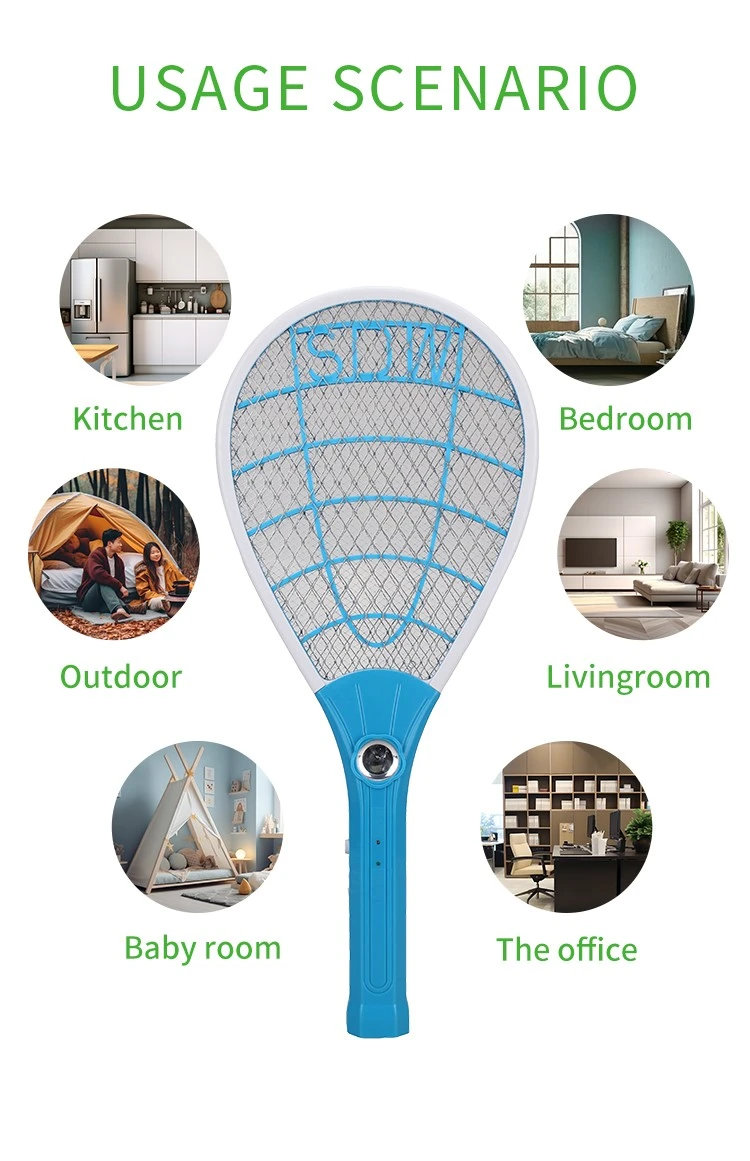
Most importers of electric mosquito swatters obsess over the first order: samples requested, factories vetted, a pre-shipment inspection booked. Then the reorder arrives eight months later and something is off. The grid feels softer. The charge port is a slightly different shade of black. The carton thickness dropped from 350 gsm to 300 gsm. Nothing is catastrophic — but the product no longer matches what your retail customers approved, and quietly, your return rate starts climbing.
How to Keep Mosquito Swatter Quality Consistent Across Repeat Orders
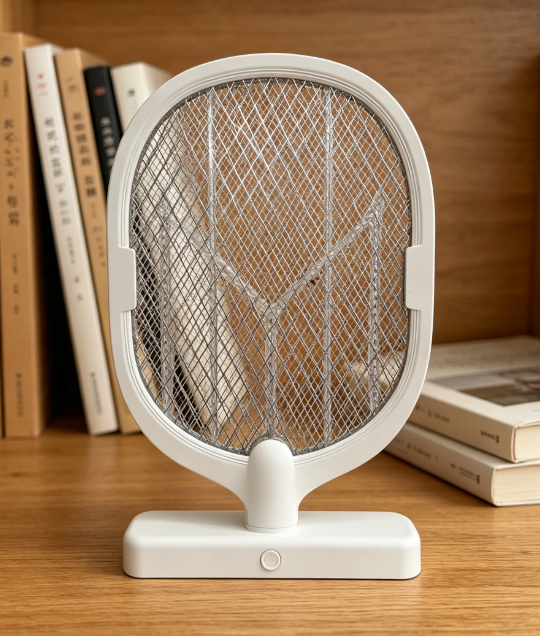
Warranty returns are the silent margin killer in the mosquito control category. A distributor who buys a swatter at $1.80 FOB and retails it at $9.90 can absorb a 1% return rate without noticing — but at 5%, the combined cost of replacement units, reverse logistics, and refund processing erases most of the line's profit.
Common mosquito swatter killer lamp failure modes wholesale spec guide

Digital bathroom scales rank as the second-highest-volume consumer weighing product category, only behind kitchen scales, with distinct market and product characteristics that set them apart from other scale types in importers’ product portfolios.
Digital bathroom body fat-bia-scale wholesale buyers guide