
Container Transit Time – A Core Concern for Foreign Trade and Logistics
2025-12-12
I. Opening: Container Transit Time – A Core Concern for Foreign Trade and Logistics
For practitioners in cross-border trade and bulk commodity transportation, "how long does it take for a container to reach its destination" is a frequently asked question – it directly impacts inventory planning, customer fulfillment, and capital turnover. However, container transit time is not a fixed value; it is influenced by multiple factors such as transportation method, route distance, and customs clearance efficiency. Today, we will break down these key variables and provide reference transit time ranges.

II. Core Influencing Factors + Corresponding Transit Time References
1. Transportation Method: The "Fundamental Variable" Determining Transit Time
Significant differences in transit time exist between different transportation methods, which is the core factor affecting container delivery time:
- Sea Freight (Most Commonly Used): Low cost and large capacity, with transit time varying by route distance:
-
- Near-ocean routes (e.g., China → Southeast Asia, Japan/South Korea): 3-7 days for direct sailing; an additional 2-5 days for transshipment.
-
- Ocean-going routes (e.g., China → Europe/North America, Australia): 20-40 days for direct sailing; typically 20-25 days to US West Coast ports (Los Angeles, Long Beach), 28-35 days to US East Coast ports (New York, Houston); 25-35 days to major European ports (Hamburg, Rotterdam).
- Air Freight (First Choice for Urgent Shipments): Fast speed but high cost; containers are mostly "Unit Load Devices (ULDs)":
-
- International routes (e.g., China → Europe/North America, Southeast Asia): 3-7 days (including airport pickup and customs clearance); an additional 1-3 days for transshipment to remote areas.
- Land Transport (Cross-border/Domestic): Suitable for neighboring countries or domestic transportation:
-
- Cross-border land transport (e.g., China → Central Asia, Southeast Asian land border crossings): 5-15 days (affected by border inspections and road conditions).
-
- Domestic land transport (e.g., inter-provincial transportation): 1-5 days (1 day for same-city, 3-5 days for inter-provincial trunk lines, depending on distance).
2. Key Additional Factors: These Links May "Delay" Transit Time
Beyond transportation methods, the following easily overlooked links have a significant impact on total transit time:
- Customs Clearance Efficiency: 1-3 days for customs clearance with complete documents (bill of lading, packing list, commercial invoice, etc.) and no inspection; delays of 3-7 days or longer may occur if subject to customs inspection or missing documents.
- Port/Airport Congestion: During peak seasons (e.g., Christmas shipping season, pre-e-commerce promotions) or in cases of port strikes or equipment failures, vessel/aircraft berthing and unloading may be delayed by 3-10 days (for example, US West Coast ports once experienced 1-2 weeks of congestion).
- Weather and Force Majeure: Typhoons or tsunamis for sea freight, severe convection weather for air freight, and heavy rains or road closures for land transport may all cause 1-5 days of delay.
- Holiday Impacts: During domestic and foreign statutory holidays (e.g., Spring Festival, Christmas), customs and ports are closed, and shipping/flight schedules are adjusted, usually resulting in 2-5 days of delay.
III. Practical Reference: Summary of Container Transit Time in Different Scenarios
|
Transport Scenario
|
Estimated Total Transit Time
|
Key Notes
|
|
China → Southeast Asia (Sea Freight Direct)
|
3-7 days
|
Avoid the rainy season; prepare ASEAN customs clearance documents in advance
|
|
China → US West Coast (Sea Freight Direct)
|
20-25 days
|
Book shipping space 2 weeks in advance during peak seasons to avoid port congestion
|
|
China → Europe (Sea Freight Direct)
|
25-35 days
|
Prioritize major ports to reduce transshipment links
|
|
China → Europe/North America (Air Freight)
|
3-7 days
|
Ensure customs clearance documents are verified correctly in advance
|
|
Domestic Inter-provincial Trunk Line (Land Transport)
|
3-5 days
|
Choose direct special lines to avoid multiple transshipments
|
IV. Conclusion: How to Ensure Containers "Arrive on Time"?
To make container transit time more controllable, we recommend 3 key actions:

- Plan in advance: Select the appropriate transportation method based on customer needs, and book shipping space at least 2-4 weeks in advance during peak seasons.
- Complete documentation: Ensure customs clearance documents are accurate and error-free to avoid inspection delays due to document issues.
- Choose reliable partners: Collaborate with experienced freight forwarders to track cargo dynamics in real-time and coordinate promptly when problems arise.
In summary, there is no "one-size-fits-all answer" for container transit time. However, by mastering the core influencing factors and preparing in advance, you can minimize delays to the greatest extent and ensure goods are delivered to customers on time.
How long is the shelf life of an electric mosquito swatter
What are some more environmentally friendly ways to prevent mosquitoes
Related Article

If you’re struggling with annoying mosquitoes, flies, and other flying pests indoors and outdoors, upgrading from traditional manual tools to anElectric Mosquito Swatter is the most efficient solution. Many homeowners and renters search where to buy fly swatter online to find durable, safe, and high-performance electric models that deliver instant pest control.
Where to Buy Fly Swatter
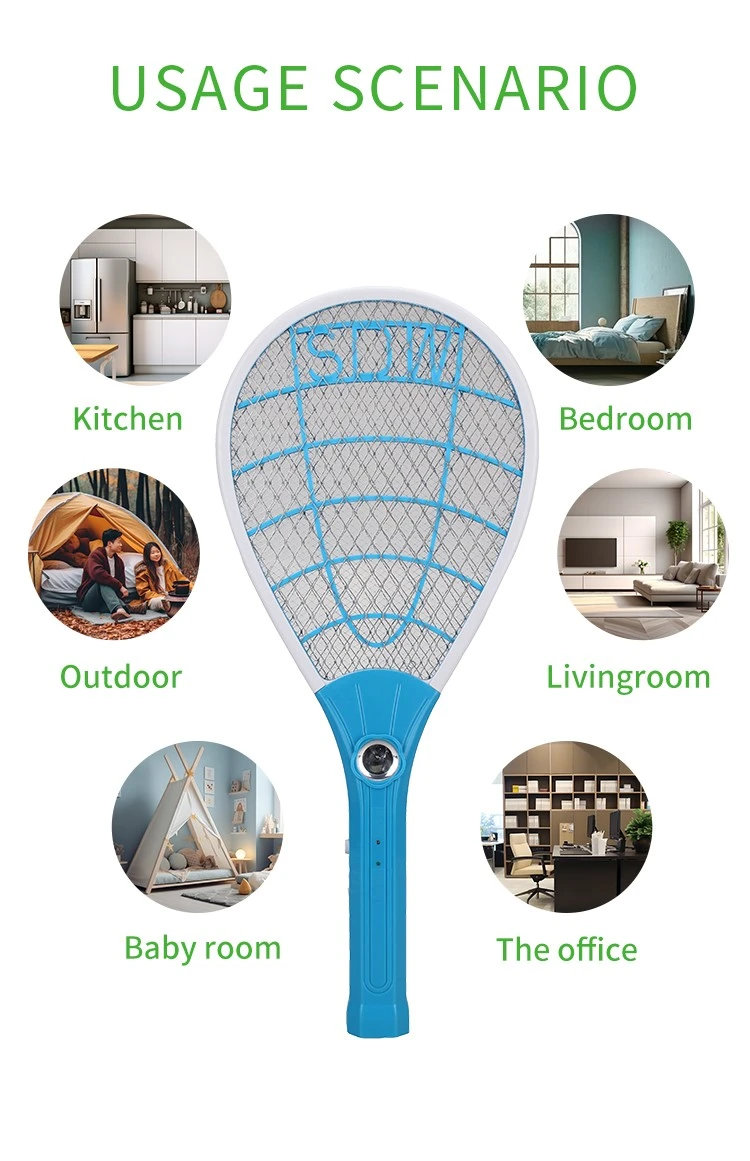
Most importers of electric mosquito swatters obsess over the first order: samples requested, factories vetted, a pre-shipment inspection booked. Then the reorder arrives eight months later and something is off. The grid feels softer. The charge port is a slightly different shade of black. The carton thickness dropped from 350 gsm to 300 gsm. Nothing is catastrophic — but the product no longer matches what your retail customers approved, and quietly, your return rate starts climbing.
How to Keep Mosquito Swatter Quality Consistent Across Repeat Orders

Warranty returns are the silent margin killer in the mosquito control category. A distributor who buys a swatter at $1.80 FOB and retails it at $9.90 can absorb a 1% return rate without noticing — but at 5%, the combined cost of replacement units, reverse logistics, and refund processing erases most of the line's profit.
Common mosquito swatter killer lamp failure modes wholesale spec guide

Digital bathroom scales rank as the second-highest-volume consumer weighing product category, only behind kitchen scales, with distinct market and product characteristics that set them apart from other scale types in importers’ product portfolios.
Digital bathroom body fat-bia-scale wholesale buyers guide