
A Comprehensive Guide to Electric Mosquito Swatter Shell Materials
2025-09-17
A Comprehensive Guide to Electric Mosquito Swatter Shell Materials: Which One Is Right for You?
As summer arrives, electric mosquito swatters become an essential household tool for mosquito control. The shell, acting as the "protective cover" of the swatter, not only influences the product's appearance and feel but also directly impacts its safety, durability, and cost-effectiveness. The market offers a wide variety of shell materials for electric mosquito swatters, and many people feel confused by technical terms like "ABS" and "PP" when making a purchase. Today, we will break down the common materials used in electric mosquito swatter shells to help you easily choose the right product for your needs.
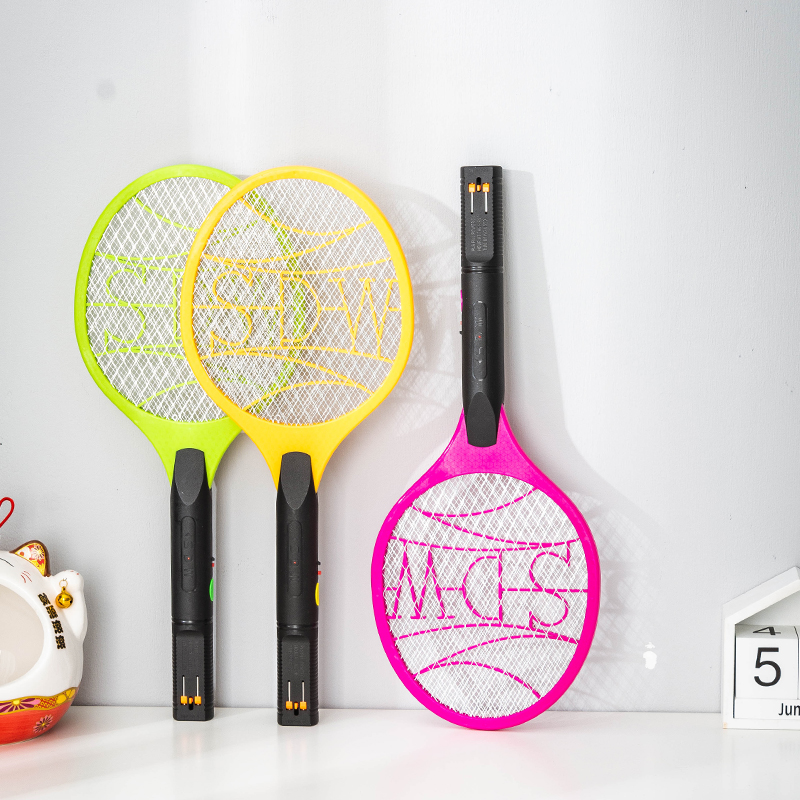
I. Why Does the Electric Mosquito Swatter Shell Material Matter?
Before diving into specific materials, let's first understand a key point: the shell material is not just an "insignificant cover" but one of the core components of the electric mosquito swatter. Firstly, the internal part of an electric mosquito swatter contains a high-voltage grid (usually with a voltage ranging from 1000V to 3000V), so the shell must have insulating properties to prevent electric shock during use. Secondly, accidental drops and collisions are inevitable in daily use, so the shell needs a certain level of impact resistance to avoid damage to internal components. Finally, the humid environment in summer requires the shell to have moisture resistance to prevent material deterioration or reduced insulation due to moisture. Therefore, choosing the right material is like adding a "double insurance" to the safety and lifespan of the electric mosquito swatter.
II. Common Types and Characteristics of Electric Mosquito Swatter Shell Materials
Currently, the shell materials of electric mosquito swatters on the market are mainly divided into three categories: plastic materials, metal materials (less common), and composite materials. Among them, plastic materials have become the mainstream choice due to their balanced cost and performance. Let's analyze the advantages and disadvantages of each type of material one by one.
1. Mainstream Choice: ABS Engineering Plastic
ABS plastic is the most commonly used material for electric mosquito swatter shells. Its full name is "Acrylonitrile-Butadiene-Styrene Copolymer," which belongs to the category of engineering plastics. It combines toughness, hardness, and impact resistance, making it one of the best choices in terms of overall performance.
Core Advantages:
- Strong impact resistance: It has good toughness, and even if it falls from a height of 1-2 meters, it is not easy to crack or break, making it suitable for families with children.
- Excellent insulation: It can effectively insulate the internal high voltage, avoiding the risk of electric leakage during use and ensuring safety.
- Easy to process and mold: It can be made into various colors and textures (such as matte and glossy finishes), offering a rich appearance and a delicate feel.
- Stable temperature resistance: It maintains stable performance within a temperature range of -20℃ to 80℃ and will not deform or soften even in high-temperature summer environments.
Minor Disadvantages:
- It may turn slightly yellow when exposed to sunlight for a long time, but this does not affect its usability.
- Compared with ordinary plastics, its cost is slightly higher. Therefore, electric mosquito swatters with pure ABS shells usually range in price from 30 to 80 yuan.
Suitable Scenarios: Daily household use, families with children or pets, and users who value durability and safety.
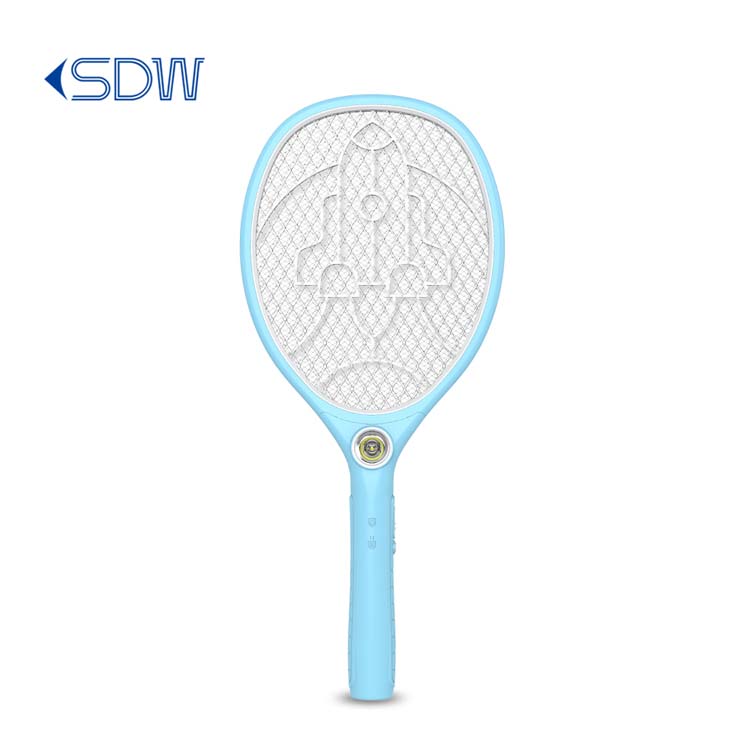
2. Budget-Friendly Choice: PP Polypropylene Plastic
PP plastic (polypropylene) is another common shell material, focusing on "high cost-effectiveness." Many affordable electric mosquito swatters under 100 yuan use this material.
Core Advantages:
- Low price: The cost of raw materials is low, so electric mosquito swatters with PP shells usually range in price from 10 to 30 yuan, making them suitable for users on a tight budget.
- Strong corrosion resistance: It is not afraid of corrosion from mosquito body fluids, detergents, etc., and it is not easy to be damaged even when wiped with a damp cloth during cleaning.
- Lightweight: Its density is lower than that of ABS, so the made shell is lighter, and it is not tiring to hold for a long time.
Minor Disadvantages:
- Weak impact resistance: Its toughness is not as good as that of ABS, and it is easy to crack or even break when dropped.
- Average temperature resistance: It may soften at high temperatures (exceeding 60℃), so it is not recommended to place it near heat sources (such as desk lamps and air conditioning vents) for a long time.
- Low surface hardness: It is easy to leave scratches, and the appearance may look rough after long-term use.
Suitable Scenarios: Temporary use in rented houses, short-term outdoor carrying (such as camping and business trips), and users with limited budgets. It is not recommended to use it as the main electric mosquito swatter for families in the long term.
3. Niche Choice: Metal Materials (Aluminum Alloy/Stainless Steel)
Metal shell electric mosquito swatters are very rare and only appear in some high-end or professional products, focusing on "extreme durability."
Core Advantages:
- Maximum durability: Its hardness is much higher than that of plastic, with excellent impact resistance, scratch resistance, and aging resistance, and its service life can reach more than 5 years.
- Good heat dissipation: Metal conducts heat quickly, which can help the internal circuit dissipate heat and avoid malfunctions caused by overheating after long-term use.
- High-end texture: Metal shells are usually paired with matte or anodizing processes, featuring a simple and elegant appearance, suitable for users pursuing a sense of quality.
Minor Disadvantages:
- Extra attention to insulation: Metal itself is conductive, so an additional insulating layer must be added inside. If the craftsmanship is poor, there may be potential safety hazards.
- Heavy weight: The high density of metal makes the swatter heavy to hold, and it is easy to get tired after long-term use.
- High price: Electric mosquito swatters with metal shells usually cost more than 100 yuan, with low cost-effectiveness.
Suitable Scenarios: Long-term outdoor use (such as farms and warehouses) and users pursuing extreme durability. Ordinary families do not need to prioritize this type.
4. Innovative Choice: Composite Materials (ABS + PP/TPR)
To balance performance and cost, many brands adopt a "composite material" design. For example, the main body of the shell uses ABS (to ensure durability), the handle part uses PP + TPR soft rubber (to improve the feel), or PC plastic is used in local areas (to enhance temperature resistance).
Core Advantages:
- Targeted optimization: Different materials are used in different parts. For example, the handle is added with soft rubber for anti-slip and comfort, and the main body of the shell uses ABS for impact resistance and safety.
- Balanced cost-effectiveness: It is cheaper than pure ABS and more durable than pure PP, suitable for the "intermediate needs" of most families.
Minor Disadvantages:
- If the craftsmanship of the material joint is poor, gaps may appear after long-term use, which are easy to accumulate dust.
- It is necessary to check the material description carefully to avoid some low-priced products claiming to use "ABS + PP" but actually having a high proportion of PP, which affects durability.
Suitable Scenarios: Users pursuing a balance of "feel + durability + cost-effectiveness," which is the mainstream innovative direction in the current market.
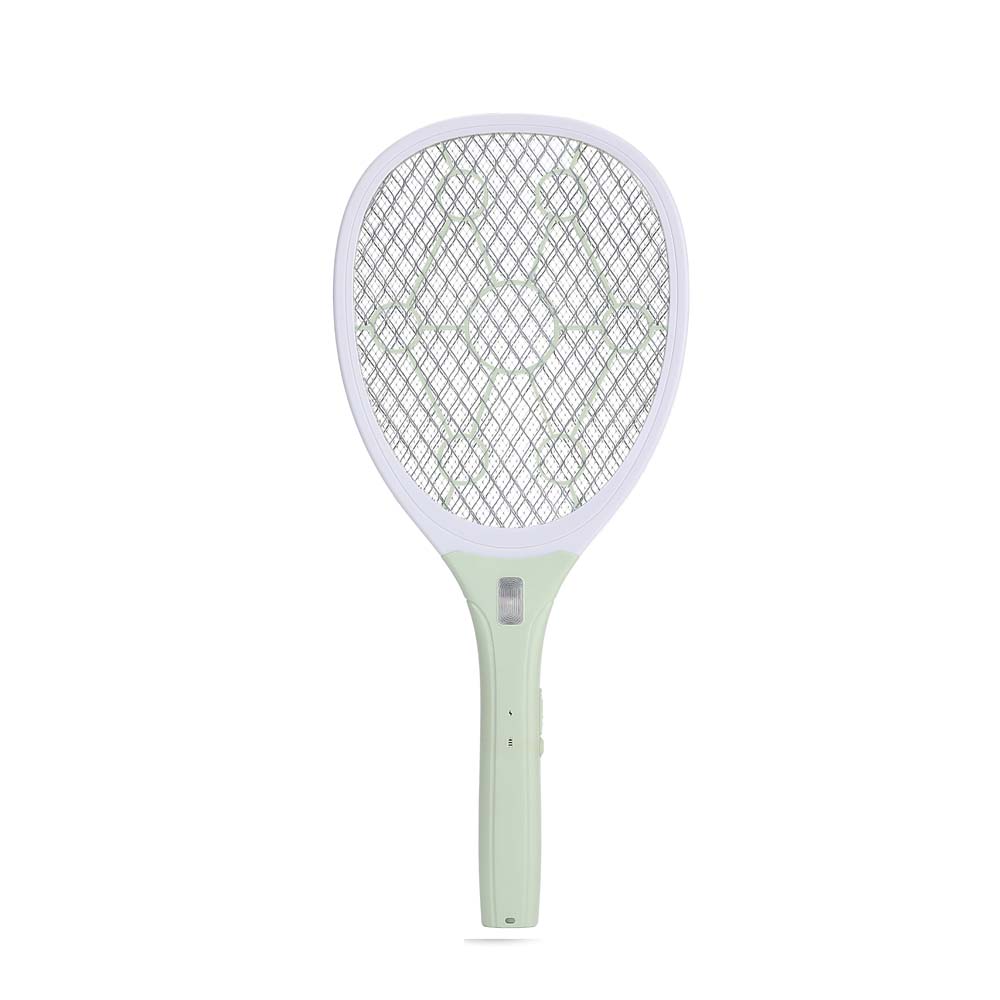
III. How to Choose the Right Electric Mosquito Swatter Shell Material Based on Your Needs?
After reading the above analysis, many people may still be confused about "which one to choose." In fact, you can quickly determine the answer by judging based on 3 core needs:
- Consider your budget: Choose PP if your budget is less than 30 yuan, ABS or composite materials if it is 30-80 yuan, and metal materials (not necessary) if it is more than 100 yuan.
- Consider usage frequency: Choose ABS or composite materials for daily use, and PP for occasional use.
- Consider usage environment: Choose ABS for daily household use, lightweight PP or composite materials for outdoor camping, and metal materials for harsh environments (such as warehouses).
Finally, a reminder: When purchasing an electric mosquito swatter, in addition to the shell material, you should also pay attention to whether the product has 3C certification (national mandatory safety certification) and whether the internal grid has a protective net (to prevent children from touching it by mistake). Good materials plus compliant safety design can make mosquito control more reassuring!
Can an Electric Mosquito Swatter Still Work After Getting Wet
Choose the Right Electric Mosquito Swatter for Business Trips and Travels
Related Article

If you’re struggling with annoying mosquitoes, flies, and other flying pests indoors and outdoors, upgrading from traditional manual tools to anElectric Mosquito Swatter is the most efficient solution. Many homeowners and renters search where to buy fly swatter online to find durable, safe, and high-performance electric models that deliver instant pest control.
Where to Buy Fly Swatter

Most importers of electric mosquito swatters obsess over the first order: samples requested, factories vetted, a pre-shipment inspection booked. Then the reorder arrives eight months later and something is off. The grid feels softer. The charge port is a slightly different shade of black. The carton thickness dropped from 350 gsm to 300 gsm. Nothing is catastrophic — but the product no longer matches what your retail customers approved, and quietly, your return rate starts climbing.
How to Keep Mosquito Swatter Quality Consistent Across Repeat Orders

Warranty returns are the silent margin killer in the mosquito control category. A distributor who buys a swatter at $1.80 FOB and retails it at $9.90 can absorb a 1% return rate without noticing — but at 5%, the combined cost of replacement units, reverse logistics, and refund processing erases most of the line's profit.
Common mosquito swatter killer lamp failure modes wholesale spec guide

Digital bathroom scales rank as the second-highest-volume consumer weighing product category, only behind kitchen scales, with distinct market and product characteristics that set them apart from other scale types in importers’ product portfolios.
Digital bathroom body fat-bia-scale wholesale buyers guide