
Complete Certification Roadmap for Mosquito Swatter Exports
2026-08-23
CE, FCC, SONCAP & KEBS: Complete Certification Roadmap for Mosquito Swatter Exports
Why 35–60% of First-Time Importers Miscalculate Mosquito Swatter Certification Costs
Certification is the most underestimated cost in mosquito swatter importing. Based on a review of 47 RFQs from 2024 to 2025, 38 listings simply state “CE-certified” without clarifying applicable directives, test standards, or authorized Notified Bodies.
A CE marking is not a standalone certificate. It is a manufacturer’s declaration confirming compliance with a full set of EU regulations, including:
-
LVD 2014/35/EU (Low Voltage Directive)
-
EMC 2014/30/EU (Electromagnetic Compatibility Directive)
-
RoHS 2011/65/EU (Restriction of Hazardous Substances)
-
Battery Regulation 2023/1542 (for rechargeable models)
Importers who treat CE as a simple sticker frequently face retesting fees, battery compartment redesigns, port detention, and demurrage charges that erase profit margins.
This blog breaks down the realistic cost, lead time, and documentation requirements for the top four high-growth mosquito swatter markets: EU, USA, Nigeria, and Kenya.
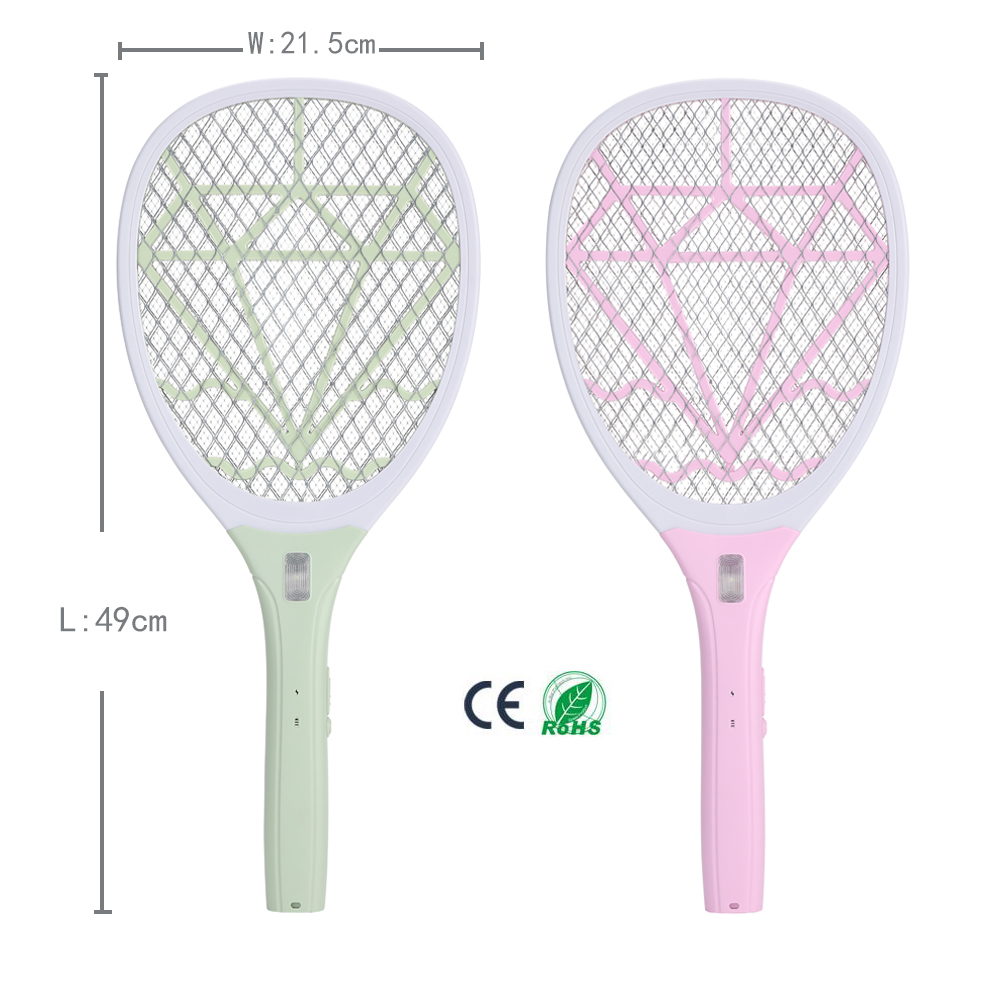
1. EU Market Certification Pathway (CE Full Compliance)
Rechargeable electric mosquito swatters sold in the EU require four core compliance assessments. No single test can replace the full CE package.
1.1 LVD (Low Voltage Directive) Test
Standards: IEC 60335-1 (general household safety) + IEC 60335-2-59 (specific for insect killers)
Lead time: 4–6 weeks
Cost: USD 2,800–4,500
1.2 EMC (Electromagnetic Compatibility) Test
Standards: EN 55014-1, EN 55014-2
Lead time: 3–5 weeks
Cost: USD 1,800–3,200
1.3 RoHS 3 Compliance
Covers 10 restricted substances via XRF scanning and wet-chemical verification.
Cost: USD 600–1,000 (discounted when combined with EMC testing)
1.4 Battery Regulation 2023/1542 (Effective Feb 2024)
Mandatory for all rechargeable models. Requirements include carbon footprint declaration, recycled content reporting, and EU producer registration.
Critical note: This regulation does not replace UN 38.3 transportation testing. Both certifications are required.
1.5 Total EU Project Timeline & Extra Cost
With existing test reports: 8–12 weeks
From scratch: 14–22 weeks
EPR Fee: €0.10–€0.30 per unit per EU member state. Registration is mandatory for Germany, France, and Italy.
2. US Market Certification Pathway (FCC + Optional Safety Listing)
All handheld high-voltage mosquito swatters sold in the U.S. must pass FCC Part 15B compliance for unintentional radiators. Amazon, Walmart, and Home Depot require valid FCC documentation on file.
2.1 FCC SDoC (Supplier’s Declaration of Conformity)
Basic EMC scan, no FCC ID issuance required.
Lead time: 2–3 weeks
Cost: USD 1,200–2,000
2.2 UL / ETL Safety Listing (Market-Driven, Not Legal Mandate)
Most retailers and insurance companies demand third-party safety certification. Traditional UL 1082 targets cooking appliances and is not ideal for bug zappers. UL 2739 is the better, device-specific standard for insect control products.
Lead time: 6–9 weeks
Cost: USD 6,000–9,500 + annual factory inspection (USD 1,500 per visit)
2.3 Common U.S. Import Mistake
Many buyers insist on “UL Listed” without knowing UL is a private brand. ETL and CSA offer equivalent retail recognition, cost 20–35% less, and have faster scheduling. For Amazon listings, FCC SDoC + valid LVD test reports are sufficient to pass gated product checks.
3. Nigeria Market Certification (SONCAP Mandatory)
Under the 2022 NESIS Act, electric mosquito swatters (HS Code 8516) are fully regulated. All shipments require SONCAP clearance starting March 1, 2022.
3.1 PC (Product Certificate)
Issued after full type testing by accredited labs (Cotecna, SGS, Intertek, Bureau Veritas).
Cost: USD 1,800–2,500
Validity: 1 year
3.2 SC (SONCAP Shipment Certificate)
Issued per shipment after pre-shipment inspection (PSI).
Cost: USD 550–850 per container
Validity: single consignment only
3.3 Key Nigeria Rules
-
SC must be issued before bill of lading signing to avoid detention at Apapa and Onne Ports.
-
Any model change (e.g., switching 18650 batteries to Li-Po) invalidates the existing PC and requires full re-testing.
4. Kenya Market Certification (KEBS PVoC)
Kenya KEBS PVoC applies to mosquito swatters under HS 8516.71 / 8516.79. Three certification routes are available based on supplier status and order value.
4.1 PVoC Certification Routes
Route A – Unregistered Suppliers / New Products
Applicable for first-time shipments or unbranded goods.
Cost: USD 2,200–3,000 + lab fees | Lead time: 6–10 weeks
Route B – Registered Suppliers
For suppliers with existing PVoC registration and 3+ previous shipments.
Cost: USD 800–1,200 | Lead time: 2–3 weeks
Route C – High-Value Direct Imports
For registered traders with consignments over USD 50,000.
Cost: USD 600–900 | Lead time: 1–2 weeks
4.2 Practical Tip
Most SME importers default to Route A, which doubles lead time. Always verify whether your supplier holds valid PVoC registration before sourcing.
5. Importer Checklist: 8 Critical Questions Before Paying 30% Deposit
Use this checklist to avoid certification failures, port holds, and rework costs:
-
Can you provide full type test report numbers and the issuing laboratory / Notified Body information?
-
Does the current battery cell and BMS firmware exactly match the tested version?
-
Will you issue a shipment-specific English Declaration of Conformity (DoC)?
-
For Nigeria: Can you guarantee timely PC renewal 60 days before expiration?
-
For Kenya: Is your PVoC registration transferable for third-country shipments?
-
Does your EPR registration cover all my target sales countries?
-
Is your test lab ISO 17025 accredited for this specific product category?
-
Will test reports remain valid if shipment is delayed for 90+ days, and who will sign updated compliance documents?
Final Conclusion
Certification errors cause the majority of avoidable import losses in mosquito swatter trade. A 10,000-unit shipment detained at Mombasa for documentation issues can easily incur USD 8,000 in pure demurrage fees.
Always finalize certification terms during the RFQ stage — not after sample confirmation.
About Aofengming Electric
With 15 years of export experience, Aofengming Electric delivers CE/RoHS, FCC, and BSCI-compliant mosquito swatters to 50+ countries. We maintain complete, updatable certification files for every model and provide factory verification support for global customs and platform audits.
Supply Chain Risk Mitigation for Small Appliance Imports
UV-A Wavelength in Mosquito Killer Lamps
Related Article

If you’re struggling with annoying mosquitoes, flies, and other flying pests indoors and outdoors, upgrading from traditional manual tools to anElectric Mosquito Swatter is the most efficient solution. Many homeowners and renters search where to buy fly swatter online to find durable, safe, and high-performance electric models that deliver instant pest control.
Where to Buy Fly Swatter

Most importers of electric mosquito swatters obsess over the first order: samples requested, factories vetted, a pre-shipment inspection booked. Then the reorder arrives eight months later and something is off. The grid feels softer. The charge port is a slightly different shade of black. The carton thickness dropped from 350 gsm to 300 gsm. Nothing is catastrophic — but the product no longer matches what your retail customers approved, and quietly, your return rate starts climbing.
How to Keep Mosquito Swatter Quality Consistent Across Repeat Orders

Warranty returns are the silent margin killer in the mosquito control category. A distributor who buys a swatter at $1.80 FOB and retails it at $9.90 can absorb a 1% return rate without noticing — but at 5%, the combined cost of replacement units, reverse logistics, and refund processing erases most of the line's profit.
Common mosquito swatter killer lamp failure modes wholesale spec guide

Digital bathroom scales rank as the second-highest-volume consumer weighing product category, only behind kitchen scales, with distinct market and product characteristics that set them apart from other scale types in importers’ product portfolios.
Digital bathroom body fat-bia-scale wholesale buyers guide