
digital-scale-accuracy-load-cell-calibration-oiml-ntep-wholesale-guide
2026-09-18
Digital Scale Accuracy for Wholesale Buyers: Load Cells, Calibration, OIML and NTEP Classes, and How to Spec a Kitchen Scale That Passes Retail Audits
Digital scales appear deceptively simple in every small-appliance wholesale catalog. With just a weighing platform, digital display, four load cells, and a control chip, they look like a low-risk, straightforward bulk product. Yet this very simplicity is whyaccuracy failures often go undetected until products hit retail shelves.
A kitchen scale that underreads or overreads weight slightly won’t trigger immediate customer complaints or obvious product defects. It fails silently: through negative retail reviews, rising return rates, and worst of all, rejected legal metrology certifications that get entire product listings pulled from storefronts.
For wholesale buyers, the biggest differentiator between profitable inventory and high-return stock is understanding one critical distinction: readability does not equal accuracy. Spec sheets often highlight fine display increments to signal quality, but true weighing precision relies on hidden hardware, standardized calibration, and market-specific certification classes.
In this guide, we break down the engineering behind digital scale accuracy, explain OIML and NTEP certification rules for global retail markets, and outline five non-negotiable factory tests to verify quality before confirming bulk orders for kitchen, pocket, and luggage scales.
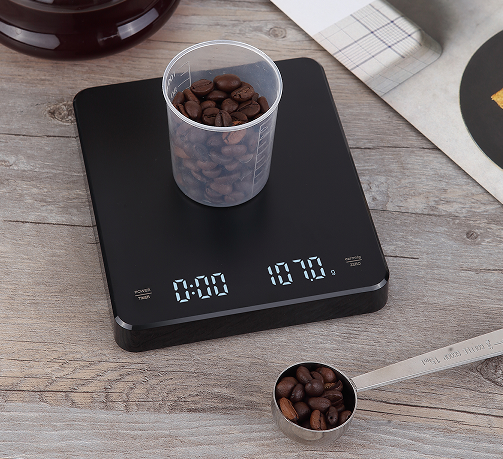
Readability vs Accuracy vs Repeatability: Key Metrics Wholesale Buyers Must Master
Most product listings advertise specs like “0.1 g / 5 kg” and lead buyers to assume the scale delivers 0.1 g precision. This is a common and costly misconception. That figure only represents readability — the smallest increment the display can show. It tells you nothing about how close the reading is to the true weight.
To audit real scale performance, you need to evaluate five core metrics. Below are industry-standard acceptable benchmarks for a typical 5 kg capacity kitchen scale, aligned with retail audit requirements:
|
Metric
|
What It Measures
|
Typical Acceptable Value (5 kg Kitchen Scale)
|
|---|---|---|
|
Readability (d)
|
The smallest incremental value the display can resolve
|
0.1 g or 1 g
|
|
Linearity
|
Consistent accuracy across low, mid, and full weighing ranges
|
Within ±1–2 d at all test points
|
|
Repeatability
|
Consistency of readings when the same load is applied repeatedly
|
Standard deviation ≤ 1 d over 10 repetitions
|
|
Creep / Drift
|
Gradual reading shift when a constant load is applied long-term
|
< 1 d shift over 10–30 minutes under load
|
|
Tare Accuracy
|
Ability to return to precise zero after using the tare function
|
Returns to 0 ± 0.5 d
|
A scale can have sharp 1 g readability and perfect repeatability, yet still deliver 8 g of error at maximum capacity due to poor linearity. This is why professional testers (including Amazon retail auditors and Germany’s Stiftung Warentest) always test scales at 10%, 50%, and 90% of full capacity — not just a single centered weight test. Your wholesale QC sampling process should follow this multi-point standard to avoid defective bulk inventory.
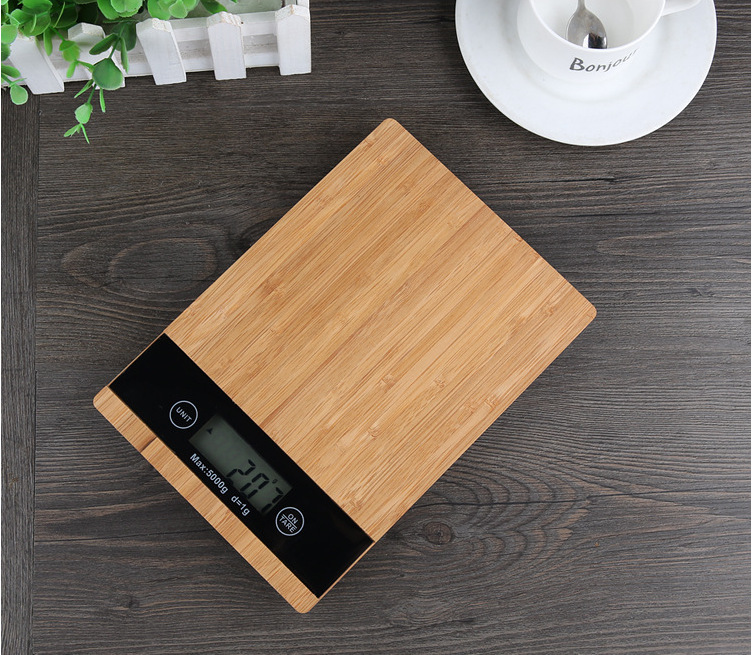
How Load Cell Failures Cause Hidden Accuracy Issues (And What to Verify With Factories)
All consumer digital scales rely on strain-gauge load cells, the core hardware that converts physical weight into measurable electrical signals. While never listed on consumer packaging or basic spec sheets, four load cell engineering details determine long-term accuracy and product reliability.
1. Load Cell Build Quality
The gap between a scale that stays accurate for 3+ years and one that drifts within six months almost always stems from load cell quality. Premium aluminum alloy cells with built-in creep and temperature compensation maintain consistent precision, while generic uncompensated sensors degrade rapidly. At wholesale volumes, high-quality load cells only add $0.30–$0.80 per unit — a minimal cost to eliminate return risks.
2. ADC Chip Resolution & Stability
A 24-bit analog-to-digital converter (ADC) chip with stable reference voltage ensures the scale interprets clean, precise microvolt signals from the load cells. Low-grade ADC hardware amplifies electrical noise, causing fluctuating readings and inconsistent accuracy even with high-quality load cells.
3. Mechanical Transmission Design
Cheap scale assemblies lack precision-machined mounting points and reliable overload stops. This creates uneven pressure and bending stress on load cells — even within the scale’s rated weight range. This is the leading cause of permanent accuracy drift in low-bulk wholesale scale lines.
4. Temperature Compensation Performance
Uncompensated load cells shift readings with temperature changes, typically 0.01–0.05% of full scale per °C. A scale calibrated in a 25 °C factory environment will deliver inaccurate readings in cold European winter warehouses or hot container shipping conditions without proper temperature compensation.
Common Field Failures to Flag in Supplier QA: Zero drift after transit (caused by packaging stress), 2–3% corner-load reading discrepancies, and creep (gradual weight reading increases under constant load). All three issues are testable in minutes and stem from cost-cutting component choices hidden in standard supplier quotations.
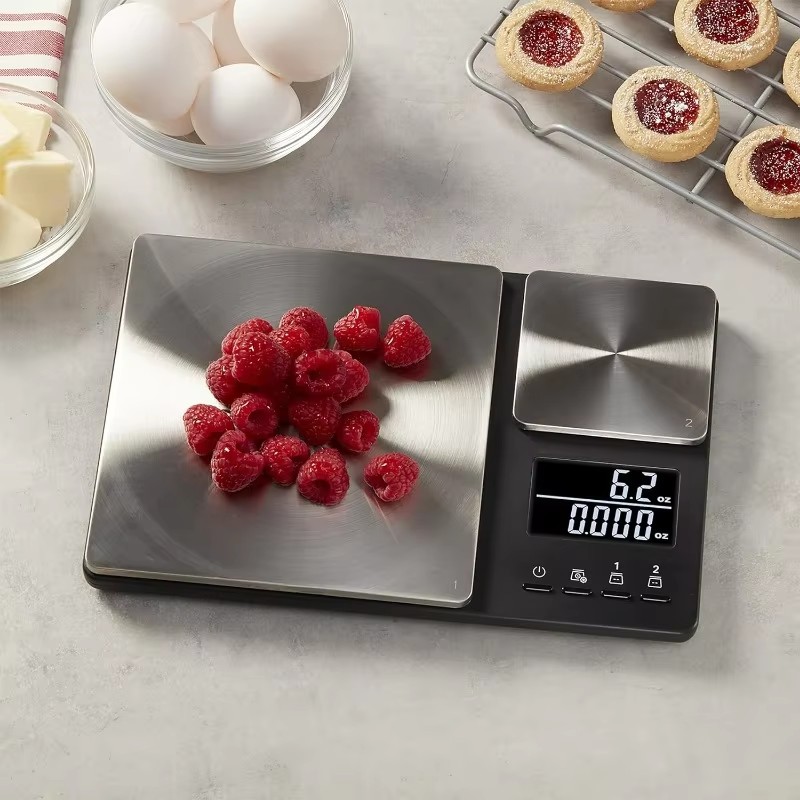
Global Certification Classes: OIML R76, NTEP Class III, and Market-Specific Rules
Accuracy is non-negotiable and legally regulated for any scale used in trade, retail selling, food portioning, or postal/luggage weight-based pricing. Household-only scales have no mandatory certification requirements in most regions, but commercial use triggers strict metrology compliance rules. The two dominant global certification frameworks are OIML R76 and NTEP Handbook 44.
|
Framework
|
Primary Regions
|
Core Retail & Commercial Requirements
|
|---|---|---|
|
OIML R76 (EU NAWI 2014/31/EU)
|
EU/EEA, Middle East, Africa, most Asian markets
|
Notified body type approval, Class III accuracy rating for retail scales, official verification marks, and matching “e” scale interval certification
|
|
NTEP Handbook 44
|
United States
|
NCWM-issued Certificate of Conformance (CoC), mandatory Class III certification for all commercially sold weighing scales
|
|
Local Metrology Approvals
|
China, India, Brazil, and other emerging markets
|
Market-specific pattern approval required for all trade-scale usage
|
A critical wholesale buying rule: product positioning defines compliance obligations. Even standard household scales require full certification if your packaging, listings, or marketing mentions “commercial use” or “precision portion control”. Many importers face full container rejections at EU and US borders for uncertified scales mispositioned for commercial applications.
For Class III certified scales, enforce standard maximum permissible error guidelines: ±1 e from minimum load to 500 e, ±1.5 e from 500 e to 2,000 e, and ±2 e for all loads above 2,000 e. Always require factories to document these tolerances on pre-shipment test reports.
5 Non-Negotiable Factory Tests for Pre-Shipment Wholesale QC
Certifications prove formal compliance, but standardized pre-shipment factory tests predict real-world retail performance. These five quick, low-cost tests eliminate defective inventory and verify consistent accuracy across bulk production runs — require them for every wholesale order, certified or not.
1. Five-Point Linearity Test
Test calibrated weights at zero (empty), 10%, 25%, 50%, and 100% of maximum capacity at the platform center. Record all readings. Reject any sample with deviation exceeding ±2 d at any test point.
2. Corner-Load Consistency Test
Place a 25% max-capacity test weight at all four platform corners and the center. Acceptable kitchen scale performance requires a maximum reading spread of 1–2 d between all test positions, preventing inconsistent weight readings for off-center loads.
3. Repeatability Test
Apply and remove a mid-range weight 10 consecutive times. Calculate reading standard deviation; only approve units with ≤1 d deviation for reliable daily retail use.
4. Creep & Drift Test
Hold a 50–100% max load for 10–30 minutes. Reject units with over 1 d of reading shift under constant load, eliminating slow accuracy degradation post-purchase.
5. Temperature & Transit Simulation Test
Compare room-temperature readings with readings after 2 hours of 10 °C low-temperature exposure. Also test units after ISTA-standard vibration and drop simulation to catch transit-induced zero drift — a defect static factory bench tests always miss.
Always require factory test reports tied to actual production unit serial numbers, not outdated prototype “golden samples”. ISO 9001-certified suppliers will readily provide traceable, calibrated test data; supplier hesitation signals inconsistent production quality.
Spec Matching: Optimize Scale Accuracy for Every Retail Segment
Over-specifying scale features erodes profit margins, while under-specifying drives returns and bad reviews. Match your accuracy and hardware specs to your target retail segment for balanced profitability and quality:
-
Standard Kitchen Scales (5 kg × 1 g): Mass-market staple. 1 g readability with ±1–2 g accuracy meets mainstream consumer expectations. Upgrade to 0.1 g readability for premium tier SKUs with high-end ADC chips and load cells.
-
Baking & Coffee Scales (3 kg × 0.1 g): Enthusiast-focused segment. Prioritize repeatability and temperature stability over maximum capacity. 2026 consumer standards also require integrated timers and USB-C fast charging.
-
Pocket & Jewelry Scales (200–500 g × 0.01 g): Highest return risk category. Ultra-fine 0.01 g resolution demands premium load cells and wind/draft shielding. Prioritize rigorous creep testing for all bulk orders.
-
Luggage Scales (50 kg × 10 g): Lenient accuracy tolerances for end users. Focus QA on hook/strap durability and overload protection — structural failures cause far worse retail feedback than minor weight deviations.
-
Commercial Portion Scales: Only ship units with full market-aligned OIML R76 or NTEP Class III certification. Build certification and premium calibrated component costs into wholesale pricing from the start.
Working with an experienced ISO 9001-certified manufacturer streamlines spec customization and quality control. Suppliers with in-house load cell aging, calibration benches, and OEM/ODM capabilities can adjust ADC firmware and mechanical design to match your exact retail requirements, cutting months of trial-and-error sampling to just 1–2 rounds.
Aofengming Electric, an ISO 9001-certified digital scale manufacturer, supports wholesale buyers with batch-specific accuracy test reports, market-targeted certification routing, and customized OEM/ODM scale solutions for household and commercial retail lines.
Do Electric Mosquito Swatters Cause Electric Shocks
2027 Chinese New Year Production Planning for Mosquito Swatter Importers
Related Article

If you’re struggling with annoying mosquitoes, flies, and other flying pests indoors and outdoors, upgrading from traditional manual tools to anElectric Mosquito Swatter is the most efficient solution. Many homeowners and renters search where to buy fly swatter online to find durable, safe, and high-performance electric models that deliver instant pest control.
Where to Buy Fly Swatter
Most importers of electric mosquito swatters obsess over the first order: samples requested, factories vetted, a pre-shipment inspection booked. Then the reorder arrives eight months later and something is off. The grid feels softer. The charge port is a slightly different shade of black. The carton thickness dropped from 350 gsm to 300 gsm. Nothing is catastrophic — but the product no longer matches what your retail customers approved, and quietly, your return rate starts climbing.
How to Keep Mosquito Swatter Quality Consistent Across Repeat Orders
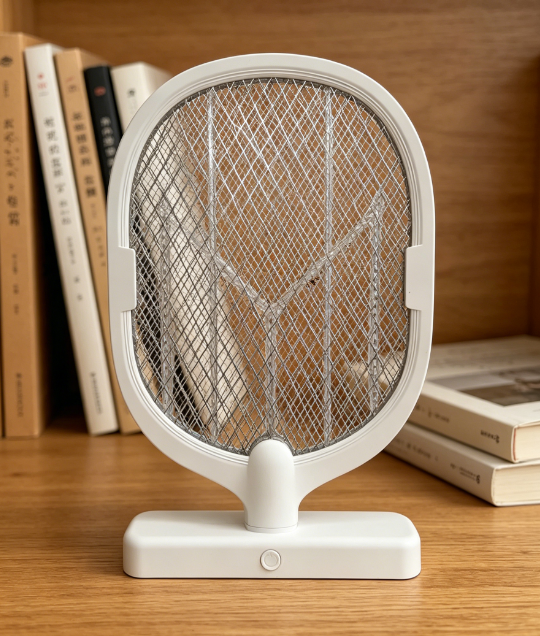
Warranty returns are the silent margin killer in the mosquito control category. A distributor who buys a swatter at $1.80 FOB and retails it at $9.90 can absorb a 1% return rate without noticing — but at 5%, the combined cost of replacement units, reverse logistics, and refund processing erases most of the line's profit.
Common mosquito swatter killer lamp failure modes wholesale spec guide

Digital bathroom scales rank as the second-highest-volume consumer weighing product category, only behind kitchen scales, with distinct market and product characteristics that set them apart from other scale types in importers’ product portfolios.
Digital bathroom body fat-bia-scale wholesale buyers guide