
Do Electric Mosquito Swatters Work on Flies
2026-05-11
Do Electric Mosquito Swatters Work on Flies? Truth, Tips & Safety Notes
As summer arrives, besides annoying mosquitoes, the buzzing flies are even more of a headache—they crawl on food and land on desktops, being not only irritating but also carrying bacteria. Many households have electric mosquito swatters, which work instantly against mosquitoes. So people can’t help but ask: Can electric mosquito swatters kill flies? Today, we will conduct actual tests and disassemble the problem to tell you the answer, along with a set of personally tested and effective fly-killing tips to help you easily get rid of fly infestations in summer.
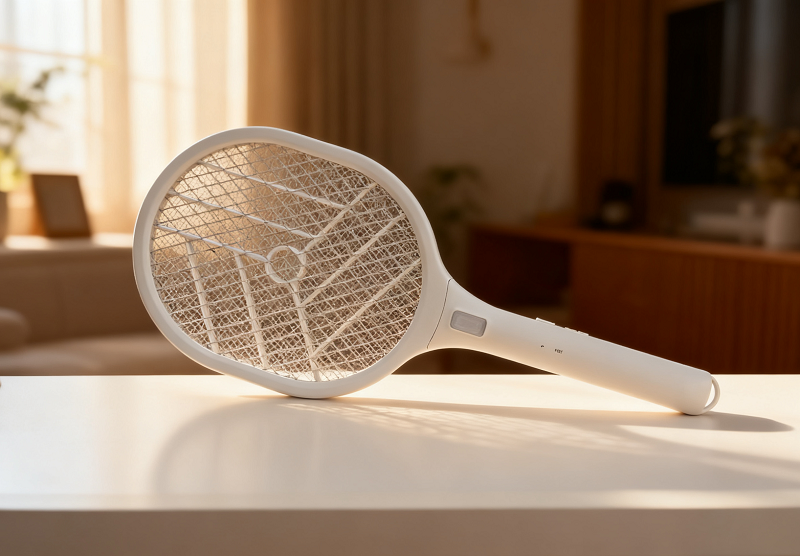
I. Core Answer: Electric Mosquito Swatters Can Kill Flies, but the Effect Depends on Skills
First, let’s give you a clear conclusion: Electric mosquito swatters can kill flies, but their effect is far less effortless than killing mosquitoes. Many people fail repeatedly when using electric mosquito swatters to kill flies, not because the swatters are useless, but because they haven’t figured out the habits of flies and the working logic of electric mosquito swatters.
In principle, the core of an electric mosquito swatter is to generate a high voltage of about 1850V-2500V between the double-layer power grid through a boost circuit, forming a strong electrostatic field. When pests such as mosquitoes and flies approach the power grid, they will be sucked into the grid, and the short-circuit current will instantly electrocute them. As flying insects, flies are naturally within its scope of action. But why is killing flies always more difficult than killing mosquitoes in actual use? The key lies in the huge differences in habits between mosquitoes and flies.
II. Why Is Killing Flies with an Electric Mosquito Swatter Harder Than Killing Mosquitoes?
Many people wonder why electric mosquito swatters can kill mosquitoes with one hit, but often "miss" when dealing with flies. In fact, this is closely related to the physiological structure and behavioral habits of the two, mainly for 3 core reasons:
First, flies are much more sensitive than mosquitoes. Experimental data shows that the conduction speed of action potentials in the ganglia of houseflies is 2.3 times that of mosquitoes. When touching the electric field of the mosquito swatter, the response delay of the antenna sensory neurons of flies is only 1.2ms, 61% faster than that of mosquitoes, which can instantly trigger an escape reflex and easily avoid the power grid. In contrast, mosquitoes react more slowly and are easily adsorbed by the electrostatic field of the power grid, making it difficult for them to escape.
Second, the body structure of flies is more "electric-resistant". The surface of flies is covered with a 0.1-0.3μm thick chitin layer, forming a natural insulating layer with extremely high surface resistivity, which makes it difficult for current to penetrate their bodies to reach the lethal threshold. Moreover, the body length and weight of flies are larger than those of mosquitoes, and the voltage design of electric mosquito swatters is more suitable for the lethal needs of mosquitoes. When dealing with flies, it often takes a longer time of electric shock to take effect.
Third, the flight trajectory of flies is more flexible. Mosquitoes fly slowly, mostly in straight lines, and are easy to be locked by electric mosquito swatters; while flies fly fast with changeable trajectories and are good at sudden turns, making it much more difficult to accurately suck them into the power grid.
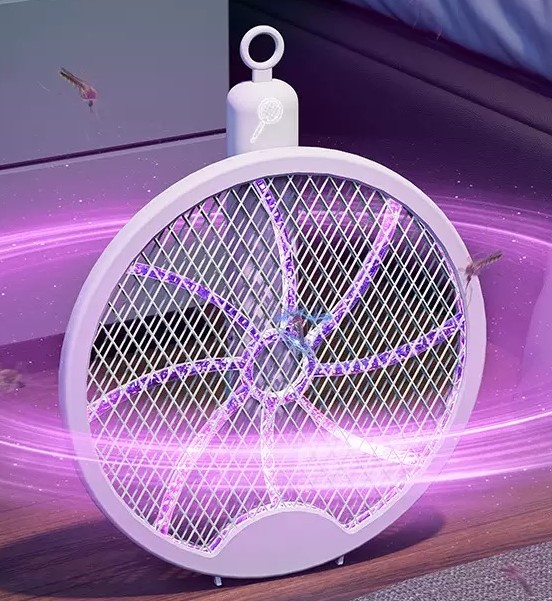
III. Practical Tips for Killing Flies with Electric Mosquito Swatters, Increasing Success Rate by 80%
Although killing flies with an electric mosquito swatter is difficult, as long as you master the correct methods, you can greatly improve the success rate. It has been personally tested and effective, and you can copy it directly:
Tip 1: Choose the right time and keep an eye on "stationary" flies. Flies don’t fly all the time. Every once in a while, they will rest on walls, desktops, curtains and other places. This is the best time to kill flies—at this time, flies have the lowest vigilance and won’t fly away suddenly, making it easier to operate.
Tip 2: Master the correct operation distance and posture. When dealing with flies resting on a flat surface, hold the electric mosquito swatter, face the sparse mesh towards the fly, gently place it on the same plane 20-30 centimeters away from the fly, press the power switch first, wait for the red light to turn on, then wave it quickly towards the fly to suck it into the power grid, and continue the electric shock for 1-2 seconds to ensure the fly is electrocuted. When dealing with flies on the wall, stick to the wall and wave quickly from 20-30 centimeters beside or below the fly to avoid startling it head-on.
Tip 3: Keep the environment quiet to avoid startling. Flies have very sensitive hearing and touch. When operating, try to be gentle, don’t speak loudly or shake quickly, otherwise it is easy to make the flies fly away in advance. In addition, try to close the doors and windows to prevent flies from escaping to other rooms.
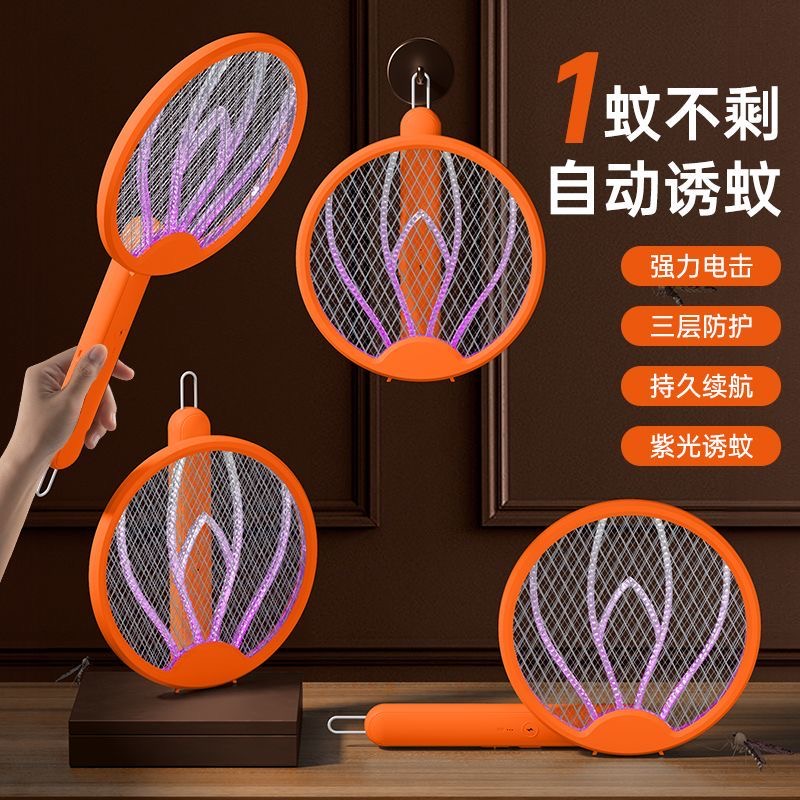
Tip 4: Choose a suitable electric mosquito swatter. Prioritize electric mosquito swatters with a high voltage of ≥2000V and a three-layer power grid design. The three-layer power grid can not only improve adsorption but also reduce the probability of flies escaping. Some upgraded electric mosquito swatters have a purple light mosquito trap function, which can also help attract flies and improve the fly-killing efficiency.
IV. Notes for Killing Flies with Electric Mosquito Swatters: Safe and Efficient
While killing flies, safety must be the top priority. In addition, there are a few details that can make fly killing more efficient. These notes must be kept in mind:
1. Do not use with insecticides or floral water at the same time: Electric mosquito swatters produce electric sparks when working, and insecticides and floral water contain flammable and explosive components, which may cause explosions when they meet, which is very dangerous.
2. Avoid touching the power grid: The voltage of the electric mosquito swatter is as high as several thousand volts when working. Although the current is small and will not cause serious harm, it will cause a tingling sensation when touched. Especially for children, the elderly and heart patients, special attention should be paid, and children should not use it alone.
3. Clean in time to avoid short circuit: After killing flies, there may be fly corpses left on the mesh. Do not rinse with water. You can shake the mesh to let the corpses fall off, or clean them with a dry cloth or small brush to prevent water from entering the circuit and causing a short circuit.
4. Pay attention to environmental humidity: When the climate is humid, the electric mosquito swatter may absorb moisture, leading to reduced high voltage, decreased fly-killing effect, and increased risk of short circuit. At this time, you can dry the electric mosquito swatter in the sun or with a hair dryer before using it.
V. Summary: Killing Flies with Electric Mosquito Swatters Is Feasible but Requires Correct Methods
To summarize finally: Electric mosquito swatters can indeed kill flies. Their high-voltage power grid is enough to kill flies, but because flies are sensitive and have a special body structure, certain skills are needed to improve the success rate. For daily household fly infestations, electric mosquito swatters are a good choice—no chemical pollution, safe and hygienic. As long as you keep an eye on stationary flies and master the correct operation methods, you can easily eliminate them.
If there are too many flies at home and the electric mosquito swatter is not enough, you can also match it with fly sticky traps and fly traps to work together to completely solve the summer fly infestation and spend the summer comfortably~
Do Mosquito Lamps Consume a Lot of Electricity
How to Choose a Kitchen Scale
Related Article

If you’re struggling with annoying mosquitoes, flies, and other flying pests indoors and outdoors, upgrading from traditional manual tools to anElectric Mosquito Swatter is the most efficient solution. Many homeowners and renters search where to buy fly swatter online to find durable, safe, and high-performance electric models that deliver instant pest control.
Where to Buy Fly Swatter
Most importers of electric mosquito swatters obsess over the first order: samples requested, factories vetted, a pre-shipment inspection booked. Then the reorder arrives eight months later and something is off. The grid feels softer. The charge port is a slightly different shade of black. The carton thickness dropped from 350 gsm to 300 gsm. Nothing is catastrophic — but the product no longer matches what your retail customers approved, and quietly, your return rate starts climbing.
How to Keep Mosquito Swatter Quality Consistent Across Repeat Orders
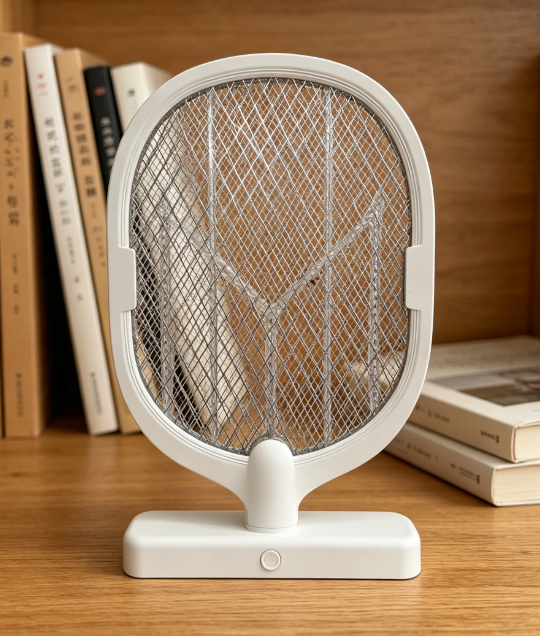
Warranty returns are the silent margin killer in the mosquito control category. A distributor who buys a swatter at $1.80 FOB and retails it at $9.90 can absorb a 1% return rate without noticing — but at 5%, the combined cost of replacement units, reverse logistics, and refund processing erases most of the line's profit.
Common mosquito swatter killer lamp failure modes wholesale spec guide

Digital bathroom scales rank as the second-highest-volume consumer weighing product category, only behind kitchen scales, with distinct market and product characteristics that set them apart from other scale types in importers’ product portfolios.
Digital bathroom body fat-bia-scale wholesale buyers guide