
Do Mosquito Lamps Consume a Lot of Electricity
2026-05-11
Do Mosquito Lamps Consume a Lot of Electricity? Understand the Truth About Mosquito Lamp Energy Consumption and Say Goodbye to Power Anxiety
As summer arrives, mosquito bites become a troublesome annoyance for everyone. Mosquito lamps, as environmentally friendly and hassle-free mosquito-killing tools, have become a must-have in almost every household. However, many questions follow, the most common one being: Do mosquito lamps consume a lot of electricity? After all, small appliances that are left on all year round, even if they consume little electricity every day, may become "invisible electricity bill assassins" over time. Today, we will detailedly break down the energy consumption secrets of mosquito lamps, help you calculate the electricity bill clearly, and use mosquito lamps with peace of mind.
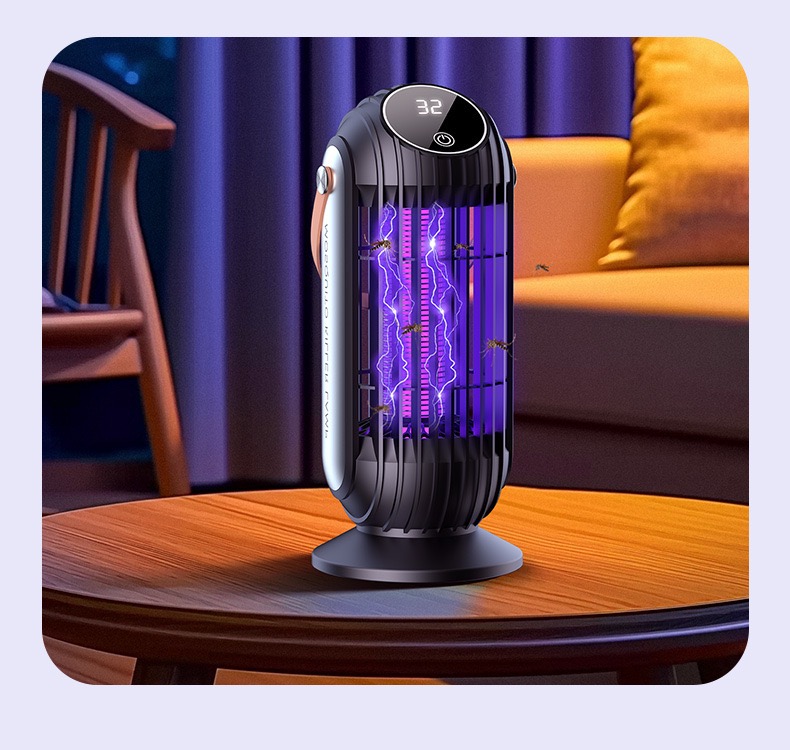
I. Core Conclusion: Mosquito Lamps Are Actually Super Energy-Saving, Far Lower Than Daily Home Appliances
First, let's put your mind at ease: ordinary household mosquito lamps do not consume much electricity at all, and can even be said to be "kings of low power consumption". Many people think that leaving mosquito lamps on all year round will consume a lot of electricity, but in fact, they have a misunderstanding about their power. The core function of a mosquito lamp is to attract mosquitoes through ultraviolet light, which does not require high-power drive. Its power is generally very low, far less than that of air conditioners and refrigerators, and even lower than that of mobile phone chargers.
According to industry data, the rated power of mainstream mosquito lamps on the market ranges from 2 to 25 watts, among which most household models are 2 to 8 watts, suitable for rooms of 10 to 20 square meters, which can fully meet the mosquito-killing needs of bedrooms and living rooms. The power of the mobile phone chargers we use daily is usually 10 to 20 watts. By comparison, we can find that the power consumption of mosquito lamps is actually very low. Even if they are left on for 24 hours, the electricity bill is almost negligible.
II. Specific Energy Consumption Calculation: Less Than 20 Cents a Day, and Not Much for a Whole Year
Talking is cheap, let's use specific data to calculate the power consumption and electricity bill of mosquito lamps, and you will see at a glance. The formula for calculating power consumption is very simple: Power Consumption (kWh) = Power (kW) × Usage Time (hours), and the electricity bill is the power consumption multiplied by the local electricity price (usually calculated at 0.6 yuan per kWh).
Here are some common examples covering different power household mosquito lamps, you can find your own situation:
1. Small household mosquito lamps (2-5W): This is the most common style, suitable for bedrooms. Taking 5W as an example, converting to kilowatts is 0.005 kW. If it is turned on for 24 hours a day, the power consumption is 0.005 × 24 = 0.12 kWh, and the electricity bill is only 0.12 × 0.6 = 0.072 yuan, which is less than 10 cents a day; even if it is left on for 365 days a year, the annual power consumption is only 43.8 kWh, and the electricity bill is about 26.28 yuan.
2. Medium-sized mosquito lamps (6-8W): Suitable for larger spaces such as living rooms and small studies. Taking 8W as an example, the daily power consumption when turned on for 24 hours is 0.008 × 24 = 0.192 kWh, and the electricity bill is about 0.115 yuan, which is a little over 10 cents a day; if left on all year round, the annual power consumption is about 69.12 kWh, and the electricity bill is less than 42 yuan.
3. Large mosquito lamps (10-25W): These are mostly used in large-area places such as restaurants and offices, and are rarely used at home. Taking 15W as an example, the daily power consumption when turned on for 24 hours is 0.36 kWh, and the electricity bill is about 0.216 yuan. Even if left on all year round, the electricity bill is only about 80 yuan.
A more intuitive comparison: a 1.5-horsepower air conditioner consumes about 1 kWh of electricity when turned on for 1 hour, which is equivalent to the power consumption of a 5W mosquito lamp turned on continuously for 200 hours (nearly 9 days). Therefore, for household mosquito lamps, "high power consumption" is basically a false proposition. Even if they are left on all year round, they will not bring much burden to the electricity bill.
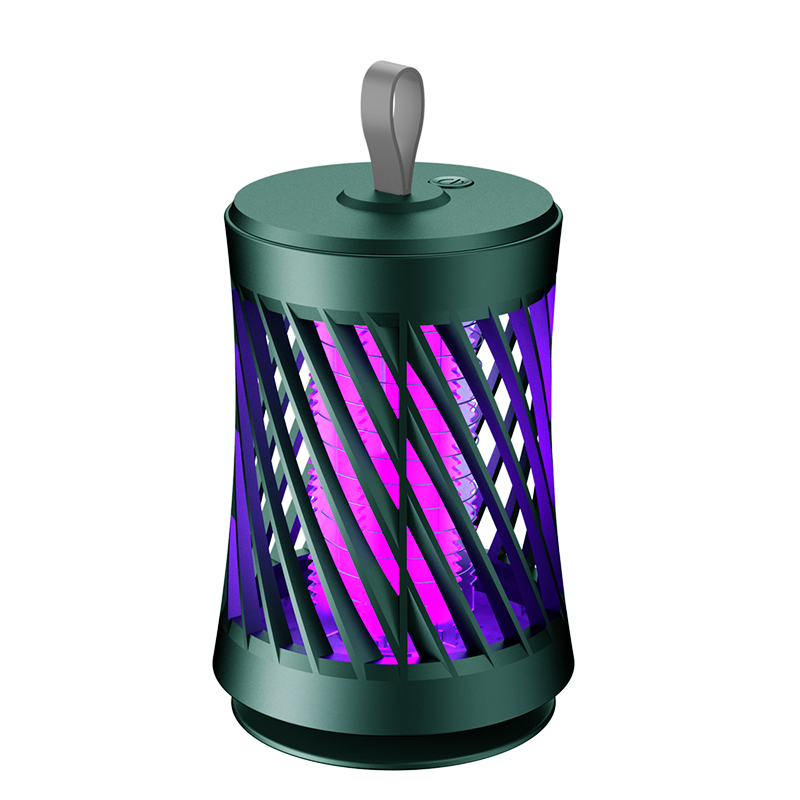
III. 3 Key Factors Affecting Mosquito Lamp Power Consumption, Learn to Save More Electricity
Although mosquito lamps themselves have low power consumption, there will be slight differences in power consumption between different usage scenarios and product types. Mastering these 3 key factors can not only ensure the mosquito-killing effect, but also further save electricity bills.
1. Power and Type of Mosquito Lamp
The power of a mosquito lamp directly determines its power consumption. The higher the power, the more electricity it consumes. For home use, it is recommended to choose models with 2-8W, which is sufficient for daily needs; if the space is small (such as a bedroom less than 10 square meters), a small mosquito lamp of 2-3W is enough.
In addition, different types of mosquito lamps have different power consumption: electronic mosquito lamps (high-voltage grid type) have slightly higher power consumption, usually 5-8W; sticky mosquito lamps have lower power consumption, mostly 2-5W; negative pressure air flow mosquito lamps have a fan, so their power consumption is slightly higher, about 8-12W, but overall they are still in the low power consumption range.
2. Usage Time and Scenario
The power consumption of a mosquito lamp is proportional to the usage time. In fact, there is no need to leave it on for 24 hours. Mosquitoes are mainly active in the evening and at night, especially 1-3 hours after dark. Turning on the mosquito lamp during this period has the best mosquito-killing effect; mosquitoes are less active during the day, so it can be turned off completely. This not only saves electricity bills, but also extends the service life of the mosquito lamp.
In addition, the use environment will also affect energy consumption: if placed in direct sunlight or high-temperature areas, the heat dissipation pressure of the mosquito lamp will increase, which may produce a slight additional power consumption; placing it in a cool and ventilated place will make the energy consumption more stable.
3. Product Energy Efficiency and Intelligent Functions
Like home appliances, mosquito lamps also have energy efficiency levels. It is recommended to choose products with level 1 energy efficiency, which have higher electricity utilization rate and are more energy-saving under the same power. Now many intelligent mosquito lamps are also equipped with light sensing and human body sensing functions, which can automatically sense the ambient light, turn on automatically at dusk and turn off automatically at dawn; or automatically reduce the power when detecting human approach, which is both safe and energy-saving, more convenient than manual switching, and can further reduce invalid energy consumption.
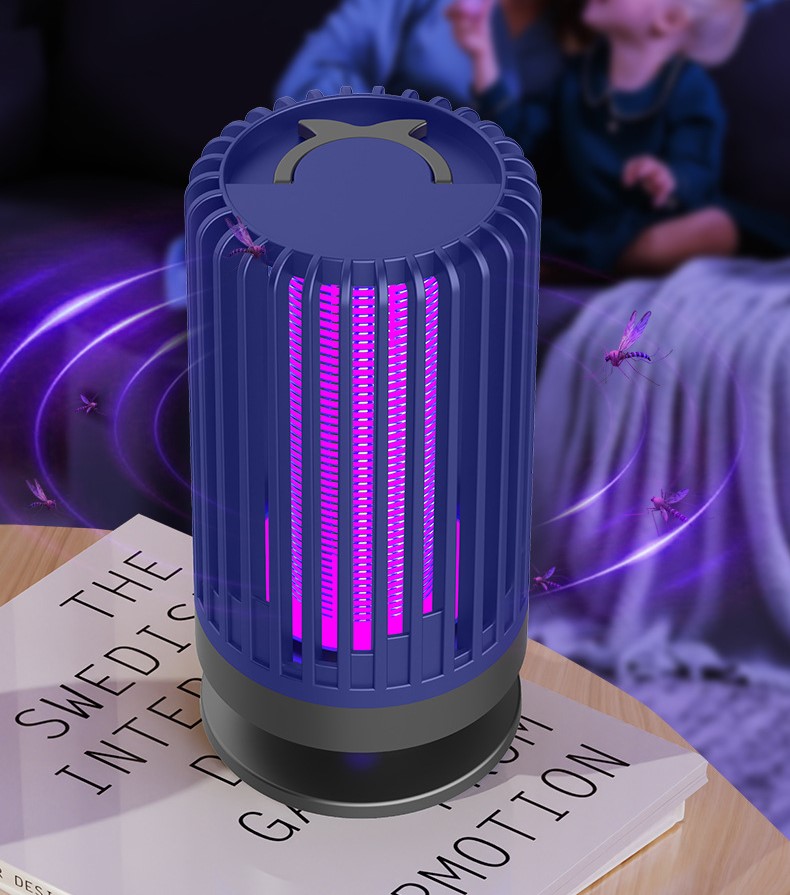
IV. Clarification of Common Misunderstandings: These Statements Are All Wrong!
Misunderstanding 1: "Leaving the mosquito lamp on all night must consume a lot of electricity" —— As calculated earlier, the electricity bill of a 5W mosquito lamp left on all night (24 hours) is less than 10 cents. Even if it is left on for a month, the electricity bill is only about 3 yuan, so there is no need to worry at all.
Misunderstanding 2: "The higher the power, the better the mosquito-killing effect" —— The mosquito-killing effect mainly depends on the wavelength and mosquito-attracting method of the mosquito-attracting lamp, and has no direct relationship with the power. In home scenarios, a 2-8W mosquito lamp, as long as it is placed in a suitable position (such as an open place 1 meter high), has a sufficient mosquito-killing effect, and there is no need to pursue high power.
Misunderstanding 3: "Intelligent mosquito lamps consume more electricity than ordinary mosquito lamps" —— On the contrary, the automatic on/off and power adjustment functions of intelligent mosquito lamps can reduce invalid working time, making them more energy-saving than ordinary mosquito lamps, and can save a lot of electricity bills in long-term use.
V. Summary: Use It with Confidence! Mosquito Lamps Are an "Energy-Saving and Hassle-Free" Mosquito-Killing Choice
In general, household mosquito lamps are typical low-power small appliances. Their power consumption is far lower than that of air conditioners, TVs and mobile phone chargers we use daily. Even if they are left on all year round, the electricity bill is almost negligible. As long as you choose a mosquito lamp with appropriate power according to the size of your space, and cooperate with scientific use methods, you can enjoy a mosquito-free environment while achieving extreme energy saving.
In summer, instead of worrying about whether mosquito lamps consume a lot of electricity, it is better to enjoy the comfort they bring —— after all, compared with the trouble of mosquito bites, a few cents of electricity bill is really insignificant. Finally, we remind you to choose qualified products from regular manufacturers when purchasing, which not only ensures the mosquito-killing effect, but also avoids additional energy consumption and potential safety hazards caused by inferior products.
What Is the Best Method for Mosquito Control
Do Electric Mosquito Swatters Work on Flies
Related Article

If you’re struggling with annoying mosquitoes, flies, and other flying pests indoors and outdoors, upgrading from traditional manual tools to anElectric Mosquito Swatter is the most efficient solution. Many homeowners and renters search where to buy fly swatter online to find durable, safe, and high-performance electric models that deliver instant pest control.
Where to Buy Fly Swatter
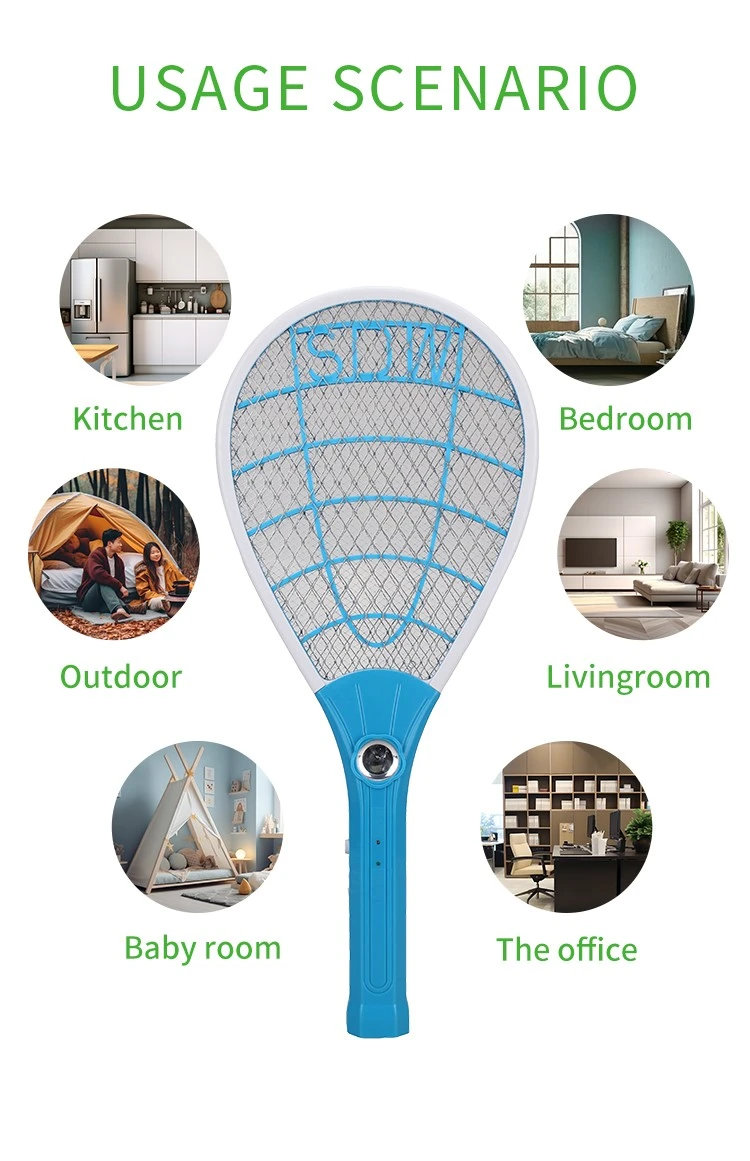
Most importers of electric mosquito swatters obsess over the first order: samples requested, factories vetted, a pre-shipment inspection booked. Then the reorder arrives eight months later and something is off. The grid feels softer. The charge port is a slightly different shade of black. The carton thickness dropped from 350 gsm to 300 gsm. Nothing is catastrophic — but the product no longer matches what your retail customers approved, and quietly, your return rate starts climbing.
How to Keep Mosquito Swatter Quality Consistent Across Repeat Orders
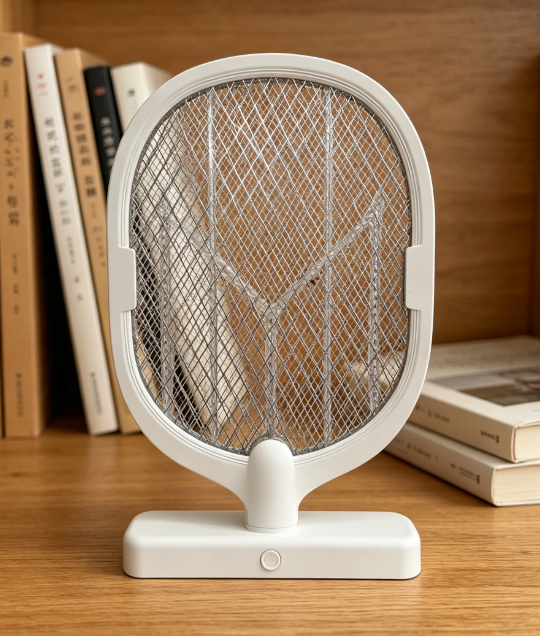
Warranty returns are the silent margin killer in the mosquito control category. A distributor who buys a swatter at $1.80 FOB and retails it at $9.90 can absorb a 1% return rate without noticing — but at 5%, the combined cost of replacement units, reverse logistics, and refund processing erases most of the line's profit.
Common mosquito swatter killer lamp failure modes wholesale spec guide

Digital bathroom scales rank as the second-highest-volume consumer weighing product category, only behind kitchen scales, with distinct market and product characteristics that set them apart from other scale types in importers’ product portfolios.
Digital bathroom body fat-bia-scale wholesale buyers guide