
Do Solar Mosquito Killers Stop Working on Rainy Days
2026-06-30
Do Solar Mosquito Killers Stop Working on Rainy Days?
Summer brings frequent rainfall and rampant outdoor mosquitoes. Many households install solar mosquito killers in yards, balconies and courtyards. However, most people share the same doubt: without sunlight on rainy days, do solar mosquito killers stop working completely? Do we have to rely solely on mosquito coils and repellent liquids in rainy weather?
This is actually a common misconception. Solar mosquito killers do not work only when the sun is shining. Their usability and performance on rainy days mainly depend on the equipment’s energy storage design, waterproof rating and weather conditions. This article will fully clarify the truth about solar mosquito killers in rainy weather, helping you avoid usage misunderstandings and maximize their mosquito-killing effects.
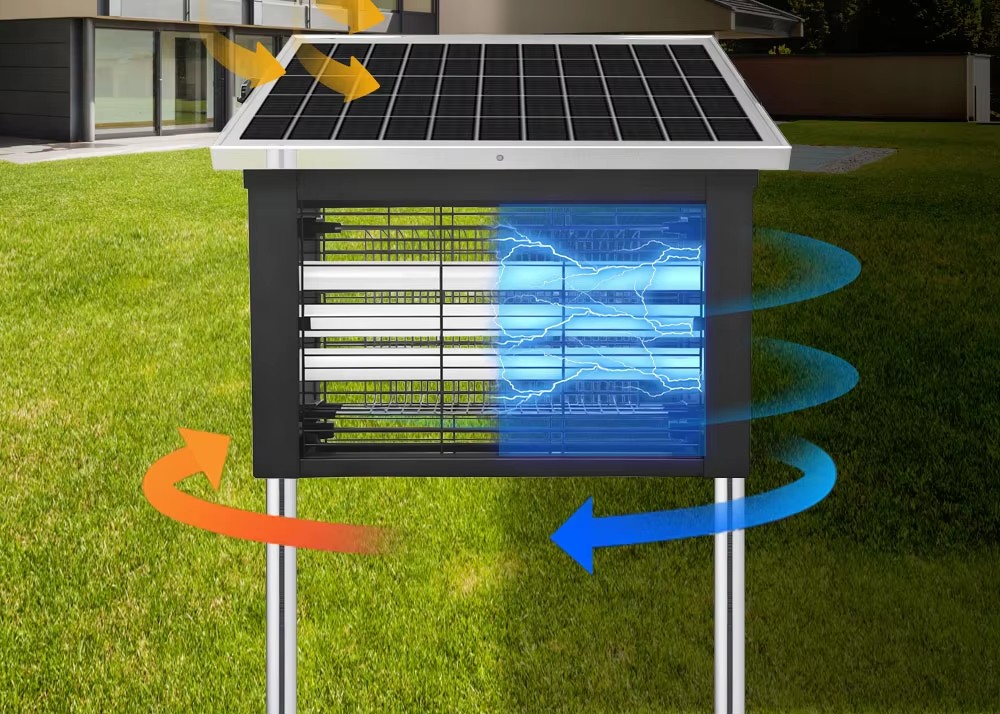
1. Core Conclusion: Solar Mosquito Killers Still Work on Ordinary Rainy Days
Here is a clear answer: qualified solar mosquito killers can operate normally with stable performance on light rainy days, overcast days and drizzly days instead of failing completely in rainy weather.
The biggest misunderstanding is assuming solar mosquito killers work only under real-time sunlight. Standard outdoor solar mosquito killers adopt a core configuration of "solar panel + large-capacity rechargeable lithium battery", following the working mode of charging in the daytime and discharging at night. The solar panel converts light energy into electric energy and stores it in the built-in battery on sunny days, and the device will automatically start mosquito killing and lighting functions at night.
In short, the night operation is powered by electricity stored during the day, not real-time night sunlight. High-quality solar mosquito killers are equipped with lithium batteries of 4500mAh or above. Once fully charged, they can last for 1.5 to 3 consecutive rainy days. Even without sunlight for 2 to 3 days, they can still light up and trap and kill mosquitoes normally at night.
Meanwhile, standard outdoor mosquito killers come with official IPX waterproof ratings and a fully sealed body design. They can resist ordinary rain and humid environments without internal water seepage, short circuits, faults or electric leakage, perfectly adapting to rainy summer outdoor scenarios.
2. Why Do People Think They “Don’t Work” on Rainy Days?
If they can work in rainy weather, why do many users report weakened or even ineffective performance? It is not device failure, but the following key factors.
2.1 Insufficient Power Storage Fails to Support Overcast and Rainy Days
Low-cost inferior solar mosquito killers are fitted with tiny batteries and low-efficiency solar panels to cut costs. They barely work on sunny days but have extremely poor energy storage capacity. On overcast or rainy days, their power runs out quickly, resulting in a much shorter lighting time or shutdown within minutes, leading to no mosquito-killing effect.
In contrast, premium models adopt high-efficiency monocrystalline or polycrystalline silicon solar panels paired with 5000mAh+ lithium batteries. They feature higher energy storage efficiency and stable operation with almost undiminished mosquito-killing performance for 3 consecutive rainy days.
2.2 Performance Reduction in Heavy Rain and Stormy Weather
Light rain does not affect operation, but extreme weather such as torrential rain and thunderstorms in summer will significantly reduce the device’s effectiveness. On the one hand, mosquitoes are barely active in extreme heavy rain and mostly hide in sheltered areas, resulting in far fewer outdoor mosquitoes. On the other hand, strong wind and rain may cover the solar panel and affect sensor response. Some models will automatically reduce power consumption and working hours to protect the circuit.
2.3 Improper Installation Aggravates Battery Shortages
Many users install mosquito killers under tree shades, deep eaves or shaded wall areas where sunlight is inherently insufficient. These locations lead to low daily power storage. On rainy days with even less sunlight, the battery cannot be recharged and runs out quickly, making people mistakenly believe rainy weather causes device failure.
3. Actual Performance of Solar Mosquito Killers in Different Rainy Conditions
The following is a detailed classification of device performance to cover all common rainy scenarios.
3.1 Overcast Days, Drizzle and Light Rain: Normal and Stable Operation
There is sufficient ambient light and no severe wind or rain in such weather. The device’s waterproof performance remains intact, and the stored battery power supports all-night operation with normal mosquito trapping and killing functions. Post-rain humid environments accelerate mosquito breeding, so continuous operation of the mosquito killer can effectively inhibit mosquito reproduction.
3.2 Moderate Rain and Continuous Overcast Days: Normal Operation with Slightly Reduced Battery Life
In prolonged rainy weather, the solar panel cannot recharge, and the device runs entirely on stored battery power. High-quality models can still light up all night, while some low-power models will have a slightly shortened working time and marginally reduced mosquito-killing effect, which is still sufficient for basic mosquito repellent and elimination needs.
3.3 Heavy Rain, Thunderstorms and Typhoons: Temporary Shutdown Recommended
It is not recommended to use the device during extreme heavy rain, strong wind and waterlogging. Although the device is waterproof, long-term direct rain impact and water immersion may damage the body’s sealed structure and cause circuit short circuits. In addition, few mosquitoes are active in such weather, making device operation unnecessary. Temporary shutdown effectively extends the service life of the equipment.
4. Practical Tips to Improve Performance and Extend Service Life on Rainy Days
Follow these simple and effective tips to ensure stable performance and undiminished mosquito-killing effect of solar mosquito killers in rainy summers.
4.1 Choose a Proper Installation Position with Sufficient Light and Moderate Rain Shelter
Priority should be given to positions with sufficient sunlight and slight shelter, such as under eaves, outer balconies and courtyard awnings. These positions ensure adequate daylight for power storage while avoiding direct heavy rain impact, protecting the device without compromising working efficiency.
4.2 Clean Solar Panels Regularly to Ensure Power Storage Efficiency
After rain, solar panels are easily covered with rain stains, dust and fallen leaves, which seriously affect subsequent power storage. Simply wipe the panel dry with a cloth after rainfall to maintain cleanliness, greatly improving power storage and battery life on overcast and rainy days.
4.3 Auxiliary Charging for Prolonged Rainy Seasons
During plum rain seasons with more than a week of continuous rain, some devices may run out of power. Most new solar mosquito killers support mains auxiliary charging. Short-term plug-in charging ensures continuous mosquito killing without shutdown failures.
4.4 Shut Down or Store the Device in Extreme Weather
Turn off the device in advance during typhoons and torrential rains, and store it temporarily in severe waterlogging to prevent water ingress and circuit damage, reduce failure rates and prolong service life.
5. Purchase Guide: How to Choose Rainproof Solar Mosquito Killers
The so-called "rainy day failure" is mostly caused by wrong product selection. Focus on two core parameters to buy devices with stable rainy-day performance.
First, check battery capacity and rainy-day endurance: choose models with 4500mAh+ lithium batteries and an official rainy-day endurance of more than 1.5 days to avoid low-capacity defective products and cope with continuous rainy weather easily.
Second, check the waterproof rating: outdoor models must reach IPX4 or higher waterproof grade with a tightly sealed body to prevent water ingress and failures in daily rainy and humid environments.
Summary
In conclusion, solar mosquito killers are not exclusive to sunny days. They work perfectly well on ordinary rainy days. The real causes of reduced rainy-day performance are inferior energy storage configurations, extreme weather and improper installation and usage habits.
With a high-quality regular device and standardized daily maintenance and installation, you can enjoy all-night physical mosquito elimination with zero electricity bills and no pollution throughout the rainy summer, keeping your yards and balconies free of mosquitoes.
How to determine whether the double protective net of an electric mosquito swatter is qualified
The Difference Between Indoor Mosquito Prevention and Outdoor Mosquito Repellent
Related Article

If you’re struggling with annoying mosquitoes, flies, and other flying pests indoors and outdoors, upgrading from traditional manual tools to anElectric Mosquito Swatter is the most efficient solution. Many homeowners and renters search where to buy fly swatter online to find durable, safe, and high-performance electric models that deliver instant pest control.
Where to Buy Fly Swatter
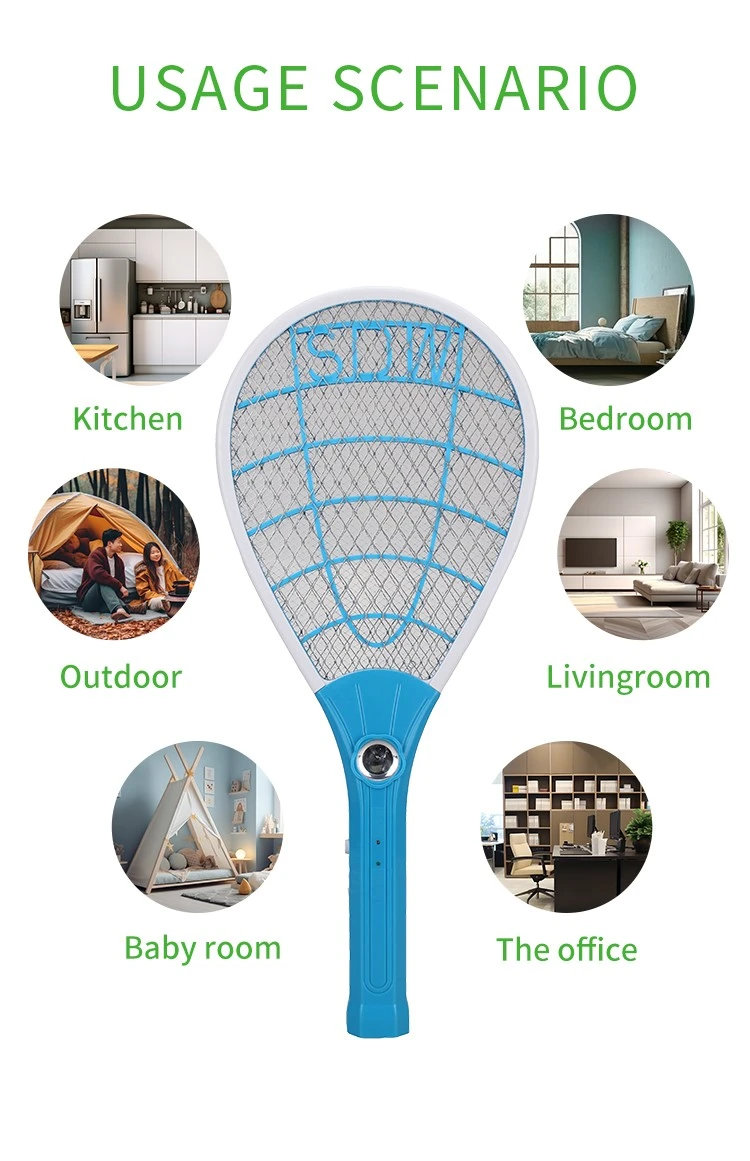
Most importers of electric mosquito swatters obsess over the first order: samples requested, factories vetted, a pre-shipment inspection booked. Then the reorder arrives eight months later and something is off. The grid feels softer. The charge port is a slightly different shade of black. The carton thickness dropped from 350 gsm to 300 gsm. Nothing is catastrophic — but the product no longer matches what your retail customers approved, and quietly, your return rate starts climbing.
How to Keep Mosquito Swatter Quality Consistent Across Repeat Orders
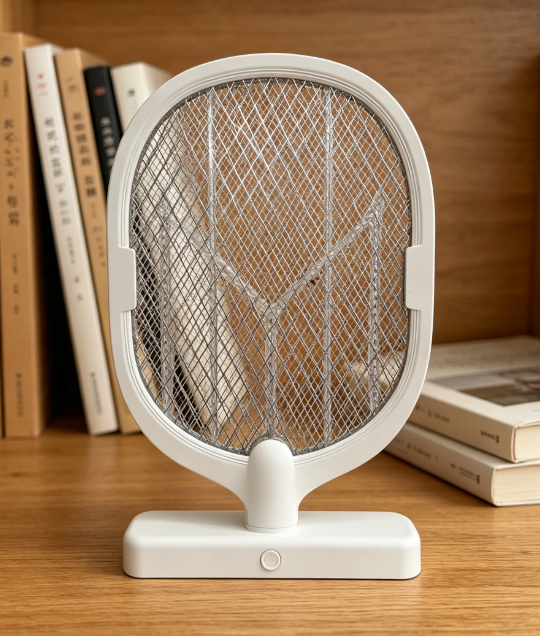
Warranty returns are the silent margin killer in the mosquito control category. A distributor who buys a swatter at $1.80 FOB and retails it at $9.90 can absorb a 1% return rate without noticing — but at 5%, the combined cost of replacement units, reverse logistics, and refund processing erases most of the line's profit.
Common mosquito swatter killer lamp failure modes wholesale spec guide

Digital bathroom scales rank as the second-highest-volume consumer weighing product category, only behind kitchen scales, with distinct market and product characteristics that set them apart from other scale types in importers’ product portfolios.
Digital bathroom body fat-bia-scale wholesale buyers guide