
Does Europe Need Mosquito Control
2026-09-24
Does Europe Need Mosquito Control? Climate Change Has Made Mosquitoes a Serious Threat
Most people assume that mosquitoes are only a nuisance in tropical and subtropical regions, such as humid Southeast Asia and Africa. With its mild, distinct four‑season climate, Europe has long been seen as a region free from severe mosquito problems. For decades, Europeans have only regarded mosquito bites as a minor summer annoyance, nothing more than itchy red bumps, and never considered mosquitoes a major public health hazard.
However, recent warnings and epidemiological data from the European Centre for Disease Prevention and Control (ECDC) have completely overturned this stereotype. Driven by global warming and frequent cross‑border travel, mosquitoes are carrying out asilent cross‑continental invasion across Europe, turning sporadic mosquito‑borne illnesses into a regular public health threat. Today, the answer to “Does Europe need mosquito control?” is clear and definitive: Yes, and Europe must upgrade its mosquito prevention and control system without delay. It has become an essential lesson for European public health.

1. Breaking the Myth: Europe Is No Longer a Mosquito-Free Haven
In the past, mosquito-related harm remained low in Europe mainly because low temperatures limited mosquito survival and reproduction. Native mosquito species were mostly harmless, and few high-risk invasive species existed. Over the past decade, however, this situation has been completely transformed, with invasive mosquitoes spreading far faster than the public expected.
The most threatening species, the Asian tiger mosquito (Aedes albopictus), has now established stable populations in 369 regions across 16 European countries, doubling its geographical range in the past 12 years. Invasive mosquito species including Japanese bush mosquitoes and Korean bush mosquitoes have also settled across Europe. Together with the widely distributed native common house mosquito (Culex pipiens), they have formed a multi-layered mosquito threat system.
Invasive mosquitoes have been actively detected across Southern Europe (Italy, France, Spain), Central Europe (Germany, Austria), and even traditionally cold regions such as the United Kingdom and southern Scandinavia. The ECDC has explicitly stated that mosquito-borne diseases have become the new normal in Europe. Mosquito proliferation is no longer a local issue but a systematic threat across the entire continent.
2. Why Mosquito Control Is Essential: More Than Annoyance — A Lethal Disease Vector
Many people underestimate Europe’s mosquito problem because they only experience minor skin irritation and disrupted sleep. Yet they overlook thelife-threatening infectious diseases mosquitoes carry — the core reason why systematic mosquito control is indispensable. Different mosquito species transmit dangerous pathogens, placing unprecedented pressure on European public health systems.
The Asian tiger mosquito poses the greatest risk, serving as the primary vector for dengue fever, chikungunya, and Zika virus. 2025 has become a record year for mosquito-borne outbreaks in Europe. In a single year, 27 local chikungunya outbreaks were recorded across the continent, with France reporting 788 confirmed cases and Italy 384 — both hitting historic highs and ending Europe’s era of being free from severe local mosquito-borne epidemics.
Europe’s native common house mosquito mainly transmits the West Nile virus. Spread from birds to humans through bites, the virus often shows no initial symptoms but can cause severe encephalitis, meningitis, and even death in critical cases. In recent years, recurring local West Nile virus outbreaks in Italy and other European countries have expanded year by year.
Worryingly, climate change continues to amplify these risks. Longer, hotter summers and warmer winters extend mosquito breeding cycles and drastically improve overwinter survival rates. ECDC research predicts that traditionally cold regions such as southern Sweden will gradually become suitable for permanent Aedes albopictus colonization, meaning mosquito threats will keep worsening with no natural reversal.
3. Ecological Debate & Balance: Mosquito Control ≠ Indiscriminate Eradication
A common concern remains: will large-scale mosquito control disrupt Europe’s ecological balance? Mosquitoes are part of the food chain and serve as prey for birds, dragonflies, and fish. Would eliminating them trigger adverse ecological chain reactions?
While this concern is reasonable, it confuses indiscriminate mass eradication with targeted, scientific mosquito management. Europe does not need to wipe out every mosquito. What it needs is targeted suppression of invasive disease-carrying species and high-density breeding hotspots to reduce infection risks — an approach fully compatible with ecological protection.
Harmless native mosquito species play a normal role in local ecosystems and require no intervention. In contrast, invasive species such as the Asian tiger mosquito are alien pests with no natural local predators. Their extreme reproductive ability crowds out native species while carrying deadly pathogens. Precision control of these invasive mosquitoes is responsible ecological governance and public health protection, not environmental destruction.
The EU has adopted modern science-based prevention strategies, abandoning traditional large-scale pesticide spraying. It now promotes eco-friendly methods including sterile insect technique, precise water source management, and real-time mosquito monitoring and early warning systems. These measures effectively control disease-spreading mosquitoes while preserving ecological balance, achieving a win-win between public safety and environmental protection.
4. Mosquito Control in Europe: From an Option to a Necessity
For a long time, European countries underinvested in mosquito prevention, relying on sporadic, passive responses instead of establishing standardized, long-term prevention systems. As invasive mosquitoes spread widely and local mosquito-borne diseases become frequent, passive emergency responses can no longer keep pace with growing risks.
Today, mosquito control in Europe is far more than a trivial summer chore — it is a critical public health priority. Systematic measures including urban stagnant water cleanup, regional mosquito monitoring networks, targeted disinfection in high-risk areas, and public health education have become essential responsibilities for all European governments.
Climate change is irreversible, mosquito invasions will continue, and mosquito-borne diseases are here to stay. For Europe, proactive, science-driven mosquito control and improved prevention systems are no longer optional — they are fundamental safeguards for public health in a changing climate.
Final Thoughts
No region is naturally immune to mosquitoes; risks only exist when ignored. Europe’s emerging mosquito crisis serves as a global wake-up call: amid globalization and climate change, localized biological threats can quickly evolve into cross-border challenges. Proactive and scientific mosquito control is never an overreaction — it is the most basic protection for human health.
Tooling and Mold Agreements in Mosquito Swatter OEM Manufacturing
mosquito killer lamp kill mechanism grid vs sticky vs suction
Related Article
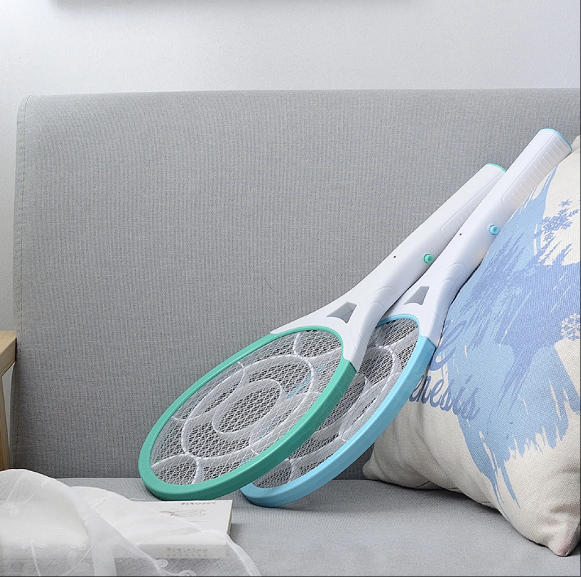
If you’re struggling with annoying mosquitoes, flies, and other flying pests indoors and outdoors, upgrading from traditional manual tools to anElectric Mosquito Swatter is the most efficient solution. Many homeowners and renters search where to buy fly swatter online to find durable, safe, and high-performance electric models that deliver instant pest control.
Where to Buy Fly Swatter
Most importers of electric mosquito swatters obsess over the first order: samples requested, factories vetted, a pre-shipment inspection booked. Then the reorder arrives eight months later and something is off. The grid feels softer. The charge port is a slightly different shade of black. The carton thickness dropped from 350 gsm to 300 gsm. Nothing is catastrophic — but the product no longer matches what your retail customers approved, and quietly, your return rate starts climbing.
How to Keep Mosquito Swatter Quality Consistent Across Repeat Orders
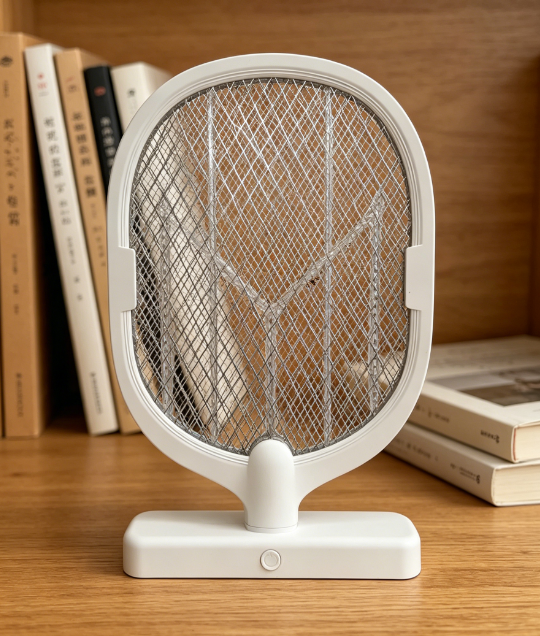
Warranty returns are the silent margin killer in the mosquito control category. A distributor who buys a swatter at $1.80 FOB and retails it at $9.90 can absorb a 1% return rate without noticing — but at 5%, the combined cost of replacement units, reverse logistics, and refund processing erases most of the line's profit.
Common mosquito swatter killer lamp failure modes wholesale spec guide

Digital bathroom scales rank as the second-highest-volume consumer weighing product category, only behind kitchen scales, with distinct market and product characteristics that set them apart from other scale types in importers’ product portfolios.
Digital bathroom body fat-bia-scale wholesale buyers guide