
How Mosquitoes Survive the Winter
2026-01-11
Still Getting Bitten in Freezing Weather? Here's How Mosquitoes Survive the Winter
You just wrap yourself tightly in a down jacket to go out, and when you get home, you find an extra red bump on your arm; late at night, while watching a drama in a heated room, you suddenly hear the familiar "buzzing" sound in your ear—obviously, it's cold enough that your breath turns to frost, so why are there still mosquitoes around? Many people have had this doubt, and some even suspect that these mosquitoes are "mutated". In fact, winter mosquitoes are not unexpected
guests that appear out of nowhere, but "overwintering survivors" hiding around us, relying on a set of exclusive survival strategies to get through the cold winter.
First, it's important to clarify a misunderstanding: mosquitoes are not only able to survive in hot weather, but low temperatures will put them into an "energy-saving mode"—a diapause state. When the temperature drops below 10°C, mosquitoes' growth, development, blood-sucking, reproduction and other activities will stop, their metabolic rate will drop significantly, and they will rely on the fat stored in their bodies to maintain life. Their lifespan can be extended from 1-2 months in summer to 3-6 months, which is enough to wait for the temperature to warm up and "stage a comeback". The mosquitoes we encounter in winter are precisely the "survival experts" who have mastered different overwintering skills.
Why Don't Mosquitoes Disappear in Cold Weather? Uncovering Their Overwintering Survival Rules
Strategy 1: Adult Mosquitoes "Hibernate and Hide", Equipped with Built-in "Antifreeze Buff"
The most common is the "adult mosquito overwintering" strategy, represented by Culex pipiens pallens and Culex molestus, which are also the most common mosquitoes found indoors in northern winters. These mosquitoes can be called masters of hide-and-seek. Before the temperature drops, they will crawl into warm, humid, wind-sheltered hidden corners, such as the ceiling of basements, gaps in air conditioning pipes, piles of debris in stairwells, and even behind wardrobes and corners of bathrooms in homes. What's more, they accumulate a lot of glycerol in their bodies. This substance can inhibit the formation of ice crystals, allowing them to not freeze even in environments close to 0°C, just like having built-in "antifreeze". If they encounter a short period of warming in winter or the warm environment of a heated room, they will "wake up" from diapause and occasionally come out to forage, which is an important reason why we still get bitten in cold weather.
Strategy 2: Mosquito Eggs "Lurk and Standby", Ready to Revive in Spring
Some other mosquitoes choose to overwinter in the form of eggs, and Aedes albopictus (commonly known as "tiger mosquitoes") is a typical representative of this type. In late autumn, female mosquitoes lay their eggs in places prone to water accumulation, such as flowerpot saucers, discarded tires, and tree holes. These eggs have extremely strong cold resistance and drought resistance. Even if the water dries up and the temperature drops sharply, they can remain viable and survive the winter safely. When the rain increases in spring, these eggs will quickly hatch into larvae and start a new year's breeding cycle. Therefore, when cleaning water-accumulating containers on the balcony or in corners in winter, you may accidentally pour out a "potential hatching pool" containing mosquito eggs.
Human Activities "Assist", Creating "Overwintering Warm Nests" for Mosquitoes
In addition to mosquitoes' own cold resistance, human activities and environmental changes are also helping them "survive". The urban heat island effect has caused the average winter temperature to rise year by year. The average winter temperature in northern China has risen by 1.2°C in the past 30 years, and the number of extreme low-temperature days has decreased. The cold wave cycle that could originally kill more than 85% of overwintering mosquitoes has shortened, greatly improving the survival rate of mosquitoes. More importantly, the constant-temperature spaces around us, such as underground garages, heating pipe wells, and central air-conditioning machine rooms in shopping malls, form stable "artificial shelters". The temperature in these areas is usually around 10°C in winter, with suitable humidity, which fully meets the survival needs of mosquitoes. The heating and electrical appliance heat dissipation in homes also provide a warm microenvironment for mosquitoes, allowing them to not fully enter diapause.
Mosquito Control in Winter Is Necessary to Block the Source of Next Year's "Mosquito Infestation"
Some people may think that winter mosquitoes are not a big threat, but in fact, "eliminating one overwintering mosquito is equivalent to eliminating a thousand second-generation mosquitoes". An overwintering female mosquito can reproduce thousands of offspring after spring, which directly affects the mosquito density in the next summer. Some species may also carry pathogens, posing potential health risks. To reduce the trouble of mosquitoes in cold weather, you can actually start with simple small things: promptly clean up water accumulation on the balcony, in flowerpots and bathrooms, seal gaps in doors, windows and pipes, regularly check hidden corners such as basements and storage rooms, and use mosquito killer lamps or electric mosquito swatters for precise elimination.
It turns out that winter mosquitoes are not "mutated monsters", but "survivors" who get through the cold winter with unique physiological adaptations and clever hiding skills. Understanding their overwintering strategies and taking targeted protective measures can not only avoid the trouble of being bitten now, but also lay the foundation for a fresh environment next summer. This winter, don't let mosquitoes "accompany" you through the winter!
2026 Year of the Horse Spring Festival Logistics Guide
Why Are There More Mosquitoes in the Countryside Than in the City
Related Article

If you’re struggling with annoying mosquitoes, flies, and other flying pests indoors and outdoors, upgrading from traditional manual tools to anElectric Mosquito Swatter is the most efficient solution. Many homeowners and renters search where to buy fly swatter online to find durable, safe, and high-performance electric models that deliver instant pest control.
Where to Buy Fly Swatter
Most importers of electric mosquito swatters obsess over the first order: samples requested, factories vetted, a pre-shipment inspection booked. Then the reorder arrives eight months later and something is off. The grid feels softer. The charge port is a slightly different shade of black. The carton thickness dropped from 350 gsm to 300 gsm. Nothing is catastrophic — but the product no longer matches what your retail customers approved, and quietly, your return rate starts climbing.
How to Keep Mosquito Swatter Quality Consistent Across Repeat Orders
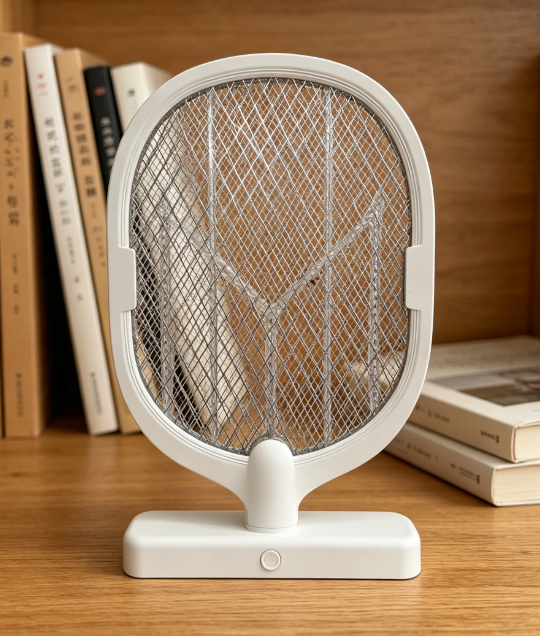
Warranty returns are the silent margin killer in the mosquito control category. A distributor who buys a swatter at $1.80 FOB and retails it at $9.90 can absorb a 1% return rate without noticing — but at 5%, the combined cost of replacement units, reverse logistics, and refund processing erases most of the line's profit.
Common mosquito swatter killer lamp failure modes wholesale spec guide

Digital bathroom scales rank as the second-highest-volume consumer weighing product category, only behind kitchen scales, with distinct market and product characteristics that set them apart from other scale types in importers’ product portfolios.
Digital bathroom body fat-bia-scale wholesale buyers guide