
Indoor vs Outdoor Mosquito Killer Lamps
2026-09-13
Indoor vs Outdoor Mosquito Killer Lamps: Spec, Mounting, and Positioning Differences for Wholesale Distributors
The Category Split Your Mosquito Lamp Catalog Must Have
Walk any importer’s booth at the Canton Fair, and you will notice an obvious product zoning rule: identical-looking mosquito killer lamps are placed in two separate areas — household indoor shelves and outdoor garden shelves.
These products look almost the same from a distance, but their internal specifications are entirely different. Indoor and outdoor mosquito killer lamps feature distinct BOM (Bill of Materials), certification standards, and profit models. Most wholesale distributors unnecessarily sacrifice profit margins by listing them as a single SKU category with unified pricing and positioning.
This blog thoroughly analyzes the core specification gaps that cause the wholesale profit margin difference (15% cost-plus vs 28% cost-plus). It also matches different product features with four mainstream distribution channels: hardware chains, supermarket DIY sections, garden centers, and online marketplaces.
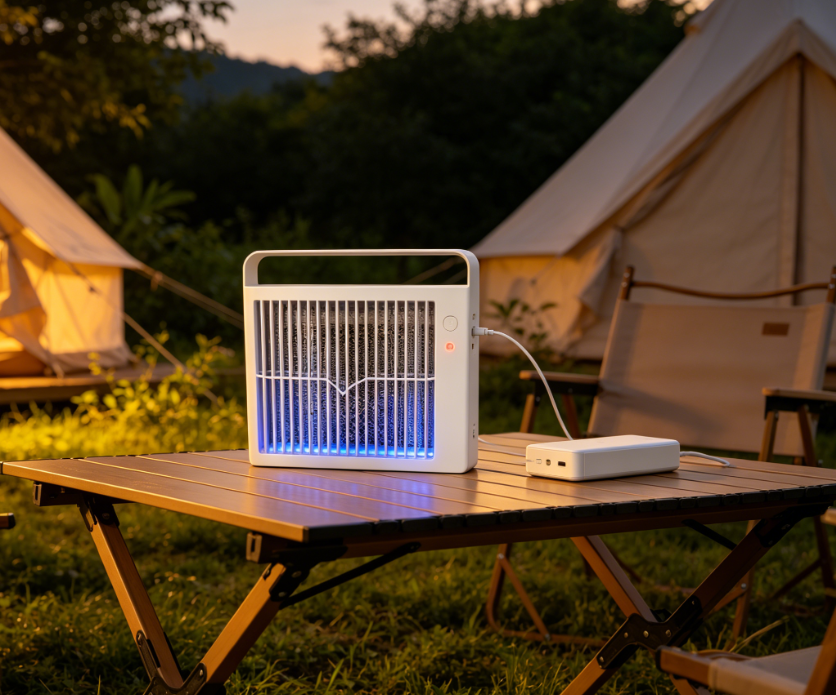
Spec Sheet Differences: Indoor VS Outdoor Mosquito Lamps
Every parameter below directly determines product pricing, application scenarios, certification costs, and after-sales maintenance. Wholesale distributors can select targeted SKUs based on these standards.
|
Specification Dimension
|
Indoor Model (HY-6 USB Example)
|
Outdoor Garden/Patio Model
|
|
IP Rating
|
IP20–IP33 (No water jet protection)
|
IP44–IP65 (Splash-proof, jet-proof and dust-proof)
|
|
Operating Temperature
|
0℃ to 40℃
|
-10℃ to 55℃
|
|
UV-A Wavelength
|
365nm / 395nm (UV-A peak)
|
365nm preferred (higher long-distance trapping rate)
|
|
Coverage Area
|
20–60㎡
|
40–150㎡
|
|
Power Source
|
USB-C / Type-A, 5V/12V adapter
|
Solar + 18650 battery / 220V AC hard-wired
|
|
Housing Material
|
ABS + PC, slim profile
|
ABS + aluminum alloy, UV-resistant additive, double sealing gaskets
|
|
Mounting Options
|
Tabletop, wall hook, hanging ring
|
Ground stake, wall mount, chain hang, post mount
|
|
Maintenance Cycle
|
UV tube replacement every 6–9 months
|
Grid cleaning + battery replacement every 12–18 months
|
|
Certification Requirements
|
CE-EMC, RoHS, FCC
|
Full indoor certifications + IEC 60529 IP test report + outdoor durability certification
|
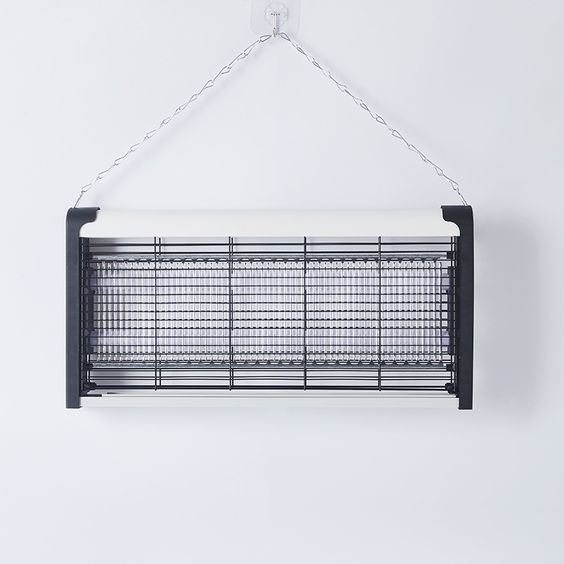
Why the Profit Gap Is Larger Than You Think
The FOB-level BOM cost gap between a 7W indoor mosquito lamp and a 12W IP44 outdoor model ranges from USD 1.80 to USD 2.50. Three core factors lead to this cost difference and create huge profit margins for wholesalers.
1. Housing Structure: Outdoor models adopt UV-stabilized ABS and aluminum heat sinks to resist high temperature and sun exposure. Indoor models use ordinary ABS and PC composite materials with lower cost and no weather resistance requirements.
2. Sealing Design: Each sealing gasket for covers, bases and cable glands costs USD 0.10–0.30 in mold fees and requires manual assembly. Outdoor lamps are equipped with 4 sets of gaskets, while indoor versions have no sealing structure at all.
3. Power Supply System: The indoor USB solution only requires a USD 0.80 PCB and a USD 0.40 plug. Outdoor 220V systems need high-grade driver boards (USD 1.40), UL/CE certified plugs and grounding wires, greatly improving production costs.
The profit amplification effect is obvious: a USD 2.00 FOB cost gap will form a USD 5.50–7.00 retail price difference. Outdoor mosquito lamps can be positioned as premium hardware products without losing market price flexibility, which is your core bargaining point for MOQ and tiered pricing with factories.
Actual Coverage Calculation: Indoor VS Outdoor Scenarios
Official coverage data on spec sheets is usually over-optimistic. Due to ambient light interference and open outdoor spaces, the actual mosquito trapping efficiency of outdoor lamps is about 30% lower than indoor ones. Below are tested and sales-proven matching standards for your product catalog.
Bedroom (15–25㎡): 7–9W USB indoor model is sufficient. Trap-and-zap design outperforms pure attractant types.
Kitchen & Dining Room (25–40㎡): 9–12W wall-mounted indoor lamp with 365nm UV-A tube for stable trapping performance.
Patio & Veranda (40–80㎡): 12W IP44 outdoor model. Install at 2–2.5 meters height and keep away from other strong light sources.
Garden & Driveway (80–150㎡): 18W IP65 solar hybrid outdoor model. Place lamps 5–8 meters apart to form staggered full coverage zones.
Channel-Specific SKU Positioning Strategy
Different sales channels have completely different demands for indoor and outdoor mosquito lamps. Reasonable SKU matching can maximize sales volume and average order value (AOV).
|
Sales Channel
|
Indoor SKU Priority
|
Outdoor SKU Priority
|
Merchandising Notes
|
|
Hardware Chains (Home Depot, Leroy Merlin)
|
Medium
|
High
|
High-margin outdoor products offset store display and operation costs
|
|
Hypermarket DIY (Carrefour, Tesco, Auchan)
|
High
|
Medium
|
Place USB indoor models in small appliance zones; outdoor models in garden sections
|
|
Garden Centers
|
Low
|
High
|
Solar-powered and ground-stake outdoor models are bestsellers
|
|
Online Marketplaces (Amazon, eBay, Mercado Libre)
|
High
|
Medium
|
Indoor USB models boost reviews and traffic; outdoor models lift AOV
|
|
B2B Wholesale (Africa, LatAm, SEA)
|
High
|
High
|
Standard container ratio: 60% indoor + 40% outdoor for balanced sales
|
Universal wholesale rule: Indoor SKUs drive traffic and fast review accumulation, while outdoor SKUs drive profits. With premium pricing and bundled accessories (stakes, solar panels, waterproof cables), outdoor lamps achieve 1.6–2.3 times higher unit AOV than indoor ones.
Seasonal & Regional Demand Cycles
Indoor and outdoor mosquito lamps follow different seasonal sales rhythms. Indoor models have a longer selling cycle with regular restocking from late winter to early summer. Outdoor products are highly seasonal, closely linked with garden and outdoor living consumption.
North America: Outdoor order peak: March–May (for May–September patio season); Indoor peak: April–July.
Western Europe: Outdoor order peak: February–April; Indoor peak: May–August.
Sub-Saharan Africa: Dual peak for indoor & outdoor models (September–December) for rainy-season mosquito outbreaks. 60/40 indoor-outdoor container ratio is the mainstream choice.
South America: Indoor peak: September–November (spring); Outdoor peak: October–February.
Consumable Maintenance: Recurring Revenue for Distributors
Outdoor mosquito lamps bring higher long-term profits thanks to repeat sales of supporting consumables, forming a sustainable revenue stream.
• UV tube replacement: Every 9–12 months for indoor models; every 12–18 months for outdoor models.
• 18650 battery replacement for solar lamps: Every 18–24 months.
• Spare parts: Ground stakes, hanging fittings and gasket repair kits for B2B garden center clients.
Distributors who only sell lamp bodies gain only one-time deals. Those who support complete sets (lamps + tubes + batteries + accessories) capture multiple repurchase opportunities. Arrange spare part inventory in initial orders to retain pricing advantages.

Wholesale SKU Order Checklist
• Channel Matching: Confirm whether target customers focus on indoor, outdoor or dual markets.
• Climate Adaptation: IP44 as the minimum standard for tropical regions; IP33 is acceptable for temperate zones.
• Power Infrastructure: Solar models require sufficient sunlight and 18-month battery warranty support.
• Certification Budget: Outdoor lamps need extra IP test reports besides CE/FCC, with a launch budget of USD 600–1200 for certification.
• Consumable Layout: Pre-list tubes, batteries and gaskets before product review accumulation.
• AOV Target: Take outdoor models as high-profit core products, and indoor USB models as traffic & customer acquisition SKUs.
Factory Supply: CZAFM (Aofengming Electric)
CZAFM provides complete indoor and outdoor mosquito killer lamp solutions, including the hot-selling HY-6 USB indoor model and full IP44 outdoor series. You can submit your channel and regional demand via the RFQ form on czafm.com to get a customized indoor/outdoor SKU distribution solution.
Where Do Mosquitoes Thrive the Most
Solar Outdoor Mosquito Killer Lamps Wholesale Buyer Guide
Related Article
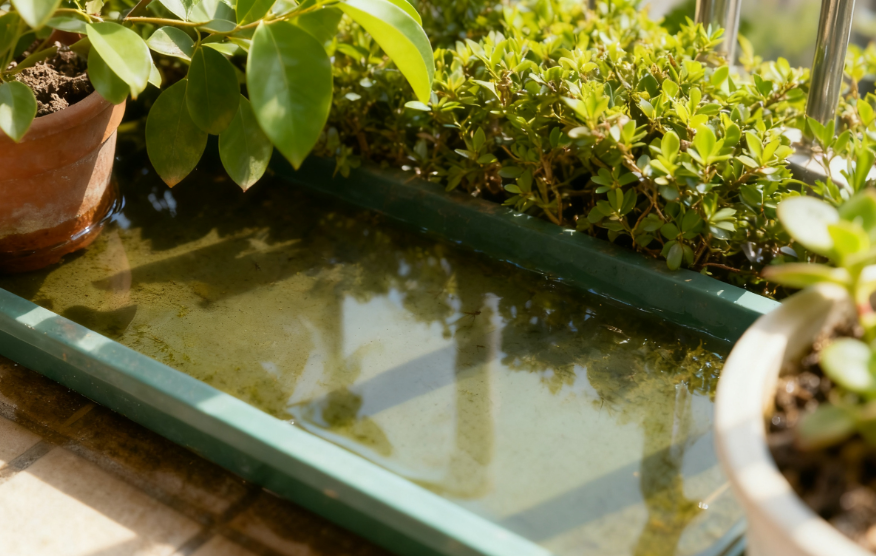
Mosquitoes are one of the most common and annoying pests worldwide. Their constant buzzing and painful bites ruin outdoor activities, disturb rest, and even pose health risks by spreading infectious diseases. Most people only notice mosquitoes when they get bitten, yet few understand why certain areas are packed with far more mosquitoes than others. Mosquito survival and reproduction rely on three core conditions: stagnant water, high humidity, and shaded, windless environments.
Where Do Mosquitoes Thrive the Most
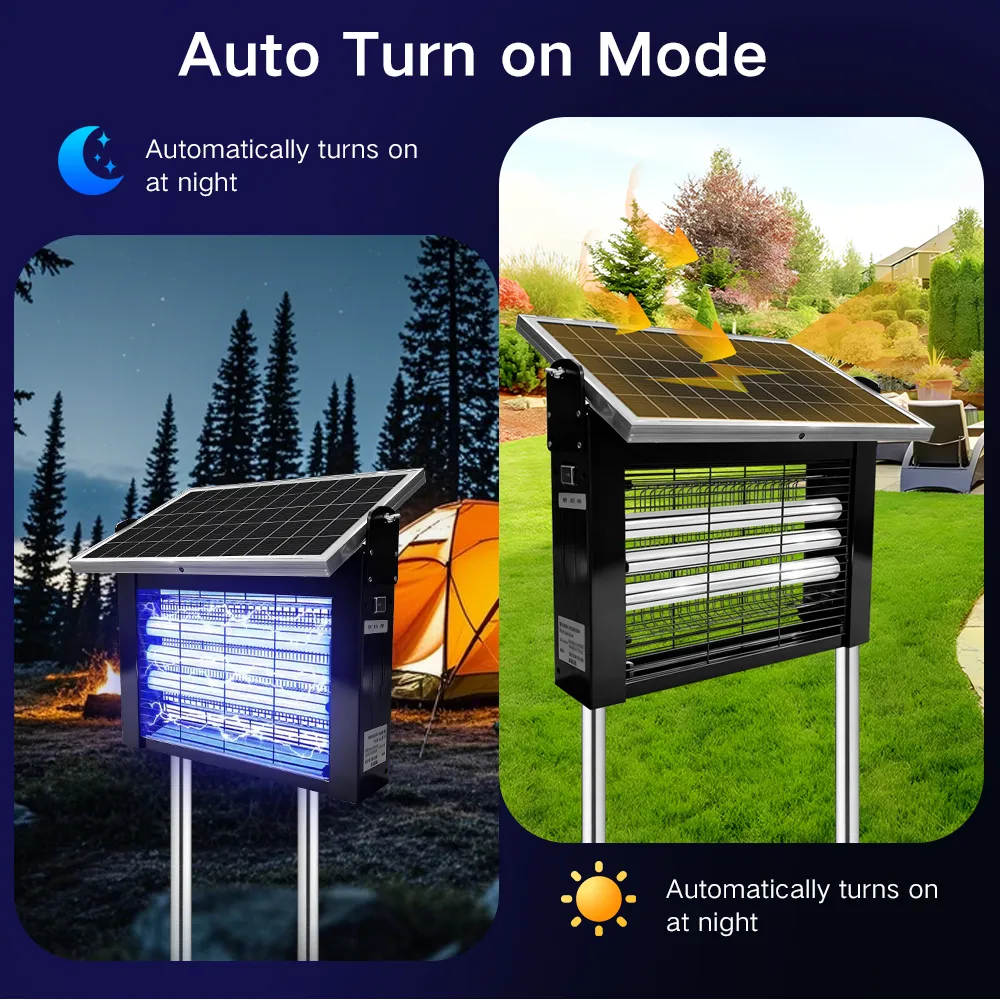
Throughout 2023 and most of 2024, solar outdoor mosquito killer lamps remained a niche, secondary product category. On Amazon, these items were mostly categorized as patio decor with basic mosquito-killing functionality. Each individual ASIN only generated 8,000–15,000 units in annual sales, failing to gain traction as mainstream outdoor and garden merchandise.
Solar Outdoor Mosquito Killer Lamps Wholesale Buyer Guide

Most importers treat an OEM mosquito swatter order as a single transaction: send a sketch, get a sample, place a PO. In practice, every project that ships late in the first 18 months of a brand breaks down for the same five reasons — undefined artwork handoff, tool-making left until after PO confirmation, certification testing ordered in parallel with sampling, and packaging dielines frozen too late.
OEM Swatter Manufacturing Project Management
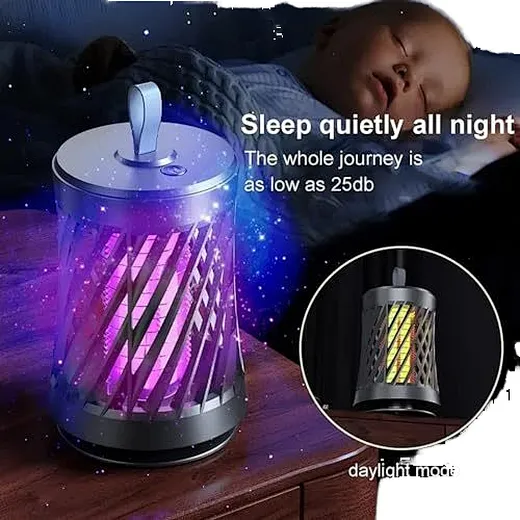
The charging port is no longer a minor accessory detail for mosquito swatters and UV mosquito killer lamps in 2026. It has become a core indicator that determines product price tiers, EU market eligibility, after-sales failure rates, and global buyer preference. For exporters, distributors, and retail buyers, choosing between Type-C and Micro-USB directly impacts profitability, compliance risks, and market competitiveness.
Type-C vs Micro-USB on Mosquito Swatters and Killer Lamps