
Is it better for the grid of an electric mosquito swatter to be smaller
2025-12-10
Recently, some customers have customized a batch of mosquito swatters with small grids. So, does a smaller grid size mean better quality of the mosquito swatter? And does it improve the mosquito-proof effect?
1. Precisely Traps Small-Sized Pests
Summer’s nuisances aren’t just mosquitoes—there are also midges, fruit flies, and other "mini pests." Ordinary large-grid swatters (aperture ≥1.5cm) often let these tiny insects slip through the cracks, while smaller grids (0.8-1.2cm aperture) can firmly block such small targets. They’re especially suitable for scenes like kitchens and balconies, where small flying insects tend to breed.

2. Enhances Usage Safety
The high-voltage power grid of electric mosquito swatters poses potential risks to children and pets. The aperture of smaller grids is usually narrower than a child’s finger width, effectively preventing accidental contact with the grid. Meanwhile, dense grids reduce the chance of pets’ paws or fur touching the electrodes, making them more family-friendly for households with kids and animals.
3. Reduces Insect "Escape After Collision"
Mosquitoes have quick reaction times during flight. When swinging a large-grid swatter, insects may suddenly change direction and escape through the gaps. Smaller grids offer a larger "blocking area," compressing the insects’ escape space and slightly improving the hit rate when swinging.
II. 4 Drawbacks of Pursuing "Extremely Small Grids"
1. Insufficient Airflow, Compromising Mosquito Attraction
Most electric mosquito swatters rely on LED purple light to attract mosquitoes, and airflow guidance is key to this process—after being lured by the light, mosquitoes fly toward the grid along the air current. If the grid is too dense (aperture ≤0.6cm), it will severely block air circulation, reducing the propagation range of the attractant light and preventing distant mosquitoes from "finding" the grid.
2. Doubled Cleaning Difficulty
After being electrocuted, insect corpses and wings stick to the grid. The narrow gaps of small grids easily trap residues when cleaning with tissues or brushes. Over time, dust and dead insects accumulate, not only affecting appearance but also potentially causing grid short circuits and reduced discharge efficiency.
3. High Swing Resistance, Poor User Experience
Dense small grids increase air resistance, making the swatter feel "heavy" when swung. Especially when dealing with fast-flying mosquitoes, it’s less flexible than large-grid models. Prolonged use may also cause wrist soreness, significantly impairing the user experience.
4. Low Cost-Effectiveness with Obvious Price Premium
Smaller grids require higher manufacturing precision (e.g., uniform grid spacing, accurate electrode fixation), leading to a 30%-50% higher price compared to ordinary large-grid swatters. However, in practical use, "extremely small grids" offer limited improvement in mosquito control effectiveness—mostly psychological satisfaction—resulting in poor cost-effectiveness.
III. Buying Guide: Don’t Blindly Chase Small Sizes—Choose a "Balanced Model" for Practicality
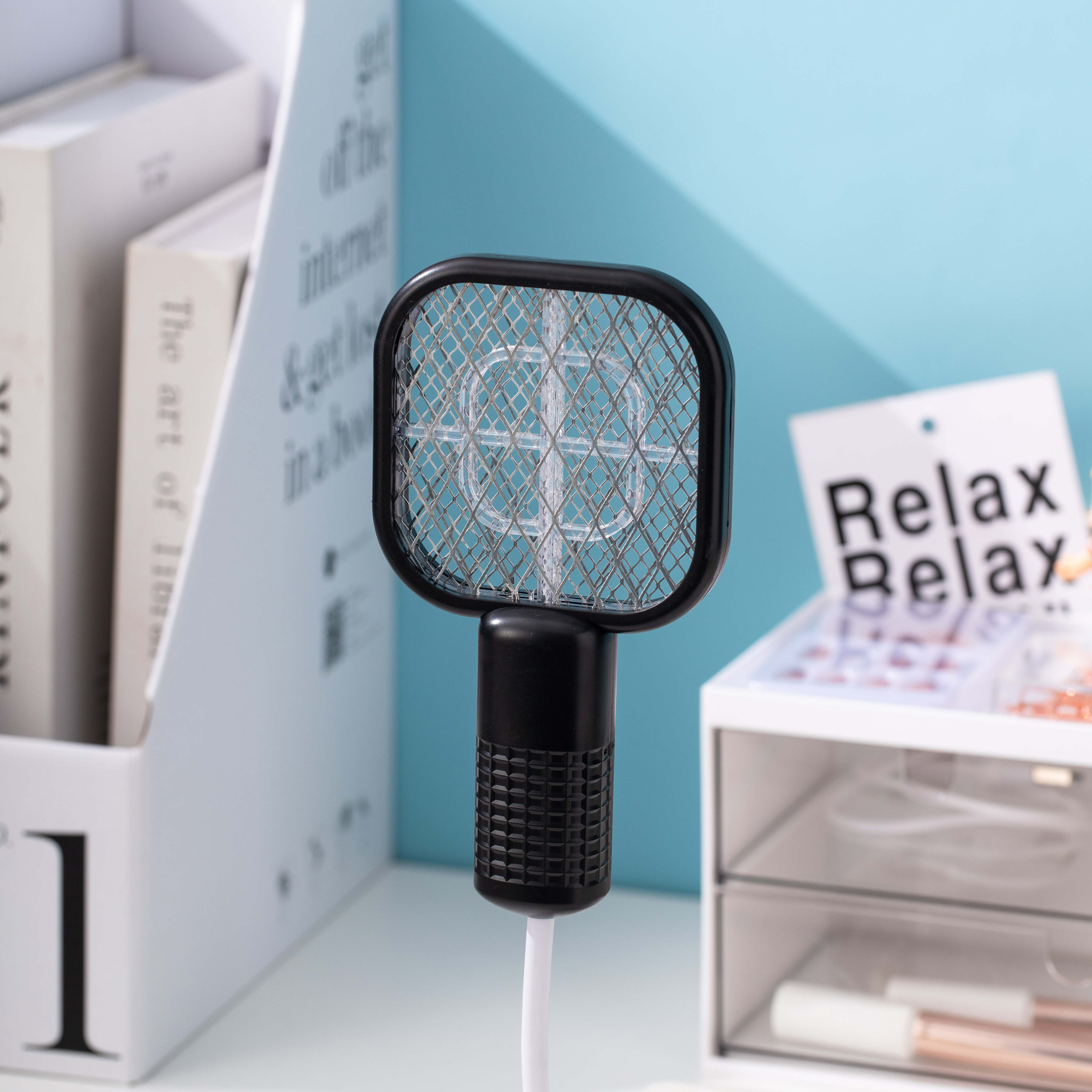
- Prioritize "medium-small grids" (0.8-1.2cm aperture):This range effectively traps small insects without excessively affecting airflow or cleaning. It’s the golden size balancing practicality and performance, suitable for daily use in most households.
- Choose Flexibly Based on Scenarios:
-
- Daily indoor mosquito control (mainly targeting mosquitoes): Opt for large grids (1.2-1.5cm aperture) for easy cleaning and flexible swinging;
-
- Kitchen/balcony (high presence of small flying insects/midges): Select small grids (0.8-1.0cm aperture) for precise trapping of small-sized pests;
-
- Households with children/pets: Focus on designs with "double-layer protective nets + medium-small grids"—the outer large grid prevents accidental contact, while the inner small grid traps insects, maximizing safety.
- Don’t Overlook Core Parameters:Grid size is just an auxiliary factor. The key features of an electric mosquito swatter are electric voltage (≥2500V for effectiveness), battery life, and attractant light brightness—these are more important than blindly pursuing "extremely small grids."
Conclusion
A smaller grid isn’t always better for electric mosquito swatters—excessively small grids sacrifice cleanability, user experience, and mosquito attraction, while overly large ones let small insects escape. The most practical choice is to "select the size based on needs": medium aperture for daily use, small grids for special scenarios (many small flying insects, families with kids/pets). Reject blind pursuit of "extremely small grids" to choose a truly useful electric mosquito swatter!
Comparison of 4 Common Battery Types for Electric Mosquito Swatters
Are There Really No Mosquitoes in Winter
Related Article

If you’re struggling with annoying mosquitoes, flies, and other flying pests indoors and outdoors, upgrading from traditional manual tools to anElectric Mosquito Swatter is the most efficient solution. Many homeowners and renters search where to buy fly swatter online to find durable, safe, and high-performance electric models that deliver instant pest control.
Where to Buy Fly Swatter

Most importers of electric mosquito swatters obsess over the first order: samples requested, factories vetted, a pre-shipment inspection booked. Then the reorder arrives eight months later and something is off. The grid feels softer. The charge port is a slightly different shade of black. The carton thickness dropped from 350 gsm to 300 gsm. Nothing is catastrophic — but the product no longer matches what your retail customers approved, and quietly, your return rate starts climbing.
How to Keep Mosquito Swatter Quality Consistent Across Repeat Orders

Warranty returns are the silent margin killer in the mosquito control category. A distributor who buys a swatter at $1.80 FOB and retails it at $9.90 can absorb a 1% return rate without noticing — but at 5%, the combined cost of replacement units, reverse logistics, and refund processing erases most of the line's profit.
Common mosquito swatter killer lamp failure modes wholesale spec guide

Digital bathroom scales rank as the second-highest-volume consumer weighing product category, only behind kitchen scales, with distinct market and product characteristics that set them apart from other scale types in importers’ product portfolios.
Digital bathroom body fat-bia-scale wholesale buyers guide