
Latest International Safety Certifications for Electric Mosquito Swatters
2026-03-26
Latest International Safety Certifications for Electric Mosquito Swatters: A Complete Guide
As summer approaches, electric mosquito swatters become a must-have household item for repelling mosquitoes and ensuring a comfortable living environment. However, as a small electrical appliance with high-voltage components, its safety performance is crucial to protecting users from electric shock, fire, and other hazards. With the globalization of trade, different countries and regions have formulated strict safety certification standards for electric mosquito swatters. This blog will detail the latest international safety certifications, their core requirements, and key updates, helping manufacturers, cross-border sellers, and consumers understand the safety compliance norms of this product.
Core International Safety Certifications for Electric Mosquito Swatters
Electric mosquito swatters, as household electrical appliances involving high-voltage circuits, need to pass corresponding safety certifications to enter the market legally in most countries and regions. The following are the most influential international certifications and their latest requirements in 2024-2026.
1. EU CE Certification: Mandatory Access Threshold for the European Market
CE certification is a mandatory safety mark for electric mosquito swatters to enter the EU market (including 27 EU member states and EEA countries such as Norway and Switzerland). It indicates that the product complies with the core safety, health, and environmental protection requirements of EU directives. For electric mosquito swatters, the latest certification involves three key directives and updated standards.
First, the Low Voltage Directive (LVD) 2014/35/EU, which applies to products with a rated voltage between 50V and 1000V AC or 75V and 1500V DC. Electric mosquito swatters (whether battery-powered or USB-charged) must meet the general safety requirements of EN 60335-1 and the special requirements for insect killers in EN 60335-2-59. The latest update in 2025, BS EN IEC 60335-2-59:2025+A11:2025, further strengthens the requirements for electrical insulation and mechanical safety, such as increasing the insulation resistance standard to ≥2MΩ and requiring the voltage to drop to below 60V within 1 second after power-off to avoid residual electric shock hazards.
Second, the Electromagnetic Compatibility (EMC) Directive 2014/30/EU, which requires electric mosquito swatters to comply with EN 55014-1 (emission) and EN 55014-2 (immunity) standards to avoid electromagnetic interference with other electronic devices. For products with LED mosquito traps or USB charging functions, additional tests for harmonic current and voltage flicker (EN 61000-3-2/3) are required.
Third, the RoHS Directive 2011/65/EU, which restricts the use of six hazardous substances such as lead and cadmium in product materials. Manufacturers need to provide EN 62321 test reports to prove that the content of hazardous substances meets the standard. In addition, if the electric mosquito swatter has a built-in lithium battery, it must also pass UN38.3 testing and comply with the IEC 62133-2 standard to ensure battery safety during use and transportation.
2. US UL Certification: Voluntary but Necessary for Market Recognition
UL certification is a non-mandatory safety certification in the United States, but it is widely recognized by consumers, retailers, and insurance companies. For electric mosquito swatters, the core certification standard is UL 1026, the "Safety Standard for Household Insecticides and Rodenticides," which covers multiple dimensions such as electrical safety, mechanical protection, and material flame retardancy.
The latest UL 1026 requirements include strict electrical safety tests: the product needs to withstand a high voltage of 2000V for 1 minute without breakdown, and the leakage current in any working state shall not exceed 0.5mA. For electric mosquito swatters with a three-layer power grid design, additional interlayer insulation tests are required to ensure a safe distance between the outer protective grid and the inner power grid. In terms of mechanical safety, the handle length shall not be less than 15cm, and the protective grid aperture shall be controlled between 6-8mm to prevent children's fingers from accidentally touching the live parts. The product also needs to pass a 1-meter free fall test to ensure that no dangerous parts are exposed after accidental falling.
In addition, for electric mosquito swatters with USB charging functions, the charging circuit must meet the safety requirements of the UL 1310 standard for power adapters. The plastic shell needs to pass a 750℃ glow wire test, requiring the burning time to not exceed 30 seconds and the drippings to not ignite the cotton paper below, effectively preventing fire risks caused by circuit short circuits.
3. Japan PSE Certification: Mandatory for Entering the Japanese Market
PSE certification is a mandatory safety certification for electric mosquito swatters to enter the Japanese market, formulated in accordance with Japan's "Electrical Appliance and Material Safety Law" (DENAN Law). Electric mosquito swatters belong to specific electrical appliances (Category A) and must obtain the "diamond PSE" certification through third-party testing and factory inspection, which is more stringent than the "round PSE" certification for general electrical appliances.
The core standards for PSE certification of electric mosquito swatters are IEC 60335-1 (general requirements) and IEC 60335-2-59 (special requirements for insect killers). The latest testing requirements include: insulation withstand voltage test (3000V AC/1 minute without breakdown), mechanical strength test (50N pressure on the protective grid without deformation), and short-circuit protection test (automatic power-off within 0.1 seconds when the power grid is short-circuited). For products with built-in lithium batteries, additional JIS C 8712 lithium battery safety testing is required.
In addition, the product must be labeled with a clear diamond PSE mark (minimum height 5mm) and Japanese safety warnings, such as "Do not touch metal parts during charging or use." The factory needs to accept annual inspections during the validity period of the certificate, and violations such as uncertified sales or missing safety warnings may result in fines of up to 1 million yen or product destruction.
4. Other Regional Key Certifications
In addition to the above three major certifications, electric mosquito swatters entering other regions also need to meet corresponding safety standards:
- Taiwan Region of China: The Bureau of Standards, Metrology and Inspection (BSMI) proposes to revise the inspection requirements, which will be implemented on July 1, 2026. Electric mosquito swatters with secondary lithium batteries need to comply with CNS 13564:2013 and the vibration and mechanical shock requirements in CNS 62133-2:2018.
- Middle East: Saudi Arabia requires SASO certification, and the United Arab Emirates requires ESMA certification, both of which need to meet the electrical safety and electromagnetic compatibility requirements similar to the EU CE certification.
- Australia/New Zealand: RCM certification is required, which combines electrical safety (AS/NZS 60335.1) and electromagnetic compatibility (AS/NZS CISPR 14.1/14.2) requirements.
- India: BIS certification is mandatory, and products must comply with the IS 302-2-59 standard, which is equivalent to IEC 60335-2-59.
Latest Updates on International Safety Certification Standards (2024-2026)
In recent years, with the continuous upgrading of electric mosquito swatter technology (such as the integration of intelligent sensing, wireless charging, and other functions) and the increasing emphasis on consumer safety, international safety certification standards have also been continuously updated. The following are the key updates worth paying attention to:
1. EU Standard Update: Strengthening the Safety of New Functions
The BS EN IEC 60335-2-59:2025+A11:2025 standard, released in May 2025, adds special requirements for intelligent electric mosquito swatters (such as those with Bluetooth/Wi-Fi functions). Such products need to additionally meet the Radio Equipment Directive (RED) 2014/53/EU, testing radio frequency performance and spectrum compliance to avoid electromagnetic interference with other wireless devices.
2. Strengthened Requirements for Lithium Battery Safety
Due to the increasing safety incidents caused by secondary batteries, major regions have successively strengthened the battery safety requirements for electric mosquito swatters. For example, the EU requires lithium batteries to pass UN38.3 and IEC 62133-2 tests, Japan requires JIS C 8712 tests, and Taiwan Region of China has added battery-related inspection items in the revised proposal, all of which aim to prevent battery explosion, leakage, and other hazards.
3. Strict Compliance Requirements for Cross-Border E-Commerce Platforms
Major cross-border e-commerce platforms such as Amazon, AliExpress, and Temu have raised the compliance threshold for electric mosquito swatters. Sellers need to provide complete certification documents (such as CE, UL, PSE certificates), test reports (electrical safety, EMC, RoHS), and compliant packaging and instructions. The instructions must include clear safety warnings and operation guidelines, otherwise, the product may be removed from the shelves or even banned from selling.
The Significance of Safety Certification for Enterprises and Consumers
For Manufacturers and Cross-Border Sellers
Safety certification is not only a mandatory requirement for market access but also a key to enhancing brand credibility. Passing international certification can help enterprises avoid risks such as customs detention, product recall, and fines, and improve product competitiveness in the global market. For example, products with UL certification are more likely to gain the trust of American consumers, while CE certification can smooth the entry into the EU market, expanding sales channels and market share.
For Consumers
Safety certification is an important guarantee for consumer use safety. Products with formal certification have undergone strict testing in terms of electrical insulation, mechanical structure, and material safety, which can effectively reduce the risks of electric shock, fire, and other accidents. When purchasing electric mosquito swatters, consumers should pay attention to identifying certification marks (such as CE, UL, PSE) and avoid buying uncertified products with potential safety hazards.
Tips for Compliance: How to Meet the Latest International Certification Requirements
For enterprises producing and selling electric mosquito swatters, complying with the latest international safety certification standards requires the following aspects:
1. Pay close attention to standard updates: Timely track the revision dynamics of certification standards in major markets (such as the EU, the United States, and Japan) to avoid non-compliance due to outdated standards.
2. Choose authoritative certification institutions: Select third-party testing institutions recognized by the target market (such as TUV, SGS, JET) to ensure the validity and recognition of certification documents.
3. Improve product design and quality control: According to the requirements of certification standards, optimize the product's electrical circuit, mechanical structure, and material selection (such as using flame-retardant materials that meet the standard and adding double-switch anti-misoperation design).
4. Prepare complete technical documents: Include circuit diagrams, material lists, test reports, risk assessment reports, and compliance declarations to ensure the smooth progress of the certification process.
In conclusion, the latest international safety certifications for electric mosquito swatters are constantly becoming stricter, reflecting the global emphasis on product safety. For enterprises, complying with certification standards is the basis for entering the global market; for consumers, recognizing certification marks is the key to ensuring safe use. With the continuous advancement of technology, it is believed that the safety standards of electric mosquito swatters will be further improved, bringing a safer and more comfortable experience to global users.
Kitchen Mosquito Control
5 Surprising Uses for Electric Mosquito Swatters You Never Knew
Related Article

If you’re struggling with annoying mosquitoes, flies, and other flying pests indoors and outdoors, upgrading from traditional manual tools to anElectric Mosquito Swatter is the most efficient solution. Many homeowners and renters search where to buy fly swatter online to find durable, safe, and high-performance electric models that deliver instant pest control.
Where to Buy Fly Swatter
Most importers of electric mosquito swatters obsess over the first order: samples requested, factories vetted, a pre-shipment inspection booked. Then the reorder arrives eight months later and something is off. The grid feels softer. The charge port is a slightly different shade of black. The carton thickness dropped from 350 gsm to 300 gsm. Nothing is catastrophic — but the product no longer matches what your retail customers approved, and quietly, your return rate starts climbing.
How to Keep Mosquito Swatter Quality Consistent Across Repeat Orders
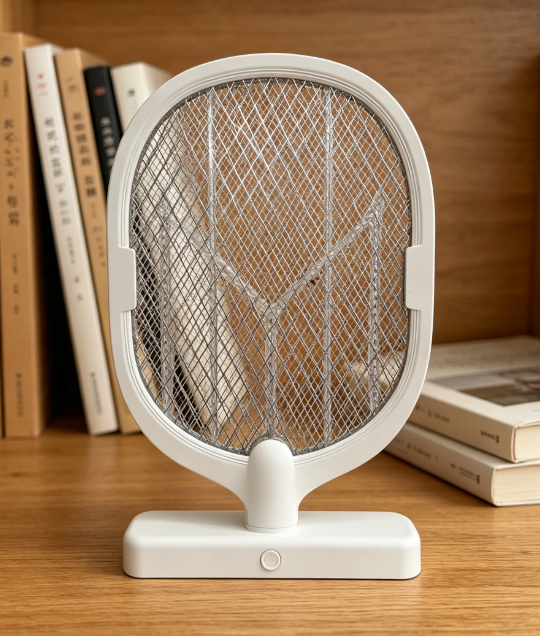
Warranty returns are the silent margin killer in the mosquito control category. A distributor who buys a swatter at $1.80 FOB and retails it at $9.90 can absorb a 1% return rate without noticing — but at 5%, the combined cost of replacement units, reverse logistics, and refund processing erases most of the line's profit.
Common mosquito swatter killer lamp failure modes wholesale spec guide

Digital bathroom scales rank as the second-highest-volume consumer weighing product category, only behind kitchen scales, with distinct market and product characteristics that set them apart from other scale types in importers’ product portfolios.
Digital bathroom body fat-bia-scale wholesale buyers guide