
Mosquito Swatter Grid Voltage
2026-09-09
Mosquito Swatter Grid Voltage, Triple-Mesh Design, and Safety Switch Standards: A Wholesale Buyer's Technical Guide
A Brazilian distributor purchased 5,000 units of cost-effective mosquito swatters from a new supplier. However, the customer return rate reached 8% within the first month of delivery. After investigation, the problem did not lie in the battery, housing or assembly quality, but in the grid. Equipped with a single-layer mesh and an operating voltage of 1,800V, the products failed to effectively kill large mosquito species such as Aedes aegypti, merely stunning the insects and leaving them alive on the racket surface. Consumers regarded live mosquitoes remaining on the swatter as a product defect and therefore returned the goods.
After subsequent specification optimization and upgrade to triple-layer mesh and 2,800V operating voltage, the field mosquito kill rate rose to 97%, and the return rate dropped below 2%.
Grid voltage, mesh configuration and safety switch design are the three core technical parameters that determine the market performance and return rate of mosquito swatters. For B2B buyers, these parameters are never trivial engineering details. Instead, they create a critical gap between a 2% and a 12% return rate — a difference that can easily decide profit or loss for a 10,000-unit bulk order.
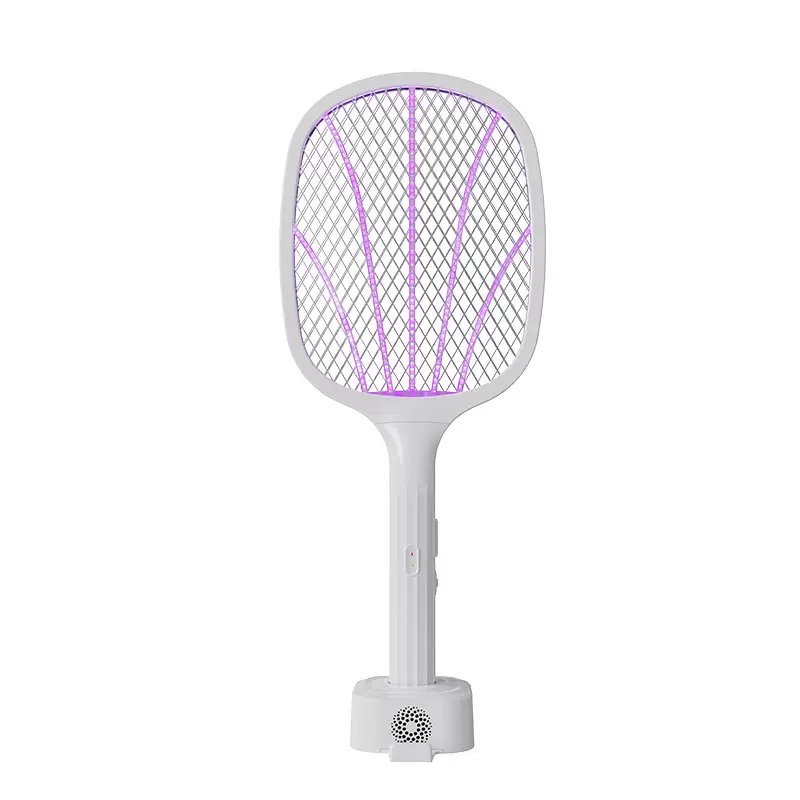
Grid Voltage Explained: Why 2,500V–3,500V Is the Optimal Range
Electric mosquito swatters work by releasing high-voltage and low-current electric discharge when insects bridge the gap between charged and grounded layers, forming a conductive circuit and achieving a killing effect. The voltage determines whether the electric discharge can kill insects lethally, while the operating current (usually below 5mA) ensures safety against accidental human contact.
|
Voltage Range
|
Kill Performance
|
Typical Application
|
Market Position
|
|---|---|---|---|
|
1,500–2,000V
|
Only stuns small insects; unstable killing effect on large mosquitoes
|
Low-end models, promotional giveaways
|
Entry-level
|
|
2,000–2,500V
|
Kills common mosquitoes including Culex and Anopheles
|
Standard retail models for supermarkets
|
Mid-range
|
|
2,500–3,000V
|
Kills Aedes aegypti, large flies and gnats
|
Brand premium models
|
Upper-mid range
|
|
3,000–3,500V
|
Instant kill with visible and audible electric arcs
|
Professional industrial-grade models
|
High-end
|
Buyers shall verify and confirm the following core parameters with suppliers explicitly:
1. Operating voltage (not peak voltage — some factories inflate nominal values on specification sheets by falsifying peak voltage data);
2. Discharge current (must be below 5mA to comply with EU Low Voltage Directive standards);
3. Voltage decay time (the time required for grid voltage to drop to a safe level after releasing the switch; the standard requirement is ≤ 2 seconds).
If suppliers only mark "high voltage" generally without specifying operating voltage and discharge current, their products are most likely non-compliant or with concealed defects. Before placing bulk orders, buyers must request test reports issued by authoritative laboratories including SGS, TÜV and Intertek. Factories that cannot provide valid compliance test reports immediately have not completed full performance testing, and buyers will ultimately bear all quality risks and return losses.
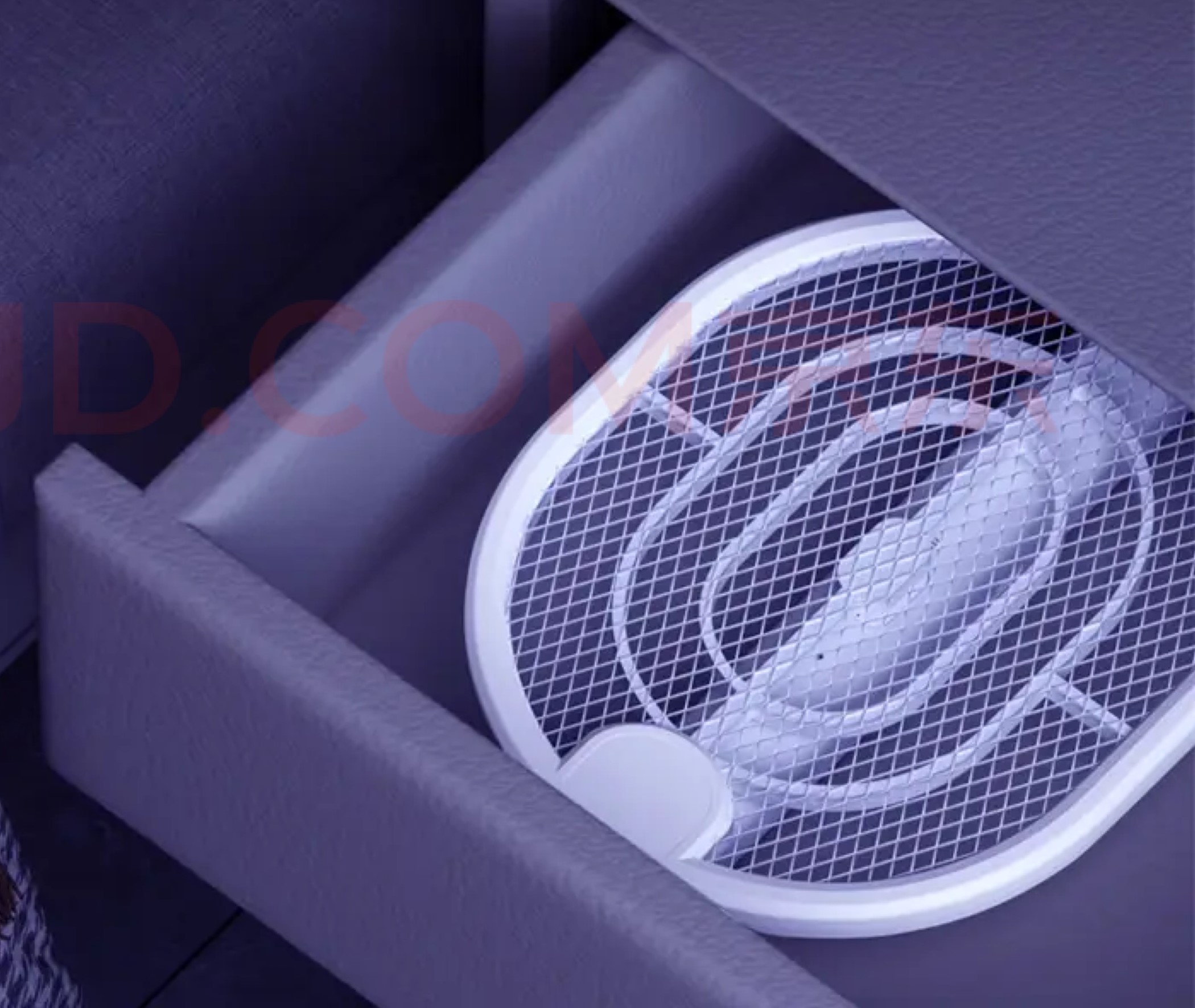
Single, Double and Triple Mesh Layers: Killing Efficiency and Safety Comparison
Mesh configuration is the most intuitive visual difference of mosquito swatters, as well as a key parameter that buyers often overlook by only focusing on appearance rather than core engineering design.
Single-layer mesh: Features only one charged grid with a component cost of $0.08–$0.12 per unit. Excessively large mesh gaps allow insects to pass through without touching the charged layer, resulting in missed kills and surviving insects, which easily trigger returns and negative reviews. It is only suitable for promotional giveaways and ultra-low-end retail markets.
Double-layer mesh: Consists of two parallel grids with opposite polarities. Electric shock is triggered when insects bridge the two grids to form a circuit, with a slight cost increase. It achieves an 85%–92% kill rate for common mosquitoes, serving as the standard configuration for mainstream retail mosquito swatters and the basic quality threshold of the industry.
Triple-layer mesh: Features two outer grounded insulating protective layers (non-electrified) with a core electrified inner layer. The outer layers prevent accidental human contact with high-voltage grids while allowing insects to penetrate and touch the inner charged layer. It delivers a 95%–98% insect kill rate and is a mandatory structure for EU market compliance with the Low Voltage Directive.
|
Mesh Configuration
|
Cost Premium
|
Kill Rate
|
Safety Rating
|
Recommended Application
|
|---|---|---|---|---|
|
Single-layer mesh
|
Baseline cost
|
70%–80%
|
Low
|
Promotional use only
|
|
Double-layer mesh
|
+$0.15–$0.20 per unit
|
85%–92%
|
Moderate
|
Standard retail market
|
|
Triple-layer mesh
|
+$0.30–$0.45 per unit
|
95%–98%
|
High (CE/UL compliant)
|
Premium market, EU & US export market
|
Triple-layer mesh is a mandatory compliance requirement for products exported to the EU market. The EU Low Voltage Directive (Standard EN 60335-2-59) clearly stipulates that accessible product surfaces must not carry dangerous high voltage. The outer grounded protective layers are the core design to meet this clause. Double-layer mosquito swatters without outer protective layers will definitely fail the accessible surface voltage test for EU compliance.
Safety Switch Mechanisms: Preventing Accidental Electric Discharge
Charged mosquito swatter grids can cause obvious electric shocks. The design of safety switches determines the controllability of high voltage when the product is not in use, and it is the most commonly omitted safety feature by factories to cut costs.
Single-button activation switch: The grid is activated by a single press. With a simple structure and low cost, it is the leading cause of most accidental electric shocks. Buttons are easily pressed by foreign objects when the swatter is stored in bags, drawers or retail packaging, triggering unintended high-voltage discharge.
Two-button activation switch (Recommended Configuration): Requires simultaneous pressing of the handle safety button and the working button to activate the grid, completely eliminating accidental discharge during storage and transportation. It increases the BOM cost by $0.10–$0.15 per unit, serving as the standard configuration for high-end retail brands and the mainstream safety procurement requirement of large supermarket chains.
Grid power indicator LED: The light indicates that the grid is electrified. Though not a mandatory safety protection structure, it reduces user operational errors and is a compulsory product specification for multiple major retail channels.
Auto-discharge circuit: Drains residual high voltage from the grid within 2 seconds after the switch is released, which is a mandatory compliance configuration for the EU Low Voltage Directive. Some factories omit this circuit to save $0.05 per unit, resulting in direct failure of the residual voltage compliance test.
The following safety configurations shall be explicitly specified in procurement contracts to prevent supplier downgrading of components:
1. Two-button activation structure (or equivalent safety interlock mechanism);
2. Auto-discharge circuit with voltage decay time ≤ 2 seconds;
3. Grid power status indicator LED;
4. Insulated grip with a minimum length of 15 cm from the nearest charged grid edge.
Buyers must request auto-discharge timing test reports from suppliers. Regardless of specification sheet claims, factories unable to provide such test data are deemed non-compliant and unsuitable for EU and US export markets.
CE LVD and UL Compliance Standards: Mandatory Test Reports for Buyers
CE marking for mosquito swatters requires compliance with two EU directives. Accurately distinguishing compliance differences between rechargeable and battery-powered models and matching target market standards is a core procurement prerequisite.
1. Low Voltage Directive (LVD) – Standard EN 60335-2-59
Governs the electrical safety of insect-killing electrical appliances. Core test items include creepage distances and clearances, dielectric strength, temperature rise during continuous operation, and high-voltage auto-decay timing. Triple-layer mesh and auto-discharge circuits are both mandatory compliance requirements under this directive.
2. EMC Directive – Standards EN 55014-1 / EN 55014-2
Regulates product electromagnetic radiation and anti-interference performance. The high-voltage oscillator module of mosquito swatters easily generates electromagnetic interference that affects nearby electronic devices. Products failing EMC tests will be detained by EU customs or recalled after market launch.
Products exported to the US market need UL certification complying with UL 60335-2-59. This standard is harmonized with IEC standards but adds US-specific requirements for plug-in devices and product labeling.
Buyers must request the following complete compliance reports from suppliers before bulk ordering:
1. CE LVD test reports issued by authoritative institutions including SGS, TÜV, Intertek and Bureau Veritas;
2. CE EMC test reports issued by accredited laboratories;
3. Additional UL test reports required for US market export;
4. RoHS substance test reports covering 6 restricted substances plus 4 phthalates.
The total cost of complete CE LVD and EMC testing for a single product model at an accredited laboratory ranges from $2,500 to $4,500. Suppliers with slightly higher initial quotes but valid full test reports help buyers avoid subsequent risks such as customs detention, product re-testing and market recalls, reducing additional losses of $15,000–$30,000, delivering higher cost performance and ROI.
Field Failure Modes: Core Quality Issues and Targeted Specification Optimization Solutions
Based on after-sales return data collected from distributors in West Africa and Southeast Asia from 2025 to 2026, the three high-frequency failure modes, root causes and rectification solutions for electric mosquito swatters are summarized as follows:
|
Failure Mode
|
Root Cause
|
Specification Fix
|
Cost Impact
|
|---|---|---|---|
|
No arc generation / grid discharge failure
|
Oxidation and failure of ordinary mesh contacts in high-humidity environments
|
Specify 304-grade stainless steel mesh (galvanized iron mesh prohibited)
|
+$0.10 per unit
|
|
Switch malfunction
|
Microswitches rated for less than 10,000 actuation cycles
|
Equip with microswitches rated for a minimum of 30,000 cycles
|
+$0.08 per unit
|
|
Battery swelling
|
Omission of battery overcharge protection chip for cost reduction
|
Install battery management IC with overcharge and over-discharge dual protection
|
+$0.15 per unit
|
Upgrading to 304 stainless steel mesh, 30,000-cycle switches and battery management IC increases the total cost by only $0.33–$0.40 per unit. Field after-sales data shows that products with these upgrades see return rates drop from 8%–12% to below 2%. For a 10,000-unit order with a unit cost of $4.50, an investment of $3,500 in component optimization can avoid over $40,000 in losses from returns, replacements and shipping costs, delivering remarkable ROI advantages.
The unified core specifications of high-quality mosquito swatters on the market are no coincidence, but the optimal implementation of mature engineering technology. The fundamental difference in product quality lies in whether suppliers strictly implement standards or cut corners on hidden components.
Aofengming factory manufactures mosquito swatters and insect killer lamps fully equipped with 304-grade stainless steel triple-layer mesh, two-button safety switches and auto-discharge circuits, with complete CE, FCC and RoHS compliance test reports. The products are qualified for sales in more than 50 global export markets. If your current procurement specifications do not include grid voltage, mesh material grade and switch cycle rating, adding these three criteria is the optimal measure to improve product quality, reduce return rates and maximize procurement benefits.
Intellectual Property Protection When Sourcing Mosquito Swatters from China
Container Loading Optimization for Mosquito Swatter Imports
Related Article

If you’re struggling with annoying mosquitoes, flies, and other flying pests indoors and outdoors, upgrading from traditional manual tools to anElectric Mosquito Swatter is the most efficient solution. Many homeowners and renters search where to buy fly swatter online to find durable, safe, and high-performance electric models that deliver instant pest control.
Where to Buy Fly Swatter
Most importers of electric mosquito swatters obsess over the first order: samples requested, factories vetted, a pre-shipment inspection booked. Then the reorder arrives eight months later and something is off. The grid feels softer. The charge port is a slightly different shade of black. The carton thickness dropped from 350 gsm to 300 gsm. Nothing is catastrophic — but the product no longer matches what your retail customers approved, and quietly, your return rate starts climbing.
How to Keep Mosquito Swatter Quality Consistent Across Repeat Orders
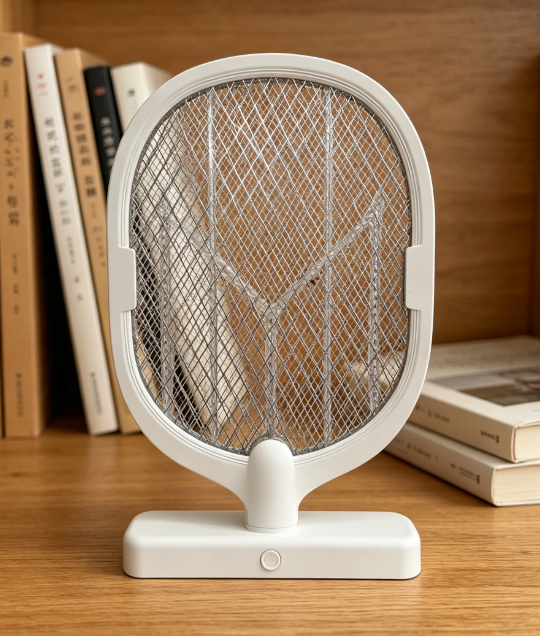
Warranty returns are the silent margin killer in the mosquito control category. A distributor who buys a swatter at $1.80 FOB and retails it at $9.90 can absorb a 1% return rate without noticing — but at 5%, the combined cost of replacement units, reverse logistics, and refund processing erases most of the line's profit.
Common mosquito swatter killer lamp failure modes wholesale spec guide

Digital bathroom scales rank as the second-highest-volume consumer weighing product category, only behind kitchen scales, with distinct market and product characteristics that set them apart from other scale types in importers’ product portfolios.
Digital bathroom body fat-bia-scale wholesale buyers guide