
Mosquitoes found in Iceland for the first time
2025-10-23
A Groundbreaking Discovery: Mosquitoes Invade the Mosquito-Free Pure Land
On October 23rd, an announcement from the Icelandic Institute of Natural History shocked the world — mosquito traces had been found in the wild within the country for the first time. This pure land, known as the "world's only mosquito-free country," ultimately failed to preserve its millennia-old ecological miracle. The person who uncovered this secret was Haltason, an ordinary local entomology enthusiast.
On the evening of October 16th, as usual, Haltason was checking the insect traps in his garden when a strange flying insect on the red insect - attracting ribbon caught his attention. "I immediately realized something was wrong and quickly collected it; it was a female individual," he recalled. Later, he captured two more insects of the same species and sent them to the institute for identification as soon as possible. After verification by entomologist Matthiasdóttir, these uninvited guests were confirmed to be Culiseta annulata — marking the first official confirmation by Iceland of mosquitoes being active in outdoor environments.
Iceland's Mosquito-Free Myth: A Careful Gift from Nature
Prior to this, Iceland's "mosquito-free legend" had long been deeply rooted in people's minds. Even though neighboring countries like Norway and Scotland were plagued by mosquitoes, this ocean - surrounded land had always managed to remain unscathed. Scientists had previously summarized three natural barriers: the frequent freeze - thaw cycles in spring and autumn cause water bodies to freeze and thaw repeatedly, directly killing mosquito eggs and larvae; the special chemical composition of water bodies brought about by volcanic activities makes waters such as hot springs unfit to be breeding grounds; and the constant strong winds disrupt the mating and foraging cycles of mosquitoes.
More interestingly, even when mosquitoes occasionally "snuck" into the country via flights — a professor from the University of Iceland once caught mosquito specimens on a flight from Greenland — they never left any traces in the wild. Locals even joked, "There are only two types of mosquitoes in Iceland: one is the specimen in the museum, and the other is the mosquito in people's imagination." This unique ecological advantage once made Iceland the only region in the world that was both livable and mosquito-free.
Why Did Mosquitoes Suddenly Appear? A Dual Signal of Globalization and Warming
The appearance of these mosquitoes this time is by no means accidental. Based on the location where they were found, Haltason speculated that these mosquitoes most likely "snuck" in through cross - border containers in the industrial area 6 kilometers away, as the constant temperature environment inside the containers provided them with a shelter for survival. And the more crucial driving force is the quietly changing climate.
Data shows that the rate of warming in Iceland is four times the average level in the Northern Hemisphere. Over the past 20 years, the average temperature has risen by 1.8℃, and glaciers have lost as much as 15 billion tons of ice each year. Matthiasdóttir pointed out that this change has weakened the "lethality" of the originally deadly freeze - thaw cycles and increased the number of windless days, creating a survival window for the cold - resistant Culiseta annulata — this type of mosquito can survive in environments below freezing point and can even overwinter in basements or barns. The comment from Turkey's Anadolu Agency hit the nail on the head: this is a clear signal that cold - adapted species are expanding to higher latitudes.

Tiny Mosquitoes: Affecting the Fragile Ecological Chain
The appearance of these three mosquitoes has triggered a chain of concerns in the Icelandic academic community. Firstly, there is the risk of ecological disturbance. As a new member of the food chain, mosquitoes may change the foraging habits of local birds and bats, and even affect the living conditions of mammals such as reindeer. Secondly, there are public health risks. Although the Culiseta annulata found this time does not transmit diseases, if mosquito species carrying pathogens enter the country later, the warming environment may provide them with a place to take root.
For ordinary people, the change is more intuitively reflected in their daily lives. Some netizens lamented, "From now on, when traveling to Iceland, we can no longer go without mosquito repellent," while others joked, "Is it still too late to go to Iceland to sell mosquito coils?" The Icelandic Environmental Protection Agency has urgently launched a national monitoring program, focusing on inspecting airports, ports, and geothermal areas in an attempt to find out whether mosquitoes have established a population here.
Conclusion: The End of the Mosquito-Free Era Marks the Start of an Ecological Warning
From being a "mosquito-free paradise" to the first discovery of mosquitoes, Iceland's ecological record has been rewritten, and at the same time, it has sounded an alarm for the whole world. Matthiasdóttir emphasized that the monitoring in the spring of next year will be crucial — only if these mosquitoes survive the winter can they be considered to have truly "settled down" in Iceland. However, regardless of the outcome, this tiny biological event is reminding us that under the dual effects of globalization and climate change, no ecological pure land can remain isolated forever.
Now, only Antarctica in the world can still retain the title of "mosquito-free pure land." And the story of Iceland may be telling us: those natural miracles that seem eternal are quietly changing in unexpected ways.
Weekly Best-Selling Product
Successfully Concludes the 138th Canton Fair
Related Article

If you’re struggling with annoying mosquitoes, flies, and other flying pests indoors and outdoors, upgrading from traditional manual tools to anElectric Mosquito Swatter is the most efficient solution. Many homeowners and renters search where to buy fly swatter online to find durable, safe, and high-performance electric models that deliver instant pest control.
Where to Buy Fly Swatter
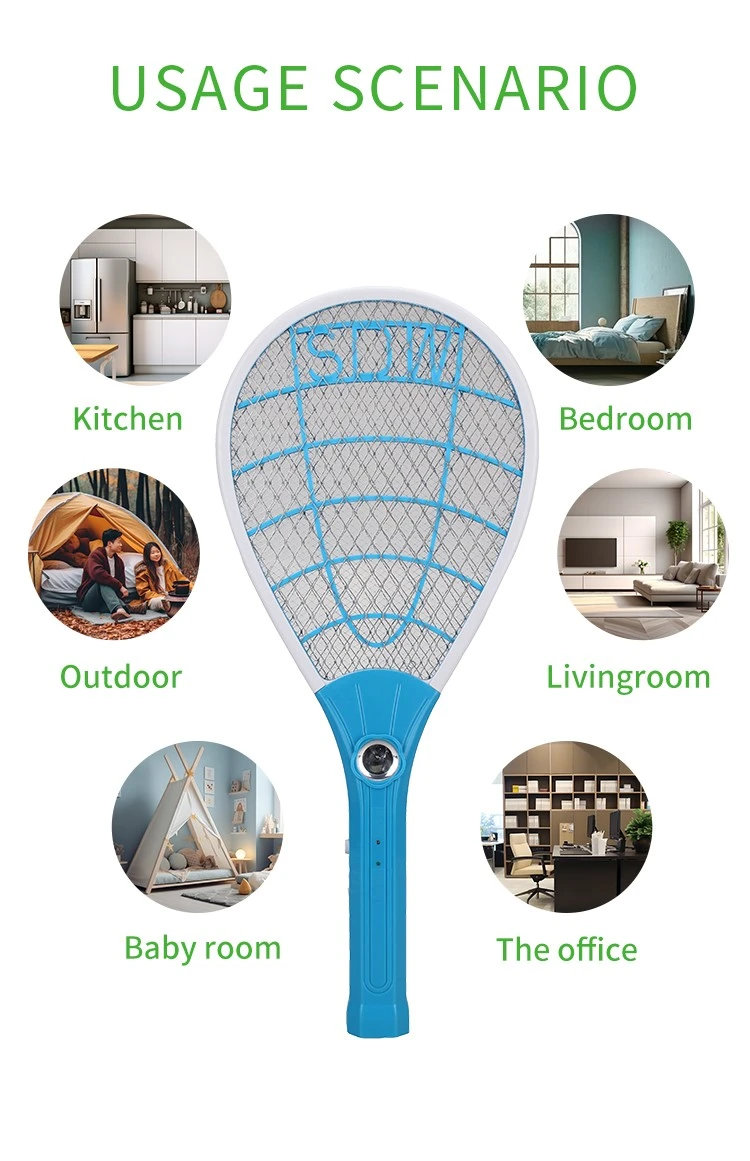
Most importers of electric mosquito swatters obsess over the first order: samples requested, factories vetted, a pre-shipment inspection booked. Then the reorder arrives eight months later and something is off. The grid feels softer. The charge port is a slightly different shade of black. The carton thickness dropped from 350 gsm to 300 gsm. Nothing is catastrophic — but the product no longer matches what your retail customers approved, and quietly, your return rate starts climbing.
How to Keep Mosquito Swatter Quality Consistent Across Repeat Orders

Warranty returns are the silent margin killer in the mosquito control category. A distributor who buys a swatter at $1.80 FOB and retails it at $9.90 can absorb a 1% return rate without noticing — but at 5%, the combined cost of replacement units, reverse logistics, and refund processing erases most of the line's profit.
Common mosquito swatter killer lamp failure modes wholesale spec guide

Digital bathroom scales rank as the second-highest-volume consumer weighing product category, only behind kitchen scales, with distinct market and product characteristics that set them apart from other scale types in importers’ product portfolios.
Digital bathroom body fat-bia-scale wholesale buyers guide