
OEM Swatter Manufacturing Project Management
2026-09-11
OEM Swatter Manufacturing Project Management: 6 Milestones, Timeline, and Communication Templates from Kickoff to First FCL
Why OEM swatter projects miss their first shipping window
Most importers treat an OEM mosquito swatter order as a single transaction: send a sketch, get a sample, place a PO. In practice, every project that ships late in the first 18 months of a brand breaks down for the same five reasons — undefined artwork handoff, tool-making left until after PO confirmation, certification testing ordered in parallel with sampling, and packaging dielines frozen too late.
The fix is a milestone chart that both sides reference every Friday. The chart below assumes a 4,000-unit pilot run with private-mold tooling, retail color box, and CE/FCC dual certification. Scale each phase proportionally for larger volumes.
The six-milestone OEM swatter project timeline
|
#
|
Milestone
|
Owner
|
Working days
|
Deliverables locked at exit
|
|---|---|---|---|---|
|
M1
|
Spec & concept lock
|
Buyer
|
3–5
|
Functional spec, target retail price, target market, battery/voltage decision
|
|
M2
|
Engineering review & DFM feedback
|
Factory
|
4–6
|
2D drawing, BOM draft, DFM note (wall thickness, mesh pitch, USB-C placement)
|
|
M3
|
Prototype A & sample approval
|
Both
|
10–14
|
3 working samples, lab test on grid voltage and battery cycle, signed golden-sample sheet
|
|
M4
|
Tooling & artwork
|
Factory
|
15–25
|
Injection mold T1 sample, color box print proof, manual layout, barcode/EAN assigned
|
|
M5
|
Pre-production run & cert filing
|
Factory
|
12–18
|
500-unit pilot run, AQL 1.5/2.5 inspection report, CE/FCC/RoHS file numbers, drop-test pass
|
|
M6
|
Mass production & FCL loading
|
Both
|
22–30
|
Bulk production, AQL final inspection, 3rd-party PSI (BV/SGS/TÜV), shipping documents, ETD/ETA calendar
|
Realistic total: 66–98 working days from M1 to ETD, or roughly 13–19 weeks. Add 10 days if you need UN38.3 lithium certification, and another 7 days if you require retail blister packaging instead of color box.
Communication templates that prevent 80% of delays
Most project slippage starts in email, not on the factory floor. Three templates remove ambiguity:
Weekly status email (every Friday, 17:00 buyer local time): subject line [Project REF-2026-XX] Wk N — Milestone status & open items. Body lists M1–M6 status (green/yellow/red), decisions needed from buyer before next Wednesday, and one photo of the line or sample currently in work.
Golden-sample approval email: subject [REF] Golden-sample sign-off — color, weight ±2g, mesh count, logo position. Attach three reference photos under D65 light. Once signed, this email becomes the contractual reference — any later claim about "the sample looked different" fails.
Mass-production deviation notice: triggered automatically if the line produces 200+ units outside the ±2g weight tolerance or with mesh pitch deviation >0.3 mm. The factory must stop the line, send 5 photos, and request buyer approval in writing before resuming.
Three checkpoints where new OEM buyers lose money
Checkpoint 1 — Artwork at M3, not M4. Sending the logo dieline at M4 forces a re-tool on the color box. Move artwork handoff into M3 (sample approval), with Pantone-coated (C) references and a CMYK proof signed in writing.
Checkpoint 2 — Cert lab queue. CE-EMC and FCC-SDOC labs in Shenzhen and Guangzhou run a 7–12 working-day queue in Q3/Q4. Book the lab slot during M4 tooling, not after M5. If the factory has its own pre-scan room (most do), request a pre-scan report 5 days before formal filing — it catches 60% of issues for free.
Checkpoint 3 — Pre-shipment inspection (PSI). Booking BV, SGS, or TÜV requires 3 working days' notice plus 1–2 days on-site. Schedule PSI at M6 day 5, not day 20. A "random selection PSI" (AQL 1.5 general, 4.0 critical) on a 4,000-unit run costs USD 280–420 and routinely saves a USD 8,000 re-work.
Adapting the milestone chart to common order profiles
Stock-model + custom color box (no private mold): drop M4 to 5–7 days. Total compresses to 38–55 working days.
Hybrid OEM/ODM (your spec, factory's existing tooling): replace M2 with a 1-day design workshop, drop M4 to 0. Total 42–60 working days.
Full ODM private mold + multi-language manual + retail blister: extend M3 by 5 days for second sample, M4 by 10 days for blister tooling, M5 by 5 days for UN38.3. Total 92–120 working days.
Final checklist before you sign the PO
Confirm in writing: (1) the milestone chart with day-counts is attached to the PI; (2) tooling ownership and amortization terms are stated (tooling fee, amortized over X units, owned by buyer after Y units shipped); (3) the factory's CE/FCC file numbers from a prior reference SKU are listed for cross-check; (4) the PSI agency is named, not "to be agreed." If any of these are missing, you do not yet have an OEM project — you have a quote.
For buyers mapping a first private-label swatter line into Walmart, Tesco, Carrefour, or a national e-commerce platform, running this six-milestone chart against a 15-year OEM partner like Aofengming Electric turns a 19-week project into a 14-week one, because the factory already has the lab pre-scan, the AQL station, and the golden-sample workflow wired into its daily production cadence.
Solar Outdoor Mosquito Killer Lamps Wholesale Buyer Guide
Type-C vs Micro-USB on Mosquito Swatters and Killer Lamps
Related Article

If you’re struggling with annoying mosquitoes, flies, and other flying pests indoors and outdoors, upgrading from traditional manual tools to anElectric Mosquito Swatter is the most efficient solution. Many homeowners and renters search where to buy fly swatter online to find durable, safe, and high-performance electric models that deliver instant pest control.
Where to Buy Fly Swatter
Most importers of electric mosquito swatters obsess over the first order: samples requested, factories vetted, a pre-shipment inspection booked. Then the reorder arrives eight months later and something is off. The grid feels softer. The charge port is a slightly different shade of black. The carton thickness dropped from 350 gsm to 300 gsm. Nothing is catastrophic — but the product no longer matches what your retail customers approved, and quietly, your return rate starts climbing.
How to Keep Mosquito Swatter Quality Consistent Across Repeat Orders
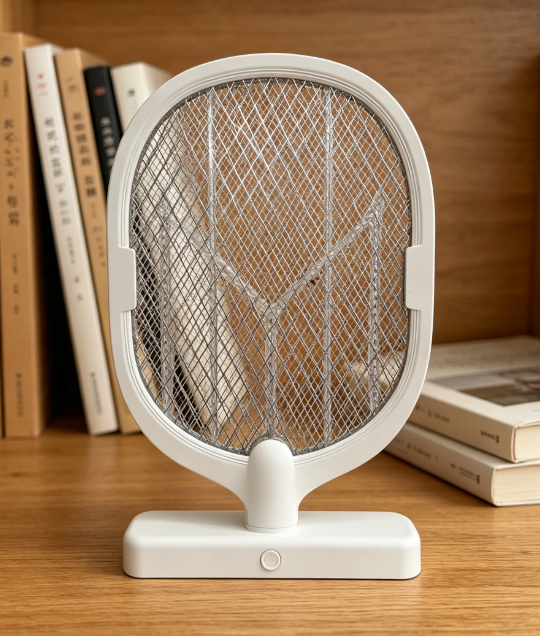
Warranty returns are the silent margin killer in the mosquito control category. A distributor who buys a swatter at $1.80 FOB and retails it at $9.90 can absorb a 1% return rate without noticing — but at 5%, the combined cost of replacement units, reverse logistics, and refund processing erases most of the line's profit.
Common mosquito swatter killer lamp failure modes wholesale spec guide

Digital bathroom scales rank as the second-highest-volume consumer weighing product category, only behind kitchen scales, with distinct market and product characteristics that set them apart from other scale types in importers’ product portfolios.
Digital bathroom body fat-bia-scale wholesale buyers guide