
OEM vs ODM Mosquito Swatter Manufacturing
2026-07-31
OEM vs ODM Mosquito Swatter Manufacturing: Which Model Fits Your Import Business?
The global small home appliance import market has witnessed steady growth in recent years, with mosquito swatters and bug zappers emerging as high-demand seasonal and daily essential products. For importers, distributors, and brand owners focusing on household pest control products, choosing the right manufacturing cooperation model directly determines product competitiveness, profit margins, market launch speed, and long-term brand development potential. When sourcing electric pest control products, three core cooperation modes dominate the supply chain: OEM mosquito swatter, ODM bug zapper, and private label mosquito killer customization.
Many small and medium-sized import businesses struggle to distinguish the practical differences between OEM and ODM manufacturing for mosquito swatters. Some opt for high-cost full customization when fast market iteration is needed, while others choose standardized ODM products and fail to build brand differentiation, resulting in sluggish sales and low profit margins. This in-depth guide is tailored specifically for small home appliance importers, systematically explaining the core logic, pros and cons, cost structures, MOQ standards, and application scenarios of OEM and ODM mosquito swatter manufacturing. Combined with a real Middle East brand launch case and a practical decision flowchart, it helps you accurately select the most suitable manufacturing model for your budget, timeline, and brand positioning
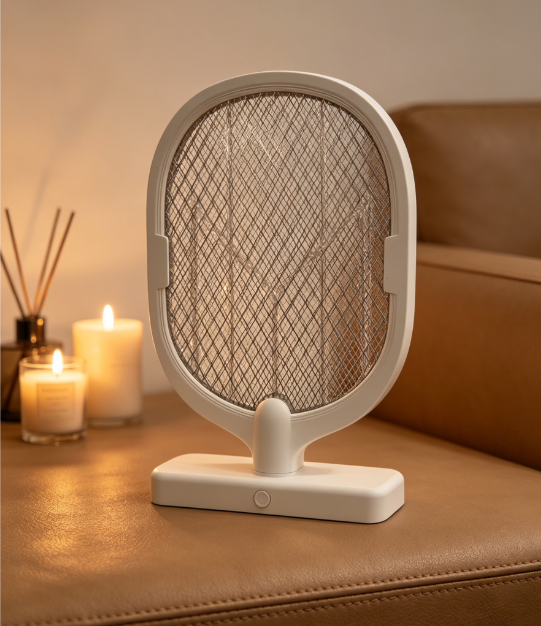
1. OEM vs ODM Explained for Small Home Appliance Importers
Before diving into specific model selection, it is critical to clarify the essential definitions of OEM and ODM in the context of mosquito swatter manufacturing, as these two modes operate completely differently in terms of intellectual property ownership, product development rights, and factory cooperation logic—distinct from generic industrial manufacturing concepts.
OEM (Original Equipment Manufacturer) mosquito swatter manufacturing refers to a pure production outsourcing model. In this mode, the importer owns all product design intellectual property. You, as the buyer, provide complete product technical specifications, structural drawings, material standards, functional parameters, appearance design requirements, and quality inspection standards. The manufacturer only undertakes raw material procurement, mass production, assembly, and packaging work strictly in accordance with your customized standards. The factory has no right to use your exclusive design for other clients, ensuring absolute product uniqueness in the market.
ODM (Original Design Manufacturer) bug zapper manufacturing is a mature design and production integrated model. The manufacturer independently completes product research and development, structural design, mold opening, and performance testing, owning all core design IP of the mosquito swatter and bug zapper products. Importers select finished mature product models from the factory’s existing product line and carry out secondary personalized modifications on the basis of standardized products. The factory can sell the same standard ODM products to multiple buyers, with differences only reflected in private label customization such as logos, colors, and packaging.
For small home appliance importers, the core difference between the two models lies in who dominates product design and innovation. OEM is buyer-led full customization, while ODM is factory-led mature product matching with lightweight customization. This fundamental difference further leads to huge gaps in MOQ, lead time, cost, and market differentiation, which we will analyze in detail below.
2. OEM Mosquito Swatter: Full Customization Control, Higher MOQ, Longer Lead Time
The biggest advantage of choosing the OEM mosquito swatter model is absolute control over the entire product, making it the top choice for importers aiming to build differentiated high-end brands and long-term market barriers. This model covers full-link customization from product core functions to external details, with no restrictions based on the factory’s existing product framework.
2.1 Core Advantages: Full Customization and Exclusive Product Barriers
In OEM cooperation, importers can customize every detail of the mosquito swatter according to local market demand characteristics. For example, for European and American markets, you can customize low-voltage safe charging, ETL/CE certified circuits, and foldable portable structures; for tropical Southeast Asian and Middle Eastern markets, you can enhance battery durability, upgrade high-power grid voltage, and customize waterproof and dustproof functions suitable for high-temperature and humid environments. In terms of appearance, you can independently design product shapes, grid sizes, handle structures, and functional button layouts, completely breaking the homogeneity of public ODM products.
More importantly, all design drawings, mold data, and product IP of OEM mosquito swatters belong exclusively to the importer. The manufacturer is prohibited from providing the same products or similar designs to any third-party customers. This exclusivity allows import brands to form unique product competitiveness in the local market, avoid price competition with homogeneous wholesale products, and effectively improve brand premium capability and user loyalty.
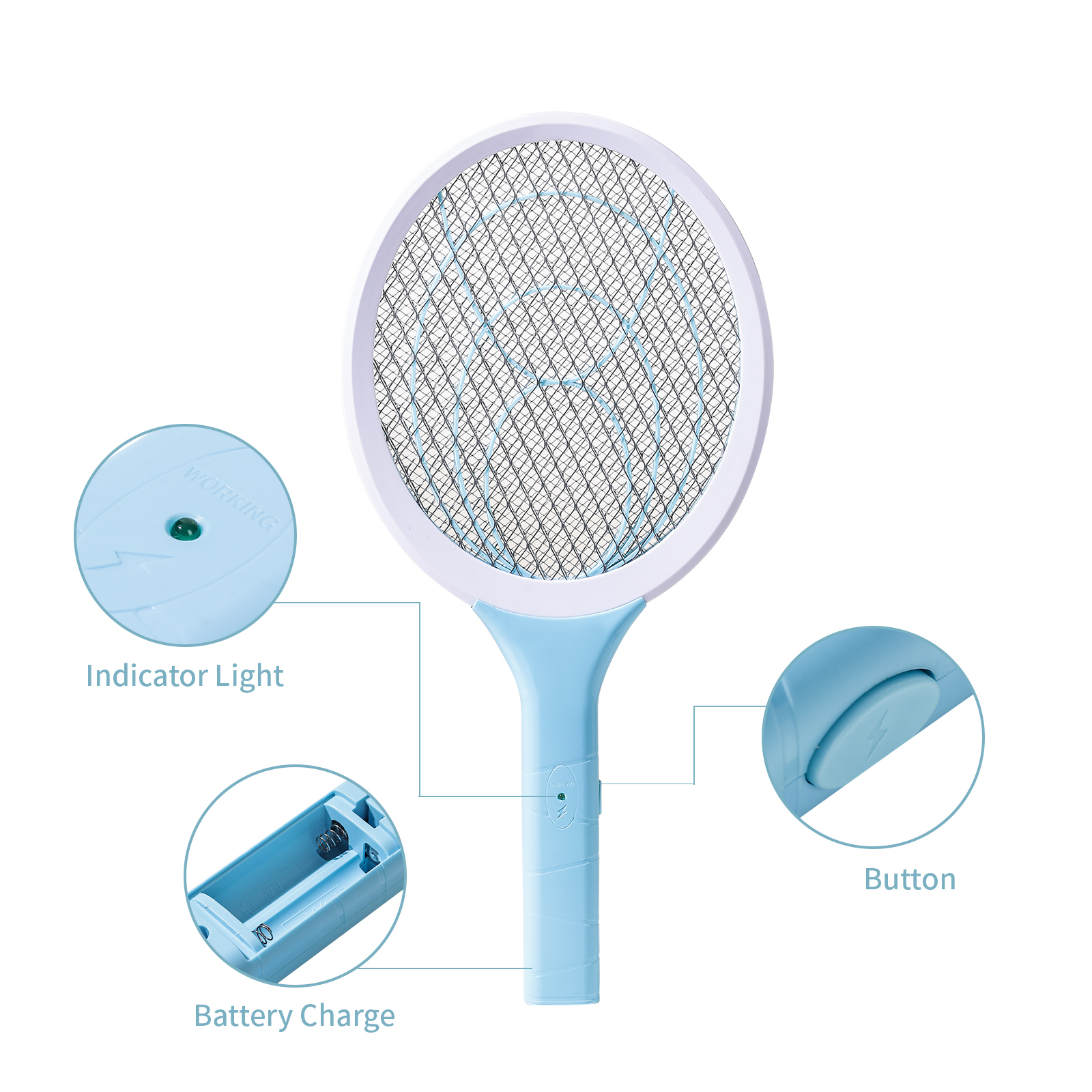
2.2 Core Disadvantages: High MOQ and Long Production Lead Time
Full customization of OEM mosquito swatters brings higher threshold costs and order quantity requirements. First, the OEM model requires independent mold opening and tooling adjustment. Custom plastic shells, circuit board structures, and special functional components all need new mold development, with a one-time mold cost ranging from $5,000 to $20,000 for conventional electric mosquito swatter products. This upfront fixed cost determines that factories cannot support small-batch trial orders, resulting in amuch higher MOQ for OEM orders compared to ODM and spot products. Generally, the MOQ for customized OEM mosquito swatters starts at 5,000–10,000 units per batch, which is a huge capital pressure for new importers or small-batch test market businesses.
Second, OEM orders have a longer overall lead time. The entire process includes design confirmation, mold opening and testing, sample production, sample modification and confirmation, mass production arrangement, quality inspection, and delivery. The whole cycle takes 45–60 working days in off-seasons and can be extended to 70–90 working days in peak summer production seasons. For importers focusing on seasonal sales of mosquito swatters, the long lead time requires advance stock arrangement and market planning, with higher operational risks.
2.3 Suitable Import Business Scenarios
The OEM mosquito swatter model is not suitable for all import businesses. It is most suitable for mature importers with stable market channels, certain brand awareness, sufficient capital budget, and long-term layout plans. If you want to create exclusive pest control product series, avoid homogeneous competition, and build a high-value brand image in the local market, OEM full customization is the best choice. It is also ideal for large supermarket chain procurement, customized government and enterprise bulk orders, and high-end boutique home appliance market layout.
3. ODM Bug Zapper: Faster to Market, Lower Cost, Less Differentiation
The ODM bug zapper model is the most mainstream and cost-effective cooperation method for small and medium-sized home appliance importers and startup import brands. Relying on the manufacturer’s mature mass-produced products and stable supply chain, it solves the pain points of high cost and slow launch of customized products, perfectly matching the needs of most importers for rapid market testing and small-batch profit making.
3.1 Core Advantages: Low Threshold and Ultra-Fast Market Launch
The biggest highlight of ODM bug zapper and mosquito swatter cooperation is zero mold cost and low upfront investment. Manufacturers have completed all mold development, product testing, and certification work for standard products in advance. Importers do not need to bear any mold opening and R&D expenses, only needing to select qualified mature product models according to market demand. This greatly reduces the threshold for import businesses to enter the pest control product market, allowing startup brands to quickly complete product layout with limited budget.
In terms of lead time, ODM orders have an absolute advantage. After confirming personalized customization requirements (logo, packaging, color), the factory can complete sample confirmation within 3–5 working days. The mass production cycle is only 10–15 working days in off-seasons and 18–25 working days in peak seasons, far shorter than OEM orders. For seasonal products such as mosquito swatters that have a short sales window (mainly concentrated in spring and summer), the fast iteration capability of ODM models allows importers to quickly seize market opportunities and respond to sudden market demand growth.
In addition, the unit production cost of ODM bug zappers is more competitive. Mature standardized mass production greatly reduces material procurement costs and production loss rates. Without additional R&D and mold amortization costs, the unit price of ODM products is 10%–20% lower than that of customized OEM products of the same configuration, bringing larger profit margins for importers in wholesale and retail links.
3.2 Core Disadvantages: Insufficient Product Differentiation
The biggest limitation of the ODM model is low product uniqueness. Since the core design, structure, and functions of ODM bug zappers are uniformly developed and owned by the factory, multiple buyers can purchase and customize the same product model. Except for personalized logos, packaging, and colors, the core product parameters and appearance structures are highly homogeneous with other brands in the market.
This homogeneity makes it difficult for ODM products to form long-term brand barriers. In the fierce market competition, most ODM mosquito swatter brands can only compete on price, which easily leads to declining profit margins and weak brand recognition. For importers who want to build high-end differentiated brands and form core market competitiveness, pure ODM lightweight customization is difficult to support long-term brand development.
3.3 Suitable Import Business Scenarios
The ODM bug zapper model is very friendly to new import startups, small and medium-sized distributors, cross-border e-commerce sellers, and businesses with short-term market testing needs. It is suitable for scenarios such as small-batch trial sales, seasonal temporary stock preparation, cross-border platform retail, and local supermarket daily wholesale. It allows importers to quickly verify market demand with low cost and low risk, and accumulate market experience and customer resources in a short time.
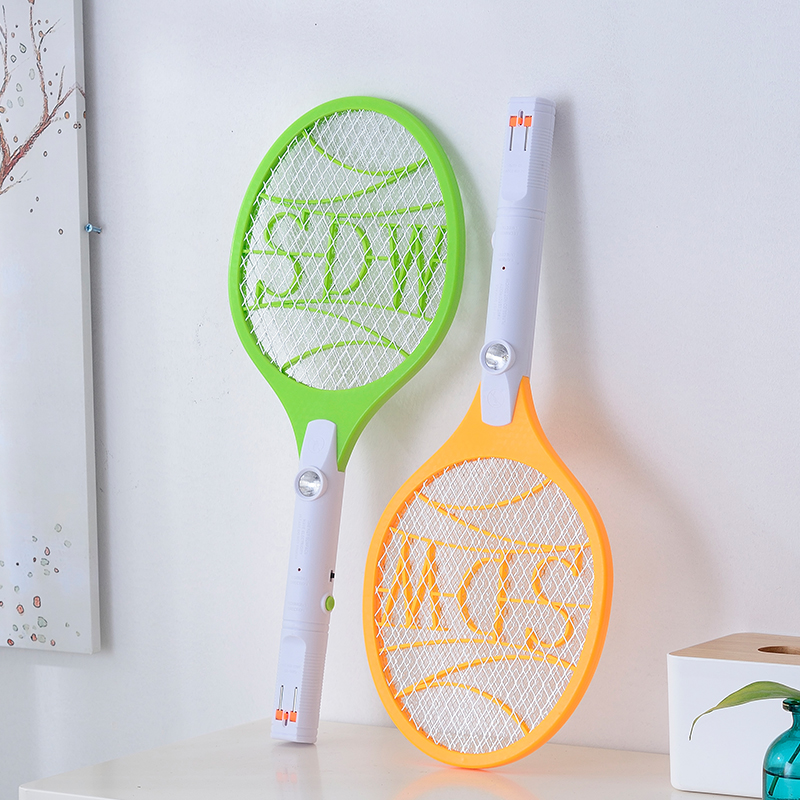
4. Private Label Mosquito Killer: Customization Options for Brand Building
Private label mosquito killer customization is a lightweight brand empowerment solution based on OEM and ODM models, and it is also the core way for most small and medium-sized import brands to build exclusive product images without high investment. Whether you choose OEM full customization or ODM mature product cooperation, you can carry out private label personalized modification, covering logo, packaging, color, and detail customization, helping brands form unique market recognition.
4.1 Logo Customization
Logo printing is the most basic and core private label service. Factories support multiple printing processes such as silk screen printing, laser engraving, and heat transfer printing for mosquito swatter handles, fuselages, and bug zapper shells. Importers can print their exclusive brand logos, brand slogans, and contact information on product surfaces. For high-end brand positioning, laser engraving is recommended, which features clear patterns, wear resistance, and no fading, improving product grade; for cost-sensitive mass wholesale, silk screen printing with lower cost and faster speed is more suitable.
4.2 Packaging Customization
Packaging is the first visual impression of products for end consumers and an important carrier of brand image. Private label mosquito killer packaging customization includes color box outer packaging, carton outer box, instruction manual, and label sticker customization. Importers can independently design packaging colors, patterns, brand information, product parameter descriptions, and multi-language instructions according to local market cultural characteristics and consumer preferences. For example, Middle Eastern markets prefer dark green and gold high-end color matching, while European and American markets favor simple and minimalist white and gray packaging. Customized exclusive packaging can effectively distinguish products from generic spot goods and enhance brand professionalism.
4.3 Color and Detail Customization
On the basis of standard ODM products, private label services also support personalized adjustment of product body colors, key accessory colors, and partial detail processes. Factories have mature color matching systems, which can customize mainstream popular colors, exclusive brand color systems, and matte/glossy surface treatments according to brand requirements. For OEM customized products, the color customization range is wider, and any personalized color matching and process design can be realized according to design drawings. This lightweight color and detail customization can greatly improve product differentiation at a very low cost.
5. MOQ Comparison Table: OEM vs ODM vs Stock Products
MOQ (Minimum Order Quantity) is one of the most concerned indicators for import businesses, which directly determines the initial investment risk and capital pressure of the order. We have sorted out the detailed parameter comparison of OEM mosquito swatter, ODM bug zapper, and stock mosquito killer products in terms of MOQ, lead time, customization degree, cost, and applicable scenarios, providing intuitive data support for your model selection.
|
Comparison Dimension
|
OEM Mosquito Swatter
|
ODM Bug Zapper
|
Stock Mosquito Killer
|
|---|---|---|---|
|
MOQ (Minimum Order Quantity)
|
5,000–10,000 units/batch
|
500–2,000 units/batch
|
100–300 units/batch
|
|
Production Lead Time
|
45–90 working days
|
10–25 working days
|
3–7 working days (direct shipment)
|
|
Customization Degree
|
Full customization (function, structure, appearance, mold)
|
Light customization (logo, packaging, color)
|
No customization (fixed standard product)
|
|
Upfront Cost
|
High (mold fee + sample fee + mass production cost)
|
Medium (only customization fee + production cost)
|
Low (only product procurement cost)
|
|
Product Differentiation
|
High (exclusive design, no homogeneity competition)
|
Medium (core homogeneous, differentiated appearance)
|
Low (completely homogeneous market products)
|
|
IP Ownership
|
Importer owns full IP
|
Factory owns IP (buyer has exclusive sales right)
|
Factory public IP
|
|
Applicable Business
|
Mature brands, large distributors, long-term layout
|
Startup brands, small-batch trial sales, cross-border sellers
|
Temporary stock, small-batch retail, market trial
|
From the comparison table, it can be clearly seen that the three models form a complete gradient from low-risk short-term trial to high-investment long-term layout. Stock products are suitable for ultra-small-batch rapid trial sales, ODM bug zappers balance cost, risk and brand customization, and OEM mosquito swatters are the ultimate choice for brand long-term competitiveness layout.
6. Real Case: How a Middle East Brand Launched with Our ODM Swatter in 30 Days
To help importers intuitively understand the practical advantages of the ODM private label model, we share a real cooperation case of a new household appliance brand from Saudi Arabia launching mosquito swatter products, which perfectly verifies the low-risk and fast-launch advantages of ODM bug zapper customization.
The client is a new local home appliance retail brand in Saudi Arabia, focusing on daily household small appliances. In February 2025, the brand planned to enter the local mosquito control product market in advance of the summer peak sales season. Facing three core pain points: insufficient initial brand budget, no independent product R&D capability, and urgent need to seize the pre-summer market window, the client finally chose our ODM bug zapper private label customization solution after comparing multiple manufacturing models.
In terms of product selection, we recommended our mature hot-selling three-layer safety grid mosquito swatter, which has passed CE, ROHS and local Middle East safety certifications, with high battery durability and high electric shock power, fully adapting to the local high-temperature and humid mosquito-prone environment. In terms of private label customization, we provided exclusive laser brand logo engraving, local Arabic + English dual-language packaging customization, and customized desert gold shell color matching that conforms to Middle Eastern aesthetic preferences.
The entire project cycle only took 30 days from demand confirmation to batch delivery: On the 1st–3rd day, completed product model selection and customization scheme confirmation; on the 4th–7th day, completed private label sample production and client confirmation; on the 8th–25th day, completed mass production, quality inspection and packaging; on the 26th–30th day, completed container loading and delivery arrangement. The whole process required no mold investment and no complicated design development, greatly saving the client’s time and capital cost.
After the products were launched in the local Saudi market, relying on exquisite private label packaging, localized color matching and reliable product quality, the brand quickly opened the local retail and supermarket wholesale channels. Within two months of launch, the product sales volume exceeded 8,000 units, and the repurchase order volume increased by 120%. This case fully proves that for new import brands with tight time, limited budget and no R&D capability, the ODM private label mosquito killer model is the most efficient and low-risk market entry solution.
7. Decision Flowchart: Choose the Right Model Based on Budget and Timeline
After understanding the characteristics, advantages, disadvantages and applicable scenarios of OEM and ODM mosquito swatter manufacturing, many importers still face selection confusion in actual business. We have sorted out a clear decision logic flowchart based on the three core dimensions of market launch timeline, capital budget, and brand positioning, helping you quickly lock the most suitable cooperation model.
7.1 Step 1: Confirm Your Market Launch Timeline
If your product launch timeline is within 1 month: Priority is given to stock products or ODM private label mosquito killer customization. OEM orders with long mold opening and production cycles cannot meet the rapid launch demand, and ODM lightweight customization can complete product launching in the shortest time.
If your product launch timeline is 1–3 months: ODM bug zapper is the optimal choice, which can balance customization richness and launch speed, leaving sufficient time for brand packaging and market promotion layout.
If your product launch timeline is more than 3 months: You can consider OEM mosquito swatter full customization, using sufficient cycle time to complete mold opening, design debugging and mass production, and launch exclusive differentiated products to seize the off-season pre-layout opportunity.
7.2 Step 2: Evaluate Your Initial Capital Budget
If your initial budget is limited (less than $10,000): Choose ODM private label customization or stock products. No high mold and R&D costs, low order threshold, and controllable risk, suitable for small-batch trial sales.
If your initial budget ismedium ($10,000–$50,000): Prioritize optimized ODM bug zapper customization, which can carry out richer private label modifications and appropriately increase order volume to obtain lower unit prices and higher profit margins.
If your initial budget is sufficient (more than $50,000): Choose OEM mosquito swatter full customization, invest in exclusive molds and design, create differentiated exclusive products, and build long-term brand barriers.
7.3 Step 3: Clarify Your Long-Term Brand Positioning
If you are a new startup brand focusing on short-term market profit and demand verification: ODM private label mosquito killer is the best choice, with low risk and fast return, which can quickly verify local market demand and accumulate customer resources.
If you are a mature brand pursuing long-term market layout and brand premium: OEM full customization is recommended. Exclusive design and product IP can completely get rid of homogeneous price competition and form sustainable brand competitiveness.
If you only need temporary seasonal stock and bulk wholesale: Stock products can be prioritized, with zero customization cycle and ultra-fast delivery, meeting sudden seasonal order demands.
8. Final Conclusion & Sourcing Suggestions
In the mosquito swatter and bug zapper import business, there is no absolute best manufacturing model, only the most suitable one for your business stage. The OEM mosquito swatter model is a high-investment, high-barrier, high-return long-term layout solution, suitable for mature brands pursuing product exclusivity and long-term market dominance. The ODM bug zapper model is a low-threshold, fast-iterative, cost-effective market entry tool, which is the first choice for most new import startups and small and medium-sized distributors. Theprivate label mosquito killer customization service, as a lightweight brand empowerment method, can help all import brands quickly complete brand image building without high investment.
For most small and medium-sized import businesses, we recommend adopting a phased development strategy: In the initial market trial stage, choose ODM private label customization to verify market demand with low risk and accumulate brand popularity; after stabilizing sales channels and confirming market demand, upgrade to OEM full customization, launch exclusive differentiated products, get rid of price competition, and realize brand upgrading and profit margin improvement.
Whether you need ODM rapid private label launching or OEM exclusive customized development, choosing a professional mosquito swatter manufacturer with mature supply chain, complete certification, and rich foreign trade experience can effectively reduce cooperation risks, shorten delivery cycles, and ensure product quality stability. Reasonable selection of manufacturing models will help your pest control product import business achieve stable growth and long-term development in the fierce global market competition.
2026 Mosquito Control Product Market Trends
How to Find a Reliable Mosquito Swatter Manufacturer in China
Related Article
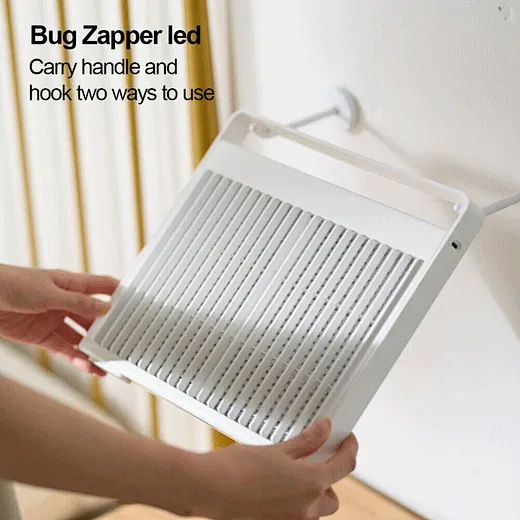
Along with air conditioners and fans, mosquito killer lamps are essential household appliances in summer. They operate quietly with no harsh odor. Compared with mosquito coils and repellent liquids, they are safer and more friendly to the elderly, children, and people with sensitive skin and respiratory systems. However, many users encounter an awkward issue: a faint burnt smell emerges soon after turning on the lamp.
Why Does Your Mosquito Killer Lamp Smell Burnt
The World Health Organization reported an estimated 14.5 million cases in 2024, following roughly 6.5 million in 2023, marking the two highest annual totals on record. For distributors of electric mosquito swatters and mosquito killer lamps, this carries critical commercial implications: public health campaigns, retail reorders, and consumer panic buying all converge within narrow time windows.
Dengue Outbreaks and Mosquito Control Product Demand
Mosquitoes rampage every summer, and mosquito incense is a must-have household mosquito repellent. As a traditional insect-repellent tool, coil mosquito incense, electric mosquito repellent tablets, and electric mosquito repellent liquids are widely used in most families. Their core active ingredient is usually pyrethroids.
Is Mosquito Incense Effective
Chinese OEM factories can easily print your custom logo on mosquito swatter handles, but they cannot secure legal trademark registration for your brand. This critical distinction — a registered legal trademark versus a mere printed logo — separates ordinary wholesale importers from legitimate brand owners. In 2026, this gap brings tangible business consequences across major global sales and customs platforms.
How to Register and Defend Your Mosquito Swatter Brand in 2026