
Revealing the Labor Cost of Electric Fly Swatters
2026-02-01
Revealing the Labor Cost of Electric Fly Swatters: How Much Does Labor Cost for This Small Mosquito-Killing Tool?
Electric fly swatters on the market range from more than ten yuan to dozens of yuan. For this small mosquito-killing tool, excluding raw materials and packaging, how much does the labor cost account for? Today, we will break down the composition of the labor cost of electric fly swatters and use real industry data to show you the inside story — no empty talk, only real costs.
There is no fixed standard for the labor cost of electric fly swatters, which is affected by the production mode (automated/semi-automated), regional differences, production scale, and product complexity, but it is generally within a quantifiable range. According to the relevant report of the China Household Electrical Appliances Association, the labor cost accounts for about 12% — 15% of the manufacturing cost of electric fly swatters. Although it seems not high, when allocated to a single product, it can also intuitively reflect the labor input in the production link.
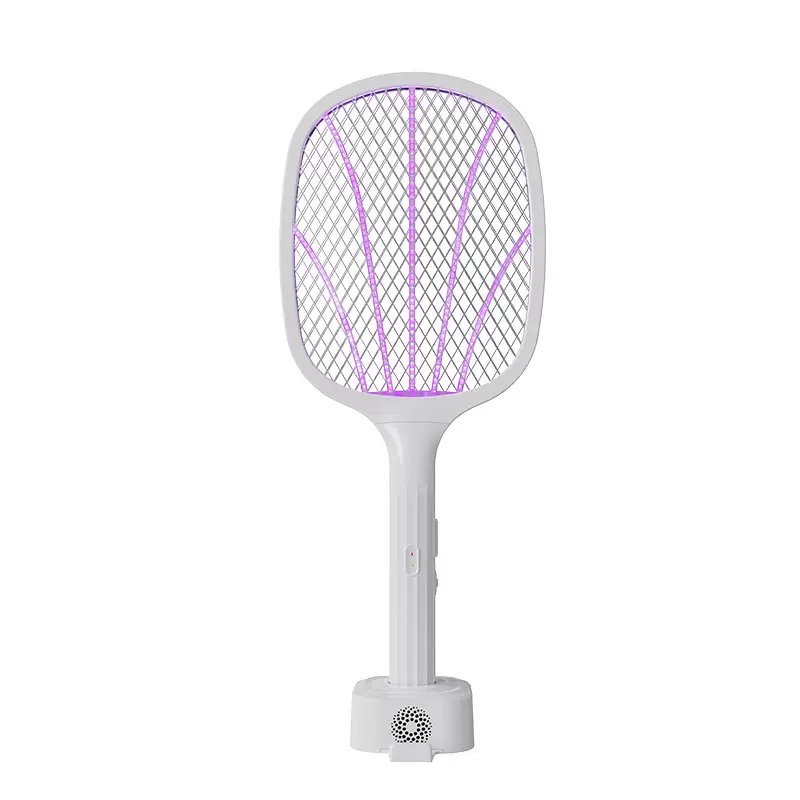
I. Which Links in Electric Fly Swatter Production Require Labor?
Although the structure of an electric fly swatter is not complicated, it needs to go through at least 5 core processes from raw materials to finished products, and each step is inseparable from manual participation (even automated production lines require manual operation and supervision). Combined with the industry production process, the main labor input is concentrated in these links:
-
Injection Molding Assistance: The frame and handle of the electric fly swatter are formed by insulating plastic injection molding. Even with automated injection molding machines, it is necessary to manually place molds, take out finished products, and clean up leftover materials to avoid defective products flowing into the next process.
-
Power Grid and Circuit Assembly: This is the most time-consuming link with the highest labor cost. Whether it is a traditional metal wire mesh or a new type of conductive plastic power grid, it needs to be manually spliced and fixed; at the same time, it is necessary to weld circuit boards, battery interfaces, and switches. Each solder joint requires precise operation to avoid short circuits.
-
Testing and Debugging: Electric fly swatters are small household appliances with high safety requirements. It is necessary to manually test the high-voltage discharge effect, switch sensitivity, and battery life, as well as check whether the power grid is loose and the shell is damaged, to ensure that each product meets the safety standards.
-
Packaging and Warehousing: After passing the inspection, the products are manually cleaned, bagged, boxed, pasted with instructions and qualification certificates, and finally packed into cartons and put into storage. The whole process requires manual sorting and handling.
As a supplement: High-end electric fly swatters (such as those with telescopic, lighting, and fast charging functions) also require additional manual assembly of telescopic rods and debugging of lighting modules, and the labor cost will be 20% — 30% higher than that of ordinary models. Small and medium-sized manufacturers mostly adopt semi-automated production lines, relying on manual insertion and visual inspection, so the labor input is more than that of the automated production lines of leading brands.
II. Core Data: How Much Is the Labor Cost per Electric Fly Swatter?
Combined with the current industry salary level (taking the core production bases of electric fly swatters in Guangdong and Zhejiang as examples), we break down the labor cost per unit into "ordinary models" and "high-end models". All data are referenced from recent manufacturer recruitment information and industry reports, which are true and verifiable.
1. Basic Parameters (Key Variables Affecting Labor Cost)
-
Salary Standard: The monthly salary of front-line production workers (injection molding assistance, assembly, packaging) is 4,200 — 5,500 yuan; the monthly salary of technical workers (soldering, testing) is 4,500 — 6,000 yuan, including board and lodging. Some manufacturers provide full-attendance bonuses and seniority bonuses. Calculated based on 26 working days per month and 8 working hours per day, the hourly wage of front-line workers is about 20 — 25 yuan, and that of technical workers is about 22 — 28 yuan.
-
Production Efficiency: For ordinary electric fly swatters, skilled workers can assemble 80 — 120 units per person per day; for high-end models with more complex processes, each person can assemble 50 — 80 units per day. Automated production lines can improve efficiency, and leading brands have a daily output of more than 50,000 units, so the proportion of labor cost can be reduced to less than 18% [4][6].
2. Calculation of Labor Cost per Unit (Excluding Management and Logistics Labor)
We calculate based on "100 units of daily output per person (ordinary model) and 22 yuan per hour": a worker works 8 hours a day with a total salary of 176 yuan. Allocated to 100 products, the labor cost per unit is about 1.76 yuan; if calculated based on 80 units per day, the labor cost per unit is about 2.2 yuan.
For high-end models, calculated based on "60 units of daily output per person and 25 yuan per hour": a worker's daily salary is 200 yuan. Allocated to 60 products, the labor cost per unit is about 3.3 yuan; if the process is more complex (such as with intelligent sensing), the labor cost per unit can reach 4 — 5 yuan.
3. Hidden Labor Costs (Easily Ignored but Actually Exist)
The above calculation is only the direct labor cost of front-line production workers. In actual production, there are two types of hidden labor costs that need to be allocated:
-
Management and Logistics: Workshop managers, quality inspection supervisors, and warehouse managers have a monthly salary of 5,000 — 7,000 yuan. Allocated by production capacity, it increases about 0.2 — 0.3 yuan per unit.
-
Rework of Defective Products: The pass rate of small and medium-sized manufacturers fluctuates between 82% and 94%. Defective products need to be manually reworked and repaired. Allocated to qualified products, it increases about 0.1 — 0.2 yuan per unit.
Overall: The labor cost per ordinary electric fly swatter is about 1.9 — 2.5 yuan; that of high-end models is about 3.5 — 5.5 yuan. This range is in line with the current industry status — leading brands rely on automated production lines, and the labor cost can be controlled at 1.9 — 3 yuan per unit; small and medium-sized manufacturers rely on labor, and the cost is mostly 2.2 — 5.5 yuan per unit [3][6].
III. Extended Thinking: Why Is There a Difference in Labor Costs?
Many people will ask why there is such a big gap in labor costs for the same electric fly swatter? There are 3 core reasons. Understanding them will help you understand the cost logic of electric fly swatters at different prices:
-
Differences in Production Modes: Leading brands (such as Kangming and Jiuliang) have built their own automated production lines, with an automation rate of more than 70% in links such as injection molding and chip mounting. Labor is mainly responsible for testing and assembly, with high efficiency and high per capita output, so the labor cost is naturally lower; small and medium-sized foundries mostly use semi-automated production lines, relying on manual operation for most processes, with low efficiency and high cost.
-
Regional Differences: Zhongshan in Guangdong, Cixi in Zhejiang, and Zhangzhou in Fujian are the three core production bases. The local workers' salaries are relatively stable (monthly salary 4,200 — 6,000 yuan); in non-core production areas, workers' salaries may be 10% — 15% lower, but the production capacity and efficiency will also decrease synchronously, resulting in little difference in the final labor cost [4].
-
Differences in Production Scale: Large factories have a daily output of tens of thousands of units. Workers are highly skilled and have refined division of labor, with a per capita daily output of 100 — 150 units, so the labor cost per unit after allocation is lower; small factories have a daily output of several hundred units, with no refined division of labor and insufficient worker proficiency, with a per capita daily output of only 50 — 80 units, so the cost is naturally higher [3][6].
IV. Conclusion: Does Labor Cost Determine the Lower Limit of Electric Fly Swatter Prices?
By now, I believe everyone has a clear understanding: although the labor cost of electric fly swatters accounts for a relatively small proportion (12% — 15%), when allocated to a single product, it is one of the important factors affecting pricing. For ordinary electric fly swatters of more than ten yuan, the labor cost accounts for about 10% — 15% of the selling price; for high-end electric fly swatters of dozens of yuan, the labor cost accounts for about 5% — 10% of the selling price. Although the proportion decreases, the absolute amount is higher.
In fact, it is not difficult to find that the labor cost of electric fly swatters is essentially a balance between "efficiency and precision" — automated production lines reduce costs, but require high initial equipment investment; manual assembly has high costs, but strong flexibility, which is suitable for niche and high-end models. For consumers, there is no need to be overly entangled in labor costs. After all, the service life of an electric fly swatter can reach 1 — 2 years, and cost performance is the core; but for manufacturers, controlling labor costs and improving production efficiency are the keys to standing firm in the industry.
Revealing the Best-Selling Code of Electric Mosquito Swatters
Your Electric Mosquito Swatter Can Be Tailored to Your Needs
Related Article

If you’re struggling with annoying mosquitoes, flies, and other flying pests indoors and outdoors, upgrading from traditional manual tools to anElectric Mosquito Swatter is the most efficient solution. Many homeowners and renters search where to buy fly swatter online to find durable, safe, and high-performance electric models that deliver instant pest control.
Where to Buy Fly Swatter

Most importers of electric mosquito swatters obsess over the first order: samples requested, factories vetted, a pre-shipment inspection booked. Then the reorder arrives eight months later and something is off. The grid feels softer. The charge port is a slightly different shade of black. The carton thickness dropped from 350 gsm to 300 gsm. Nothing is catastrophic — but the product no longer matches what your retail customers approved, and quietly, your return rate starts climbing.
How to Keep Mosquito Swatter Quality Consistent Across Repeat Orders

Warranty returns are the silent margin killer in the mosquito control category. A distributor who buys a swatter at $1.80 FOB and retails it at $9.90 can absorb a 1% return rate without noticing — but at 5%, the combined cost of replacement units, reverse logistics, and refund processing erases most of the line's profit.
Common mosquito swatter killer lamp failure modes wholesale spec guide

Digital bathroom scales rank as the second-highest-volume consumer weighing product category, only behind kitchen scales, with distinct market and product characteristics that set them apart from other scale types in importers’ product portfolios.
Digital bathroom body fat-bia-scale wholesale buyers guide