
Revealing the Voltage of Electric Mosquito Swatters
2025-10-29
Revealing the Voltage of Electric Mosquito Swatters: How Many Volts Does It Take to Eliminate Mosquitoes Easily?
Waving an electric mosquito swatter that makes a "crackling" sound and watching mosquitoes be eliminated instantly, many people can't help but wonder: How many volts of voltage are hidden in this small electric mosquito swatter? Today, we will delve into the topic of the voltage of electric mosquito swatters to help you understand the "electrical secrets" behind this daily item.

I. The Voltage of Electric Mosquito Swatters: Understanding the Core Parameter in Two Parts
To know the voltage of an electric mosquito swatter, it is first necessary to clarify that its voltage is not a "single value" but is divided into two parts: battery voltage and power grid voltage. There is a huge gap between the two, and their functions are completely different.
1. Battery Voltage: Low-Voltage Power Supply with No Safety Risks
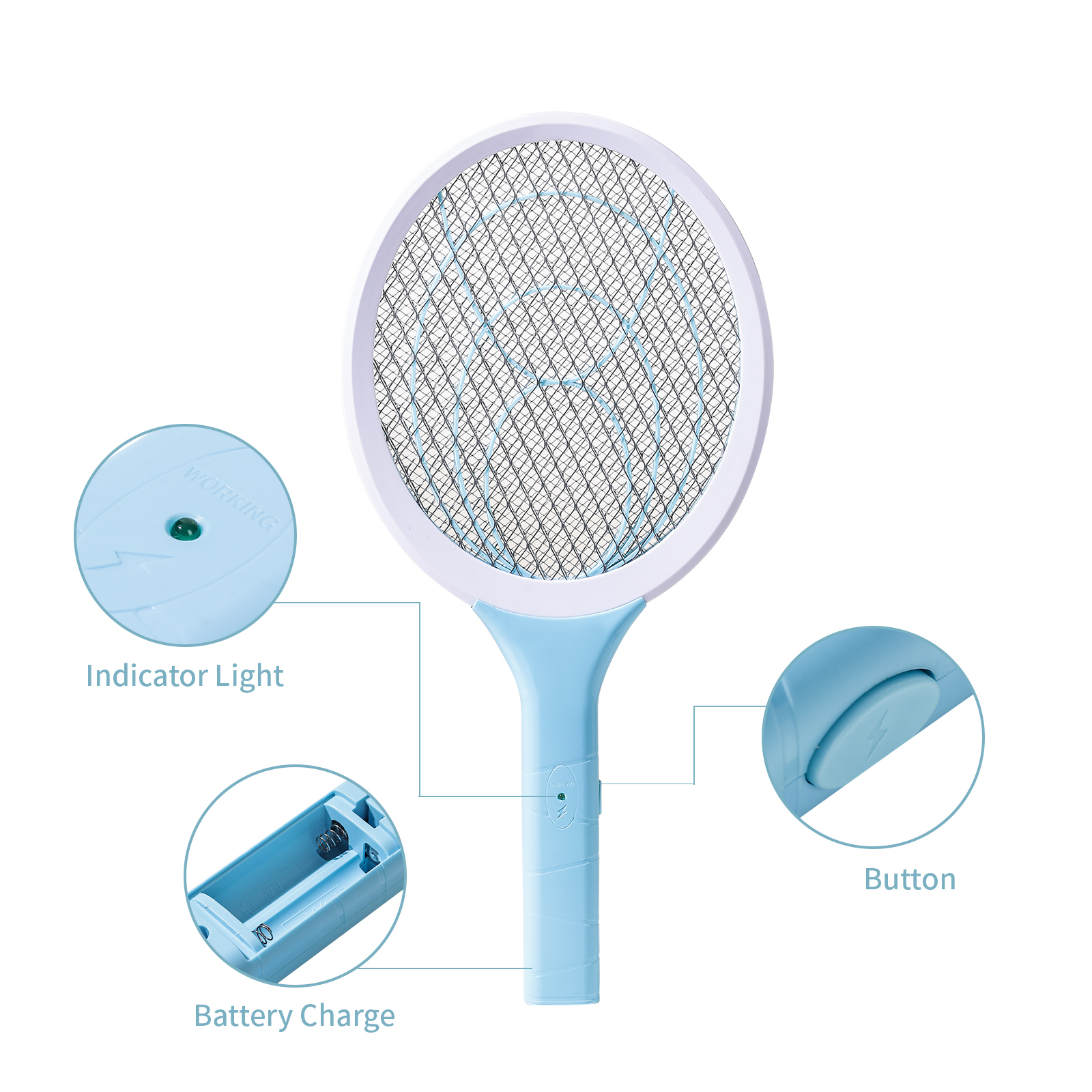
The "power source" of an electric mosquito swatter is its built-in battery, which is commonly available in two types: dry batteries and rechargeable lithium batteries. Regardless of the type, the output voltage of the battery is very low, and its main function is to provide basic power for the subsequent voltage boosting process.
- If dry batteries are used, most are two AA or AAA batteries connected in series, with a total voltage usually being 3V;
- For rechargeable models, the voltage of the built-in lithium battery is generally around 3.7V (similar to the voltage of a mobile phone battery).
The voltage at this stage is comparable to that of remote controls and flashlights we use daily. Even if you come into direct contact with the battery, it will not cause any electric shock risk to the human body, so it is highly safe.
2. Power Grid Voltage: High-Voltage for Mosquito Elimination, with "Instant Power" as the Key
What truly eliminates mosquitoes is the power grid voltage processed by the voltage boosting circuit inside the electric mosquito swatter. This step is the core technology of the electric mosquito swatter — through internal components such as transformers and capacitors, the low voltage of the battery is quickly boosted, and finally, a high voltage sufficient to break down the air and electrocute mosquitoes is formed between the power grids.
According to national standards and common products on the market, the power grid voltage of electric mosquito swatters is usually between 800V and 2500V, and mainstream products are mostly concentrated in the range of 1200V to 1800V. This voltage range can not only ensure that mosquitoes (especially larger ones like mosquitoes and flies) are stunned or killed instantly but also avoid serious harm to the human body by controlling the current intensity.
For example, when we accidentally touch the power grid with our hands, we will only feel a slight tingling sensation, rather than the electric shock risk we would face when touching the 220V household voltage. This is the ingenuity of the "high-voltage, low-current" design of electric mosquito swatters.
II. Higher Voltage Is Not Necessarily Better; These Factors Are More Important
Some consumers may think that "the higher the voltage, the better the mosquito elimination effect", but this idea is not entirely accurate. Excessively high voltage will not only increase the product cost but also bring unnecessary safety hazards. For instance, "arc discharge" is prone to occur between the power grids, and it may even damage small electrical appliances around.
When choosing an electric mosquito swatter, in addition to paying attention to the voltage, you should attach more importance to the following points:
- Power Grid Structure: Priority should be given to the three-layer power grid design (the outer layer is a protective grid, and the inner layer is a high-voltage grid). It can not only prevent accidental touch but also avoid mosquitoes from "escaping";
- Battery Capacity: For rechargeable electric mosquito swatters, it is recommended to choose those with a capacity of more than 1200mAh, which have longer battery life and do not require frequent charging;
- Safety Certification: Choose products with 3C certification. They will have designs such as overvoltage protection and short-circuit protection inside, making them more reliable to use.
III. Using Electric Mosquito Swatters: Remember These Safety Details
Although the power grid voltage of electric mosquito swatters is relatively safe for the human body, we still need to pay attention to details during use to avoid accidents:
- Do not operate the electric mosquito swatter with wet hands, and do not use it in humid environments such as bathrooms, as humidity will increase the risk of electric shock;
- Avoid hitting metal objects or getting close to flammable and explosive items (such as insecticides and mosquito coil liquids) to prevent sparks caused by high voltage;
- When children use it, they must be accompanied by adults, and children should not wave the electric mosquito swatter as a "toy";
- When not in use for a long time, take out the battery or store it after fully charging to prevent battery leakage from damaging the device body.
Conclusion
After reading this, I believe you have a clear understanding of the voltage secrets of electric mosquito swatters — the 3V/3.7V battery voltage provides power, and the 800V-2500V power grid voltage is responsible for eliminating mosquitoes. The "low-voltage power supply, high-voltage mosquito elimination" design makes it both efficient and relatively safe. Next time you pick up an electric mosquito swatter, you may wish to pay more attention to the voltage parameters on the product manual, choose and use this "mosquito elimination helper" correctly, and reduce the trouble caused by mosquitoes in your life.
Revealing the Material of Electric Mosquito Swatter Mesh
Can Electric Mosquito Swatters Kill Dust Mites
Related Article

If you’re struggling with annoying mosquitoes, flies, and other flying pests indoors and outdoors, upgrading from traditional manual tools to anElectric Mosquito Swatter is the most efficient solution. Many homeowners and renters search where to buy fly swatter online to find durable, safe, and high-performance electric models that deliver instant pest control.
Where to Buy Fly Swatter
Most importers of electric mosquito swatters obsess over the first order: samples requested, factories vetted, a pre-shipment inspection booked. Then the reorder arrives eight months later and something is off. The grid feels softer. The charge port is a slightly different shade of black. The carton thickness dropped from 350 gsm to 300 gsm. Nothing is catastrophic — but the product no longer matches what your retail customers approved, and quietly, your return rate starts climbing.
How to Keep Mosquito Swatter Quality Consistent Across Repeat Orders
Warranty returns are the silent margin killer in the mosquito control category. A distributor who buys a swatter at $1.80 FOB and retails it at $9.90 can absorb a 1% return rate without noticing — but at 5%, the combined cost of replacement units, reverse logistics, and refund processing erases most of the line's profit.
Common mosquito swatter killer lamp failure modes wholesale spec guide

Digital bathroom scales rank as the second-highest-volume consumer weighing product category, only behind kitchen scales, with distinct market and product characteristics that set them apart from other scale types in importers’ product portfolios.
Digital bathroom body fat-bia-scale wholesale buyers guide