
Round vs Other Shapes of Electric Mosquito Swatters
2025-10-28
Round vs. Other Shapes of Electric Mosquito Swatters: Is There a Real Functional Difference?
Electric mosquito swatters become an "essential anti-mosquito tool" in every household. However, when choosing one, many people hesitate: beyond appearance, is there any functional difference between round electric mosquito swatters and those of other shapes like square or diamond? What’s more puzzling is why most electric mosquito swatters on the market adopt an arc-shaped design. Today, starting from the core need of catching mosquitoes and design logic, we will analyze the functional differences between mosquito swatters of different shapes, while explaining the reason for the popularity of arc-shaped designs, helping you select a truly practical product.
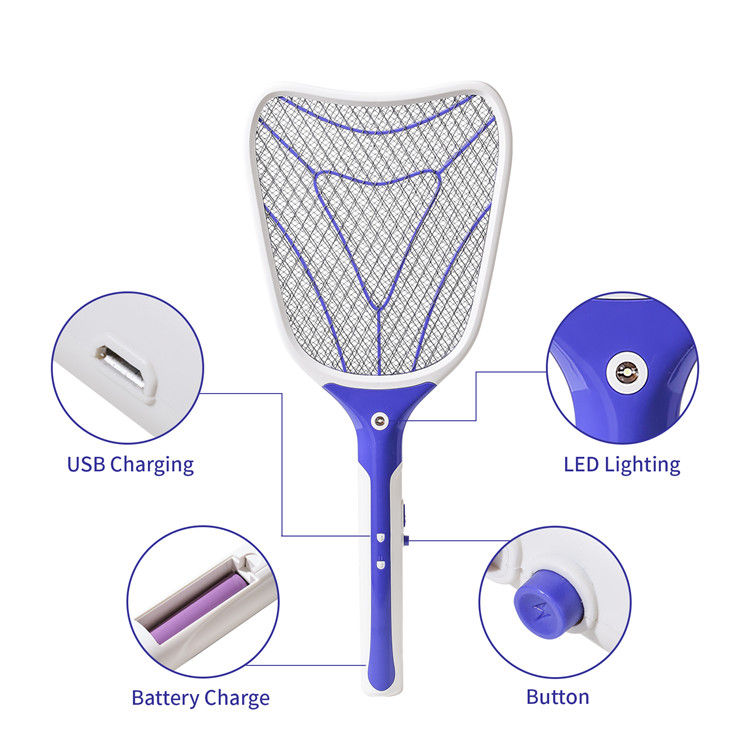
I. Core Function Comparison: Which Offers Better Mosquito-Catching Efficiency?
The core function of an electric mosquito swatter is "catching mosquitoes," and the impact of shape on mosquito-catching efficiency is mainly reflected in three aspects: coverage range, flexibility in chasing mosquitoes, and power grid utilization rate.
1. Round (Arc-Shaped) Electric Mosquito Swatters: More Flexible for "Precise Mosquito Catching" in Small Spaces
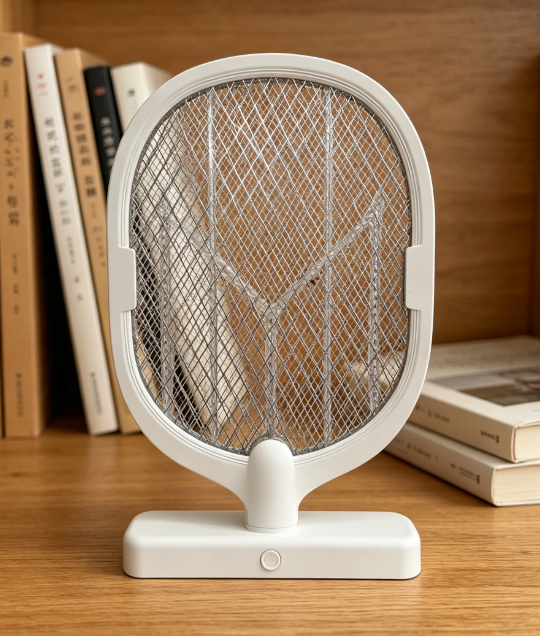
The surface of round (arc-shaped) electric mosquito swatters is mostly a complete circle or a smooth arc, usually with a diameter between 15-20 cm. The advantages of this design are obvious:
- No Dead Angles in Chasing: The arc-shaped surface has no sharp corners. When dealing with fast-flying mosquitoes, the power grid can make even contact with the insects no matter which direction (up, down, left, right) you swing the swatter. It is especially suitable for use in small spaces such as bedrooms and beside bedside tables. When dealing with mosquitoes "flying around the bedside," you don’t need to deliberately adjust the angle, and the success rate of swinging to catch mosquitoes is higher.
- Lightweight and Ergonomic Adaptation: The frame of the arc-shaped surface is mostly an integrated arc structure, with uniform material distribution. It is lighter than a square swatter of the same size. At the same time, the arc lines fit the movement trajectory of the palm, so the wrist bears force more evenly during long-term use, and women or the elderly will not easily feel fatigued. It is suitable for "short-distance, high-frequency" mosquito-catching scenarios.
However, it has a prominent shortcoming: limited coverage area. In open spaces such as living rooms and balconies, when facing multiple mosquitoes flying at the same time, a round (arc-shaped) swatter can only focus on one mosquito at a time, and its efficiency is lower than that of a large-sized square swatter.
2. Square/Diamond Electric Mosquito Swatters: More Efficient for "Wide-Range Catching" in Large Spaces
The surface area of square (including rectangular and diamond-shaped) electric mosquito swatters is usually larger, with a common size of over 20 cm × 15 cm. Some models are even designed with a "widened surface," making them more functionally suitable for large spaces:
- Wide Coverage Range: The horizontal or vertical length of the square surface is longer, so it can cover a larger area when swung. For example, when chasing mosquitoes in the living room, one swing can cover the area from the sofa to the coffee table, reducing the number of "escaped mosquitoes."
- High Power Grid Utilization Rate: The power grid of the square surface is arranged more neatly, which can make full use of the surface space. Some models even add "reinforced power grids" at the corners to prevent mosquitoes from hiding in the corners of the surface and escaping.
Nevertheless, square swatters are slightly less flexible: due to the existence of corners, they are easily blocked by furniture when used in narrow spaces (such as beside wardrobes or in wall corners), making them less "flexible in turning" than arc-shaped swatters; moreover, the sharp corners may accidentally collide with objects during swinging, requiring more care during use.
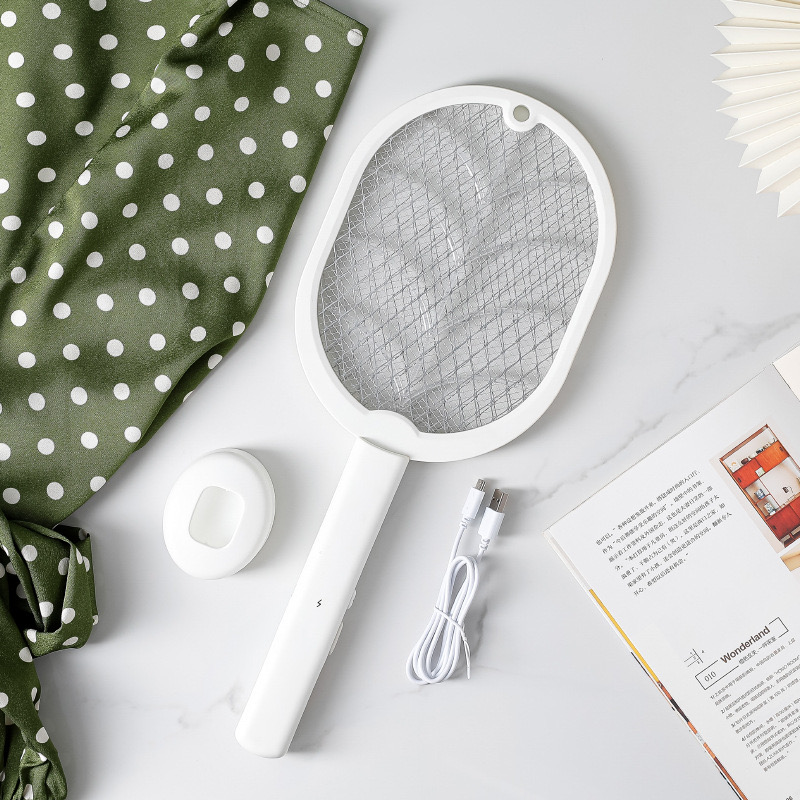
II. Why Do Most Electric Mosquito Swatters Adopt an Arc-Shaped Design?
More than 70% of household electric mosquito swatters on the market use an arc-shaped (including round) surface. This is not just for aesthetics, but a comprehensive consideration based on safety, practicality, and user experience:
- Higher Safety: The arc-shaped surface has no right angles or sharp protrusions, so it is not easy to scratch clothes or furniture during daily storage. During use, it can also avoid bumps caused by children accidentally touching the corners. At the same time, the arc-shaped frame can make the edge of the power grid smoother, reducing the risk of leakage caused by dust accumulation at the corners.
- Less Air Resistance: Quick swinging is required when catching mosquitoes. The arc-shaped surface can reduce air resistance during movement, making the swing smoother. It will not cause mosquitoes to detect and escape in advance due to "excessive wind resistance," which indirectly improves the success rate of mosquito catching.
- Easier Production and Assembly: The arc-shaped frame mostly adopts an integrated injection molding process, with a simpler mold structure, so the production efficiency is higher than that of square frames with multiple right angles. At the same time, the arc-shaped structure fixes the power grid more stably, and there is less chance of power grid deviation during assembly, reducing the difficulty of quality control.
- Adaptation to Most Household Scenarios: Most households’ mosquito-catching needs are concentrated in small spaces such as bedrooms and kitchens. The flexibility and lightness of the arc-shaped swatter just match these scenarios, while the proportion of users with large-space use needs is relatively low. Therefore, brands are more inclined to take the arc-shaped design as the mainstream model.
III. Auxiliary Functions: Is There a Difference in Battery Life and Durability?
In addition to mosquito-catching efficiency and design logic, battery life and durability are also key concerns for users. The impact of shape on these two functions is mainly reflected in battery capacity design and surface structural strength.
1. Battery Life: Shape Indirectly Affects Battery Size
The battery of an electric mosquito swatter is usually installed in the handle or at the connection between the surface and the handle. Due to the large arc of the frame of the arc-shaped surface, the internal space available for the battery is relatively limited. Therefore, the battery capacity of most arc-shaped electric mosquito swatters is between 800-1200 mAh, with a battery life of about 1-2 weeks (using 10 minutes per day);
In contrast, the frame of the square surface is more regular. Some models are designed with a "thickened battery compartment" under the surface, allowing the battery capacity to reach 1500-2000 mAh and the battery life to be extended to 2-3 weeks. This is more suitable for users who are reluctant to charge frequently.
However, this is not absolute: many brands now optimize the internal structure (such as using ultra-thin batteries and reducing the thickness of the frame) to enable arc-shaped swatters to be equipped with large-capacity batteries. Therefore, when purchasing, you should not only look at the shape but also pay attention to the battery capacity parameters.
2. Durability: Is the Frame of a Square Swatter More Shock-Resistant?
From a structural perspective, the frame of the square surface is mostly straight, and the connection parts adopt a right-angle reinforcement design, so its shock resistance is slightly stronger; while the frame of the arc-shaped surface is curved, and the arc-shaped frame of some low-priced models is relatively thin. If it is accidentally dropped on the ground, it is easy to have frame deformation and power grid loosening.
However, durability depends more on the material: whether it is arc-shaped or square, as long as it adopts an ABS shock-resistant plastic frame and thickened power grid wires (diameter ≥ 0.3 mm), its durability can be guaranteed. Shape is only a secondary influencing factor.
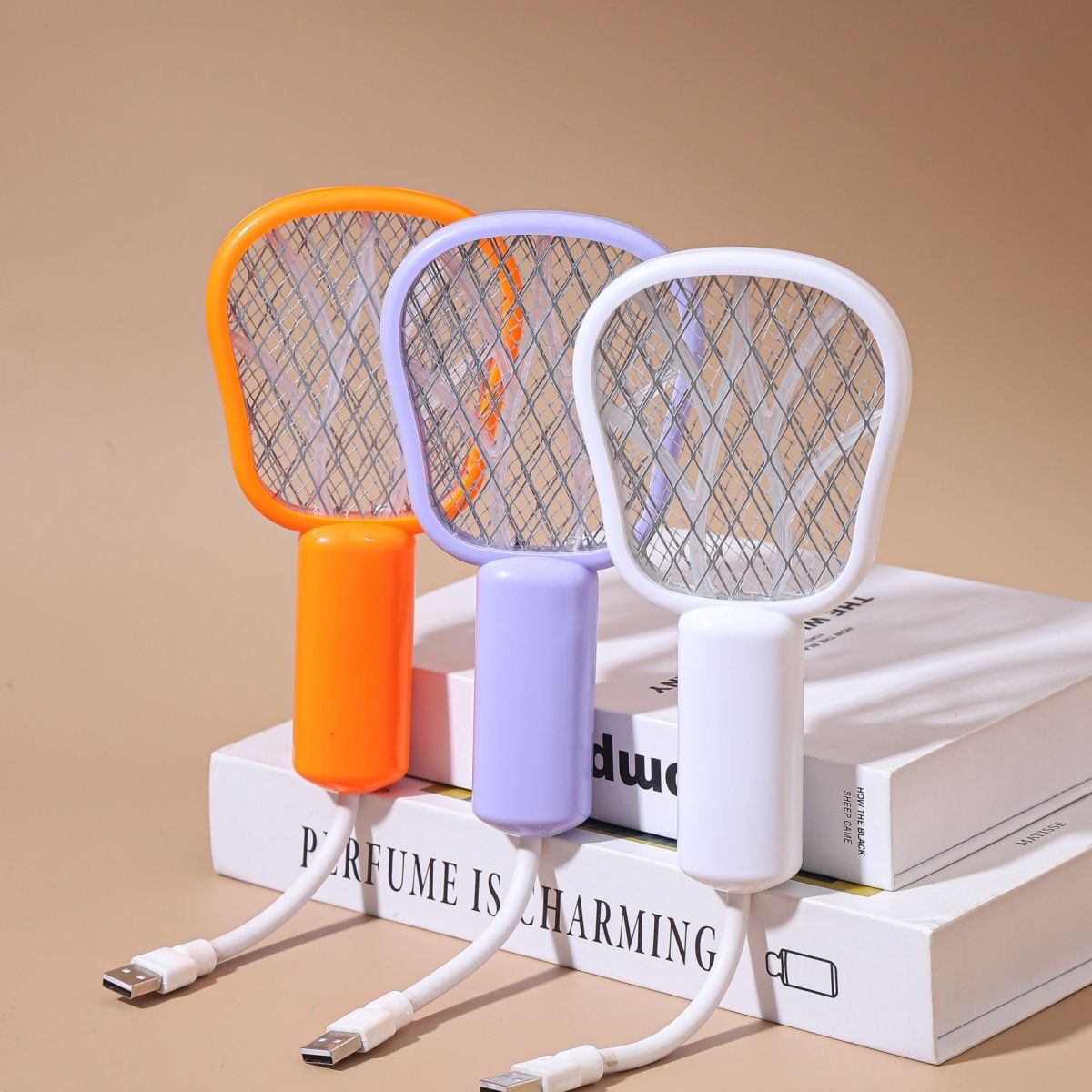
IV. Conclusion: Should You Choose an Arc-Shaped One or Another Shape?
After understanding the functional comparison and design logic, there is no need to hesitate about "which shape is better." The key depends on your usage scenario and needs:
- If you mainly use it in small spaces such as bedrooms and study rooms, pursue lightness, flexibility, safety, and easy storage, and your daily mosquito catching is mainly "precise chasing," an arc-shaped (round) electric mosquito swatter is more suitable, and this is also the first choice for most households;
- If your living room, balcony, and other spaces are large (area ≥ 20 ㎡), there are many mosquitoes, you need to "catch mosquitoes in a wide range," and hope for a longer battery life, a square/diamond electric mosquito swatter is more efficient;
- If your budget is sufficient, prioritize models with "large-capacity battery (≥ 1200 mAh) + shock-resistant material + anti-mistouch power grid." Shape is only a choice for adapting to appearance and scenarios, not a decisive factor for core functions.
Finally, a reminder: no matter which shape you choose, the "power grid voltage" (usually ≥ 2000 V; too low voltage cannot kill mosquitoes quickly) and "safety protection" (such as double-layer power grid for anti-mistouch) of the electric mosquito swatter are more important parameters. After all, the core standard of a good electric mosquito swatter is that it can kill mosquitoes quickly and safely.
Which Enterprises Are Eligible to Participate in the Canton Fair
Can Mosquito Killer Lamps Cause Sunburn
Related Article

If you’re struggling with annoying mosquitoes, flies, and other flying pests indoors and outdoors, upgrading from traditional manual tools to anElectric Mosquito Swatter is the most efficient solution. Many homeowners and renters search where to buy fly swatter online to find durable, safe, and high-performance electric models that deliver instant pest control.
Where to Buy Fly Swatter
Most importers of electric mosquito swatters obsess over the first order: samples requested, factories vetted, a pre-shipment inspection booked. Then the reorder arrives eight months later and something is off. The grid feels softer. The charge port is a slightly different shade of black. The carton thickness dropped from 350 gsm to 300 gsm. Nothing is catastrophic — but the product no longer matches what your retail customers approved, and quietly, your return rate starts climbing.
How to Keep Mosquito Swatter Quality Consistent Across Repeat Orders
Warranty returns are the silent margin killer in the mosquito control category. A distributor who buys a swatter at $1.80 FOB and retails it at $9.90 can absorb a 1% return rate without noticing — but at 5%, the combined cost of replacement units, reverse logistics, and refund processing erases most of the line's profit.
Common mosquito swatter killer lamp failure modes wholesale spec guide

Digital bathroom scales rank as the second-highest-volume consumer weighing product category, only behind kitchen scales, with distinct market and product characteristics that set them apart from other scale types in importers’ product portfolios.
Digital bathroom body fat-bia-scale wholesale buyers guide