Smart Mosquito Killer Lamps With App Connectivity
Smart Mosquito Killer Lamps With App Connectivity: Should You Add an IoT SKU to Your 2027 Product Line?
Walk the smart-home aisles at the Canton Fair or IFA and you will increasingly find mosquito killer lamps that connect to an app, count insects caught, schedule on/off cycles and reorder glue boards automatically. Connectivity used to be a gimmick at $60 retail; in 2026 the component math has changed enough that a smart lamp can land at retail price points mainstream buyers actually pay. For wholesale buyers planning 2027 assortments, the question is no longer "does it work?" but "does it belong in my SKU mix, and at what volume?"
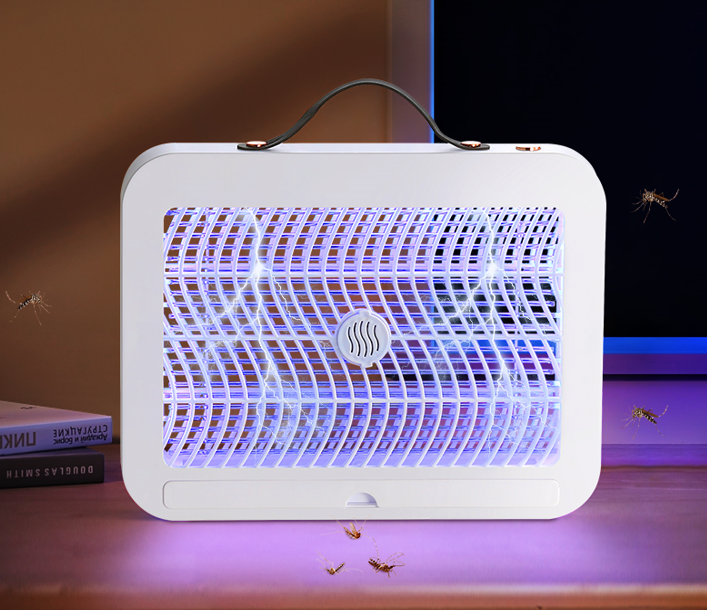
What "Smart" Actually Adds to a Mosquito Killer Lamp
Strip away the marketing and a connected killer lamp is a conventional UV-A lamp plus three additions: a wireless module (Wi-Fi or Bluetooth Low Energy), a microcontroller that replaces the analog timer, and optionally one or two sensors. The features that justify the category:
- Catch counting — an IR or capacitive sensor registers grid/fan events, feeding a daily "mosquitoes caught" graph in the app. This is the single feature most cited in positive retail reviews because it makes an invisible product visible.
- Scheduling and away-mode — pre-dawn and dusk cycles matched to Aedes and Culex activity peaks, controllable remotely.
- Consumable alerts — glue-board or UV-LED replacement reminders that drive repeat purchases of accessories, improving the lifetime revenue per unit sold.
- Firmware-driven UV control — some designs dim the UV output dynamically, extending LED lifetime beyond the standard 15,000–20,000 hours.
The BOM Math: What Connectivity Really Costs at Wholesale
Component prices have fallen steadily since 2022 as Wi-Fi/BLE combo modules moved into commodity territory. Current factory-level deltas for a mid-size indoor killer lamp versus an identical non-connected model:
| Component / item | Non-smart lamp | Wi-Fi smart lamp | Delta (FOB) |
|---|---|---|---|
| Control board + MCU | $0.40 | $0.90 | +$0.50 |
| Wi-Fi/BLE module (certified, pre-flashed) | — | $0.90–1.60 | +$0.90–1.60 |
| Catch sensor (IR pair) | — | $0.25–0.45 | +$0.25–0.45 |
| Cloud/app platform fee (per unit amortized) | — | $0.15–0.40 | +$0.15–0.40 |
| Additional certification (RED/FCC/SRRC) | — | $2,000–4,000 one-off per model | one-off |
| Typical FOB price effect | $3.00–6.00 | $4.80–9.50 | +$1.80–3.50 (30–60%) |
Two structural notes. First, choose a factory that uses a certified module (e.g., pre-certified Wi-Fi combo modules) rather than a self-developed RF design — this cuts radio certification cost by roughly half and shortens the compliance timeline by 4–6 weeks. Second, cloud platform fees are often quoted per active device; for wholesale volumes negotiate a fixed per-unit firmware cost with the factory, or specify local-LAN-only operation (app talks to the lamp without cloud) to eliminate recurring fees entirely.
Which Markets Are Actually Asking for It
Smart mosquito lamps are not uniformly demanded across regions. The realistic demand map for 2027:
- North America and Western Europe — the primary markets. Smart-home household penetration sits near 40–50% in the US and 30–40% in Western Europe, and big-box retailers (including home-improvement chains) already shelf connected pest-control devices. Smart lamps fit the $29.99–49.99 retail band, a genuine gap between basic $15 lamps and $80+ premium units.
- Japan and South Korea — strong smart-home adoption and high willingness to pay for app-enabled home appliances; also the strictest radio certification environments (MIC/TELEC in Japan, KC in Korea), which raises entry cost.
- Middle East (GCC) — growing premium retail segment, but volumes concentrate in Dubai/Riyadh urban retail; conventional lamps still dominate volume.
- Africa, Southeast Asia, Latin America — volume markets where Wi-Fi penetration in target demographics is thin and a $1.80–3.50 FOB premium kills price competitiveness. Stay with non-smart SKUs here, or offer a "smart-ready" version only for capital-city retail chains.
A practical portfolio heuristic: allocate roughly 15–25% of your indoor lamp volume to a smart SKU in developed markets, keeping 75–85% conventional. The smart unit is a margin and brand-positioning play, not a volume play.
Compliance Knock-Ons Buyers Underestimate
Adding a radio changes your compliance footprint. Beyond the base CE/FCC requirements a non-smart lamp already carries, a Wi-Fi model additionally needs:
- EU: Radio Equipment Directive (RED 2014/53/EU) full assessment — radio spectrum, EMC and safety — plus EN 300 328 testing for 2.4 GHz Wi-Fi/BLE.
- US: FCC Part 15C certification for the intentional radiator (module grant leverage applies if using a certified module).
- UK: UKCA radio compliance post-Brexit.
- Canada: ISED (RSS-247).
- Data privacy: if the app collects usage data, GDPR (EU) and state privacy laws (US) apply to the app operator — clarify in writing whether the factory, the brand owner, or the platform vendor is the data controller. For most B2B buyers the clean answer is a local-LAN design with no account requirement.
Budget 6–10 weeks and $3,000–6,000 total for radio certification across EU/US/UK on top of your existing product certificates, assuming a pre-certified module.
Five Questions to Ask Before Committing to a Smart SKU
- Whose app? Factory-owned white-label apps (fast, low cost, but you don't control the brand experience) versus custom app development ($15,000–40,000 one-off). For a first smart SKU, white-label with your logo splash is the rational entry.
- Cloud dependency: What happens to features if the cloud vendor shuts down? Demand a contractual answer and a local-LAN fallback mode.
- OTA update policy: who pays for and approves over-the-air firmware updates after shipment?
- Certified module or custom RF? Insist on the former unless volumes exceed roughly 50,000 units/year.
- Sensor accuracy: ask for test data on catch-counting accuracy — a counter that over-reports by 3× becomes a returns problem.
A "Good-Better-Best" Ladder Without Full IoT
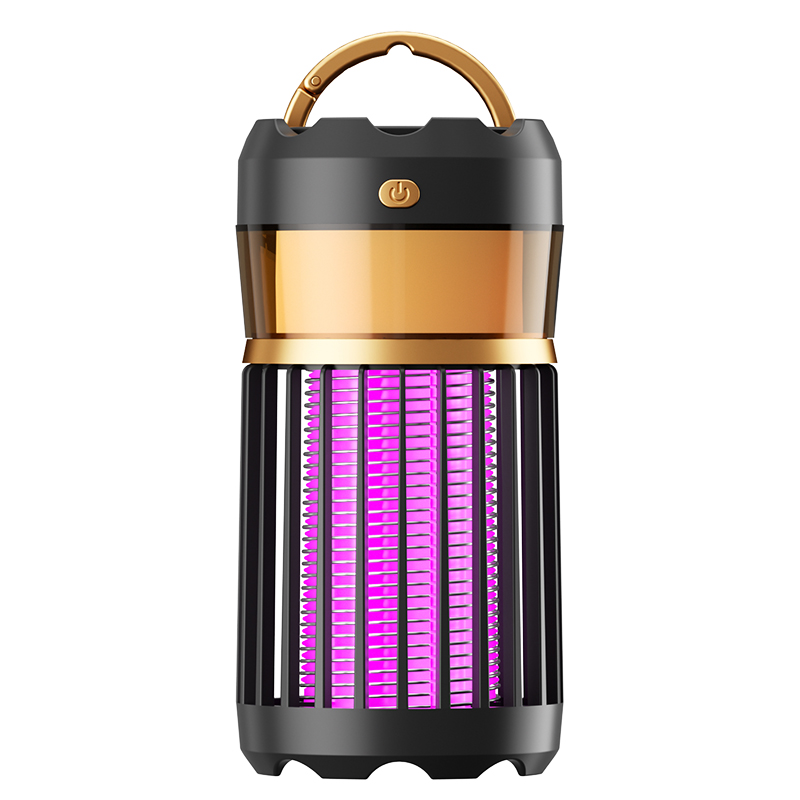
If the certification and app overhead feels heavy, consider a middle rung: a lamp with a physical smart feature set but no radio — light sensor auto-on at dusk, motion-activated boost mode, and a mechanical catch-count dial. These add $0.60–1.00 to FOB, need no radio certification, and cover 70% of the perceived-smart value in markets where app adoption is uncertain. Many distributors run a three-tier ladder: basic ($3–5 FOB) / sensor-enhanced ($4–6) / Wi-Fi smart ($5–9), letting retailers self-select by market.
For 2027 planning, the honest summary: smart mosquito killer lamps are a credible margin and differentiation play in North America, Europe and Northeast Asia, and an expensive distraction elsewhere. Develop one well-executed smart SKU, protect the rest of the line with sensor-based "smart-lite" versions, and keep conventional lamps carrying the volume. Aofengming Electric develops both conventional and connected killer lamp platforms under one roof — from UV-A LED optical design to pre-certified Wi-Fi module integration — giving importers a single factory path whether a market asks for a $4 basic lamp or a $9 app-connected flagship.
Shipping Lithium Battery Mosquito Swatters and Killer Lamps
UV LED vs Fluorescent Tube Mosquito Killer Lamps
Related Article