
Solar Outdoor Mosquito Killer Lamps Wholesale Buyer Guide
2026-09-11
Solar Outdoor Mosquito Killer Lamps: Wholesale Cost Structure, Market Validation, and Sourcing Risks (2026)
1. From Novelty to Mainstream: Why Solar Outdoor Mosquito Lamps Became a Reliable Wholesale Category
Throughout 2023 and most of 2024, solar outdoor mosquito killer lamps remained a niche, secondary product category. On Amazon, these items were mostly categorized as patio decor with basic mosquito-killing functionality. Each individual ASIN only generated 8,000–15,000 units in annual sales, failing to gain traction as mainstream outdoor and garden merchandise.
2025 marked a decisive turning point for category commercialization. Global search analytics show that indexed search volume for the core term “solar mosquito killer outdoor” rose 71% year-on-year in the U.S. and 88% in Brazil. Meanwhile, top-performing SKUs rapidly climbed from outside the top 200 to a stable top 40 ranking in Amazon’s Patio & Garden subcategory, proving strong, sustained consumer demand.
For B2B wholesale buyers, this shift delivers two critical takeaways: the category is now mature enough to support full-container orders, yet still early enough in its growth cycle. Early-bird buyers can lock in favorable landed costs before major retail brands launch their private-label alternatives and capture first-mover market advantages.
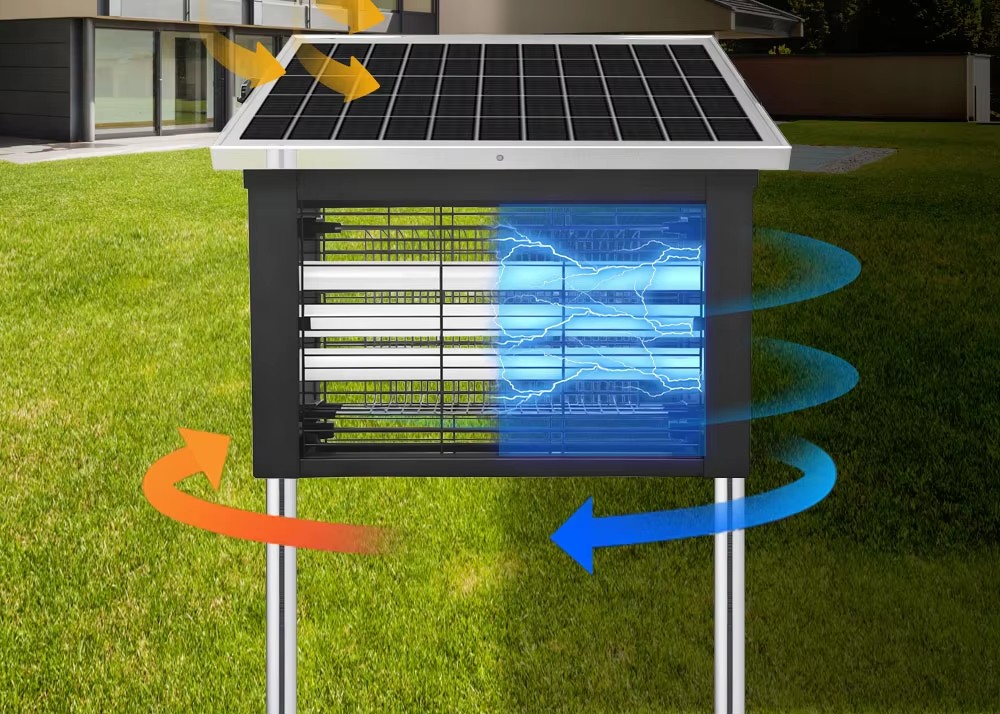
2. 2026 Product Specifications & Complete FOB Cost Structure Breakdown
The 2026 upgraded standard solar outdoor mosquito killer lamp features optimized industrial-grade configurations for efficient solar power generation, long-lasting energy storage, professional UV mosquito attraction, and full weather resistance. Standard components include: 1.5–2.5 W monocrystalline solar panels, 1500–2400 mAh 18650 lithium-ion batteries, IP65-rated ABS+PC housing, 365–395 nm UV-A LED lights, brushless fan or electrostatic zapper grids, and integrated light & motion sensors.
Based on standard 2,000-unit FOB bulk orders from Guangdong manufacturers, the following table outlines full BOM cost allocation, 2024–2026 price fluctuations, and essential quality control checkpoints:
|
Component
|
% of FOB Cost
|
2024 Price Band
|
2026 Price Band
|
Quality & Sourcing Notes
|
|---|---|---|---|---|
|
1.5–2.5W Monocrystalline Solar Panel
|
14%–18%
|
USD 0.55–0.85
|
USD 0.42–0.68
|
Reject any batch with solar efficiency below 18%
|
|
18650 Lithium Cell + BMS Protection Board
|
11%–15%
|
USD 0.65–0.95
|
USD 0.50–0.78
|
UN38.3 certification and MSDS documentation mandatory for air freight shipments
|
|
IP65 ABS+PC Housing + Waterproof Gasket
|
17%–22%
|
USD 0.80–1.20
|
USD 0.72–1.05
|
Only UV-stabilized ABS accepted; reject materials with UV additives below 5%
|
|
UV-A LED Module + Driver
|
9%–12%
|
USD 0.40–0.62
|
USD 0.32–0.50
|
Wavelength tolerance: ±5 nm; 365 nm delivers far stronger mosquito attraction than 395 nm
|
|
Brushless Fan / Electrostatic Zapper Grid
|
7%–10%
|
USD 0.35–0.55
|
USD 0.30–0.48
|
Grid-type models require additional CE-EMC compliance documentation
|
|
Sensors + PCB + Assembly Labor
|
12%–16%
|
USD 0.55–0.85
|
USD 0.45–0.72
|
Calibrate sensors to prevent false triggering in shaded patio areas
|
|
Retail Color Box + User Manual
|
8%–11%
|
USD 0.40–0.62
|
USD 0.36–0.55
|
Packaging must display IP65 rating and battery safety warnings in 4 languages
|
In 2026, the weighted average FOB unit price for 2,000-unit bulk orders stands at USD 5.80–7.40 per unit, representing a 12%–18% year-over-year decrease from 2024. Solar panels and lithium batteries drive the majority of cost reductions, while housing and waterproof gaskets see slower price declines due to upgraded UV-resistant and waterproof manufacturing processes.
3. 2026 Wholesale Channel Landscape & Profit Margin Analysis
Solar outdoor mosquito killer lamps have established three mature global sales channels with distinct pricing structures, compliance standards, and profit margins tailored to regional market demands:
1. U.S. Amazon Patio & Garden Channel
Median retail prices range from USD 22.99 to 34.99. SKUs with a 4.0+ star rating achieve monthly sales of 600–1,200 units. Top sellers typically include ground stakes and are packaged as two-unit color box sets. This channel favors premium-spec models with stainless steel stakes and dual UV-zapper functionality, delivering the highest industry gross margins at 48%–58%.
2. EU DIY & Garden Retail Chain Channel
Major retailers include Jardiland, Obi, and Hornbach. Wholesale tender prices range from USD 18 to 26 with long lead times of 6–9 months. Products must comply with full EU regulations: CE-RED certification, IP65 waterproof certification, and EU battery directive standards. This channel prioritizes complete documentation over premium features, with gross margins of 32%–40%.
3. LATAM & Africa Distributor-Focused Channel
Operated primarily by regional distributors, this channel features the lowest wholesale pricing at USD 13–18. Markets prefer lightweight single-stake variants with Spanish, Portuguese, and French multi-language manuals and humidity-resistant packaging suitable for tropical climates. Focused on high-volume distribution, this segment yields lower gross margins of 28%–36%.
4. Three Critical Sourcing Risks That Cause Wholesale Order Losses & Mitigation Solutions
Most wholesale losses in this category stem from hidden quality defects and factory corner-cutting rather than market demand volatility. Below are the three most damaging sourcing risks for 2026 bulk orders with actionable QC solutions:
Risk 1: Overstated IP65 Waterproof Ratings
False IP65 waterproof claims are the most prevalent quality failure in this industry. Many samples pass visual inspection but fail professional water spray testing. Enforce standardized testing based on the IEC 60529 standard: a minimum 3-minute continuous spray test using a 6.3 mm nozzle at 12.5 L/min flow rate. Reject any batch showing water ingress at solar panel seams or USB port covers to prevent large-scale return losses.
Risk 2: Undisclosed Battery Downgrading
When lithium cell raw material prices rise, some factories quietly replace standard 2400 mAh 18650 batteries with low-capacity 1200 mAh cells, severely reducing product runtime. No laboratory testing is required for detection: a genuine 2400 mAh 18650 cell weighs approximately 45g, while a 1200 mAh cell weighs only 22g. Random weight sampling instantly identifies 80% of non-compliant units and should be added to mandatory incoming QC checks.
Risk 3: UV-LED Wavelength Drift
Peer-reviewed 2024 academic data confirms that 365 nm UV light is 2.4 times more effective at attracting Aedes and Culex mosquitoes than 395 nm light. Unscrupulous suppliers often label low-cost 395 nm LEDs as premium 365 nm mosquito-attracting lights, leading to surging 1-star reviews complaining of poor performance. Mitigate this risk by requiring spectrometer wavelength reports for every production batch; most Guangdong manufacturers have on-site testing equipment for fast verification.
5. Low-Risk Market Entry Strategy: Pilot 1,000 Units Before Full Container Scaling
To avoid costly full-container misjudgments, new wholesale buyers should adopt a staged stocking strategy. Before committing to a 40HQ full-container order, launch a 1,000-unit pilot trial covering the three mainstream form factors: stake-mount, wall-mount, and hanging models.
Test each SKU independently within Amazon’s subcategories over a 60-day period, tracking review growth velocity and return rates. Scale a follow-up 4,000-unit order only with the highest-performing SKU that delivers strong review growth and minimal returns. This pilot strategy caps potential downside risk at a USD 7,500 landed cost, compared to over USD 32,000 in losses from a failed full-container order.
6. Final Wholesale Sourcing Recommendations
For solar outdoor mosquito killer lamps, 70% of end-user satisfaction and product performance is determined by BOM specifications. Lock four core parameters in formal purchasing contracts — solar panel wattage, UV LED wavelength, IP65 waterproof rating, and battery capacity — instead of relying on verbal factory assurances.
Partnering with an experienced manufacturer is equally critical for reliable sourcing. Factories with mature full-range production capabilities (producing the classic HY-6 USB indoor mosquito killer lamp alongside updated solar outdoor models) offer standardized BOM references, stable quality consistency, and faster sampling cycles to reduce new product trial-and-error costs.
For wholesale buyers entering this category in 2026, formal spec locking + small-batch pilot validation + experienced factory cooperation forms the three-step blueprint for stable profitability and scalable growth in the solar outdoor mosquito lamp wholesale market.
Indoor vs Outdoor Mosquito Killer Lamps
OEM Swatter Manufacturing Project Management
Related Article

If you’re struggling with annoying mosquitoes, flies, and other flying pests indoors and outdoors, upgrading from traditional manual tools to anElectric Mosquito Swatter is the most efficient solution. Many homeowners and renters search where to buy fly swatter online to find durable, safe, and high-performance electric models that deliver instant pest control.
Where to Buy Fly Swatter
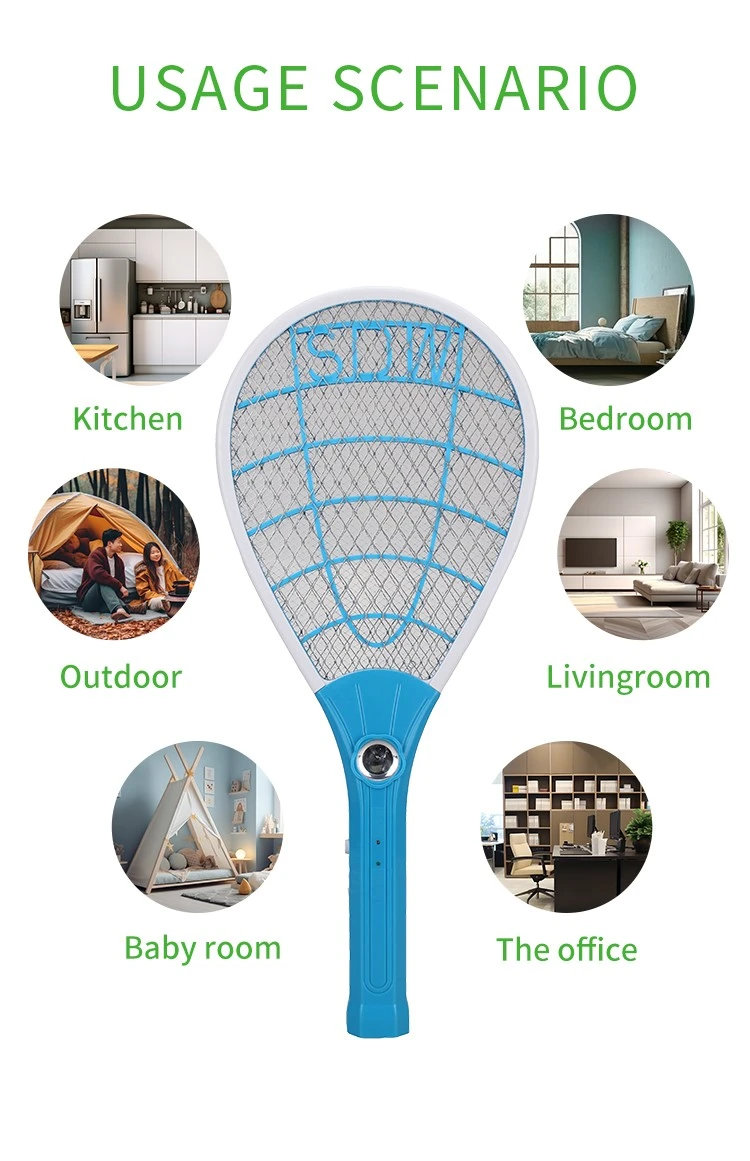
Most importers of electric mosquito swatters obsess over the first order: samples requested, factories vetted, a pre-shipment inspection booked. Then the reorder arrives eight months later and something is off. The grid feels softer. The charge port is a slightly different shade of black. The carton thickness dropped from 350 gsm to 300 gsm. Nothing is catastrophic — but the product no longer matches what your retail customers approved, and quietly, your return rate starts climbing.
How to Keep Mosquito Swatter Quality Consistent Across Repeat Orders
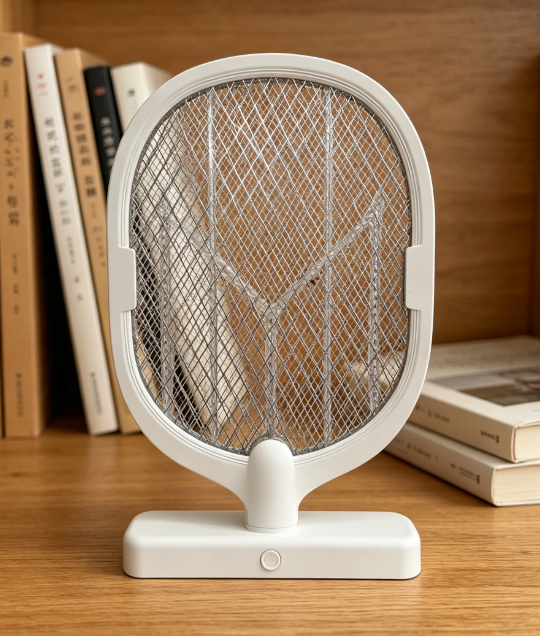
Warranty returns are the silent margin killer in the mosquito control category. A distributor who buys a swatter at $1.80 FOB and retails it at $9.90 can absorb a 1% return rate without noticing — but at 5%, the combined cost of replacement units, reverse logistics, and refund processing erases most of the line's profit.
Common mosquito swatter killer lamp failure modes wholesale spec guide

Digital bathroom scales rank as the second-highest-volume consumer weighing product category, only behind kitchen scales, with distinct market and product characteristics that set them apart from other scale types in importers’ product portfolios.
Digital bathroom body fat-bia-scale wholesale buyers guide