
The Grid Design of Electric Mosquito Swatters Holds Great Knowledge
2025-11-30
The Grid Design of Electric Mosquito Swatters Holds Great Knowledge
Have you ever had the frustrating experience of chasing a mosquito with an electric swatter late at night, only to watch it slip through the grid right before your eyes? Or accidentally touching the grid and feeling a numbing sensation in your hand that lingers for ages? Actually, these annoyances are all related to the "core component" of an electric mosquito swatter — its grid design. Don’t think the grid is just a few pieces of wire strung together; its number of layers, spacing, voltage, current, and even material selection are all results of careful calculations, forming the "science of mosquito elimination". Today, let’s take a deep dive into how the grid of an electric mosquito swatter is designed.
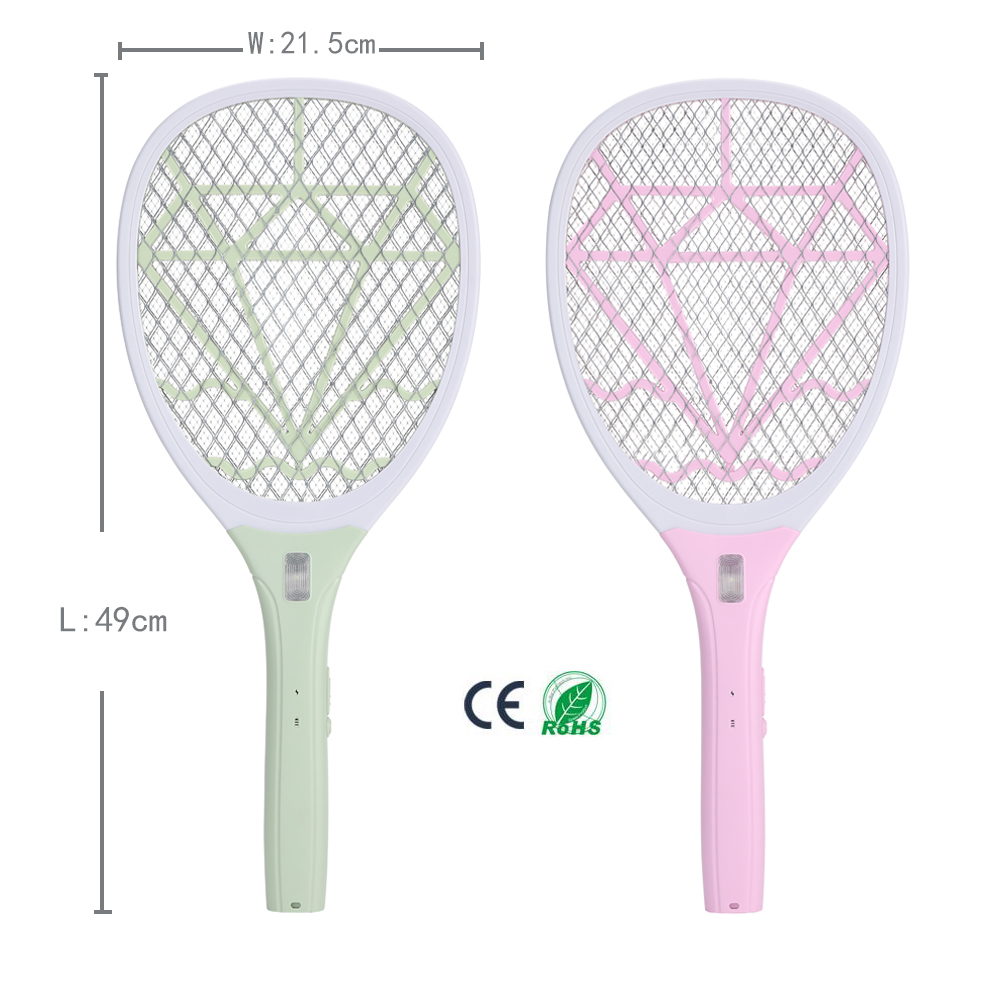
I. Grid Structure: Three Layers or Two? The Key Lies in "Precise Electrocution"
Most electric mosquito swatters on the market feature a "three-layer grid structure", while a few older models use a two-layer design. Why is the three-layer structure more common? It all comes down to the principle of electrocution: for the swatter to work, mosquitoes must come into contact with both the "positive pole" and "negative pole" simultaneously to form a current loop and get electrocuted.
The three-layer grid design is quite ingenious: the middle layer is connected to the high-voltage positive pole, while the upper and lower layers are connected to the negative pole, forming two "pinching electric fields". As long as a mosquito flies into the grid, it will instantly form a current loop whether it touches "upper negative pole + middle positive pole" or "middle positive pole + lower negative pole". This structure also reduces the chance of mosquitoes "slipping away" — with a two-layer grid, a mosquito might only touch one pole and escape unharmed.
Additionally, grid spacing is a matter of "balance". If it’s too dense (less than 1mm, for example), mosquitoes can’t fly in at all; if it’s too sparse (more than 2.5mm), small mosquitoes will slip through the gaps. The current mainstream design uses a spacing of 1.5-2mm, which allows common mosquitoes like Culex and Aedes to enter while ensuring a high electrocution success rate. I once measured the grid of my home swatter with a ruler, and it was exactly 1.8mm — no wonder its mosquito-killing efficiency is much higher than older models.
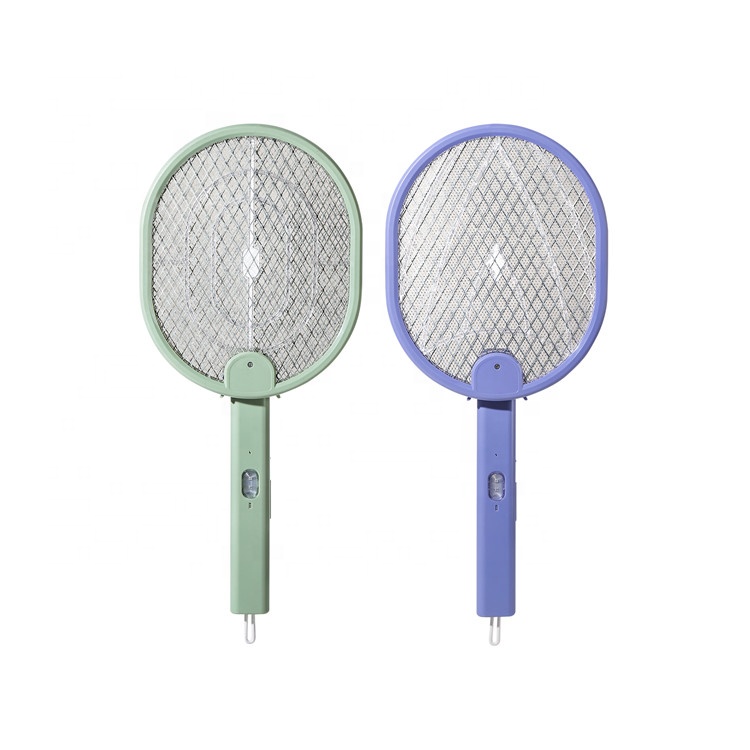
II. Electrical Parameter Design: High Voltage for "Killing Mosquitoes", Low Current for "Ensuring Safety"
You’ll often see "2000V high voltage" marked on electric mosquito swatter packaging. It sounds intimidating, but in reality, it’s a combination of "high voltage and low current". This is based on the core logic of grid design: it must kill mosquitoes without harming humans.
A mosquito’s exoskeleton is very thin, so a high voltage of 2000-3000V is enough to instantly pierce its body, damage its nervous system and cells, and achieve "instant death". However, the current must be controlled at a few milliamps (usually 1-3mA), because the maximum safe current the human body can withstand is below 10mA. A current of a few milliamps will only cause a slight numbing sensation, not actual harm.
It’s also worth mentioning the "voltage reduction protection" design of the grid: many people worry about electric leakage if the swatter gets wet. In fact, high-quality electric mosquito swatters are equipped with a "current-limiting resistor" for the grid. Even if it comes into contact with moisture, the current will be restricted to a safe range, avoiding the risk of electric shock.
III. Material Selection: From Iron-Aluminum to Nickel-Plated Wire, the Secret to Durability
The metal wires of the grid may seem insignificant, but they are crucial to the swatter’s durability. As you’ve observed, some electric mosquito swatters (especially older two-layer models) do use an "iron-aluminum grid" design. The advantage of this material is its extremely low cost, allowing the product to be priced at around a dozen yuan. However, it has obvious drawbacks: iron and aluminum have average electrical conductivity; aluminum is prone to oxidation and iron is easy to rust. In the humid summer air, the grid surface often develops black spots, and the wires may break and stop working within half a year.
In contrast, the current mainstream materials have been upgraded to "nickel-plated iron wire" or "pure copper wire":
- Nickel-plated iron wire offers the best cost-performance. The nickel coating forms a dense protective film, preventing rust even with frequent contact with moisture. It also has sufficient hardness and won’t bend easily if accidentally hit against a table corner.
- Pure copper wire has about 30% higher electrical conductivity than nickel-plated iron wire, enabling faster electrocution response. When paired with a high voltage of around 3200V, it can achieve "instant death upon contact". However, copper wire is relatively soft and requires a stronger ABS frame for fixation, resulting in a slightly higher cost.
A small number of high-end models even use "stainless steel wire", which has better corrosion resistance than nickel-plated iron wire but slightly lower conductivity than pure copper. It’s more suitable for use in humid southern regions.
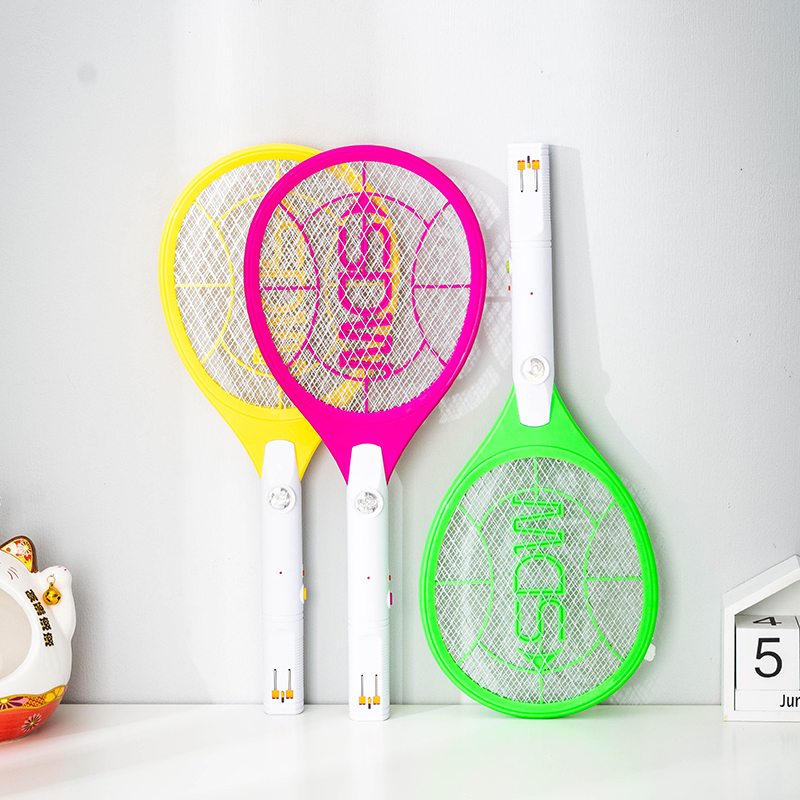
IV. Shopping Tips: Choose the Right Electric Mosquito Swatter by Looking at the Grid
After discussing so many design details, let’s summarize a few key points for choosing an electric mosquito swatter:
- Prioritize "three-layer grids": They are more reliable than two-layer grids in terms of both mosquito-killing efficiency and safety, and the outer negative pole grids can also prevent accidental electric shocks.
- Check the grid spacing: Use the ruler function on your phone to measure it — a spacing of 1.5-2mm is ideal; avoid grids that are too dense or too sparse.
- Identify the material: Gently touch the metal wires. Those that feel solid and have a silvery-white luster are mostly nickel-plated; those that are reddish-bright and slightly soft to the touch may be pure copper; if the grid surface is dull and feels rough, it’s likely made of rust-prone iron-aluminum material, which is not recommended.
- Verify safety certifications: Regular products will be marked with "3C certification". It’s best if the grid has a transparent protective cover around its edges to prevent accidental contact by children.
A well-designed grid should ensure that mosquitoes "never return once they enter" while keeping us safe during use. Next time you buy an electric mosquito swatter, don’t just focus on its appearance and price — pay more attention to its grid. After all, that’s where the "core combat capability" of an electric mosquito swatter lies.
Where Do Fruit Flies Actually Come From
What Is a Dry Cell
Related Article

If you’re struggling with annoying mosquitoes, flies, and other flying pests indoors and outdoors, upgrading from traditional manual tools to anElectric Mosquito Swatter is the most efficient solution. Many homeowners and renters search where to buy fly swatter online to find durable, safe, and high-performance electric models that deliver instant pest control.
Where to Buy Fly Swatter

Most importers of electric mosquito swatters obsess over the first order: samples requested, factories vetted, a pre-shipment inspection booked. Then the reorder arrives eight months later and something is off. The grid feels softer. The charge port is a slightly different shade of black. The carton thickness dropped from 350 gsm to 300 gsm. Nothing is catastrophic — but the product no longer matches what your retail customers approved, and quietly, your return rate starts climbing.
How to Keep Mosquito Swatter Quality Consistent Across Repeat Orders

Warranty returns are the silent margin killer in the mosquito control category. A distributor who buys a swatter at $1.80 FOB and retails it at $9.90 can absorb a 1% return rate without noticing — but at 5%, the combined cost of replacement units, reverse logistics, and refund processing erases most of the line's profit.
Common mosquito swatter killer lamp failure modes wholesale spec guide

Digital bathroom scales rank as the second-highest-volume consumer weighing product category, only behind kitchen scales, with distinct market and product characteristics that set them apart from other scale types in importers’ product portfolios.
Digital bathroom body fat-bia-scale wholesale buyers guide