
The production of electric fly swatters
2025-08-10
The production of electric fly swatters is a systematic process that integrates precision manufacturing and strict quality control. Every link, from component processing to finished product assembly, affects the performance and safety of the product. As a manufacturer with more than ten years of experience in producing electric fly swatters, today we will take you through the detailed production process:
I. Production of Core Components
Manufacturing of Circuit Components
Electronic components such as transistors, capacitors, and resistors in the high-frequency oscillation circuit are mass-produced by professional electronic manufacturers in accordance with specifications to ensure stable parameters. As the core component for voltage boosting, the transformer needs to be precisely wound with enameled wires using a winding machine. The turns ratio between the primary coil and the secondary coil is strictly implemented in accordance with the design requirements. After winding, it undergoes paint dipping and curing treatment to enhance insulation and stability.
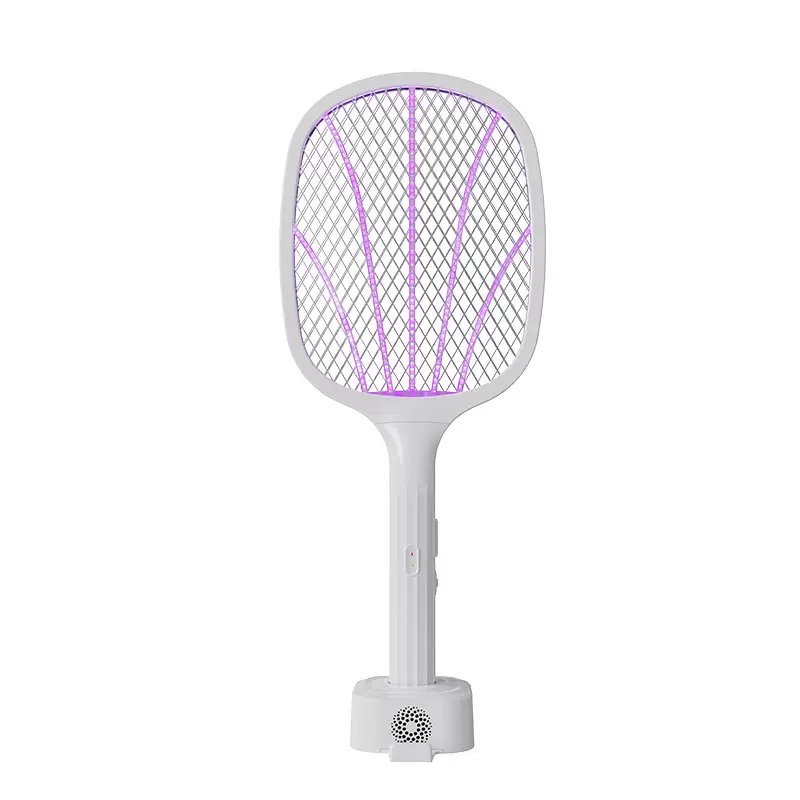
Processing of Power Grids
Stainless steel wires or galvanized iron wires with a diameter of 0.3-0.5mm are used and processed into a three-layer mesh structure through stamping dies. The outer layer of the mesh has larger apertures (about 10-15mm) to play a protective role, while the inner layer has smaller apertures (about 3-5mm) for electric shock. The distance between adjacent layers is controlled at 5-8mm, which not only ensures that mosquitoes can easily enter but also prevents accidental contact by the human body. After processing, it needs to go through rust removal, polishing, and plating treatments to improve rust resistance.
Injection Molding of Plastic Parts
The handle and frame are made of ABS or PP engineering plastics and are formed in one go through an injection molding machine. The mold needs to be precisely polished to ensure a smooth surface without burrs. The handle is designed with grooves according to ergonomics to enhance the grip feeling. After injection molding, deburring treatment is carried out to remove gate residues and ensure a neat appearance.
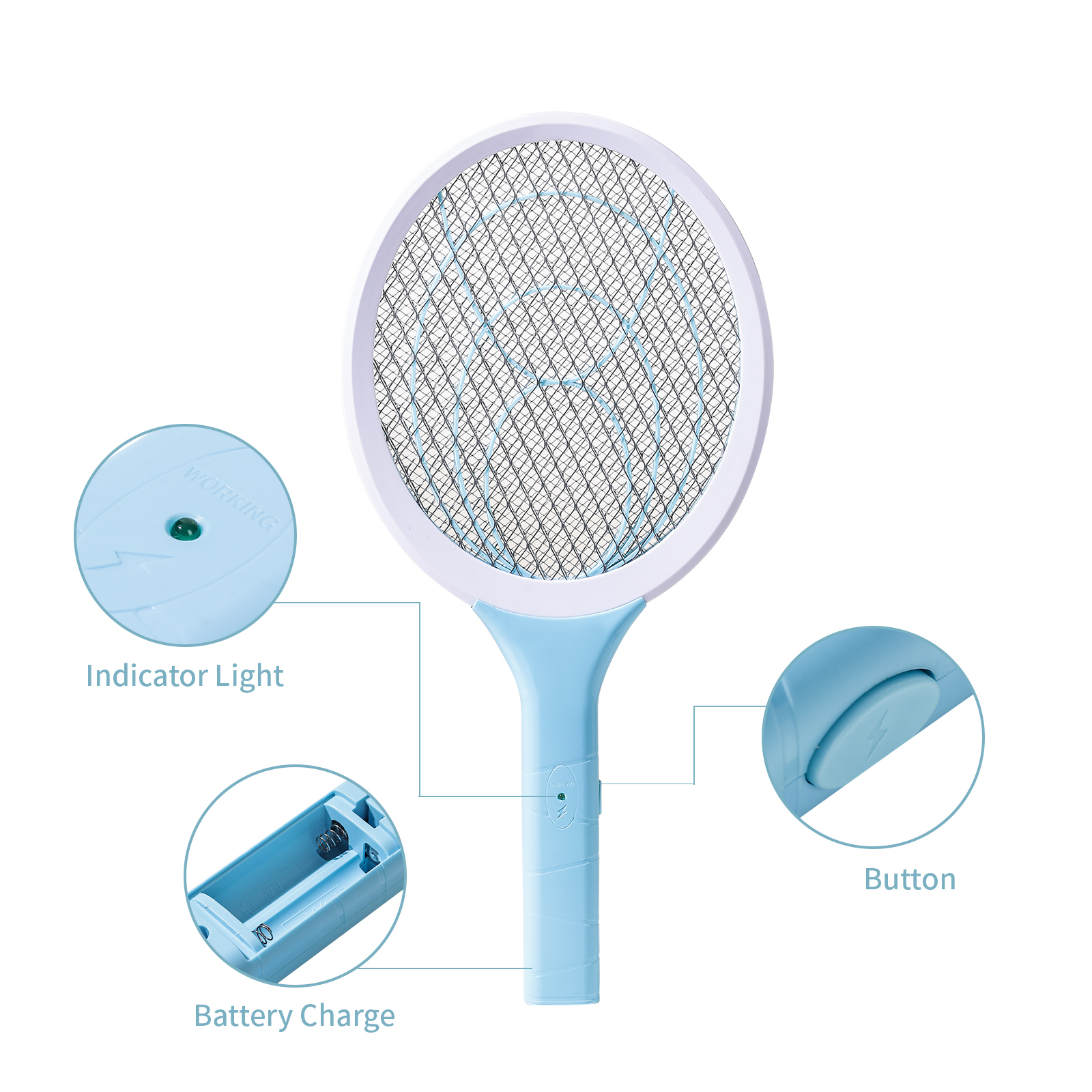
Rechargeable battery packs (such as lithium batteries) are formed by welding battery cells, protection boards, and wires. The protection board must have overcharge, over-discharge, and short-circuit protection functions. For dry battery models, a battery compartment is reserved with built-in metal contact pieces to ensure good contact with the battery.
II. Pretreatment and Inspection of Components
All components must undergo strict screening before entering the assembly process:
- Electronic components are tested for parameters such as resistance and capacitance through automated testing equipment, and unqualified products are rejected;
- Plastic parts are inspected for cracks, deformation, and dimensional deviations must be controlled within ±0.2mm;
- The power grid undergoes conductivity testing to ensure there is no wire breakage or short circuit, and the thickness of the plating layer is also tested to meet the standards.
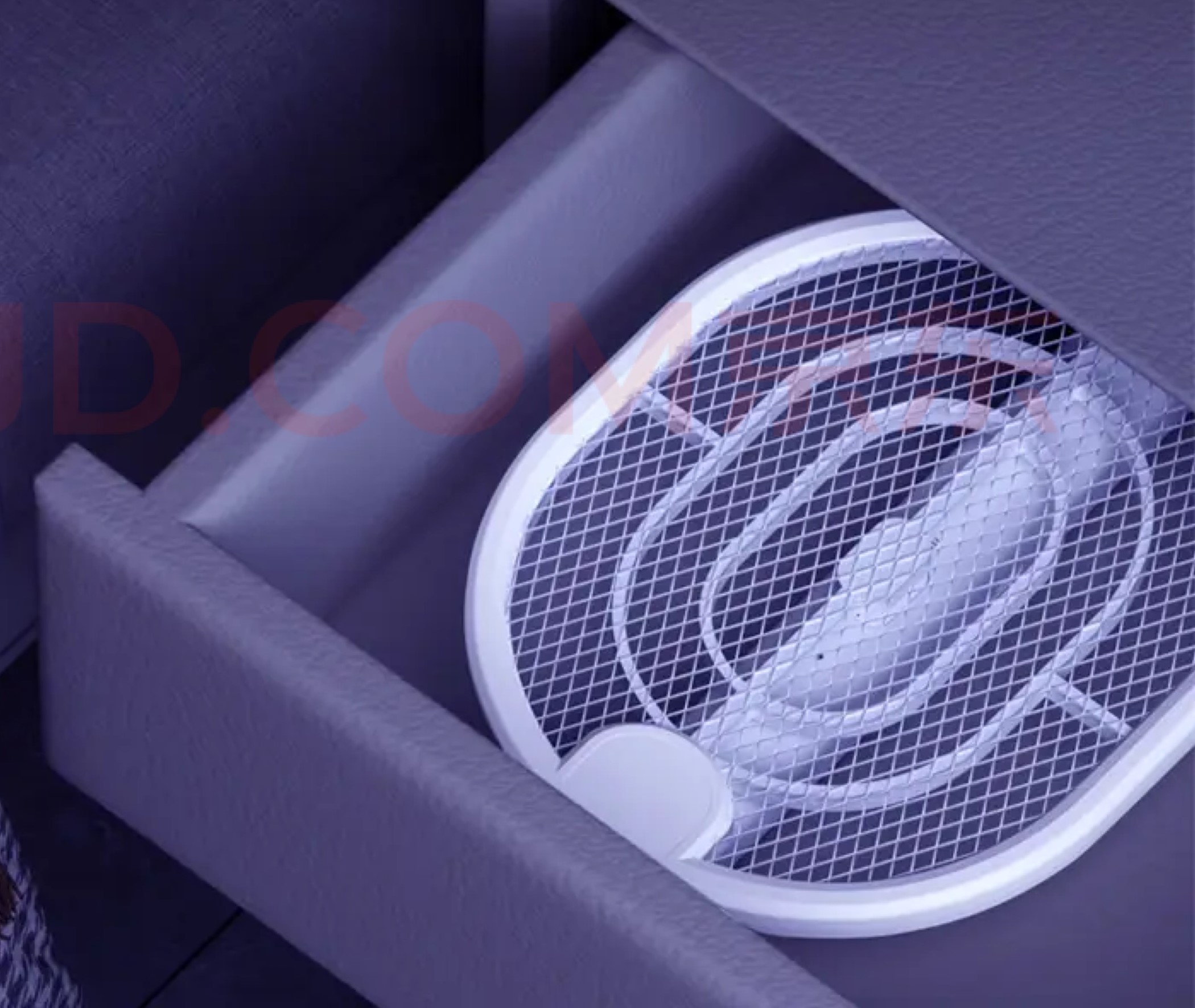
III. Assembly Line Assembly
Circuit Welding
On the PCB circuit board, components of the oscillation circuit and rectifier circuit are fixed through wave soldering or reflow soldering, and the solder joints must be full without cold soldering. Manual assistance is required for welding large components such as transformers and wires to ensure correct circuit connections. At this point, a preliminary power-on test can be conducted to check whether the oscillation frequency meets the design standards (usually 10-20kHz).
Mesh Placement and Assembly
The three-layer power grid is embedded into the frame in sequence and fixed with clips or screws to ensure that the grids are aligned and there are no protrusions on the edges. Then, the wires connecting the power grid and the circuit board are connected, and the joints are wrapped with insulating sleeves to prevent short circuits.
Handle Assembly
First, install components such as the battery compartment, switch buttons, and indicator lights into the handle shell, then embed the welded circuit board, connect the wires, and fix them. The upper and lower shells of the handle are sealed with screws or ultrasonic welding to ensure waterproofing and dustproofing. At this point, install the power plug (for rechargeable models) or the battery cover (for dry battery models).
Overall Integration
Connect the frame and the handle through a rotating shaft or fixed clips, test the firmness of the connection. For models that can rotate 360 degrees, it is necessary to ensure smooth rotation without jamming. Finally, install a protective cover (for some models) to prevent the power grid from being exposed.
IV. Finished Product Inspection and Packaging
Performance Testing
- High-voltage testing: After power-on, use a high-voltage meter to detect the voltage between the power grids, which should reach 2000-3000V and be stable without fluctuations;
- Mosquito-killing effect testing: Simulate mosquitoes contacting the power grid, observe whether they can be instantly electrocuted, and simultaneously test the short-circuit protection function (it should automatically power off when a short circuit lasts for 3 seconds);
- Safety testing: Use a metal rod with a diameter of 3mm to touch the outer layer of the mesh, and the inner layer should not produce an electric shock reaction to ensure that the anti-miscontact design is effective.
Appearance and Durability Inspection
Check whether the plastic parts have scratches, whether the power grid is flat, and whether the switch is pressed smoothly. Conduct a drop test (free fall from a height of 1.2 meters to the concrete ground), and after the test, the function should be normal without component falling off.
Packaging and Storage
Qualified products are put into dust bags and packed into packaging boxes printed with instructions and warning signs, with built-in charging cables (for rechargeable models) or instructions. Finally, they are stored in batches. Thermometers and humidity detectors should be placed in the warehouse, and the appropriate temperature and humidity in the warehouse should be ensured daily. The storage environment needs to be dry and ventilated, avoiding high temperature and direct sunlight.
Eco-Friendly Ideas for Upcycling Old Electric Fly Swatters
Can Electric Fly Swatters Be Taken on a Plane
Related Article

If you’re struggling with annoying mosquitoes, flies, and other flying pests indoors and outdoors, upgrading from traditional manual tools to anElectric Mosquito Swatter is the most efficient solution. Many homeowners and renters search where to buy fly swatter online to find durable, safe, and high-performance electric models that deliver instant pest control.
Where to Buy Fly Swatter

Most importers of electric mosquito swatters obsess over the first order: samples requested, factories vetted, a pre-shipment inspection booked. Then the reorder arrives eight months later and something is off. The grid feels softer. The charge port is a slightly different shade of black. The carton thickness dropped from 350 gsm to 300 gsm. Nothing is catastrophic — but the product no longer matches what your retail customers approved, and quietly, your return rate starts climbing.
How to Keep Mosquito Swatter Quality Consistent Across Repeat Orders

Warranty returns are the silent margin killer in the mosquito control category. A distributor who buys a swatter at $1.80 FOB and retails it at $9.90 can absorb a 1% return rate without noticing — but at 5%, the combined cost of replacement units, reverse logistics, and refund processing erases most of the line's profit.
Common mosquito swatter killer lamp failure modes wholesale spec guide

Digital bathroom scales rank as the second-highest-volume consumer weighing product category, only behind kitchen scales, with distinct market and product characteristics that set them apart from other scale types in importers’ product portfolios.
Digital bathroom body fat-bia-scale wholesale buyers guide