
The Rumor That Mosquito Killer Lamps Are Power-Hungry Is False
2025-11-20
Don't Be Misled! The Rumor That Mosquito Killer Lamps Are Power-Hungry Is False—The Daily Electricity Cost Is Only About 0.15 Yuan
Every time the mosquito season hits, mosquito killer lamps become a "mosquito-repelling essential" for many households. However, recently, you often hear comments like: "Although mosquito killer lamps look small, they actually consume a lot of electricity, and the daily electricity cost is quite high" or "I'd rather be bitten than turn it on; it's more cost-effective to save on electricity bills." These claims have made many people hesitant to use mosquito killer lamps, but is this really the case? Today, let's do the math carefully to debunk the rumor that "mosquito killer lamps are power-hungry"—in fact, the daily electricity cost of an ordinary mosquito killer lamp is less than 0.2 yuan, and accurately calculated, it's only about 0.15 yuan.
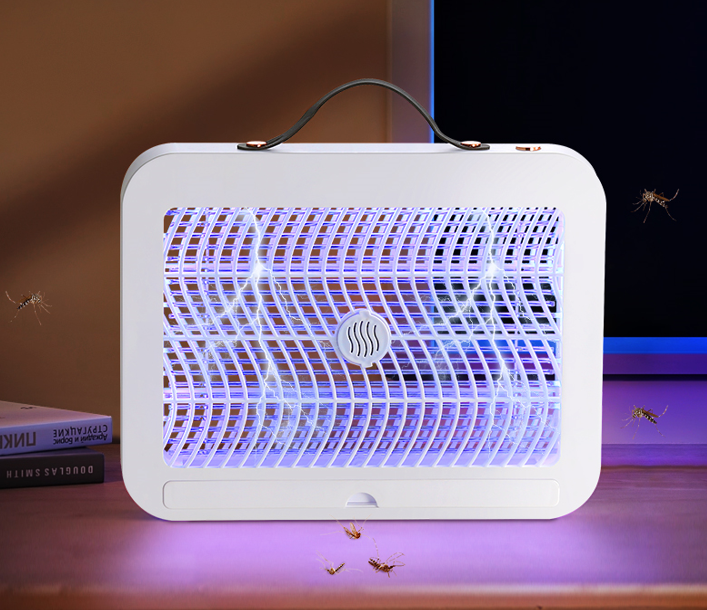
1. Calculate the Electricity Cost: The Truth About the "Low Power Consumption" of Mosquito Killer Lamps Lies in the Formula
To determine whether a mosquito killer lamp consumes a lot of electricity, we can't rely on feelings; we need to use data. The core factors affecting the power consumption of electrical appliances are "power" and "usage duration," and there is a clear scientific formula for calculating electricity costs: Electricity Cost = Power (kW) × Usage Duration (hours) × Electricity Price (yuan/kWh). We will calculate the actual electricity cost step by step based on the actual parameters of mosquito killer lamps on the market.
First, let's look at the power. Most mainstream household mosquito killer lamps on the market, whether they are physical electric shock type (killing mosquitoes with an electric grid) or photocatalytic type (attracting mosquitoes and then sticking or drying them), have a power ranging from 5 to 15 watts. Even high-power models designed for large spaces (such as living rooms and bedrooms) rarely exceed 20 watts. To make the calculation results more rigorous and closer to the "worst-case usage scenario," we choose a relatively high power—10 watts—as the calculation benchmark.
Next is the usage duration. Most people are used to turning on the mosquito killer lamp in the evening and turning it off in the morning: turning it on around 6 p.m. when mosquitoes start to be active and turning it off around 8 a.m. the next day, with a total daily usage of about 12 hours. If there is a need for continuous mosquito prevention at night, the maximum daily usage will not exceed 24 hours.
Finally, the electricity price. Currently, the average price of residential electricity in China is about 0.5 yuan per kWh (1 kWh = 1 kilowatt-hour, which is the amount of electricity consumed by an electrical appliance with a power of 1 kilowatt operating for 1 hour). In some regions, due to tiered electricity prices or regional differences, the electricity price may fluctuate between 0.45 and 0.6 yuan per kWh, but the overall difference is not significant.
Substitute these data into the formula for calculation:
- Power conversion: 10 watts = 0.01 kW (1 kW = 1000 watts);
- Daily power consumption: 0.01 kW × 12 hours = 0.12 kWh (i.e., 0.12 degrees of electricity);
- Daily electricity cost: 0.12 kWh × 0.5 yuan/kWh = 0.06 yuan (only 6 cents).
Even if we calculate based on the "extreme scenario"—a power of 15 watts, 24-hour operation a day, and an electricity price of 0.6 yuan per kWh—the result is only:
15 watts = 0.015 kW; 0.015 kW × 24 hours = 0.36 kWh; 0.36 kWh × 0.6 yuan/kWh = 0.216 yuan (about 20 cents).
In normal usage scenarios, the daily electricity cost of a mosquito killer lamp is stably around 0.15 yuan, so there is no such thing as "high power consumption" at all.
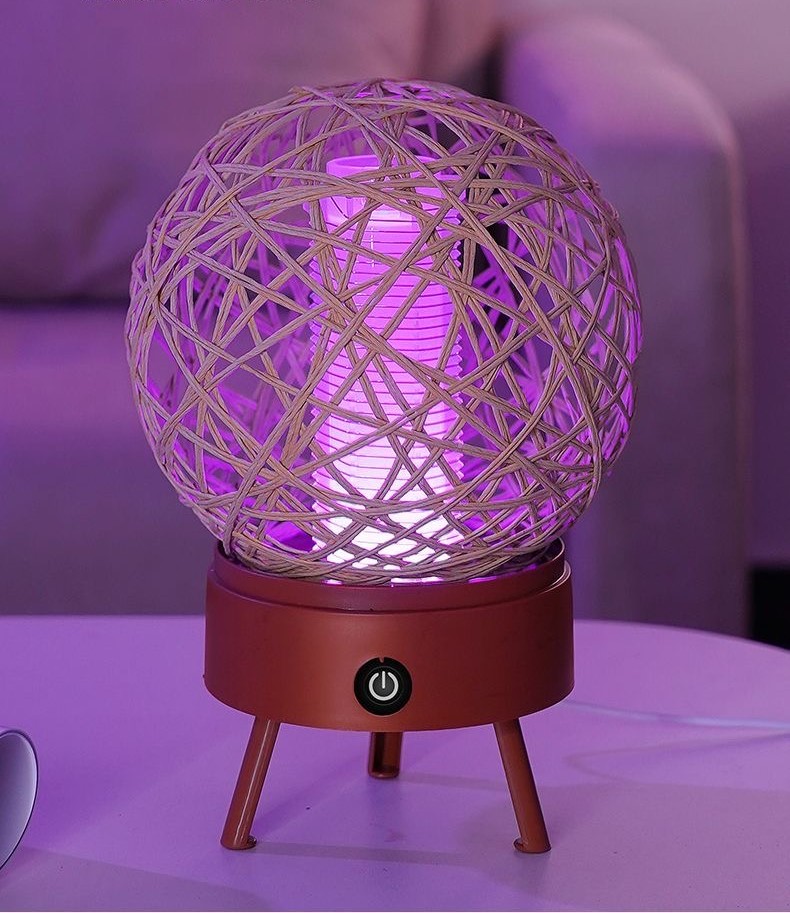
2. Trace the Source: Where Does the Rumor That "Mosquito Killer Lamps Are Power-Hungry" Come From?
Since the data clearly proves that mosquito killer lamps have low power consumption, why does the rumor that "mosquito killer lamps are power-hungry" spread? In fact, there are mainly two reasons:
One is "cognitive confusion," where some users confuse mosquito killer lamps with other high-power household appliances. For example, air conditioners (with a power of about 1000-2000 watts) and electric heaters (with a power of about 1500-2000 watts). The hourly power consumption of such appliances (1-2 kWh) is equivalent to the power consumption of a mosquito killer lamp operating continuously for 100-200 hours (about 4-8 days). Misattributing the "high power consumption" of other appliances to mosquito killer lamps easily leads to the illusion that "mosquito killer lamps are power-hungry."
The second reason is "differences in technological iteration." In the early days, there were indeed a few immaturely designed mosquito killer lamps on the market with relatively high power (about 25-30 watts) and low mosquito-attracting efficiency, which required long-term operation to achieve results, indirectly increasing power consumption. However, with the development of technology, mainstream mosquito killer lamps now have achieved the upgrade of "low power consumption + high efficiency." Their power has been significantly reduced, while the mosquito-attracting effect has been significantly improved, and they have long been rid of the label of "high power consumption."
3. Practical Tips: 3 Ways to Make Mosquito Killer Lamps "Energy-Saving and Efficient"
If you want to make your mosquito killer lamp both energy-saving and maximize its mosquito-killing effect, you can keep these 3 tips in mind:
First, choose the right usage environment and turn it on in a closed space as much as possible. For example, close the windows and doors before going to bed at night and then turn on the mosquito killer lamp. This prevents mosquitoes from continuously entering from the outside, reduces the "invalid working time" of the mosquito killer lamp, and indirectly reduces power consumption.
Second, avoid strong light interference and place it in a reasonable position. Mosquito killer lamps mainly attract mosquitoes with light of a specific wavelength. If placed near strong lights such as desk lamps or living room main lights, the mosquito-attracting effect will be weakened, making it difficult for mosquitoes to be attracted, and the mosquito killer lamp will need to operate for a longer time to be effective. It is recommended to place it in a dark position such as a corner, at a height of 1-1.5 meters from the ground (the active height of mosquitoes).
Third, clean and maintain it regularly to keep the device efficient. Whether it is the electric grid of an electric shock-type mosquito killer lamp or the mosquito-collecting box of a photocatalytic mosquito killer lamp, if too many mosquito corpses accumulate, it will affect the conductivity of the electric grid or the reaction effect of the photocatalyst, leading to a decrease in mosquito-killing efficiency. It is recommended to clean it 1-2 times a week to ensure that the mosquito killer lamp is always in the best working condition and avoid "inefficient operation and power waste."
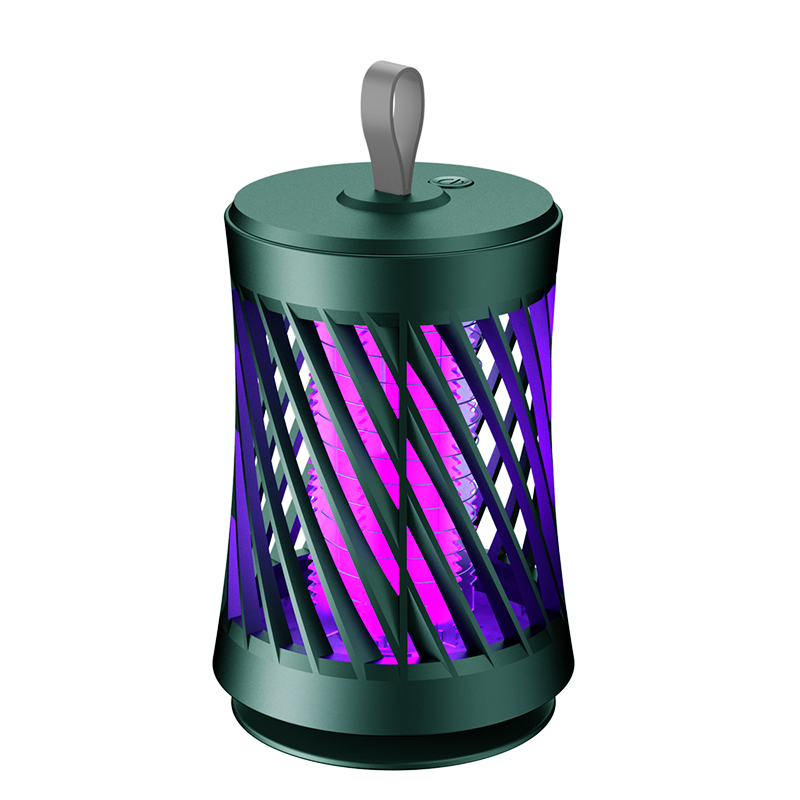
4. Conclusion: Don't Give Up "Mosquito-Free Freedom" Because of Rumors
Based on comprehensive data calculations and actual usage scenarios, the claim that "mosquito killer lamps are power-hungry" is a complete rumor— the daily electricity cost of an ordinary household mosquito killer lamp is only about 0.15 yuan, and even in extreme usage, it does not exceed 0.3 yuan. Instead of enduring mosquito bites and affecting sleep quality for the sake of negligible electricity costs, it is better to turn on the mosquito killer lamp with confidence and exchange it for a comfortable mosquito-free environment at a very low cost.
How to Save a Water-Soaked Electric Mosquito Swatter
A Complete Guide to CE-EMC and CE-LVD Certifications
Related Article

If you’re struggling with annoying mosquitoes, flies, and other flying pests indoors and outdoors, upgrading from traditional manual tools to anElectric Mosquito Swatter is the most efficient solution. Many homeowners and renters search where to buy fly swatter online to find durable, safe, and high-performance electric models that deliver instant pest control.
Where to Buy Fly Swatter
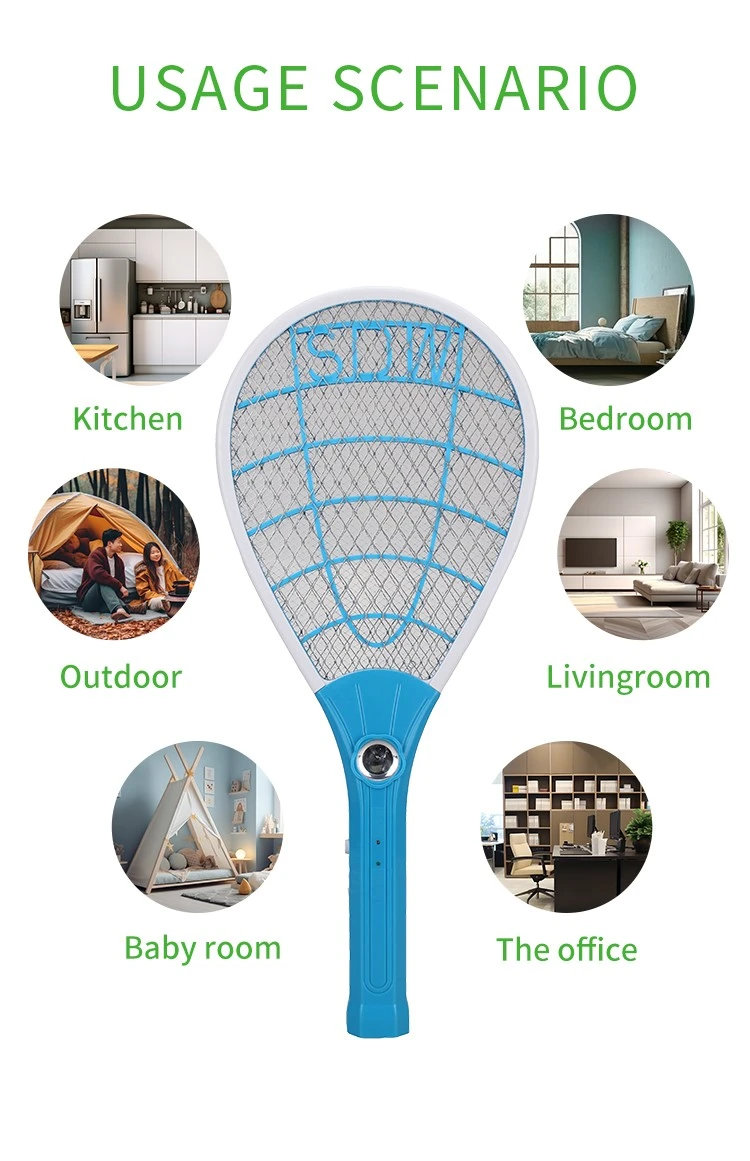
Most importers of electric mosquito swatters obsess over the first order: samples requested, factories vetted, a pre-shipment inspection booked. Then the reorder arrives eight months later and something is off. The grid feels softer. The charge port is a slightly different shade of black. The carton thickness dropped from 350 gsm to 300 gsm. Nothing is catastrophic — but the product no longer matches what your retail customers approved, and quietly, your return rate starts climbing.
How to Keep Mosquito Swatter Quality Consistent Across Repeat Orders
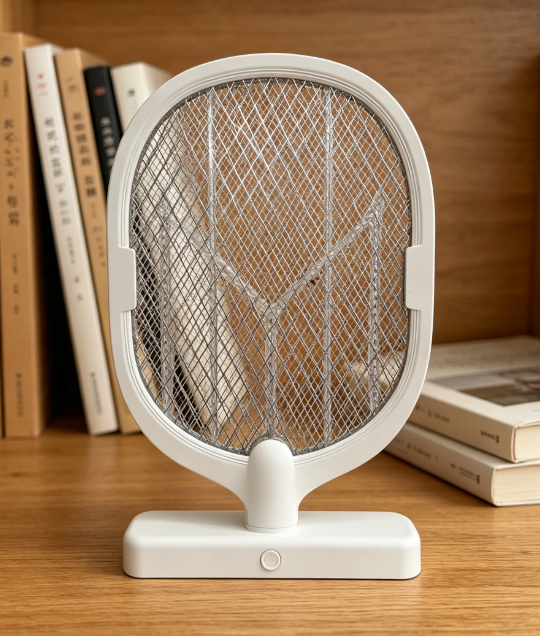
Warranty returns are the silent margin killer in the mosquito control category. A distributor who buys a swatter at $1.80 FOB and retails it at $9.90 can absorb a 1% return rate without noticing — but at 5%, the combined cost of replacement units, reverse logistics, and refund processing erases most of the line's profit.
Common mosquito swatter killer lamp failure modes wholesale spec guide

Digital bathroom scales rank as the second-highest-volume consumer weighing product category, only behind kitchen scales, with distinct market and product characteristics that set them apart from other scale types in importers’ product portfolios.
Digital bathroom body fat-bia-scale wholesale buyers guide