
Tooling and Mold Agreements in Mosquito Swatter OEM Manufacturing
2026-09-28
Tooling and Mold Agreements in Mosquito Swatter OEM Manufacturing: Cost Recovery, Ownership, and Multi-SKU Economics
Meta Description: Structure tooling cost recovery, mold ownership clauses, and depreciation schedules in mosquito swatter OEM contracts. A buyer's financial framework for 2026.
Most importers fixate on the FOB unit price when negotiating a mosquito swatter OEM contract. The smarter ones look at tooling first. A single plastic injection mold for a handheld swatter housing can run anywhere from $3,500 to $12,000 depending on cavity count, steel grade, and surface finish. For a killer lamp base with integrated UV-reflector geometry, tooling often pushes past $8,000. If you do not structure the tooling agreement correctly, you are effectively prepaying a manufacturing subsidy with no guarantee of cost recovery. This article breaks down how to negotiate mold ownership, depreciation schedules, and multi-SKU sharing clauses that protect your capital.
Why Tooling Economics Matter More Than Unit Price
A typical first-time buyer will haggle over a $0.15 difference in unit price on a 10,000-piece order. That saves $1,500. Meanwhile, the same buyer often accepts a $6,000 tooling fee with no written ownership clause and no depreciation schedule. Over a 50,000-unit program, the tooling cost per unit is $0.12. Over 100,000 units, it drops to $0.06. The unit price difference fades; the tooling structure endures.
In mosquito swatter manufacturing, tooling falls into four categories:
-
Plastic injection molds for handle housings, grid frames, and lamp bases (P20 or 718H steel)
-
Metal stamping dies for the triple-layer aluminum or zinc-coated mesh grid
-
PCB fixture jigs for wave-soldering the charging circuit and LED driver board
-
Silicone or TPE molds for grip sleeves, button overlays, and gasket seals
Plastic molds represent 60–75% of total tooling spend in most swatter programs. Stamping dies account for another 15–20%. The remainder is split between PCB fixtures and soft-grip tooling.
Standard Mold Cost Structures and What Drives the Quote
Chinese mold shops typically quote mosquito swatter tooling using a tiered steel-and-cavity matrix. Below is a realistic cost framework based on 2026 market rates in the Chaoshan and Dongguan manufacturing clusters:
|
Component
|
Cavities
|
Steel Grade
|
Typical Cost (USD)
|
Lifespan (shots)
|
|---|---|---|---|---|
|
Swatter handle housing
|
1
|
P20
|
$3,500 – $5,000
|
300,000
|
|
Swatter handle housing
|
2
|
718H
|
$6,500 – $9,000
|
500,000
|
|
Killer lamp base
|
1
|
P20
|
$4,500 – $6,500
|
300,000
|
|
Grid mesh stamping die
|
1-up
|
SKD11
|
$1,800 – $3,200
|
1,000,000
|
|
Button / grip TPE mold
|
4
|
Nak80
|
$2,500 – $4,000
|
200,000
|
The cavity count is the biggest cost lever. A two-cavity mold doubles output per cycle but rarely doubles the price because the machining overhead is shared. For buyers planning volumes above 30,000 units annually, two-cavity tooling usually pays back within the first production year through reduced machine-hour rates.
Always request the mold shop name and location in your contract. Some factories subcontract mold making to unqualified shops to pad margin, then blame dimensional drift on "steel fatigue" when tolerances fail.
Ownership Clauses: Who Keeps the Mold When the Contract Ends?
This is where most tooling disputes originate. There are three standard ownership models in Guangdong province OEM contracts:
Buyer owns, factory stores. You pay 100% of tooling upfront. The mold is your asset. The factory stores it free of charge and runs production on demand. If you switch suppliers, you have the right to move the mold. This is the safest model but requires trust that the factory will not delay release.
Shared ownership with amortization. You pay 50–70% upfront. The remaining 30–50% is amortized across unit pricing over a defined volume, typically 30,000 to 50,000 pieces. Once the threshold is hit, ownership transfers to you. If you never reach the threshold, the factory retains ownership. This model lowers your entry cost but locks you into a minimum volume commitment.
Factory owns, buyer rents. The factory bears all tooling cost and recovers it through a higher unit price. You pay zero upfront. This is common for commoditized products but leaves you with no asset and no leverage if the factory raises prices later.
For mosquito swatter programs with custom housing shapes, color formulations, or branded button layouts, model 1 or 2 is strongly recommended. The molds contain your industrial design DNA. Losing control of them means a competitor could theoretically produce identical housings from the same tooling.
Your contract should state explicitly: "Upon full payment of tooling fees, all molds, dies, fixtures, and associated CAD/CAM files become the exclusive property of the buyer. The supplier shall not use, copy, or transfer said tooling to any third party without written consent." Add a penalty clause, typically 2–3x the tooling value, for unauthorized use.
Depreciation Schedules and Break-Even Math
A depreciation schedule ties tooling recovery to actual production volume, not calendar time. This protects both parties. The factory gets predictable cash flow. You avoid paying for tooling on a product that never sells.
Here is a practical break-even calculation for a two-cavity swatter housing mold costing $8,000:
|
Annual Volume
|
Tooling per Unit
|
Break-Even vs. Factory-Owned Mold*
|
|---|---|---|
|
10,000 units
|
$0.80
|
Never (factory-owned cheaper)
|
|
25,000 units
|
$0.32
|
Month 14
|
|
50,000 units
|
$0.16
|
Month 8
|
|
100,000 units
|
$0.08
|
Month 5
|
*Assumes factory-owned tooling adds $0.18/unit to the FOB price versus buyer-owned tooling with full upfront payment.
The inflection point usually sits between 25,000 and 40,000 annual units. Below that, shared ownership (model 2) with a 50,000-unit amortization threshold makes sense. Above it, full buyer ownership pays back quickly and gives you supply-chain flexibility.
Multi-SKU Mold Sharing: Cutting Tooling Spend by 30–40%
Experienced buyers negotiate mold sharing across product variants. In mosquito swatter manufacturing, this is highly feasible:
Shared handle core, swapped inserts. One mold base with interchangeable inserts for different grip textures, button positions, or colorants. Insert swaps cost $400–$800 versus $3,500+ for a whole new mold.
Family molds. A single mold with cavities for both the swatter handle and the charging base. Common for 2-in-1 UV swatter programs where the base station and handheld unit share design DNA.
Universal grid die. One stamping die sized to the largest mesh frame, with shims or adapters for smaller frames. This works if your product line shares the same grid voltage and wire gauge.
A distributor running three swatter SKUs — standard rechargeable, 2-in-1 UV, and a budget battery model — can often share one handle mold core with two insert sets and one universal grid die. Total tooling drops from roughly $16,000 to $10,500, a 34% saving.
Red Flags in Tooling Contracts and How to Audit Them
Before wiring any tooling deposit, review the contract for these five warning signs:
Vague steel specifications. "Standard mold steel" is not acceptable. Specify P20, 718H, or NAK80 by name. Require a steel certificate from the mold shop.
No mold trial report clause. The contract should mandate a T1 trial shot with dimensional report, warp analysis, and sample parts before final acceptance.
Missing maintenance responsibility. Who pays for mold polishing, cavity repair, or parting-line re-machining after 200,000 shots? Spell it out.
No CAD file escrow. You need the native STEP or IGES files, not just PDF drawings. If the factory disappears, you must be able to reproduce the mold elsewhere.
Unlimited storage without movement rights. Factories sometimes claim "storage fees" or delay mold release. Specify a 48-hour release window upon written request and a $200/day late fee.
Send a third-party inspector to the mold shop for the T1 trial if the tooling value exceeds $8,000. The $350 inspection fee is negligible compared to discovering a warp defect after 10,000 molded parts.
Conclusion
Well-structured tooling agreements separate serious distributors from one-off buyers. If you are planning a multi-SKU mosquito control line for 2027, getting the mold economics right in Q4 2026 will lock in your cost base before steel prices and CNC labor rates shift again. Our OEM versus ODM guide covers the broader manufacturing decision, while this MOQ negotiation framework helps align tooling spend with volume commitments. For a look at a product that benefits from shared tooling architecture, see the 2-in-1 electric mosquito swatter with UV light.
With 15 years of OEM experience and in-house mold maintenance capability, Aofengming Electric in Chaozhou, China, structures tooling agreements that let buyers recover costs transparently and retain full mold ownership from day one.
Mosquito Species Behavior and Product Matching
Does Europe Need Mosquito Control
Related Article
If you’re struggling with annoying mosquitoes, flies, and other flying pests indoors and outdoors, upgrading from traditional manual tools to anElectric Mosquito Swatter is the most efficient solution. Many homeowners and renters search where to buy fly swatter online to find durable, safe, and high-performance electric models that deliver instant pest control.
Where to Buy Fly Swatter
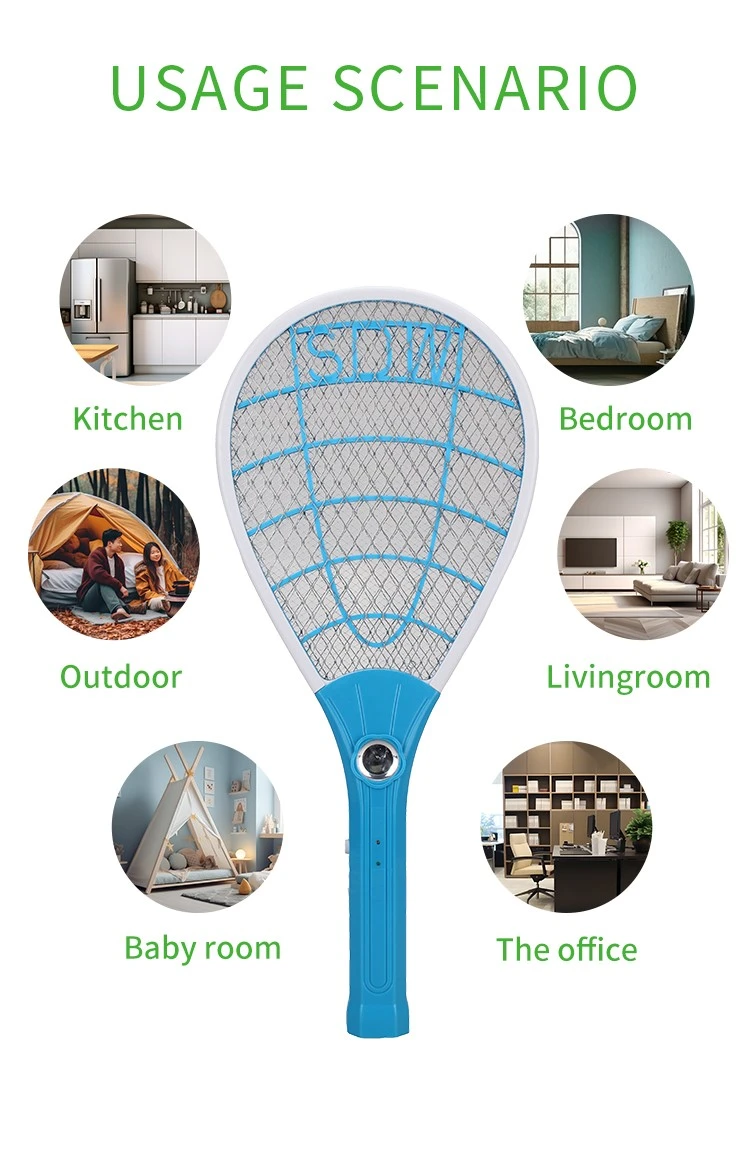
Most importers of electric mosquito swatters obsess over the first order: samples requested, factories vetted, a pre-shipment inspection booked. Then the reorder arrives eight months later and something is off. The grid feels softer. The charge port is a slightly different shade of black. The carton thickness dropped from 350 gsm to 300 gsm. Nothing is catastrophic — but the product no longer matches what your retail customers approved, and quietly, your return rate starts climbing.
How to Keep Mosquito Swatter Quality Consistent Across Repeat Orders
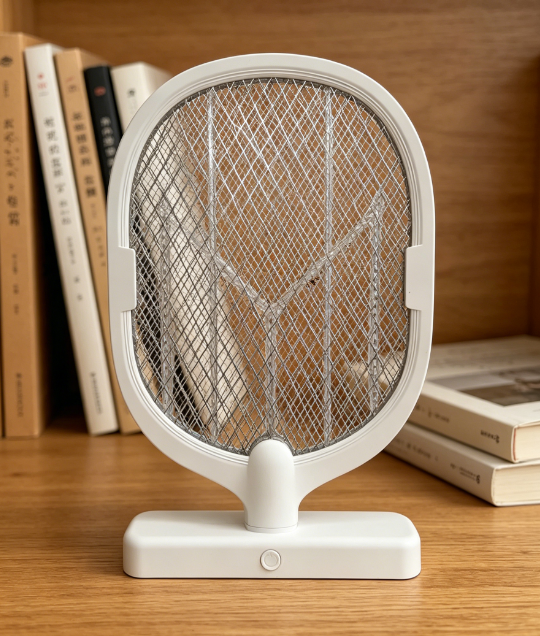
Warranty returns are the silent margin killer in the mosquito control category. A distributor who buys a swatter at $1.80 FOB and retails it at $9.90 can absorb a 1% return rate without noticing — but at 5%, the combined cost of replacement units, reverse logistics, and refund processing erases most of the line's profit.
Common mosquito swatter killer lamp failure modes wholesale spec guide
Digital bathroom scales rank as the second-highest-volume consumer weighing product category, only behind kitchen scales, with distinct market and product characteristics that set them apart from other scale types in importers’ product portfolios.
Digital bathroom body fat-bia-scale wholesale buyers guide