
Traditional vs Smart Mosquito Swatter
2026-06-10
Traditional vs Smart Mosquito Swatter: The Ultimate Summer Buying Guide
The most annoying part of summer is never the sweltering heat, but the incessant buzzing of mosquitoes. Whether you’re binge-watching shows, taking a quick nap, or relaxing at home, a mosquito bite can easily ruin your cozy moment. As a must-have summer gadget, electric mosquito swatters are found in nearly every household. However, the market now features two distinct types: traditional basic mosquito swatters and smart multi-functional mosquito swatters, leaving many people confused about which one to choose.
Some people believe traditional swatters are sufficient and cost-effective, while others prefer the convenience of smart models. The two products differ greatly in price, with a gap of several to more than ten times, and offer entirely different user experiences. Today, we will conduct an in-depth comparison between traditional and smart mosquito swatters in terms of working principles, pros and cons, application scenarios, and cost performance, helping you pick the perfect mosquito-killing tool without pitfalls.
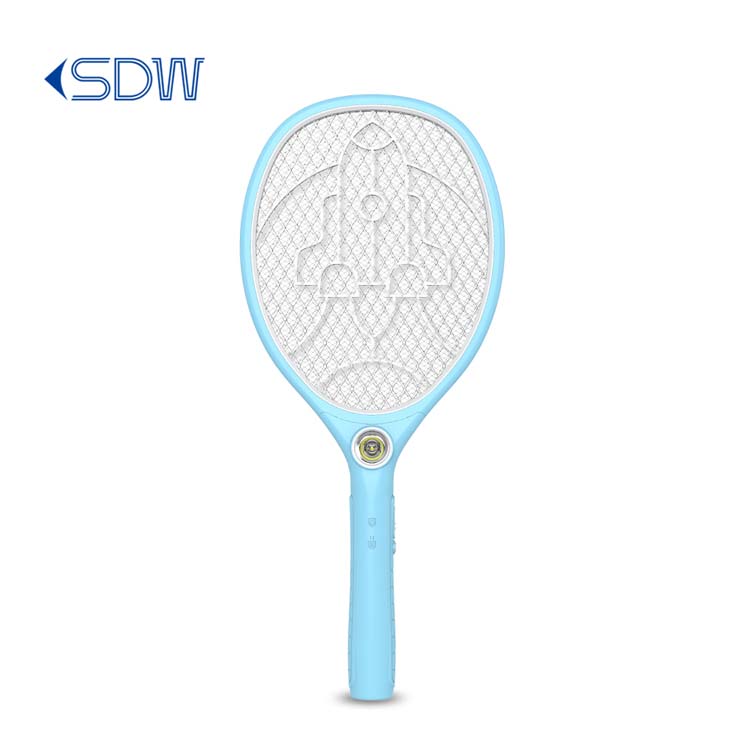
1. Working Principle: Same Core Function, Totally Different Experience
Both traditional and smart mosquito swatters rely on high-voltage electric shock to kill mosquitoes. They physically eliminate pests with instantaneous high voltage, leaving no chemical residues. Safer and healthier than mosquito coils and repellent liquids, they are suitable for people of all ages. Nevertheless, the two models differ significantly in operating modes and technical configurations.
The traditional electric mosquito swatter is an original basic model with a simple structure, consisting only of a three-layer metal grid, high-voltage generator, basic battery, and handle. It is a fully manual tool that requires users to spot mosquitoes visually and swing the swatter manually. Mosquitoes are killed only when they touch the grid, making the entire process passive and completely dependent on human observation and operation.
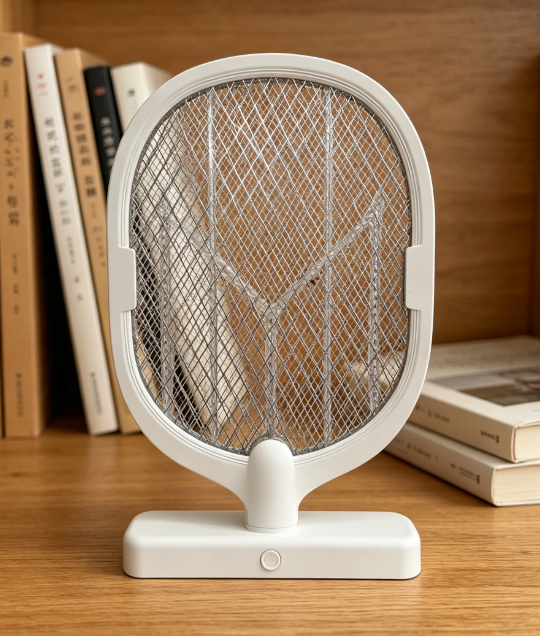
The smart mosquito swatter is an upgraded iteration of the traditional version. Based on the basic high-voltage electric shock function, it is equipped with advanced intelligent modules. Most high-end smart models come with 365nm purple mosquito-attracting lights, infrared sensors, AI recognition systems, and adaptive power adjustment technology. They support dual modes: manual swatting and automatic trapping & killing, requiring no manual supervision and actively eliminating hidden mosquitoes to break free from full manual operation.
2. Traditional Mosquito Swatter: A Classic Budget-Friendly Essential
Having dominated the market for decades, traditional manual mosquito swatters remain popular among families thanks to their simple structure, durability, and affordable price. With no fancy redundant functions, they focus on pure practicality.
2.1 Core Advantages
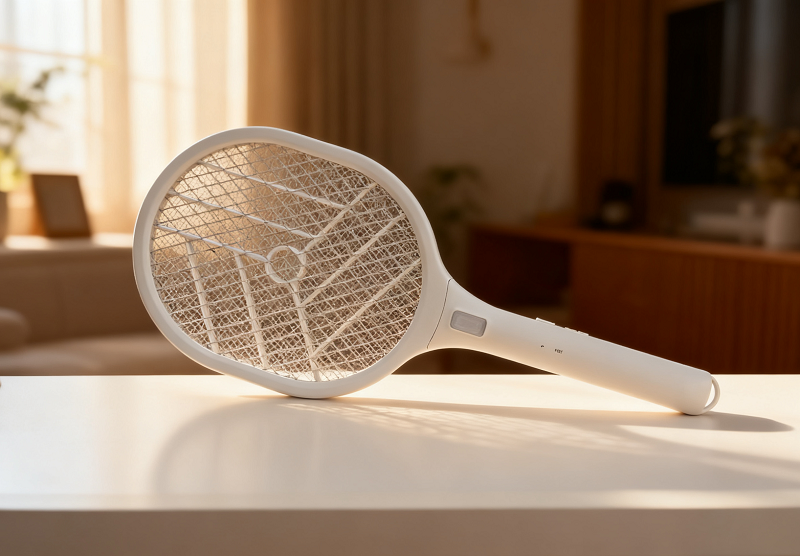
First of all, it offers excellent cost performance. Traditional swatters are priced at only 10 to 30 yuan, making replacement extremely affordable. They are perfect for students, renters, and users with temporary mosquito-killing needs. In addition, they are extremely easy to use and highly durable. With no complex electronic components, they work right after power-on, accessible to both the elderly and children, and require almost no daily maintenance.
Furthermore, traditional swatters feature instant response with zero delay. You can swing the swatter immediately when spotting mosquitoes, flies, or moths for visible and effective real-time pest elimination. They are lightweight and comfortable to hold, causing no hand fatigue even after long-time use.
2.2 Major Drawbacks
The biggest flaw of traditional swatters is total reliance on manual operation. They only kill mosquitoes you can see and swat. They are completely ineffective against hidden mosquitoes lurking in wall corners, behind curtains, or in ceiling gaps, resulting in extremely low mosquito elimination coverage and frequent frustrating misses.
They also provide a poor user experience. You need to turn on the light to find mosquitoes at night, interrupting your rest. Moreover, traditional swatters produce loud noise up to 78 decibels when shocking mosquitoes, with sharp crackling sounds that easily disturb sleep. Additionally, basic models have poor protective designs, and single-layer grid versions may cause accidental electric shocks with low safety performance.
3. Smart Mosquito Swatter: Tech-Powered Lazy-Friendly Pest Killer
As a trending upgraded product in recent years, smart mosquito swatters perfectly solve all the pain points of traditional models. Focusing onfull automation, hands-free operation, and full coverage, they upgrade passive mosquito killing to active intelligent elimination, greatly freeing hands and catering to users pursuing a high-quality home life.
3.1 Core Advantages
First, dual working modes enable all-day mosquito elimination. You can use it manually to kill visible flying mosquitoes during the day. At night, turn on the automatic mosquito-trapping mode: the professional 365nm purple light simulates human body light sources to attract mosquitoes accurately, and the adaptive high-voltage system kills pests automatically. You can simply place it in a corner to eliminate hidden mosquitoes in dead zones without supervision.
Second, intelligent noise reduction and upgraded safety. Adopting PWM pulse width modulation technology with a working frequency above 20kHz, high-end smart swatters operate silently without harsh crackling sounds, ensuring no disturbance during nighttime use. Equipped with multi-layer protective grids and an intelligent power-off system, they automatically cut off power upon human contact, preventing accidental electric shocks and making them safe for families with seniors and infants.
Third, long-lasting battery life and precise identification. Most smart models are built with large-capacity lithium batteries that support weeks of use on a single charge. Premium versions adopt AI image recognition technology with a 92.3% accuracy rate, which can distinguish mosquitoes from sundries and adjust discharge power intelligently for energy conservation and extended service life.
3.2 Relative Disadvantages
The high price is the biggest downside of smart swatters, with mainstream models costing 80 to 200 yuan, a significant premium over traditional versions. Besides, the built-in intelligent sensors, mosquito-attracting lights, and other modules make their structure more complex and slightly heavier, leading to a less comfortable hand feel during long-time manual use. They also have multiple functions that require a short learning curve for new users, which may seem redundant for minimalists.
4. Core Parameter Comparison: Clear Differences at a Glance
To help you distinguish the two products more intuitively, we have sorted out a comparison of core advantages and disadvantages:
|
Comparison Dimension
|
Traditional Mosquito Swatter
|
Smart Mosquito Swatter
|
|
Price Range
|
10-30 Yuan (High Cost-Performance)
|
50-200 Yuan (Mid-to-High End)
|
|
Working Mode
|
Full Manual Swatting
|
Manual Swatting + Automatic Trapping & Killing
|
|
Mosquito Killing Range
|
Only Visible Flying Mosquitoes
|
Full Coverage, Including Hidden Mosquitoes in Dead Zones
|
|
Operating Noise
|
Loud with Obvious Crackling Sounds
|
Silent Operation, No Night Disturbance
|
|
Safety Performance
|
Basic Protection, Prone to Accidental Touch
|
Multi-Layer Protection + Intelligent Power-Off, High Safety
|
|
Battery Life
|
Ordinary Battery, Average Endurance
|
Large-Capacity Lithium Battery, Long-Lasting
|
|
Target Users
|
Students, Renters, Temporary Use
|
Long-Term Residents, Families with the Elderly & Kids, Lazy Users
|
5. Final Buying Advice: Choose According to Your Needs
Choose a Traditional Swatter If You:
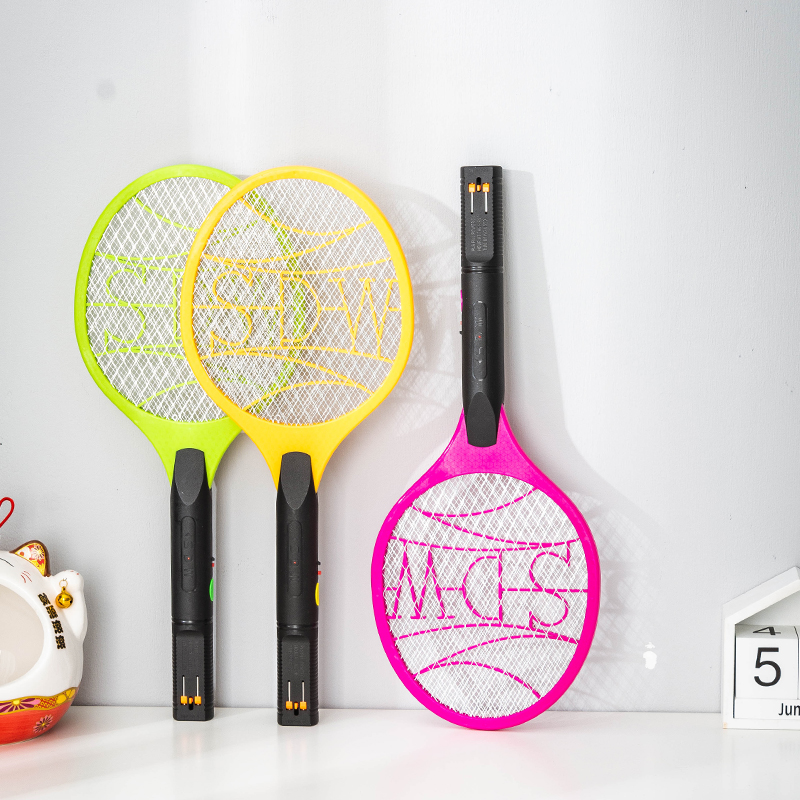
Have a limited budget and pursue maximum cost performance, only needing a temporary solution for summer mosquitoes; have simple mosquito-killing needs and no long-term mosquito breeding problems at home; are renting short-term accommodation or living in a student dormitory, and prefer low-cost, durable, and replaceable gadgets with no demand for extra functions.
Choose a Smart Swatter If You:
Live in a house with severe and recurring mosquito problems in corners, balconies, and bedrooms; have seniors, infants, or pregnant family members, requiring high safety and low noise performance; have a busy schedule and want a hands-free automatic mosquito elimination solution; have a sufficient budget and are willing to improve home comfort with a multi-functional all-season mosquito-proof gadget.
6. Conclusion: No Absolute Best, Only the Most Suitable
There is no absolute good or bad between traditional and smart mosquito swatters—they simply adapt to different needs. The traditional swatter is a cost-effective must-have, minimalist, practical, and economical to meet basic mosquito-killing demands. The smart swatter is an experience-upgrade gadget that solves traditional pain points with technology, delivering all-round intelligent mosquito elimination and greatly improving home living experience.
For temporary summer mosquito control, a traditional swatter is fully sufficient and cost-effective. For thorough mosquito prevention, hands-free operation, and guaranteed safety and silence, a smart swatter is a worthy summer investment that keeps your home mosquito-free all season long. You can make a targeted choice based on your living scenario, budget, and usage habits to bid farewell to mosquito troubles easily.
Do UV Mosquito Lights Work on Flies
Portable Mosquito Swatter for Travel
Related Article

If you’re struggling with annoying mosquitoes, flies, and other flying pests indoors and outdoors, upgrading from traditional manual tools to anElectric Mosquito Swatter is the most efficient solution. Many homeowners and renters search where to buy fly swatter online to find durable, safe, and high-performance electric models that deliver instant pest control.
Where to Buy Fly Swatter
Most importers of electric mosquito swatters obsess over the first order: samples requested, factories vetted, a pre-shipment inspection booked. Then the reorder arrives eight months later and something is off. The grid feels softer. The charge port is a slightly different shade of black. The carton thickness dropped from 350 gsm to 300 gsm. Nothing is catastrophic — but the product no longer matches what your retail customers approved, and quietly, your return rate starts climbing.
How to Keep Mosquito Swatter Quality Consistent Across Repeat Orders
Warranty returns are the silent margin killer in the mosquito control category. A distributor who buys a swatter at $1.80 FOB and retails it at $9.90 can absorb a 1% return rate without noticing — but at 5%, the combined cost of replacement units, reverse logistics, and refund processing erases most of the line's profit.
Common mosquito swatter killer lamp failure modes wholesale spec guide

Digital bathroom scales rank as the second-highest-volume consumer weighing product category, only behind kitchen scales, with distinct market and product characteristics that set them apart from other scale types in importers’ product portfolios.
Digital bathroom body fat-bia-scale wholesale buyers guide