
Type-C vs Micro-USB on Mosquito Swatters and Killer Lamps
2026-09-10
Type-C vs Micro-USB on Mosquito Swatters and Killer Lamps: 2026 Wholesale Cost, EU Compliance & Buyer Preference
The charging port is no longer a minor accessory detail for mosquito swatters and UV mosquito killer lamps in 2026. It has become a core indicator that determines product price tiers, EU market eligibility, after-sales failure rates, and global buyer preference. For exporters, distributors, and retail buyers, choosing between Type-C and Micro-USB directly impacts profitability, compliance risks, and market competitiveness. This guide breaks down the 2026 port market landscape, BOM cost differences, EU regulatory rules, regional buyer trends, and optimal SKU portfolio strategies.
1. 2026 Mosquito Device Port Market Segmentation (By Price Tier)
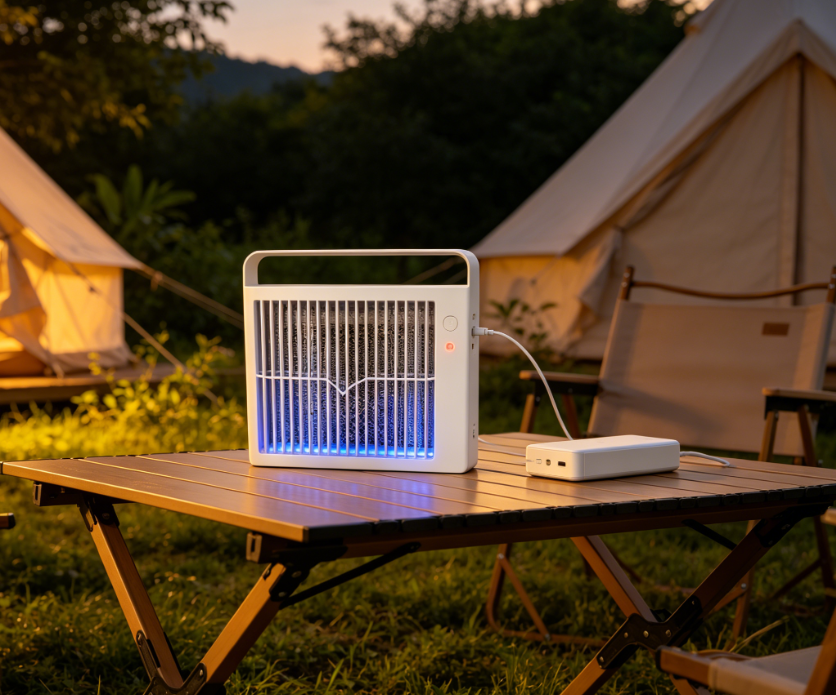
Random sampling of 40HQ full container loads from Guangdong loading docks shows an obvious correlation between charging port configuration and FOB price tiers. The port mix instantly reveals which target market and customer group each batch of mosquito swatters and killer lamps serves.
1.1 Budget Tier (FOB < USD 1.80)
Low-cost entry-level mosquito devices remain dominated by traditional charging solutions. Around 80–90% of SKUs adopt Micro-USB ports, while an increasing number of ultra-budget models use non-rechargeable AA batteries to cut manufacturing costs further. These configurations are mainly targeted at price-sensitive emerging markets with low retail pricing thresholds.
1.2 Mid Tier (FOB USD 1.80–3.50)
The mid-end market shows a transitional port mix. Approximately 70% of products upgrade to Type-C ports, 25% retain Micro-USB for cost control, and 5% use old proprietary pin ports (mostly legacy HY-series models). This tier balances cost performance and user experience, catering to mainstream global mass markets.
1.3 Premium Tier (FOB > USD 3.50, UV-Lamp Combo Models)
High-end multi-functional mosquito swatters and integrated UV killer lamps have completed large-scale port upgrading. Over 95% of premium SKUs adopt Type-C ports, equipped with PD/QC fast charging and IPX4-rated sealed rubber grommets for waterproof and dustproof protection, greatly improving product durability and user experience.
2. Type-C vs Micro-USB: Exact BOM Cost Difference Per Unit
Many exporters hesitate to switch to Type-C due to cost concerns. However, the actual BOM (Bill of Materials) premium is minimal compared to the long-term after-sales and market value gains. The total cost delta per unit ranges from USD 0.18 to 0.32, with detailed cost breakdowns as follows:
|
Cost Component
|
Micro-USB (USD/Unit)
|
Type-C (USD/Unit)
|
Cost Delta (USD/Unit)
|
|---|---|---|---|
|
16-pin Board-Mount Connector
|
0.04–0.06
|
0.10–0.16
|
+0.06–0.10
|
|
Included Charging Cable
|
0.10–0.14
|
0.16–0.22
|
+0.06–0.08
|
|
PCB Layout Rework
|
0.00
|
0.02–0.04
|
+0.02–0.04
|
|
IPX4 Sealing Grommet
|
0.04
|
0.06
|
+0.02
|
|
Total BOM Premium
|
—
|
—
|
+0.18–0.32
|
For a full 40HQ container with 5,000 units, the total additional cost is only USD 900–1,600, which is negligible in overall landed costs. In return, Type-C ports deliver 3–5 times longer service life: 10,000 plug-in cycles for Type-C versus only 1,500–2,500 cycles for field-used Micro-USB ports. This significantly cuts RMA (Return Merchandise Authorization) and warranty failure rates, greatly improving long-term profit margins.
3. EU Common Charger Directive 2024/1765: Full Compliance Rules 2026
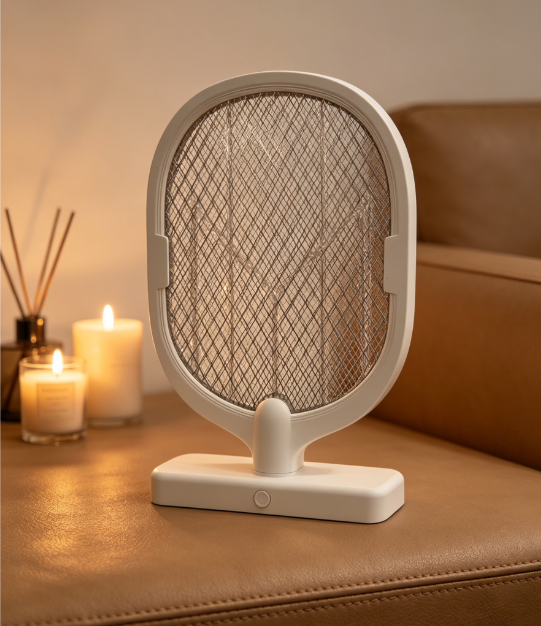
The port shift is not a market trend alone but a mandatory regulatory requirement. The EU Directive (EU) 2024/1765 amended the Radio Equipment Directive, officially listing mosquito swatters and mosquito killer lamps as small handheld electronic devices subject to universal Type-C charging regulations, with a hard compliance deadline of 28 December 2024.
3.1 Mandatory Compliance Requirements for EU Importers
-
Full Port Switch: All newly produced SKUs for the EU market after the compliance date must adopt USB Type-C. Eligible old inventory is grandfathered, but compliance is judged by production date, not shipping or arrival date.
-
Document Update: Refresh the Declaration of Conformity (DoC) and technical files to cite EN IEC 62680-1-3 (USB Type-C standard) and EN IEC 62680-1-2 (USB Power Delivery standard) for PD-enabled models.
-
Cable & Adapter Rules: Products bundled with charging accessories must include at least one Type-C cable. Optional AC adapters (if included) must support PD 3.0 or higher protocols.
-
Packaging Relabeling: Update cartons and user manuals with the official USB-C trident logo and clear output power markings (e.g., 5V⎓2A).
3.2 Non-Compliance Penalties
Penalties vary by EU member state. Basic violations incur fines of EUR 10,000 per SKU in Italy and Spain. Severe violations in Germany lead to forced product withdrawal plus fines exceeding EUR 50,000. Traditional CE certification without updated DoC files will be deemed non-compliant by EU market surveillance authorities.
4. Hidden Retail Selling Points of Type-C Mosquito Devices
The slight cost premium of Type-C is easy to justify with strong retail selling points, which help brands win Amazon Buy Box rankings and offline supermarket shelf priority.
4.1 3A Fast Charging
A standard 4,000 mAh mosquito swatter takes 4 hours to fully charge via Micro-USB, while Type-C PD fast charging shortens the time to just 1.5 hours. This intuitive efficiency advantage is a core competitive highlight for e-commerce product listings.
4.2 Bidirectional Power Output
The Type-C port supports bidirectional power transmission. It can charge the mosquito device via a power bank outdoors and output low-current power to charge mobile phones in emergencies, perfectly matching camping, outdoor patio, and night market usage scenarios.
4.3 Upgraded IPX4/IPX5 Waterproof Sealing
The larger structural footprint of Type-C ports allows for softer, more durable silicone sealing grommets, realizing IPX4 or higher waterproof performance. This effectively prevents damage from outdoor dew, rain splashes, and daily water contact, reducing product failures.
4.4 Universal Cable Compatibility
One Type-C cable charges mosquito swatters, killer lamps, smartphones, and e-readers. It simplifies household cable management and supports retailer SKU rationalization, reducing retail stocking pressure.
5. 2026 Regional Buyer Preference Data (SEA, Africa, Latin America, EU)
EU regulations drive mandatory Type-C adoption, while emerging markets determine global sales volume. Q1–Q3 2026 global distributor RFQ feedback shows clear regional preference differences:
|
Region
|
Micro-USB Still Acceptable?
|
Type-C Mandatory for Premium SKUs?
|
Buyer Market Notes
|
|---|---|---|---|
|
West Africa (Nigeria, Ghana, Senegal)
|
Yes (Sub-USD 1.80 SKUs)
|
Yes (UV Combo > USD 3)
|
Local phone port transition ongoing; cable bundling remains a standard selling feature
|
|
East Africa (Kenya, Tanzania, Uganda)
|
Broadly acceptable
|
Growing demand
|
Driven by TECNO/Infinix Type-C phone penetration; urban markets prioritize upgrades
|
|
Southeast Asia (PH, ID, VN)
|
Yes, but rapidly declining
|
Yes (Mid-tier & above)
|
Convenience store chains require Type-C for premium shelf listings
|
|
Latin America (BR, MX, CO)
|
Common in budget tiers
|
Yes (> USD 3.20 SKUs)
|
Local certifications do not mandate Type-C, but retailers prefer upgraded models
|
|
EU 27 + UK
|
No (Post-Dec 2024)
|
100% Mandatory
|
Full regulatory compliance required for all new production
|
6. 2026 Optimal SKU Port Strategy for Exporters
A one-size-fits-all full conversion is unnecessary in 2026. A tiered portfolio strategy balances compliance, cost, and market adaptability:
-
Single-SKU Exporters: Fully switch to Type-C. Eliminate EU compliance risks and simplify cable packaging and inventory management.
-
Multi-Tier Portfolio Exporters: Retain 1 Micro-USB/AA battery entry-level model for ultra-price-sensitive markets; upgrade all rechargeable mid-to-premium SKUs to Type-C.
-
EU-Only Exporters: Zero Micro-USB allowance. All post-2024-12-28 production must use Type-C to avoid regulatory penalties.
-
OEM/Private Label Sellers: Confirm port specifications with retail buyers before mold adjustments. Most 2026 major retail chains have locked Type-C into official product specs.
The hybrid port portfolio remains viable in 2026, but full Type-C conversion will be inevitable in 2027–2028, led by retail market demand ahead of formal regulations.
Final Thoughts
In 2026, Type-C vs Micro-USB selection for mosquito swatters and killer lamps is no longer a trivial cost choice but a strategic decision covering compliance, after-sales cost, retail competitiveness, and global market layout. Although Type-C brings a small BOM premium, its longer service life, faster charging, waterproof performance, and EU compliance value far offset the extra cost. For long-term export business growth, accelerating Type-C upgrading for mid and premium SKUs is the most cost-effective investment, while retaining Micro-USB entry models can maintain advantages in low-end emerging markets.
the swatter and killer-lamp ranges.
OEM Swatter Manufacturing Project Management
What Do Pest Control Companies Use for Mosquitoes
Related Article

If you’re struggling with annoying mosquitoes, flies, and other flying pests indoors and outdoors, upgrading from traditional manual tools to anElectric Mosquito Swatter is the most efficient solution. Many homeowners and renters search where to buy fly swatter online to find durable, safe, and high-performance electric models that deliver instant pest control.
Where to Buy Fly Swatter
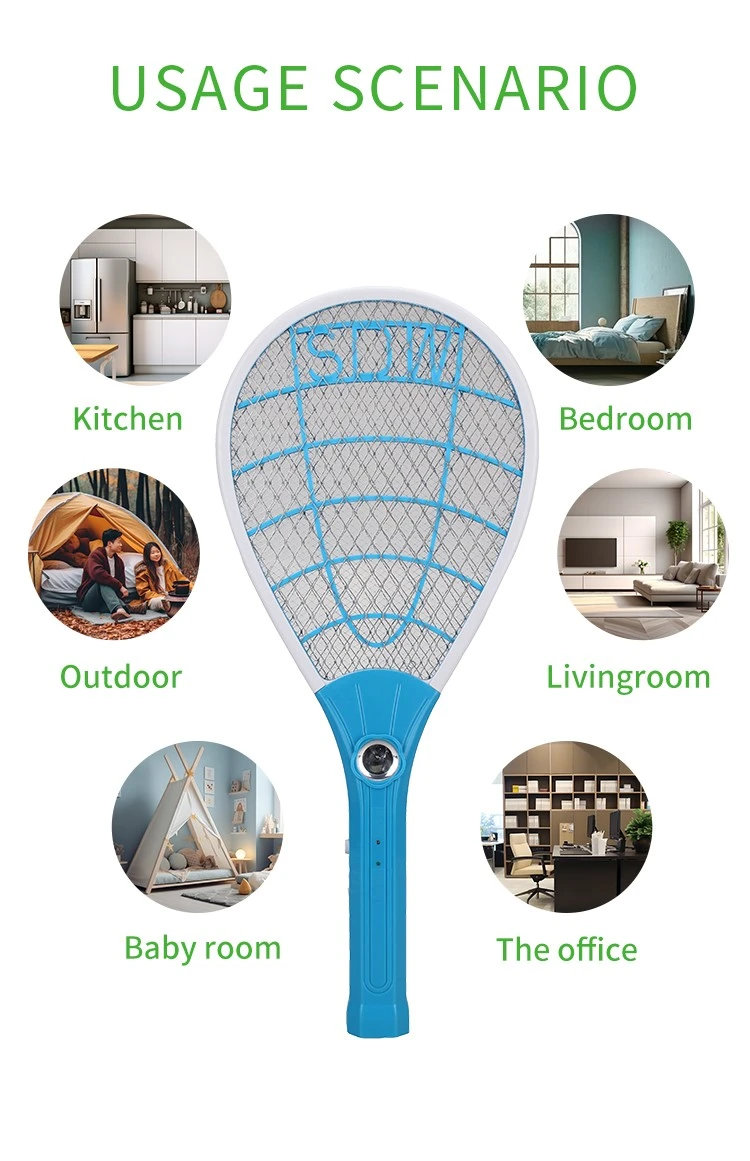
Most importers of electric mosquito swatters obsess over the first order: samples requested, factories vetted, a pre-shipment inspection booked. Then the reorder arrives eight months later and something is off. The grid feels softer. The charge port is a slightly different shade of black. The carton thickness dropped from 350 gsm to 300 gsm. Nothing is catastrophic — but the product no longer matches what your retail customers approved, and quietly, your return rate starts climbing.
How to Keep Mosquito Swatter Quality Consistent Across Repeat Orders
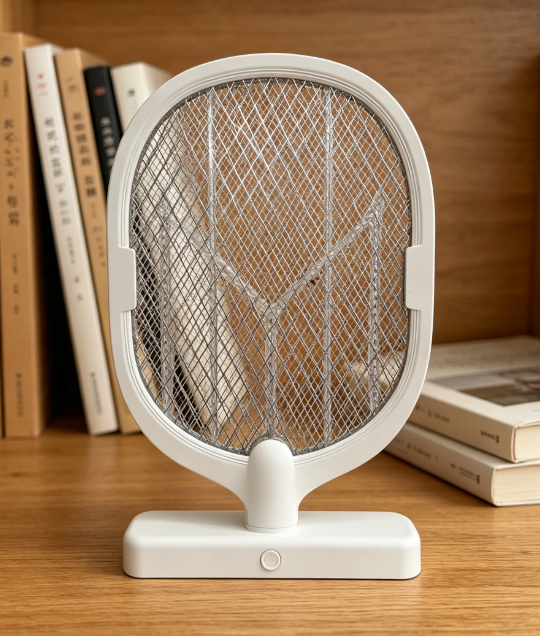
Warranty returns are the silent margin killer in the mosquito control category. A distributor who buys a swatter at $1.80 FOB and retails it at $9.90 can absorb a 1% return rate without noticing — but at 5%, the combined cost of replacement units, reverse logistics, and refund processing erases most of the line's profit.
Common mosquito swatter killer lamp failure modes wholesale spec guide

Digital bathroom scales rank as the second-highest-volume consumer weighing product category, only behind kitchen scales, with distinct market and product characteristics that set them apart from other scale types in importers’ product portfolios.
Digital bathroom body fat-bia-scale wholesale buyers guide