
Understanding CE Certification
2025-10-26
Understanding CE Certification: What Does It Mean for Electrical Products to Be CE Certified?
When purchasing imported electrical appliances, have you often seen a logo consisting of the letters "C" and "E" on the product body or packaging? Behind this seemingly simple logo lies crucial information related to product safety, compliance, and market access—it is the CE Certification. For ordinary consumers and enterprises, understanding the core meaning of CE Certification, especially the in-depth value of electrical products obtaining this certification, can help us avoid safety hazards and reduce compliance risks. Today, we will break down the essence of CE Certification and its "endorsement significance" for electrical products.
I. First, Understand: What Is CE Certification?
CE Certification is not a "quality certification" of a specific country, but a mandatory compliance mark established by the European Union (EU) for products entering its market. Its full name is "Conformité Européenne" (French, meaning "European Conformity"). Simply put, any product that intends to be sold in the 27 EU member states, as well as countries in the European Economic Area (EEA) such as Iceland, Liechtenstein, and Norway, must first obtain CE Certification and affix the CE mark—it is the "admission ticket" for products to enter the European market, rather than a proof of "excellent quality" (this point needs to be clearly distinguished).
In terms of coverage, CE Certification applies to an extremely wide range of product categories, from small household appliances and lamps to large machinery, medical devices, and even toys and building materials. Among them, electrical products (such as refrigerators, washing machines, rice cookers, hair dryers, and other household and industrial electrical appliances) are key areas under the supervision of CE Certification. This is because such products are directly related to electrical safety, and any design defects may lead to serious risks such as electric shock and fire.
II. Key Focus: What Exactly Does It Mean for Electrical Products to Be CE Certified?
Many people mistakenly believe that "having the CE mark means a good product", but in fact, the core of CE Certification is "compliance" rather than "high quality". Specifically, for electrical products, obtaining certification means that they meet at least the following 4 key conditions, which are also the most important value points that consumers and enterprises should pay attention to:
1. Complying with Unified EU Safety Regulations to Avoid "Safety Traps"
The EU has formulated strict Low Voltage Directive (LVD, 2014/35/EU) and Electromagnetic Compatibility Directive (EMC, 2014/30/EU) for electrical products, which are the core bases for electrical products to obtain CE Certification.
- Compliance with the LVD: It means that the product meets the electrical safety indicators, such as good insulation performance (to avoid electric shock), heat-resistant and flame-retardant power cords (to prevent short-circuit fires), and reasonable temperature rise control (to avoid damage or danger caused by overheating);
- Compliance with the EMC: It means that the product will not generate excessive electromagnetic radiation (which may interfere with other electrical appliances, such as televisions and routers) and can also resist external electromagnetic interference (to ensure normal operation without malfunction due to the influence of other electrical appliances).
For consumers, electrical appliances with CE Certification are equivalent to avoiding the safety traps of "inferior products causing electric shock, fire, and interfering with other equipment", making them more reassuring to use.

2. Meeting EU Market Access Requirements for Legal Sales by Enterprises
For enterprises that produce or export electrical appliances, CE Certification is not an "optional bonus item" but a "must-have". If electrical products enter the EU market without obtaining CE Certification, once discovered by customs inspections or market supervision authorities, they will face penalties such as product seizure, fines, and recalls, and may even be banned from entering the European market.
For example: A Chinese home appliance enterprise wants to export a new type of electric kettle to Germany. It must first entrust a qualified testing organization (such as TÜV, SGS) to conduct LVD and EMC tests on the product. After passing the tests, a CE Certification certificate is issued, and then the CE mark is affixed to the product before it can be legally sold in the German market. Products without CE Certification, no matter how low the price is, cannot enter the mainstream channels in Europe.
3. Product Design and Production Processes Meeting "Standardization" Requirements
CE Certification not only involves the testing of "finished products" but also indirectly requires enterprises' design and production processes to meet EU standardization requirements. For instance, in the product design stage, enterprises need to refer to EU harmonized standards (such as the EN 60335 series of safety standards for household electrical appliances); in the production stage, they need to establish a stable quality control system (such as ISO 9001) to ensure that each batch of products can meet the indicators of CE Certification (rather than only "qualified samples").
This means that electrical appliances with CE Certification have stronger quality stability—there will be no situation where "one batch of products is good and another is poor". Enterprises will also pay more attention to after-sales services (such as product recall mechanisms) because CE Certification requires enterprises to take responsibility for the compliance of their products.
4. Reducing International Trade Risks and Enhancing Brand Credibility
In global trade, CE Certification has also become a "globally recognized compliance certificate". In addition to the EU, many non-EU countries (such as Turkey, some countries in the Middle East, and some countries in Southeast Asia) also refer to the standards of CE Certification and take it as a reference for the access of imported electrical appliances.
For enterprises, electrical appliances with CE Certification have a lower "trust threshold" in the international market—consumers will believe that the products have undergone authoritative testing, and the brand has higher professionalism and sense of responsibility; partners are also more willing to cooperate because compliant products can reduce legal risks in trade (such as cross-border disputes caused by unqualified products).

III. Misunderstanding Reminder: CE Certification Is Not a "Quality Certification", and "Fake Certification" Should Also Be Guarded Against
Finally, a common misunderstanding needs to be corrected: CE Certification is not equivalent to "excellent quality", but only "compliance and qualification". For example, two rice cookers with CE Certification—one may be positioned as "high-end and intelligent", while the other may be a "basic model". However, their core safety indicators all meet the standards, and the only differences lie in functions and materials. CE Certification does not distinguish between "high-end" and "basic models"; it only judges whether the product "meets safety and compliance requirements".
At the same time, we should also be alert to "fake CE Certification". Some unscrupulous enterprises will affix "fake CE marks" on their products without actually passing the testing. Consumers and purchasers can verify the authenticity through the following methods:
- Request the enterprise to provide the CE Certification certificate and test report, and confirm whether the issuing organization has EU-recognized qualifications (the organization's code can be queried on the EU official website);
- Check whether the format of the CE mark is standardized (for example, there are clear requirements for the size and spacing of the letters, and it cannot be randomly scaled or deformed);
- For high-risk electrical appliances (such as high-power household appliances), a third-party organization can be entrusted to conduct re-inspection to confirm whether they meet the requirements of LVD and EMC.
Conclusion
For electrical products, CE Certification is "the bottom line of safety, the threshold of compliance, and the key to the market". For consumers, it means "safer use"; for enterprises, it means "legal access to the European market and enhanced brand credibility". Next time you see the CE mark on an electrical appliance, you will know that behind this small logo is the product's commitment to safety and the enterprise's adherence to compliance.
What Does FOB Mean
This Tiny Insect Kills More Than Sharks
Related Article

If you’re struggling with annoying mosquitoes, flies, and other flying pests indoors and outdoors, upgrading from traditional manual tools to anElectric Mosquito Swatter is the most efficient solution. Many homeowners and renters search where to buy fly swatter online to find durable, safe, and high-performance electric models that deliver instant pest control.
Where to Buy Fly Swatter
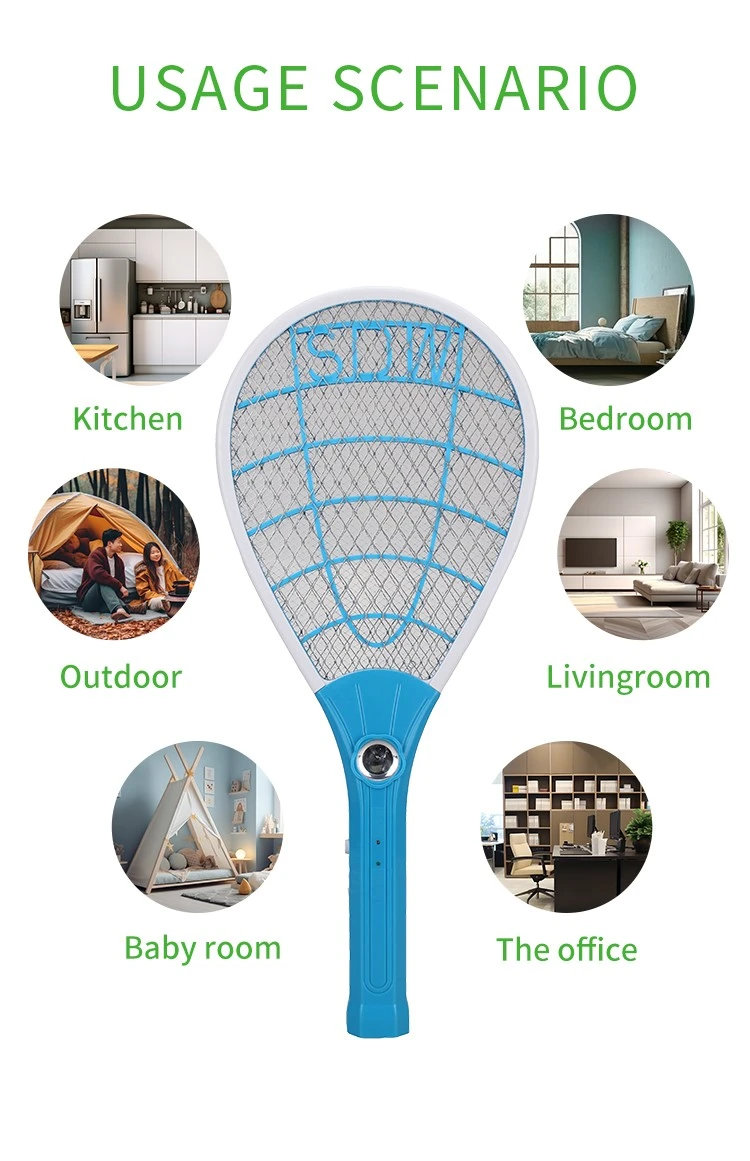
Most importers of electric mosquito swatters obsess over the first order: samples requested, factories vetted, a pre-shipment inspection booked. Then the reorder arrives eight months later and something is off. The grid feels softer. The charge port is a slightly different shade of black. The carton thickness dropped from 350 gsm to 300 gsm. Nothing is catastrophic — but the product no longer matches what your retail customers approved, and quietly, your return rate starts climbing.
How to Keep Mosquito Swatter Quality Consistent Across Repeat Orders
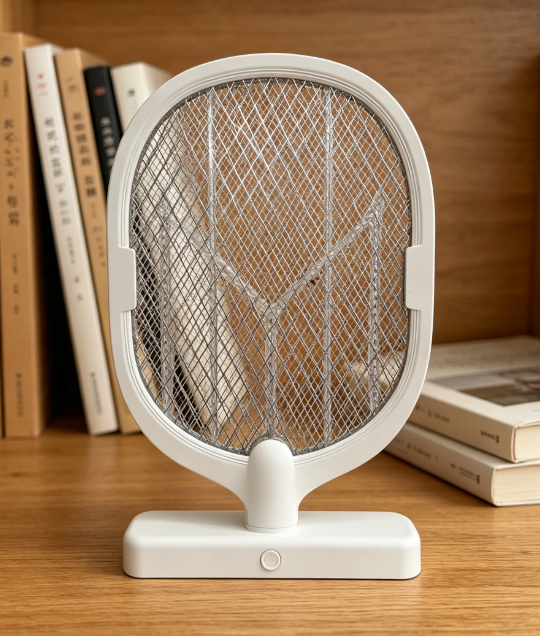
Warranty returns are the silent margin killer in the mosquito control category. A distributor who buys a swatter at $1.80 FOB and retails it at $9.90 can absorb a 1% return rate without noticing — but at 5%, the combined cost of replacement units, reverse logistics, and refund processing erases most of the line's profit.
Common mosquito swatter killer lamp failure modes wholesale spec guide

Digital bathroom scales rank as the second-highest-volume consumer weighing product category, only behind kitchen scales, with distinct market and product characteristics that set them apart from other scale types in importers’ product portfolios.
Digital bathroom body fat-bia-scale wholesale buyers guide