
What is factory inspection
2025-12-16
Factory Inspection: The Pre-Shipment "Quality Firewall" – What It Inspects and Why It Matters
Friends in procurement, foreign trade, or brand cooperation have likely encountered this scenario: as an order nears completion, customers often take the initiative to propose an "on-site factory inspection" and only agree to arrange shipment after confirmation. For many people new to the supply chain, factory inspection may seem like a simple process of "checking if the goods are good," but in reality, it is a critical link that safeguards the rights and interests of both trading parties – it gives customers peace of mind when purchasing and helps factories avoid after-sales risks in advance. Today, let’s discuss in detail: What is factory inspection? What are its core purposes? And what steps does the complete process include?
I. What is factory inspection?
Factory inspection (also known as "pre-shipment inspection") refers to the sampling or full inspection of finished products conducted by representatives from the customer, a third-party testing institution, or a joint team from both the buyer and seller at the production factory – after production is completed but before packaging and shipment. Simply put, it is the "final quality checkpoint" before shipment, with the core goal of verifying whether products meet order requirements and preventing issues such as "goods not matching the order" or "substandard quality."
It’s important to clarify: When customers personally visit the factory for inspection, it is the most direct method. They can intuitively observe the production site and physical products, and even conduct on-site function tests, which is more persuasive than just reading reports. Of course, many customers also entrust third-party institutions (such as SGS, Intertek, etc.) to ensure the objectivity of inspection results, but "customers being present in person" remains a "standard practice" for many important orders.

II. Why do customers insist on pre-shipment factory inspections? 3 core purposes
-
Avoid "goods not matching the order" and uphold order agreementsThis is the most core purpose. When signing an order, both parties clearly define product specifications (such as size, material, color), functions, packaging requirements, etc. For example, a garment order may require "100% cotton fabric" and "no fraying at the neckline," while an electronic device order may specify "battery life ≥ 8 hours" and "no loose interfaces." Inspection involves verifying these details one by one to prevent factories from producing non-compliant products due to production errors or cutting corners, which would leave customers unable to use or sell the goods after receipt.
-
Reduce after-sales risks and minimize lossesOnce non-compliant products are shipped, it may lead to a series of troubles such as returns, exchanges, and claims. Customers have to bear logistics and time costs, while factories face rework expenses and damage to their brand reputation. For instance, in an overseas trade order, the customer shipped the goods without inspection, only to find that 30% of the 1,000 small household appliances had faulty buttons. In the end, the entire shipment had to be returned, and the factory not only had to re-produce the products but also compensate the customer for sea freight and delay losses. Pre-shipment inspection could have nipped these risks in the bud.
-
Control production quality and stabilize supply chain trustFor long-term cooperative customers, inspection is also a "regular assessment" of the factory’s production capacity. Through inspection, customers can understand whether the factory’s quality control processes are standardized and production technology is stable, helping them judge if the factory is worthy of long-term cooperation. Conversely, factories can use feedback from customer inspections to promptly adjust production details, improve quality control levels, and build long-term trust.
III. The complete process of factory inspection: From preparation to completion, no step can be skipped
When customers conduct on-site inspections at factories, it is not a "casual check" but a systematic inspection with a clear process, usually divided into 4 steps:
1. Pre-inspection preparation: Clarify standards and prepare "reference materials"
Before the inspection, the customer will communicate inspection standards with the factory in advance – such as in accordance with the order contract, industry standards (e.g., AATCC standards for garments, IEC standards for electronics), or special requirements agreed upon by both parties. They will also prepare "reference tools": order documents, samples (approved samples), measuring tools (tape measures, calipers, colorimeters), and function testing equipment (e.g., voltage testers for chargers), ensuring the inspection is evidence-based rather than subjective.
2. On-site verification: From "macro" to "micro," layered checks
This is the core link of the inspection. Customers usually follow the logic of "first checking the overall situation, then examining details":
- Step 1: Inspect the production site and inventory (macro)First, visit the factory’s production workshop and finished product warehouse to check if the production environment is clean (e.g., whether food factories meet hygiene standards), if finished products are stored by batch, and if packaging is standardized – avoiding mixing or mispacking.
- Step 2: Sampling/full inspection (by ratio)For large-batch orders, samples are usually selected in accordance with the "AQL sampling standard" (e.g., AQL 2.5/4.0, a universally used sampling rule in the industry). For example, 80 pieces are sampled from 1,000 products; for high-value, small-batch orders, full inspection may be conducted.
- Step 3: Detailed inspection (the core of the core)
- Appearance: Check for scratches, stains, color differences, or deformations (e.g., whether furniture paint is smooth, whether garments have skipped stitches or stains);
- Specifications: Use tools to measure size and weight to confirm compliance with order requirements (e.g., whether carton size is suitable for transportation, whether product accessories are complete);
- Function: Conduct on-site tests of product functions (e.g., power-on tests for home appliances, safety tests for toys, service life tests for tools);
- Packaging: Check if the outer carton is sturdy, if labels are clear (e.g., product name, specifications, quantity, barcode accuracy), and if there are moisture-proof/collision-proof measures.
3. Issue communication and rectification
If non-compliant products are found during the inspection (e.g., slight scratches on a small number of products, individual functional test failures), the customer will communicate with the factory on the spot. Minor issues may require immediate rectification (e.g., re-wiping, replacing accessories); major issues (e.g., inconsistent materials, widespread functional non-compliance) may lead to rework, delayed shipment, or even order cancellation. Both parties will sign a "list of inspection issues" to clarify rectification requirements and re-inspection timelines.
4. Issue a report and confirm shipment
After the inspection is passed (or re-inspection is passed after rectification), an "inspection report" will be issued. If the customer conducts the inspection in person, they will sign a confirmation form on the spot to clearly state "shipment approved"; if it is a third-party inspection, the report will serve as an important basis for the customer to make payment and the factory to ship the goods. This report is also key evidence in case of subsequent disputes.
Final thoughts: Factory inspection is not "fault-finding" but "win-win"
Many factories view customer inspections as a sign of "distrust," but in fact, the opposite is true. Inspection is a process of discovering and solving problems in advance. It not only avoids complaints and claims from customers after receiving non-compliant products but also helps factories establish a reputation of "valuing quality." For customers, taking time to conduct on-site inspections at factories before shipment may seem like an extra step, but it is actually the most cost-effective and efficient way of "risk control."
After all, the core of supply chain cooperation is "assurance," and factory inspection is the most direct guarantee of that assurance. If you are a buyer, next time you have an important order, you might as well visit the factory in person; if you are a factory, there’s no need to resist inspections. Treat them as an opportunity to improve quality control, and you will go further and more steadily.
How long should you charge an electric mosquito swatter
Which is the RIGHT Bug Zapper for you
Related Article

If you’re struggling with annoying mosquitoes, flies, and other flying pests indoors and outdoors, upgrading from traditional manual tools to anElectric Mosquito Swatter is the most efficient solution. Many homeowners and renters search where to buy fly swatter online to find durable, safe, and high-performance electric models that deliver instant pest control.
Where to Buy Fly Swatter
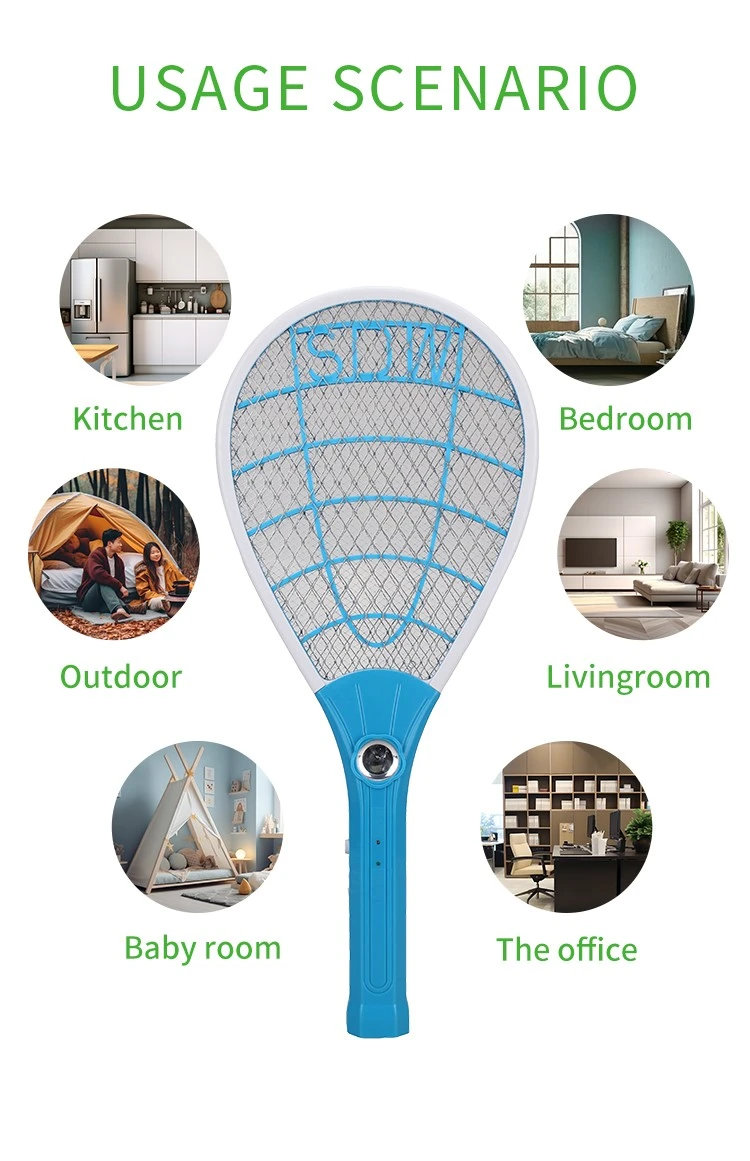
Most importers of electric mosquito swatters obsess over the first order: samples requested, factories vetted, a pre-shipment inspection booked. Then the reorder arrives eight months later and something is off. The grid feels softer. The charge port is a slightly different shade of black. The carton thickness dropped from 350 gsm to 300 gsm. Nothing is catastrophic — but the product no longer matches what your retail customers approved, and quietly, your return rate starts climbing.
How to Keep Mosquito Swatter Quality Consistent Across Repeat Orders
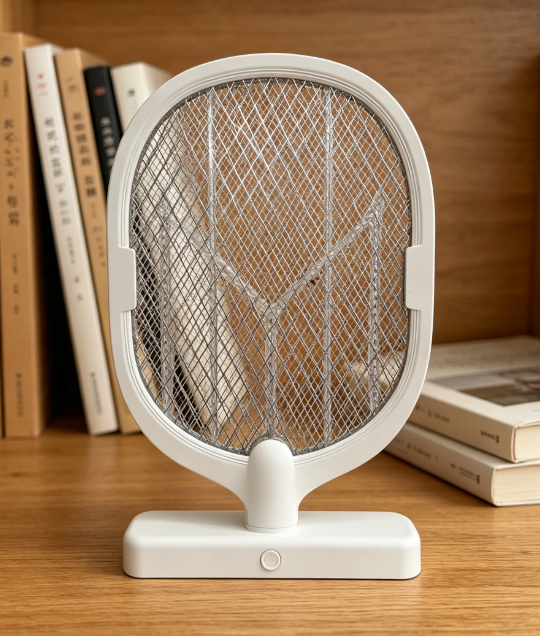
Warranty returns are the silent margin killer in the mosquito control category. A distributor who buys a swatter at $1.80 FOB and retails it at $9.90 can absorb a 1% return rate without noticing — but at 5%, the combined cost of replacement units, reverse logistics, and refund processing erases most of the line's profit.
Common mosquito swatter killer lamp failure modes wholesale spec guide

Digital bathroom scales rank as the second-highest-volume consumer weighing product category, only behind kitchen scales, with distinct market and product characteristics that set them apart from other scale types in importers’ product portfolios.
Digital bathroom body fat-bia-scale wholesale buyers guide