
What Is the General Voltage and Power of a Mosquito Lamp
2026-07-16
What Is the General Voltage and Power of a Mosquito Lamp? Detailed Standard Parameters for Home & Commercial Mosquito Killers
Most consumers prioritize the core parameters of mosquito lamp voltage and power when selecting and using mosquito killers. Appropriate voltage and power for mosquito lamps not only determine the mosquito-killing effect and daily power consumption but also directly affect safety, service life, and applicable scenarios. There are various types of mosquito lamps on the market, including plug-in home models, USB portable models, and high-power commercial models, with significant differences in standard voltage and power ratings. In particular, mainstream electric mosquito killers have two sets of core parameters: input voltage and grid high voltage, which are easily confused by consumers. This article comprehensively explains the standard voltage and power values of different mosquito lamp models, parameter differences, and purchasing and usage tips to help users select the most suitable mosquito lamp.
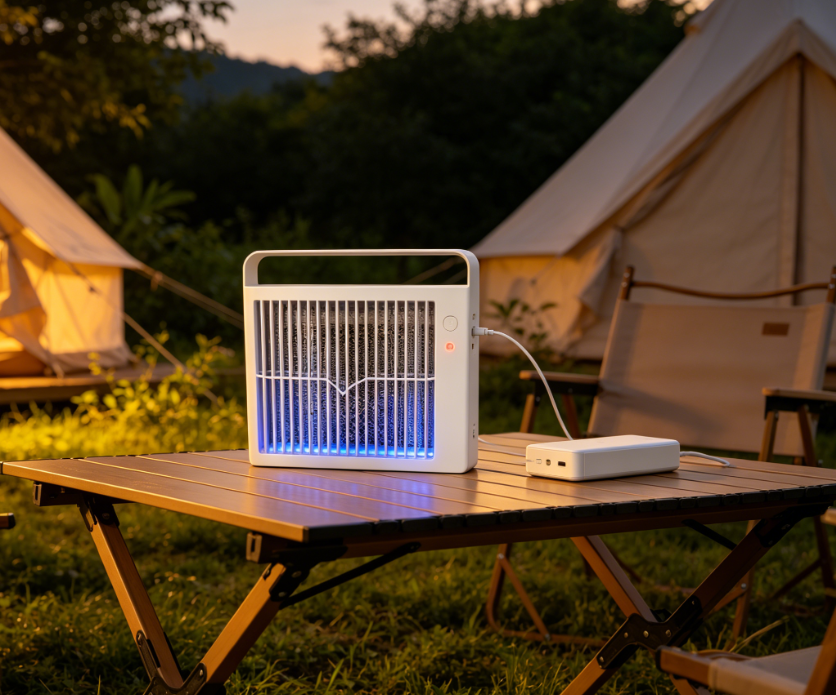
1. Standard Voltage and Power Parameters of Conventional Household Mosquito Lamps
Household mosquito lamps are the first choice for home mosquito control and the best-selling product category, featuring low power consumption and high safety for indoor use. Household mosquito lamps have highly standardized and stable voltage and power parameter ranges, serving as the primary reference for most ordinary users during selection.
1.1 Conventional Voltage Range for Household Mosquito Lamps
The operating voltage of household mosquito lamps is mainly divided into AC mains voltage and DC low voltage. Different voltage specifications correspond to different power supply modes and usage scenarios and serve as key criteria for classifying household mosquito lamp types:
Fixed plug-in mosquito killers adopt a rated input voltage of AC 220V with a 50Hz power frequency, compatible with standard household sockets in China and compliant with national standard voltage requirements for household mosquito lamps. Some export models support a wide voltage range of 180-240V for global power grid adaptation.
Portable rechargeable and USB plug-in mini mosquito lamps feature a unified input voltage of DC 5V, compatible with phone chargers, power banks, and computer USB ports. The low-voltage design eliminates electric shock risks, making them ideal for bedrooms, dormitories, and vehicle use.
1.2 Conventional Power Range for Household Mosquito Lamps
Household mosquito lamps feature low overall power consumption, with the mainstream household mosquito lamp power ranging from 2W to 15W. The industry divides them into three power gears based on model size, UV lamp bead quantity, and mosquito trapping coverage, precisely matching different indoor spaces while balancing mosquito-killing performance and energy efficiency:
Mini USB mosquito lamps (2W-5W): Compact in size with fewer UV lamp beads, suitable for small spaces within 10㎡ such as bedrooms, desks, and dormitories. They consume extremely low power and can operate 24 hours continuously.
Standard desktop household mosquito lamps (6W-10W): The mainstream choice for home use, delivering stable UV light and moderate mosquito trapping range. Perfect for 15-30㎡ living rooms and bedrooms with balanced mosquito-killing efficiency and high cost performance for daily use.
Floor-standing large household mosquito lamps (10W-15W): Equipped with more lamp beads and wider light coverage, applicable to large living rooms, balconies, and courtyards of 30-50㎡, meeting full-house mosquito repellent and killing needs.
Overall, household mosquito lamps offer outstanding energy-saving advantages with reasonable voltage and power configurations, resulting in negligible daily power costs. A standard 10W household mosquito lamp operating 24 hours a day consumes only 0.24 kWh of electricity, allowing long-term seasonal operation without excessive power waste and supporting all-day mosquito control.
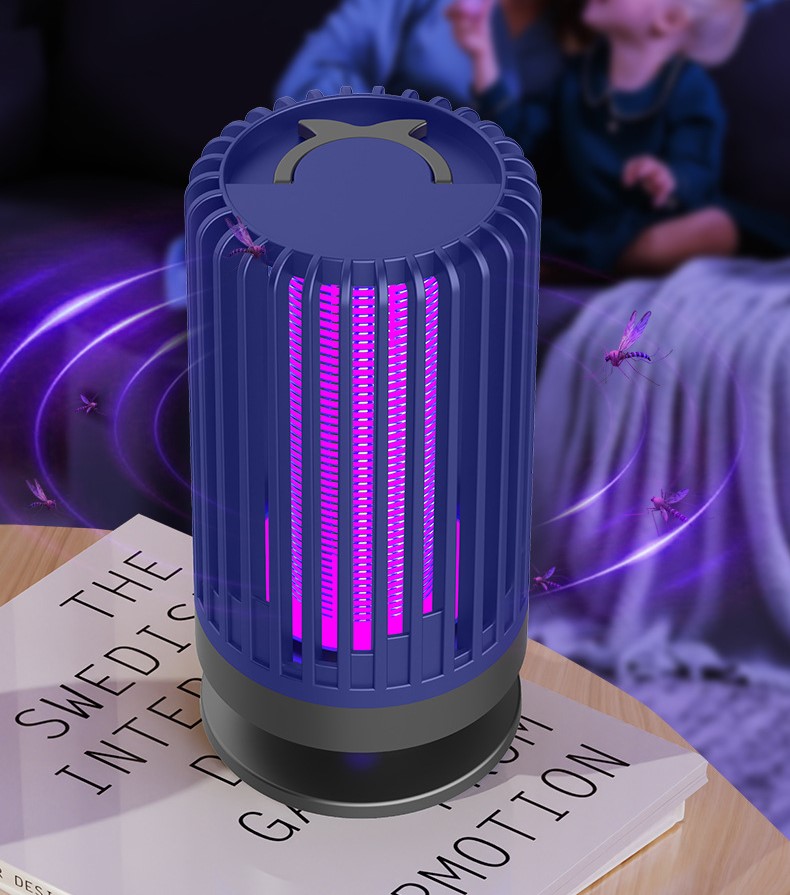
2. Core Voltage and Power Differences Among Various Mosquito Lamp Types
Mosquito lamps with different working principles have vastly different core voltage and power parameters, which is the main cause of poor purchasing decisions for many users. The most obvious differences lie in the high grid voltage of electric shock mosquito lamps and the low power of suction mosquito lamps, two core parameters that directly determine equipment working principles and user experience.
2.1 Parameters of High-Voltage Electric Shock Mosquito Lamps
High-voltage electric shock mosquito lamps are the most popular mosquito-killing devices on the market, eliminating mosquitoes instantly via high-voltage grids with the core feature of low input voltage and high operating voltage. These lamps adopt the standard household input voltage of 220V AC or 5V DC, with a built-in booster module that raises the basic voltage significantly. The universal grid operating high voltage ranges from 1000V to 3500V, while the equipment power remains within the conventional household range.
Regular household models feature a grid voltage of 1500V-2500V, sufficient to instantly kill mosquitoes and small flying insects. Enhanced models reach 3000V-3500V, capable of eliminating moths, flies, and other large flying pests. The high voltage adopts pulse instantaneous output with extremely low peak current, complying with human body safety standards and posing no electric shock risks during normal use. This type of mosquito lamp has a power range of 4W-12W, suitable for most household scenarios.
2.2 Parameters of Physical Suction Mosquito Lamps
Physical suction and air-drying mosquito lamps are designed for families with infants, pregnant women, and the elderly, with no high-voltage grid structure and safer, simpler voltage and power parameters. Compatible with 220V mains power or 5V low-voltage power supply without voltage boosting components, these lamps have lower overall power consumption, with the conventional suction mosquito lamp power ranging from 3W to 8W.
These mosquito lamps trap flying insects through fan negative pressure without high-voltage operation, featuring lower power consumption and quieter operation. They are extremely safe for vulnerable groups but deliver slightly lower mosquito-killing efficiency than electric shock models, making them only suitable for small spaces.
2.3 Parameters of Outdoor Commercial Mosquito Lamps
Outdoor commercial mosquito lamps used in courtyards, parks, shops, and farms have overall higher voltage and power parameters than household models, specially designed for large-scale public outdoor scenarios. Powered by stable 220V mains electricity, mainstream commercial mosquito lamp power ranges from 18W to 30W, with some professional high-coverage models reaching 40W.
Commercial mosquito lamps adopt a grid high voltage of over 3000V, with a light coverage range of 500 to 800 square meters. Featuring excellent waterproof and dustproof performance, they support 24/7 outdoor operation and are ideal for large public areas, courtyards, and farms.
3. How Mosquito Lamp Voltage and Power Affect Usage Performance
Many users hold a misconception of blindly pursuing mosquito lamps with ultra-high voltage and power. In fact, higher parameters do not equal better performance. Different voltage and power combinations correspond to exclusive usage scenarios, and the matching degree between parameters and space directly determines the final mosquito-killing effect and user experience.
3.1 Power Determines Mosquito Control Coverage
Mosquito lamp power is the core factor affecting mosquito control coverage, directly influencing UV light brightness and effective trapping distance. Lower power corresponds to weaker UV luminosity and smaller trapping range, only suitable for compact spaces; higher power delivers wider UV radiation and stronger trapping capability, covering large apartments and outdoor areas effectively.
There is no need to use 15W+ high-power mosquito lamps for small indoor rooms, as it causes power waste and light pollution. Conversely, using low-power models below 5W in large apartments or outdoor spaces leads to insufficient trapping and poor mosquito-killing results.
3.2 High Voltage Determines Insect Killing Efficiency
For mainstream electric shock mosquito lamps, grid high voltage directly affects killing efficiency and success rate. A low-voltage grid of 1000V-2000V only kills small pests such as mosquitoes and midges, while a high-voltage grid above 2500V delivers stronger killing power, eliminating all types of flying insects thoroughly without escape.
It is worth noting that high voltage only affects insect killing and has no impact on power consumption. Under the same power rating, different high voltage values cause almost no difference in daily electricity usage, so high-voltage models do not consume more power.
4. Key Tips for Purchasing and Using Mosquito Lamps by Voltage and Power
Based on the above voltage and power standards for various mosquito lamps, the core purchasing principle is scenario-based parameter matching. A reasonable combination of voltage and power ensures stable and efficient mosquito-killing performance while maximizing safety and energy savings.
4.1 Precise Parameter Matching by Scenario
Indoor bedrooms and dormitories (within 10㎡): Choose low-power (2W-6W), low-voltage (5V/220V) non-high-voltage or mild-high-voltage mosquito lamps for quiet, energy-saving, and safe use. Indoor living rooms and small apartments (10-50㎡): Select 220V, 6W-15W conventional high-voltage mosquito lamps for optimal cost performance. Outdoor courtyards, shops, and farms: Adopt 220V, 18W+ high-power commercial mosquito lamps with 3000V+ high-voltage grids to meet large-scale mosquito control demands.
4.2 Avoid Parameter False Labeling and Safety Risks
Prioritize formal mosquito lamps with standard 220V rated voltage and avoid unqualified no-brand products, which often have falsely labeled power and high voltage parameters, leading to poor mosquito-killing effects and potential hazards such as unstable voltage and electric leakage. In addition, the grid of electric shock mosquito lamps maintains high voltage during operation; direct contact by children and the elderly must be prohibited to prevent accidents.
4.3 Daily Parameter Adaptation Skills
5V low-voltage USB mosquito lamps feature strong compatibility with various low-voltage power supplies and are ideal for mobile use. 220V mains-powered mosquito lamps provide more stable light and high-voltage output, suitable for long-term fixed-position operation. Frequent switching is unnecessary; continuous operation of low-power mosquito lamps delivers better mosquito-killing results with lower energy consumption.
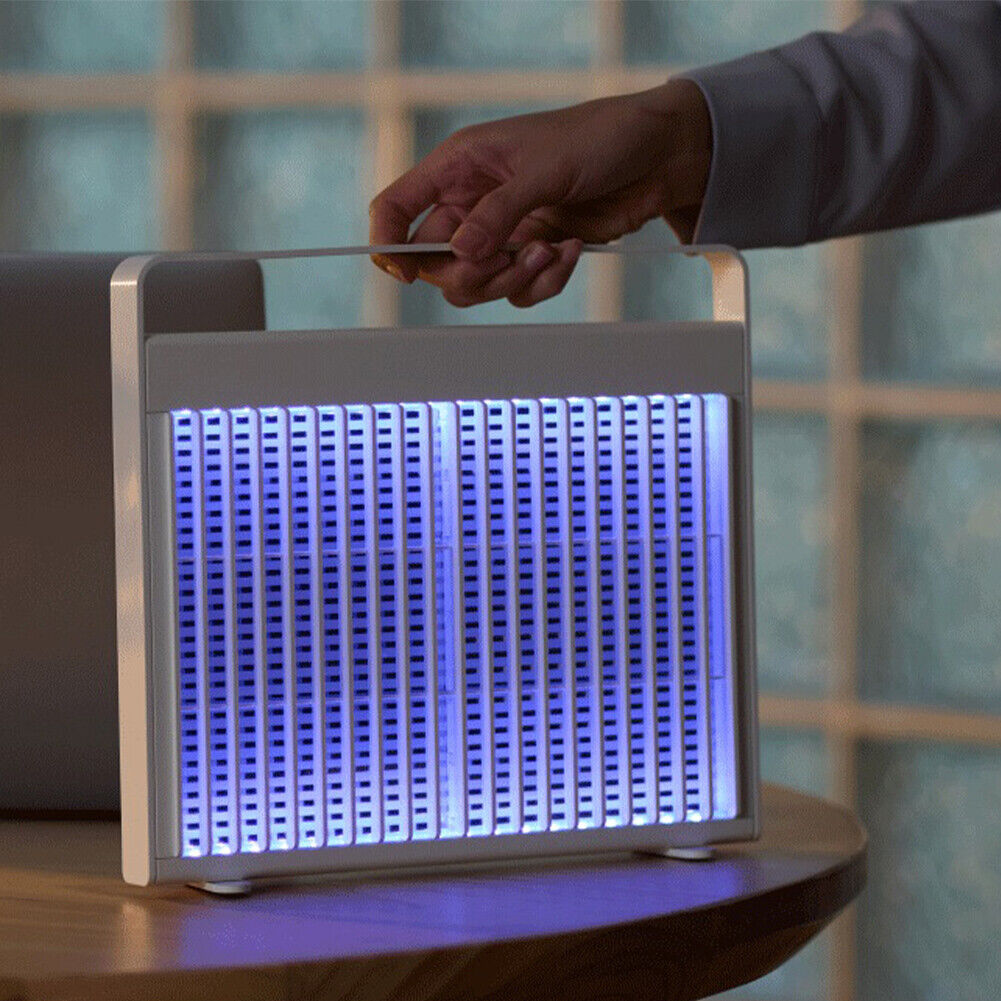
5. Conclusion
In summary, conventional household mosquito lamps have two input voltage options: 220V AC mains and 5V DC low voltage, with mainstream mosquito lamp power ranging from 2W to 15W. Electric shock household models feature a grid high voltage of 1000V-3500V, while commercial mosquito lamps generally have a power of 18W-30W with superior high voltage parameters and coverage. There is no need to blindly pursue ultra-high power or voltage when purchasing mosquito lamps. Matching the appropriate voltage and power parameters according to space size and indoor/outdoor scenarios achieves safe, energy-saving, and efficient mosquito control.
Can You Use Mosquito Lamps in School Dormitories
Detachable Flashlight Electric Swatter
Related Article

If you’re struggling with annoying mosquitoes, flies, and other flying pests indoors and outdoors, upgrading from traditional manual tools to anElectric Mosquito Swatter is the most efficient solution. Many homeowners and renters search where to buy fly swatter online to find durable, safe, and high-performance electric models that deliver instant pest control.
Where to Buy Fly Swatter
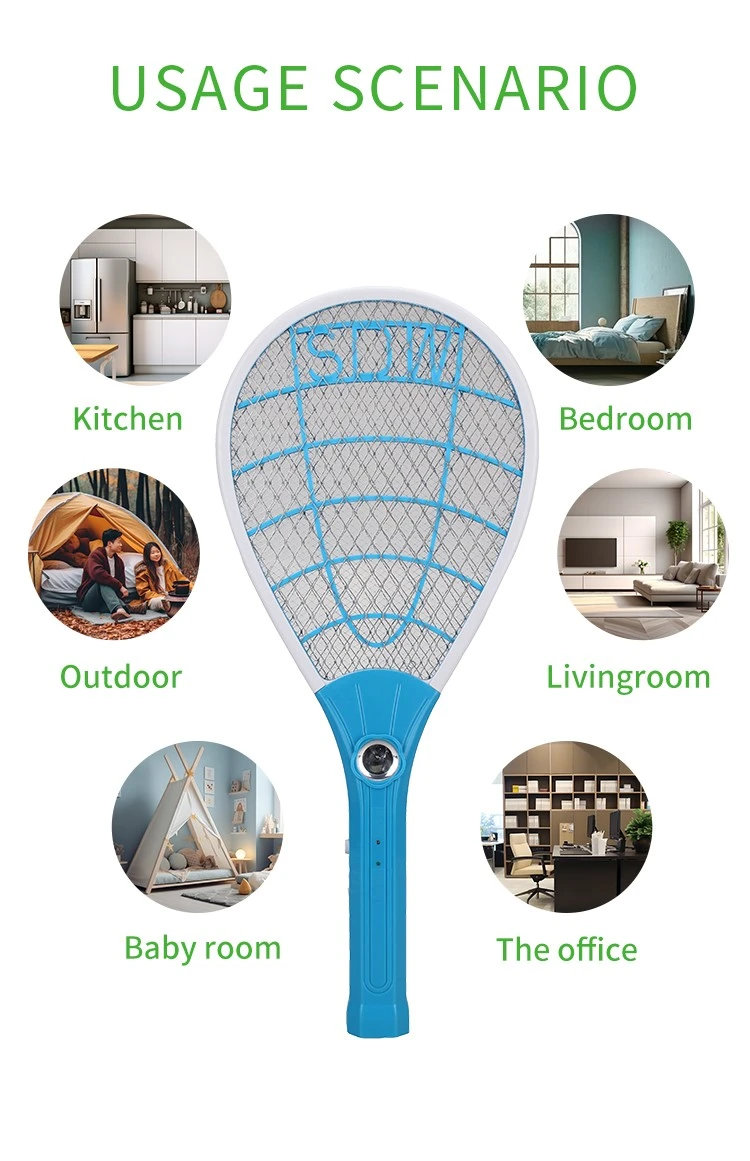
Most importers of electric mosquito swatters obsess over the first order: samples requested, factories vetted, a pre-shipment inspection booked. Then the reorder arrives eight months later and something is off. The grid feels softer. The charge port is a slightly different shade of black. The carton thickness dropped from 350 gsm to 300 gsm. Nothing is catastrophic — but the product no longer matches what your retail customers approved, and quietly, your return rate starts climbing.
How to Keep Mosquito Swatter Quality Consistent Across Repeat Orders
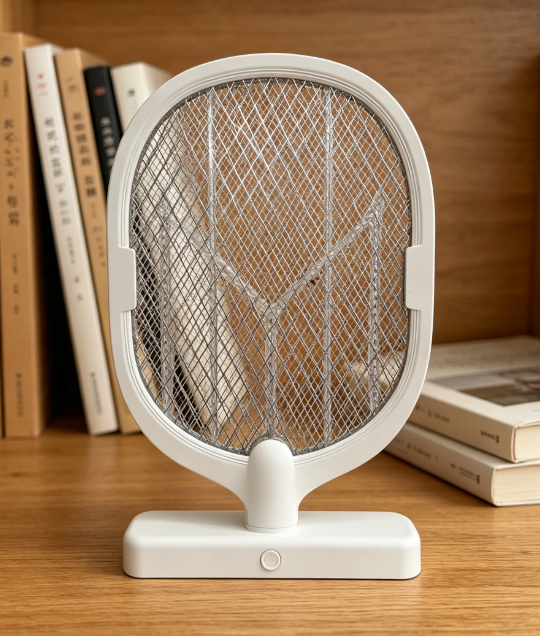
Warranty returns are the silent margin killer in the mosquito control category. A distributor who buys a swatter at $1.80 FOB and retails it at $9.90 can absorb a 1% return rate without noticing — but at 5%, the combined cost of replacement units, reverse logistics, and refund processing erases most of the line's profit.
Common mosquito swatter killer lamp failure modes wholesale spec guide

Digital bathroom scales rank as the second-highest-volume consumer weighing product category, only behind kitchen scales, with distinct market and product characteristics that set them apart from other scale types in importers’ product portfolios.
Digital bathroom body fat-bia-scale wholesale buyers guide