
What is the Voltage of a Mosquito Lamp
2026-02-06
What is the Voltage of a Mosquito Lamp? A Complete Guide to Household/Outdoor Lamp Voltages, Must-See for Avoiding Pitfalls
Every season when mosquitoes are rampant, mosquito lamps become a "mosquito-repelling artifact" for many families and shops. When everyone buys, uses or replaces a mosquito lamp, they will subconsciously ask: What is the voltage of a mosquito lamp? In fact, there is no uniform standard for the voltage of mosquito lamps. It mainly depends on the usage scenario (household/outdoor) and product type (electric shock type/suction type). The voltage of different styles varies significantly. Today, we will break it down in detail to help you figure out the key points, avoid damaging the equipment due to improper use or leaving potential safety hazards.
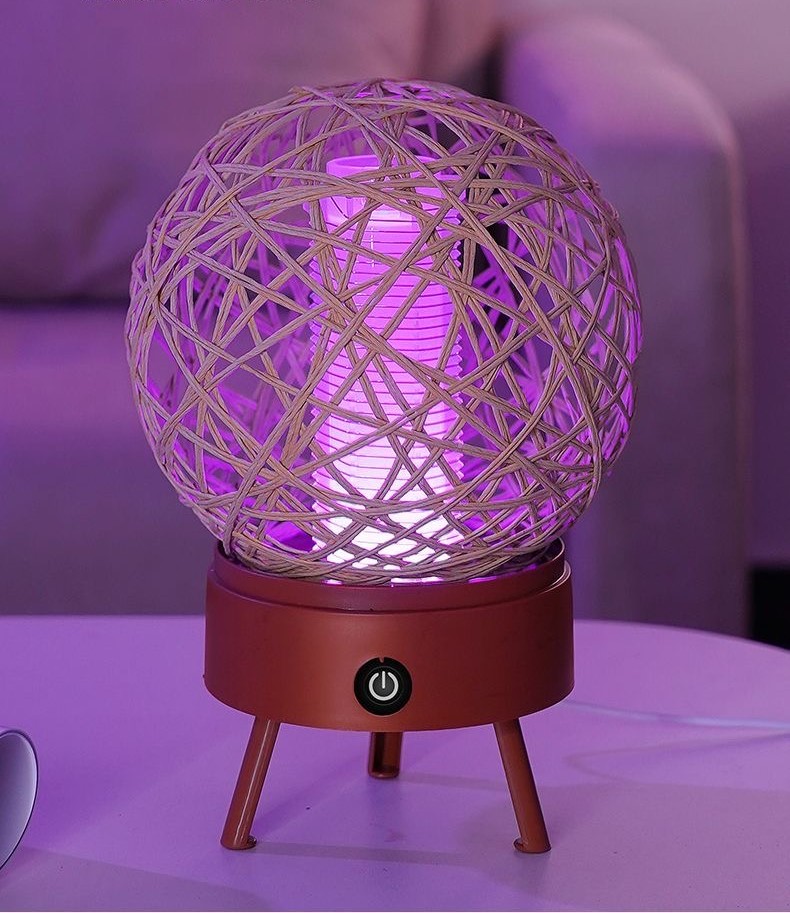
I. Household Mosquito Lamps: Mainstream Voltage Adapts to Household Circuits, Safe and Easy to Operate
Household mosquito lamps that we usually place in the living room, bedroom and children's room are the most uniform and distinguishable category in terms of voltage. They are mainly adapted to regular household circuits, do not require additional transformers, and can be used by plugging in. They are also the styles that everyone comes into contact with most.
1. Plug-in household mosquito lamps (most common): The mainstream voltage is 220V (AC), which is the same as the voltage of table lamps, mobile phone chargers, TVs and other electrical appliances at home. They can be directly plugged into household wall sockets for use. Most of these mosquito lamps are small-sized (15-30cm in diameter). Whether they are electric shock type (killing mosquitoes with a high-voltage power grid) or suction type (sucking mosquitoes with a fan), the external power supply is 220V, and the internal voltage will be converted into a low voltage suitable for core components through a transformer (detailed internal voltage differences later).
2. Rechargeable household mosquito lamps: The voltage is divided into two types. One is the input voltage when charging (adapting to the charger), mostly5V (DC), which is universal with mobile phone charger voltage, making it convenient to match with ordinary USB chargers and power banks for charging; the other is the output voltage when working (battery-powered), mostly 3.7V-7.4V (DC). The voltage varies slightly with different battery life. This type of mosquito lamp focuses on portability and is suitable for mobile use (such as placing beside the bed or on the balcony at night).
Key points: For household mosquito lamps, priority should be given to 220V plug-in models (strong adaptability). For rechargeable models, pay attention to the matching of charger voltage. Avoid using high-voltage chargers for charging to prevent damage to the battery or potential safety hazards; when using in children's rooms, priority should be given to suction type (low internal voltage, no hidden danger of high-voltage power grid).
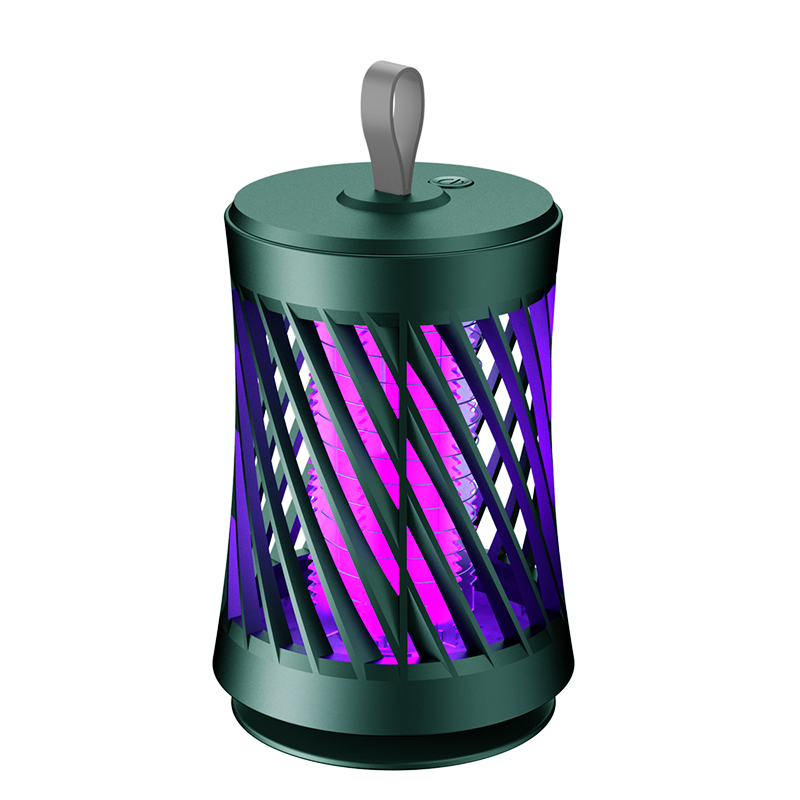
II. Outdoor Mosquito Lamps: Voltage Adapts to Outdoor Scenarios, Pay Attention to Waterproofing and Power Supply Methods
Outdoor mosquito lamps (mostly used in courtyards, shop entrances, parks, farms, etc.), due to their complex use environment and wide coverage, have great differences in voltage from household models. They are mainly divided into two power supply types with different voltages.
1. Outdoor plug-in models: The voltage is mostly 220V (AC), the same as household models, but this type of mosquito lamp is usually equipped with waterproof design (IP65 and above), adapted to outdoor sockets, suitable for fixed use in courtyards and shop entrances. The power is slightly higher than that of household models, but the voltage still maintains the 220V universal standard.
2. Outdoor solar-powered models: The voltage is relatively special, belonging to low-voltage power supply, which is mainly divided into two types: solar panel charging voltage (3.7V-12V, DC) and battery working voltage (3.7V-7.4V, DC). It does not need an external power supply and relies on solar energy for charging, suitable for scenarios without outdoor sockets (such as parks, orchards, remote courtyards). This type of mosquito lamp focuses on energy saving and environmental protection, with low voltage and higher safety, but attention should be paid to the charging efficiency of the solar panel to avoid insufficient battery life.
Key points: When choosing the voltage of outdoor mosquito lamps, first confirm whether there is a power supply in the use scenario. If there is no power supply, priority should be given to solar low-voltage models; if there is a power supply, 220V plug-in waterproof models can be selected; for outdoor use, pay attention to voltage adaptability, avoid connecting low-voltage mosquito lamps to high-voltage power supplies, and vice versa.
III. Easy to Confuse: Mosquito Lamp "External Power Supply Voltage" vs "Internal Core Voltage"
When many people ask about the voltage of mosquito lamps, they easily confuse two concepts. In fact, this is also the key when purchasing and using, to avoid misuse caused by misunderstanding:
1. External power supply voltage: It is the "plug-in voltage" we usually talk about, that is, the voltage at which the mosquito lamp is connected to the power supply (such as 220V for household use, 5V for rechargeable models, 3.7V for solar models). This voltage is what we need to focus on when purchasing and must be compatible with the power supply.
2. Internal core voltage: It is the voltage at which the internal components of the mosquito lamp work, which is different from the external power supply voltage and will be converted through transformers and rectifiers. For example, the voltage of the internal high-voltage power grid of a 220V plug-in electric shock mosquito lamp can reach 800V-1500V (DC high voltage), but this is an internal closed voltage, which will not be exposed and has guaranteed safety; while the voltage of the internal fan and lamp tube of a suction mosquito lamp is mostly 5V-12V (low voltage), which is safer.
Key points: In daily purchase and use, we only need to focus on the "external power supply voltage". There is no need to worry about the internal core voltage (the manufacturer has made a closed design); do not disassemble the mosquito lamp by yourself to avoid contacting internal high-voltage components and causing electric shock hazards.
IV. Usage Pitfalls: Mosquito Lamp Voltage Selection & Usage Notes
1. Voltage matching is the premise: For any type of mosquito lamp, it is necessary to ensure that the external power supply voltage is consistent with the voltage marked on the product. For example, a 5V rechargeable model cannot use a 9V charger, and a 220V plug-in model cannot be connected to a 110V power supply (the domestic household standard is 220V, and corresponding voltage models should be selected for 110V regions overseas). Otherwise, the mosquito lamp will be directly damaged, and even short circuit and fire may be caused.
2. Priority to low voltage in special scenarios: In children's rooms, bedrooms, infant places, priority should be given to rechargeable (5V input, 3.7V-7.4V working) or suction mosquito lamps, avoiding the use of electric shock type (high internal voltage) to reduce potential safety hazards; in outdoor humid environments, priority should be given to low-voltage solar models or waterproof plug-in models to prevent electric leakage.
3. Check product labels: When purchasing, the voltage of the mosquito lamp will be clearly marked on the bottom of the product, power cord or manual (such as "Input Voltage: 220V~50Hz", "Battery Voltage: 3.7V"). Be sure to check carefully and do not judge by experience.
Summary
In fact, there is no "unified answer" to the voltage of mosquito lamps. The core depends on the usage scenario: for household use, priority is given to 220V plug-in models or 5V rechargeable models; for outdoor use, priority is given to 220V waterproof plug-in models or 3.7V-12V solar models; the key is to distinguish between "external power supply voltage" and "internal core voltage", ensure that the power supply voltage is consistent with the product label, and select the appropriate voltage model according to the usage scenario. This can not only ensure the normal operation of the mosquito lamp, but also improve the safety of use.
Final reminder: No matter what voltage the mosquito lamp is, it should be kept away from water sources and flammable and explosive items when in use, and cleaned regularly to avoid malfunctions; if the mosquito lamp is found to be unable to work normally, priority should be given to checking the voltage adaptation problem rather than blindly replacing parts~
Is There Any Impact on the Electric Mosquito Swatter Industry
Why Prioritize Type-C Ports
Related Article

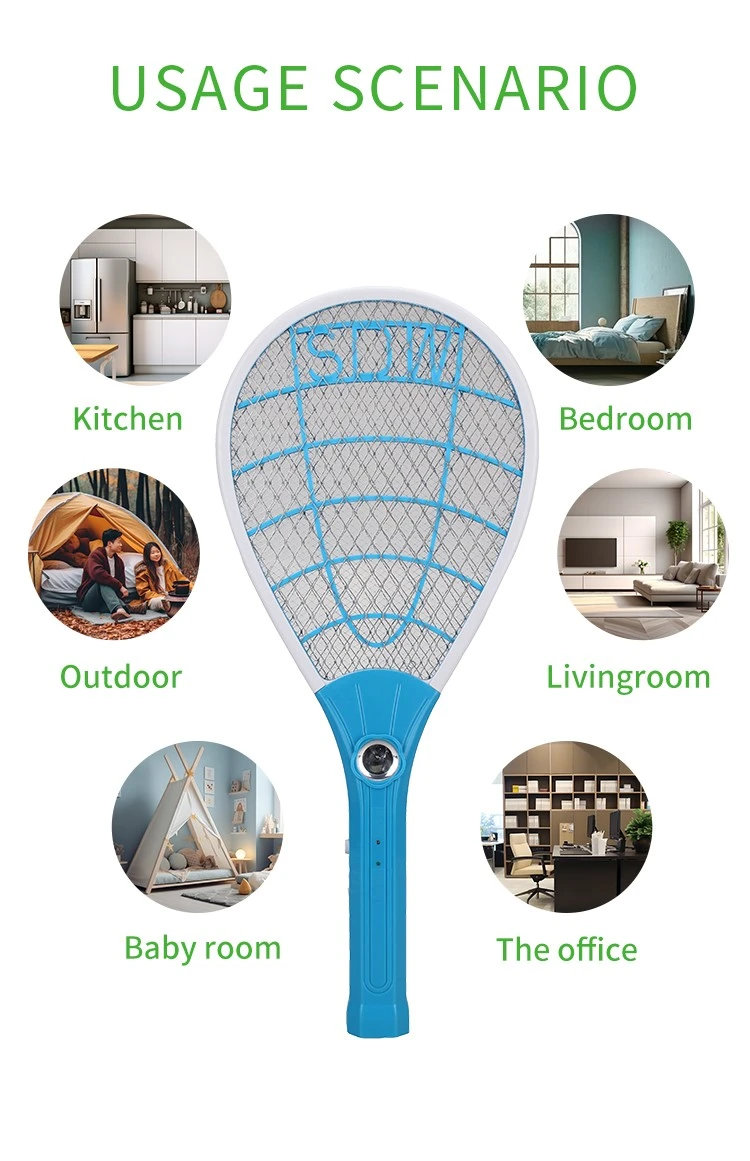
If you’re struggling with annoying mosquitoes, flies, and other flying pests indoors and outdoors, upgrading from traditional manual tools to anElectric Mosquito Swatter is the most efficient solution. Many homeowners and renters search where to buy fly swatter online to find durable, safe, and high-performance electric models that deliver instant pest control.
Where to Buy Fly Swatter
Most importers of electric mosquito swatters obsess over the first order: samples requested, factories vetted, a pre-shipment inspection booked. Then the reorder arrives eight months later and something is off. The grid feels softer. The charge port is a slightly different shade of black. The carton thickness dropped from 350 gsm to 300 gsm. Nothing is catastrophic — but the product no longer matches what your retail customers approved, and quietly, your return rate starts climbing.
How to Keep Mosquito Swatter Quality Consistent Across Repeat Orders
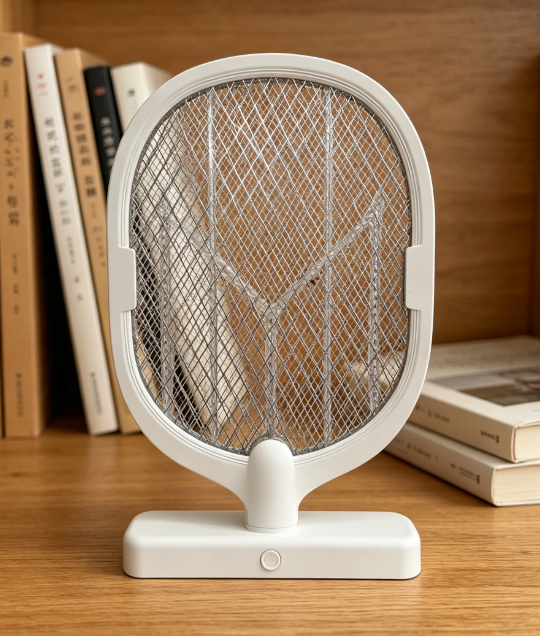
Warranty returns are the silent margin killer in the mosquito control category. A distributor who buys a swatter at $1.80 FOB and retails it at $9.90 can absorb a 1% return rate without noticing — but at 5%, the combined cost of replacement units, reverse logistics, and refund processing erases most of the line's profit.
Common mosquito swatter killer lamp failure modes wholesale spec guide

Digital bathroom scales rank as the second-highest-volume consumer weighing product category, only behind kitchen scales, with distinct market and product characteristics that set them apart from other scale types in importers’ product portfolios.
Digital bathroom body fat-bia-scale wholesale buyers guide