
Why Are Moths Attracted to Light
2025-10-08
On summer nights, when you open the window, you often find moths hovering and fluttering around the light, even desperately hitting the light bulb. This seemingly common phenomenon hides a biological mystery that has puzzled scientists for years. Why are moths so "obsessed" with light? Is this behavior of theirs driven by instinct, or are they misled by some external factors? Next, we will explore this issue in depth from a scientific perspective and uncover the secret behind moths' "light-chasing" behavior.
1. The Historical Mystery of Moth Phototaxis
Human observation of moth phototaxis has a long history. As early as in ancient Greece, the philosopher Aristotle mentioned the phenomenon of moths fluttering around flames in his works and attributed it to "yearning for light". However, this romantic explanation is obviously unable to meet the rigor of modern science. With the development of biology, ecology, and neuroscience, scientists have put forward a variety of hypotheses to explain the phototactic behavior of moths from different angles, but a completely unified conclusion has not yet been formed.
Moths belong to the order Lepidoptera in the class Insecta and are close relatives of butterflies, but their living habits are significantly different. Most moths are nocturnal, while butterflies are mostly active during the day. This difference in activity time makes the light perception and response mechanisms of moths quite different from those of butterflies. For nocturnal moths, light should be an important signal for identifying directions, finding food, and locating mates. But why do they show such a strong "persistence" towards artificial light sources?
2. Main Scientific Hypotheses Explaining Moth Phototaxis
In order to uncover the mystery of moths' attraction to light, scientists have put forward a variety of representative hypotheses through long-term observation and experiments, and each hypothesis provides a reasonable explanation from different physiological and ecological perspectives.
2.1 The Celestial Navigation Hypothesis
This is one of the most widely accepted hypotheses at present. The hypothesis holds that during the long process of evolution, moths have developed the ability to navigate using celestial bodies such as the moon and stars as reference points. Since celestial bodies are very far away from the Earth, the light they emit appears almost parallel to moths. By maintaining a fixed angle between their bodies and the light, moths can achieve straight-line flight, thereby accurately finding food sources or returning to their habitats.
However, the situation changed with the emergence of artificial light sources (such as light bulbs and street lamps). The light emitted by artificial light sources is divergent rather than parallel. Moths mistakenly take artificial light sources as celestial bodies and still fly while maintaining a fixed angle with the light according to their original navigation logic. As a result, the flight path of moths is no longer a straight line, but they keep hovering around the light source and eventually gradually approach the light source, forming the "light-chasing" phenomenon we see. For example, when a moth faces a street lamp, it will try to keep the light shining from one side of its body, but this actually causes it to fly around the street lamp in circles.
2.2 The Phototaxis Instinct Hypothesis
Some scientists believe that the phototactic behavior of moths is an inborn instinctive response. In nature, light is often associated with "safety" and "food". For instance, light during the day indicates the presence of plants that can provide nectar, and sudden light in the dark may imply an open space, which helps moths avoid natural enemies. Long-term evolution has made moths form an instinctive tendency towards light. Without the interference of artificial light sources, this instinct can help moths survive and reproduce better.
However, the emergence of artificial light sources has broken this balance. The phototactic instinct of moths cannot distinguish between natural and artificial light sources, leading them to overreact to artificial light sources and keep approaching them. Nevertheless, this hypothesis cannot fully explain why some moths stop flying or even die after approaching the light source, nor can it explain the phenomenon that the degree of phototaxis varies among different species of moths.
2.3 The Heat Attraction Hypothesis
Some other scientists have proposed that the essence of moths' attraction to light is actually their attraction to the heat accompanied by light. Many artificial light sources release heat while emitting light. Moths are ectothermic animals, and their body temperature changes with the ambient temperature. On cold nights, warm light sources have a strong attraction to moths, because approaching the light source can help them increase their body temperature and enhance their activity ability.
To verify this hypothesis, scientists conducted relevant experiments: they placed cold light sources (such as LED lights, which release almost no heat) and hot light sources (such as incandescent lamps) in a dark environment respectively and observed the reactions of moths. The results showed that moths were significantly more attracted to hot light sources than to cold ones, but some moths still hovered around cold light sources. This indicates that heat is indeed one of the factors attracting moths, but it is not the only factor. The phototactic behavior of moths is also affected by other factors.
Although the phototactic behavior of moths seems to be just an interesting natural phenomenon, in fact, the large number of artificial light sources has posed a serious threat to the survival of moths.
First of all, moths consume a lot of energy by flying around light sources. Moths usually have a short lifespan, and they need to complete reproductive tasks such as mating and laying eggs within a limited time. The long-term "light-chasing" behavior makes moths waste precious energy, preventing them from finding mates and food normally, and ultimately affecting the reproduction of the population.
Secondly, moths close to light sources are more likely to be attacked by natural enemies. The light exposes moths to a bright environment, making them obvious targets for natural enemies such as birds and bats. At the same time, when moths fly around the light source, their movements are restricted, making it difficult for them to avoid the pursuit of natural enemies quickly.
In addition, some moths may be burned or even killed by high temperatures when they are close to high-temperature light sources (such as incandescent lamps and candles). Even cold light sources may interfere with the biological clocks of moths, causing their activity time to be disrupted and further affecting their survival and reproduction.
As human beings, we have the responsibility to reduce the harm of artificial light to nocturnal insects such as moths and protect the ecological balance. The following are some simple and feasible suggestions:
- Try to use cold light sources: Such as LED lights, which release less heat and have a relatively lower attraction to moths.
- Control the brightness and usage time of lights: Turn off the lights in a timely manner when lighting is not needed, and avoid keeping high-brightness outdoor lights on for a long time. For example, households can install motion-sensor lights that only turn on when someone passes by; street lamps in cities can adopt methods such as segmented lighting or dimming to reduce the impact on the surrounding ecological environment.
- Install lampshades or adjust the angle of lights: By installing lampshades or adjusting the irradiation angle of lights, the divergence range of light can be reduced, and light can be prevented from shining directly into the night sky, thereby reducing the misleading effect on moths.
The phenomenon of moths being attracted to light is the result of the interaction between long-term natural evolution and human activities. By understanding the scientific principles behind it, we can not only better appreciate this natural phenomenon but also take effective measures to protect nocturnal insects such as moths and maintain the stability of the ecosystem. In the future, with the continuous deepening of scientific research, it is believed that we will have a more comprehensive and in-depth understanding of the phototactic behavior of moths.
How LED Insect Light Traps Boost Environmental Sustainability
Using a Mosquito Killer Lamp at Home
Related Article

If you’re struggling with annoying mosquitoes, flies, and other flying pests indoors and outdoors, upgrading from traditional manual tools to anElectric Mosquito Swatter is the most efficient solution. Many homeowners and renters search where to buy fly swatter online to find durable, safe, and high-performance electric models that deliver instant pest control.
Where to Buy Fly Swatter
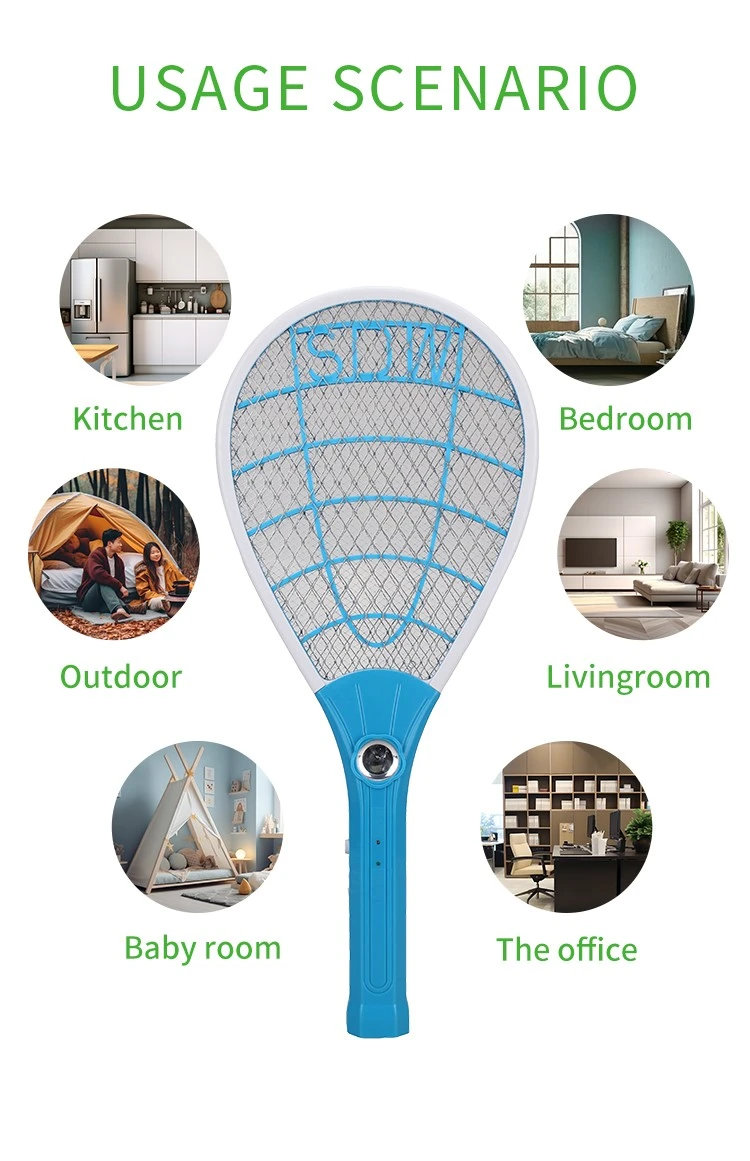
Most importers of electric mosquito swatters obsess over the first order: samples requested, factories vetted, a pre-shipment inspection booked. Then the reorder arrives eight months later and something is off. The grid feels softer. The charge port is a slightly different shade of black. The carton thickness dropped from 350 gsm to 300 gsm. Nothing is catastrophic — but the product no longer matches what your retail customers approved, and quietly, your return rate starts climbing.
How to Keep Mosquito Swatter Quality Consistent Across Repeat Orders
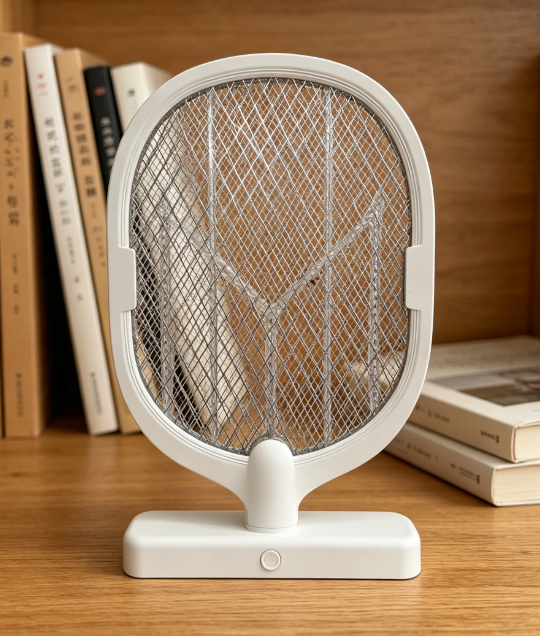
Warranty returns are the silent margin killer in the mosquito control category. A distributor who buys a swatter at $1.80 FOB and retails it at $9.90 can absorb a 1% return rate without noticing — but at 5%, the combined cost of replacement units, reverse logistics, and refund processing erases most of the line's profit.
Common mosquito swatter killer lamp failure modes wholesale spec guide

Digital bathroom scales rank as the second-highest-volume consumer weighing product category, only behind kitchen scales, with distinct market and product characteristics that set them apart from other scale types in importers’ product portfolios.
Digital bathroom body fat-bia-scale wholesale buyers guide