
Why Do Electric Fly Swatters Zap Mosquitoes But Not Humans
2025-11-09
Why Do Electric Fly Swatters Zap Mosquitoes But Not Humans? Uncovering the Scientific Principles Behind It
Every summer and autumn, electric fly swatters become a "mosquito-killing essential" in many households. With a swing of the electrified grid, a annoying mosquito is instantly zapped and eliminated with a crisp "crack". But many people wonder: if electric fly swatters can easily kill mosquitoes, why do human hands barely feel anything when touching the grid, let alone get injured? The answer actually lies in the design principles of electric fly swatters and the characteristics of "electricity". Today, we will break this down in detail.
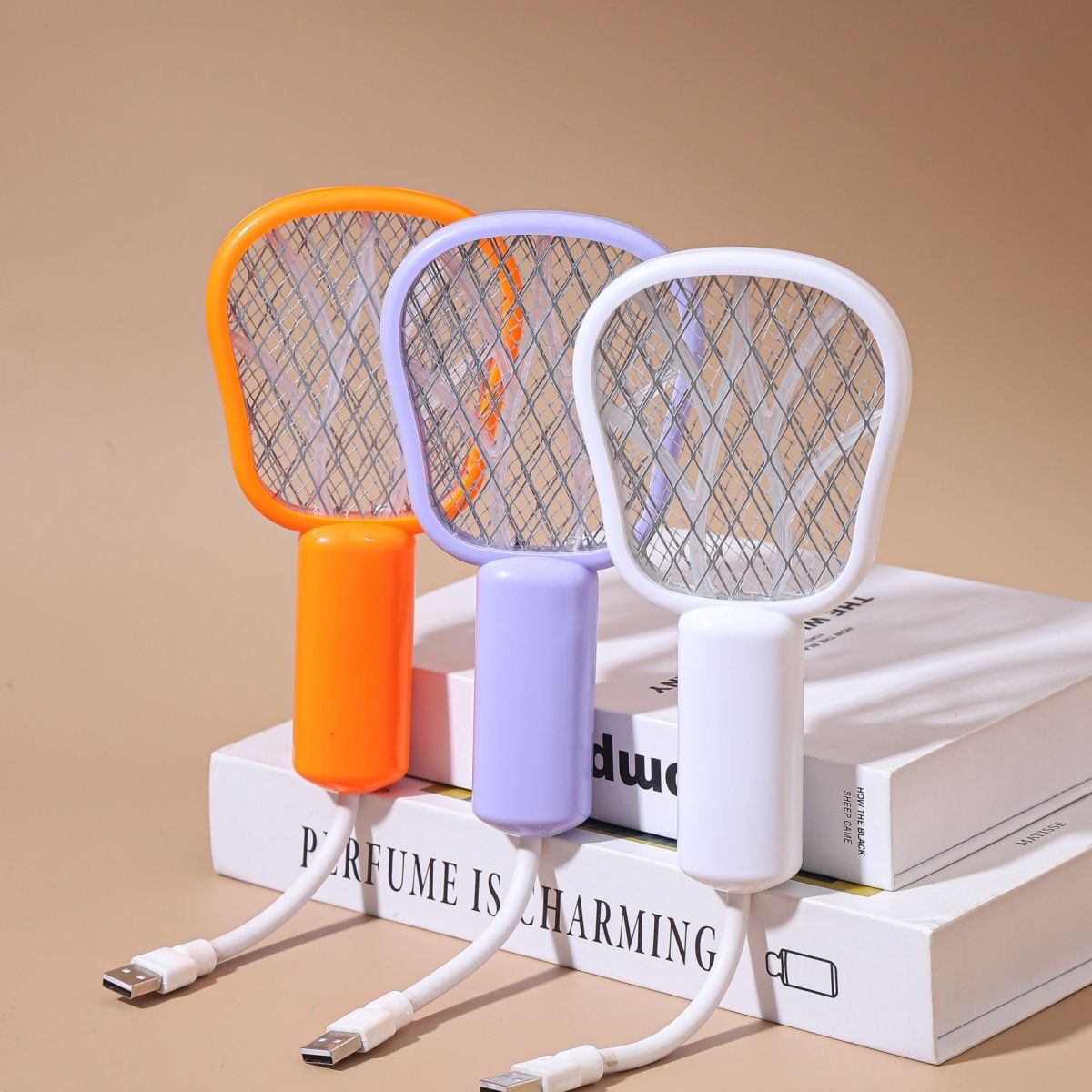
What Kind of "Electricity" Does an Electric Fly Swatter Produce?
To understand why it "doesn't shock humans", we first need to know that the "electricity" output by an electric fly swatter is different from the alternating current (AC) we use daily in our homes. The electricity from household sockets is low-frequency AC at 220V, which provides a stable current continuously. Once the human body comes into contact with it, the current can easily pass through the body, posing an electric shock hazard. However, the "electricity" from an electric fly swatter is high-frequency, high-voltage, low-current electricity processed by a special circuit. These three key attributes are the core reasons why it "only kills mosquitoes but doesn't harm humans".
Specifically, the working process of an electric fly swatter is simple: the low-voltage direct current (DC) provided by batteries (usually 1.5V or 3V dry batteries or lithium batteries) first passes through an "oscillation circuit" to become high-frequency AC. Then, a "step-up transformer" increases the voltage to 2000V-3000V (or even higher). Finally, a "rectifier circuit" converts it into high-frequency, high-voltage DC that can kill mosquitoes. The key point here is that the current is strictly limited to an extremely small range during this process—usually only a few milliamps (mA), far below the current value that is harmful to the human body.
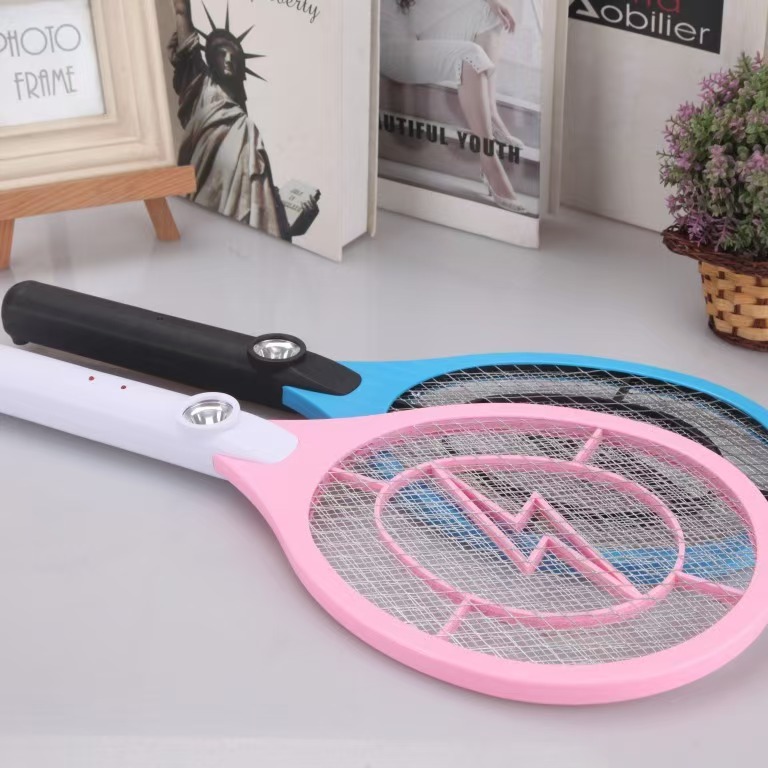
Mosquitoes vs. Humans: Why the "Same Electricity" Has Drastically Different Effects?
When exposed to voltages above 2000V, mosquitoes are killed while humans remain unharmed. This essentially stems from the significant differences in "resistance", "size", and "current tolerance" between mosquitoes and the human body.
1. Mosquitoes' "Fatal Weakness": Low Resistance, Small Size, and Concentrated Current
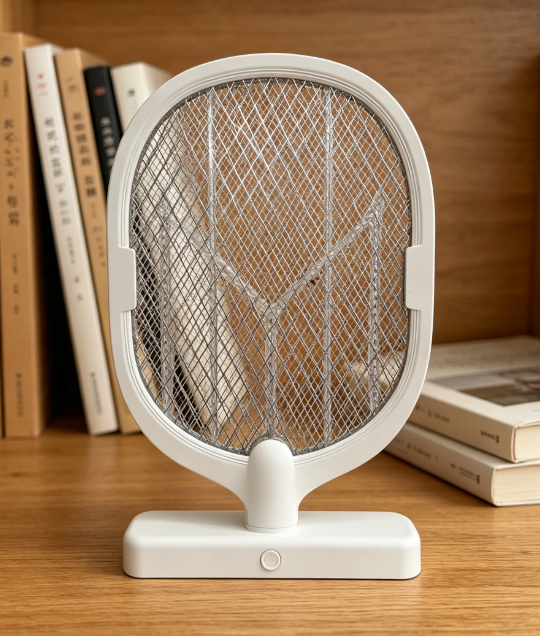
The physical structure of mosquitoes means that once they touch the grid of an electric fly swatter, they become an "electric current path". The grid of an electric fly swatter actually has a three-layer design: the outer and inner layers are high-voltage electrified grids, and the middle layer is an insulating grid (to prevent direct connection between the outer and inner layers when accidentally touched). When a mosquito flies through the outer grid to the middle layer, it comes into contact with both the outer and inner high-voltage grids simultaneously. At this point, the mosquito's body acts as a "conductor", creating a path between the two layers of grids.
Since mosquitoes are very small (usually only a few millimeters long) and have a thin cuticle on their body surface, their resistance is extremely low (far lower than that of the human body). Additionally, high-frequency, high-voltage electricity has strong "breakdown capability", so the current instantly concentrates and passes through the mosquito's body. Although the overall current value is small, when concentrated in the tiny body of a mosquito, it instantly generates high temperatures, burning its nervous system and internal organs. At the same time, the surrounding air heats up and expands, producing a "crack" sound—this is the entire process of a mosquito being electrocuted.
2. Humans' "Safety Advantage": High Resistance, "Diluted" Current, and Below-Hazard Threshold
The situation is completely different when a human hand touches the grid of an electric fly swatter. First, the human body has very high resistance—skin (especially dry skin) is a good insulator, with a resistance that can reach hundreds of thousands of ohms (Ω). Moreover, the output current of an electric fly swatter is inherently limited to a few milliamps. According to Ohm's Law (current = voltage ÷ resistance), even when in contact with a high voltage of 2000V, the current passing through the human body is only "2000V ÷ 100,000Ω = 0.02A = 20mA". In reality, however, the current of an electric fly swatter is usually only 1-5mA, far below this value.
More importantly, what is the "safe current" that the human body can withstand? Generally speaking, an AC current below 10mA (or a slightly higher DC current) has minimal impact on the human body—it may only cause a slight "tingling or itching sensation" but no harm. A current exceeding 30mA can cause muscle spasms, making it impossible for a person to break free from the power source on their own, while a current exceeding 100mA may be life-threatening. The current of an electric fly swatter is inherently designed to be within the "1-5mA" safe range. Coupled with the high resistance of the human body, the actual current passing through the human body is even smaller, so it naturally causes no harm.
Furthermore, the "high-frequency electricity" characteristic of electric fly swatters also reduces risks. Household AC is low-frequency electricity at 50Hz, which easily causes the heart to "resonate", increasing the risk of electric shock. However, the electricity from an electric fly swatter is high-frequency electricity at tens of kilohertz (kHz). This frequency of current mainly acts on the surface of the skin and is less likely to penetrate deep into the body to affect internal organs and the heart, further enhancing safety.
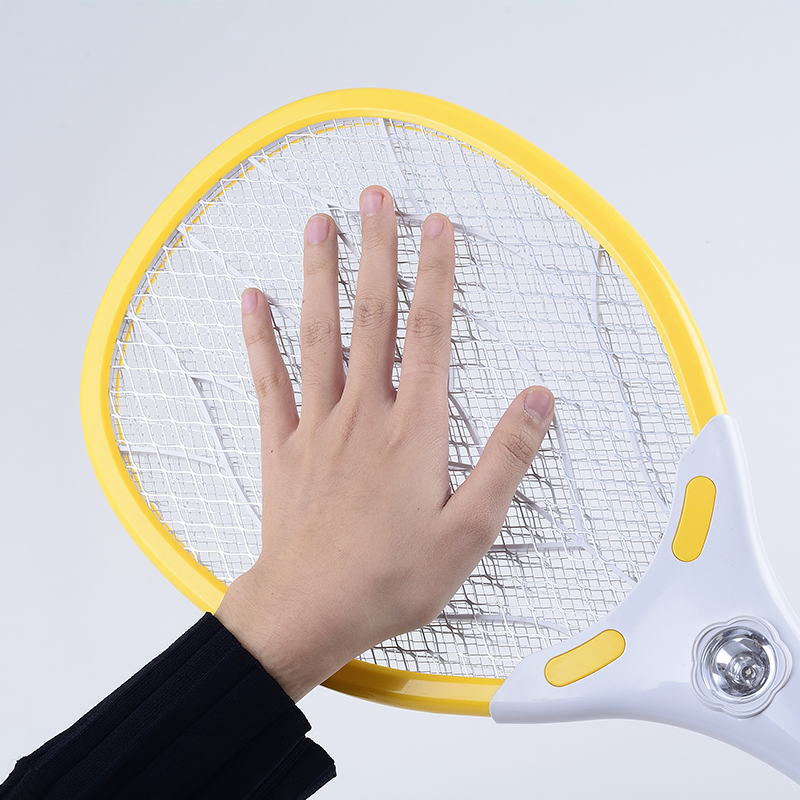
Another Detail: The "Protective Design" of Electric Fly Swatters
In addition to the inherent safety in its principles, the design of electric fly swatters also prevents accidental contact injuries. For example, the aforementioned "three-layer grid"—the middle insulating layer prevents human hands from touching both the outer and inner high-voltage grids at the same time. If you only touch a single outer grid, no current path is formed, so current will not pass through the human body. Additionally, many electric fly swatters are designed with a "switch lock": you need to hold down the switch to energize the device, and releasing the switch cuts off the power, preventing accidental energization when children touch it.
However, it should be noted that if the skin is moist (e.g., right after washing hands), its resistance will decrease significantly, and you may feel a more obvious tingling sensation when touching the electric fly swatter. Also, do not touch both the outer and inner grids of the electric fly swatter with your hands at the same time (even though there is a middle insulating grid, there is still a risk if it is damaged). Under normal usage conditions, the safety design of electric fly swatters is sufficient to protect human safety.
Summary: The Core Logic of Why Electric Fly Swatters "Don't Shock Humans"
In simple terms, the design concept of electric fly swatters is "targeted mosquito elimination": high-frequency, high-voltage electricity is used to deal with mosquitoes, which have low resistance and small size, allowing the current to concentrate and kill them. At the same time, the combination of "low current + high human body resistance" ensures that the current passing through the human body when in contact does not reach the hazard threshold. It is like a "precision strike" weapon that is only effective against mosquitoes and safe for humans.
Next time you use an electric fly swatter, you no longer need to worry about "whether it will shock you". As long as you use it normally, it is a safe and efficient mosquito-killing tool that allows you to spend the mosquito-infested seasons with peace of mind.
Why USB Ports Stay Universal for Electronics
Truth About Cheap Mosquito Swatters
Related Article

If you’re struggling with annoying mosquitoes, flies, and other flying pests indoors and outdoors, upgrading from traditional manual tools to anElectric Mosquito Swatter is the most efficient solution. Many homeowners and renters search where to buy fly swatter online to find durable, safe, and high-performance electric models that deliver instant pest control.
Where to Buy Fly Swatter
Most importers of electric mosquito swatters obsess over the first order: samples requested, factories vetted, a pre-shipment inspection booked. Then the reorder arrives eight months later and something is off. The grid feels softer. The charge port is a slightly different shade of black. The carton thickness dropped from 350 gsm to 300 gsm. Nothing is catastrophic — but the product no longer matches what your retail customers approved, and quietly, your return rate starts climbing.
How to Keep Mosquito Swatter Quality Consistent Across Repeat Orders
Warranty returns are the silent margin killer in the mosquito control category. A distributor who buys a swatter at $1.80 FOB and retails it at $9.90 can absorb a 1% return rate without noticing — but at 5%, the combined cost of replacement units, reverse logistics, and refund processing erases most of the line's profit.
Common mosquito swatter killer lamp failure modes wholesale spec guide

Digital bathroom scales rank as the second-highest-volume consumer weighing product category, only behind kitchen scales, with distinct market and product characteristics that set them apart from other scale types in importers’ product portfolios.
Digital bathroom body fat-bia-scale wholesale buyers guide