
Why Do Mosquito Lamps All Use Blue-Violet Light
2026-04-24
Why Do Mosquito Lamps All Use Blue-Violet Light? The Truth Lies in Mosquitoes' "Visual Code"
As summer arrives, mosquito lamps become a "savior" for many families. But careful observers will notice a common feature: whether it’s a small household model or a high-power commercial one, almost all mosquito lamps emit blue-violet light. Clearly, white light and yellow light are softer and more in line with daily visual habits, so why do manufacturers choose blue-violet light as the "core bait" for mosquito lamps? Today, we will unravel this mosquito-killing secret hidden in light and shadow, helping you understand the love-hate relationship between blue-violet light and mosquitoes in one article.
Core Answer: Blue-Violet Light is an Irresistible "Fatal Temptation" for Mosquitoes
The core logic of a mosquito lamp is never to "repel mosquitoes" but to "attract them" — by simulating signals that mosquitoes like, luring them near the lamp, and then eliminating them through electric shock, wind suction, sticky traps, or other methods. Blue-violet light is one of the signals that can accurately hit mosquitoes' "preferences". This is inseparable from mosquitoes' physiological characteristics and the unique advantages of blue-violet light, and it is not a random choice by manufacturers.
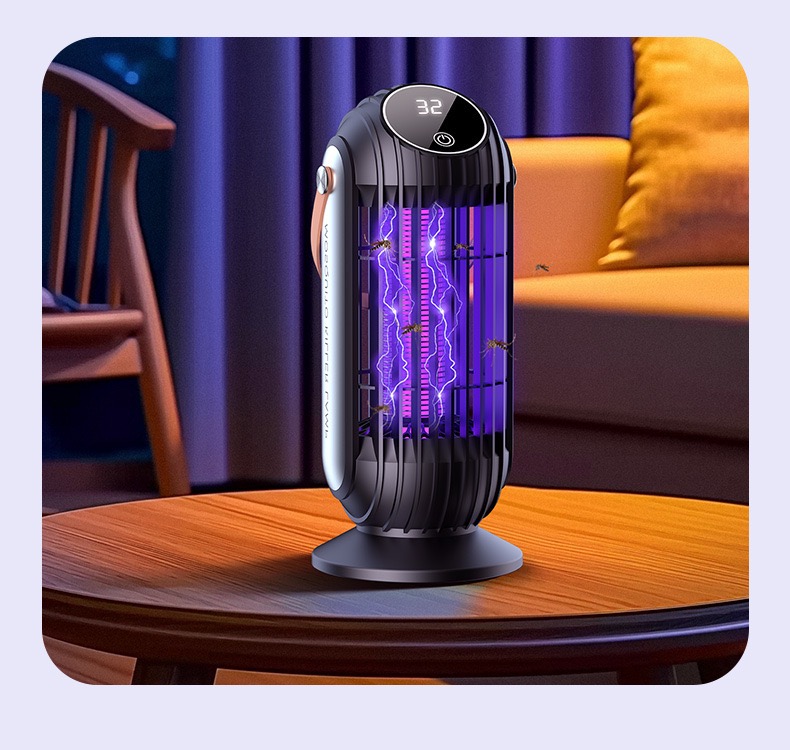
1. Mosquitoes' "Visual Preference": Only Fond of Light of Specific Wavelengths
Mosquitoes' eyes are different from humans'. They do not have a complete color vision system. Their compound eyes are composed of countless hexagonal cone cells, and their sensitivity to light and wavelength preference are very different from those of humans. Studies have found that mosquitoes' compound eyes are most sensitive to light in the 360-400nm band, which corresponds exactly to the blue-violet light we see (among which light with a wavelength of about 370nm is the most attractive). In contrast, they are slow to respond to long-wavelength light such as white light and yellow light, and even actively avoid it.
From a physiological mechanism perspective, the photosensitive proteins (opsin proteins) in mosquitoes' compound eyes form a quantum efficiency peak in the 340-400nm range. When the photon energy of blue-violet light reaches 3.42eV (corresponding to a wavelength of 365nm), it triggers the isomerization reaction of opsin, transmitting signals of "forage available" or "habitat available" to the mosquito's nervous system. Simply put, blue-violet light is like a "food signal light" that humans see in the eyes of mosquitoes, and they will instinctively move towards the light source.
More importantly, blue-violet light in this band can also simulate "survival signals" in mosquitoes' natural environment — such as plant fluorescence, sweat reflection, and even dim light near water sources. This makes mosquitoes mistakenly think they have found a place to forage (suck blood) or inhabit, thus willingly "throwing themselves into the trap". In contrast, white light has a wavelength mostly above 450nm, with insufficient photon energy to trigger the mosquito's phototactic reflex arc, so it naturally cannot achieve the effect of luring mosquitoes.
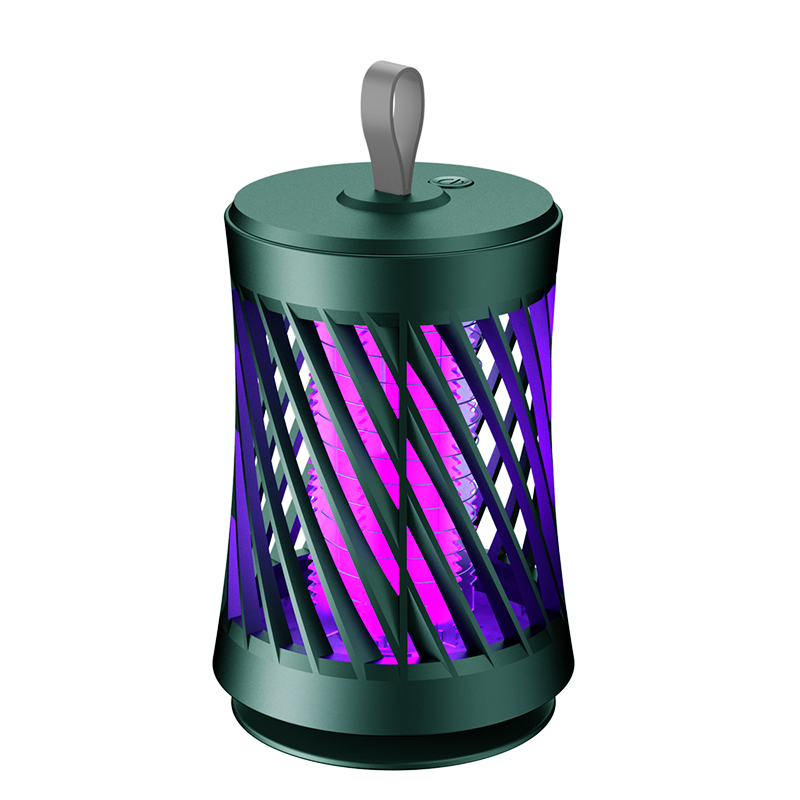
2. "Inherent Advantages" of Blue-Violet Light: Balancing Mosquito Attraction Efficiency and Usage Safety
In addition to accurately matching mosquitoes' visual preferences, blue-violet light can become the "standard configuration" of mosquito lamps because it finds a perfect balance between mosquito attraction efficiency and usage safety, which is irreplaceable by light of other bands.
First of all, the mosquito attraction efficiency of blue-violet light is far higher than that of other light. Experimental data show that the phototactic response intensity of Culex mosquitoes (the most common mosquitoes in our daily life) to blue-violet light with a wavelength of 365±10nm is 12.7 times that of the visible light band. Even in the presence of weak ambient light, blue-violet light can form an obvious "light signal advantage", filtering out interference such as plant reflected light and daily lighting, and maintaining a trapping efficiency of more than 82%, while the efficiency of white light in the same environment will drop to 47%.
Secondly, blue-violet light is safer and suitable for household use. Many people will worry that blue-violet light contains ultraviolet rays, which may cause harm to the human body. In fact, the blue-violet light used in mosquito lamps is mainly near-ultraviolet (370-400nm) and violet light (360-380nm), which belong to the UVA band, different from the UVC band (200-300nm) that can burn the skin. This band of light has minimal irritation to human skin and eyes, and it will not affect health at all as long as it is used normally (not looked directly at from close range or irradiated for a long time).
In addition, blue-violet light also has higher photoelectric conversion efficiency. Whether it is LED lamp beads or ultraviolet fluorescent lamps, the efficiency of converting electrical energy into blue-violet light in the 360-400nm band can reach more than 68%, which can not only ensure the mosquito attraction effect but also save electricity, meeting the needs of household mosquito lamps for "low power consumption and long battery life". If other bands of light are used, either the mosquito attraction efficiency is low, or the power consumption is too high, making it difficult to balance practicality and economy.
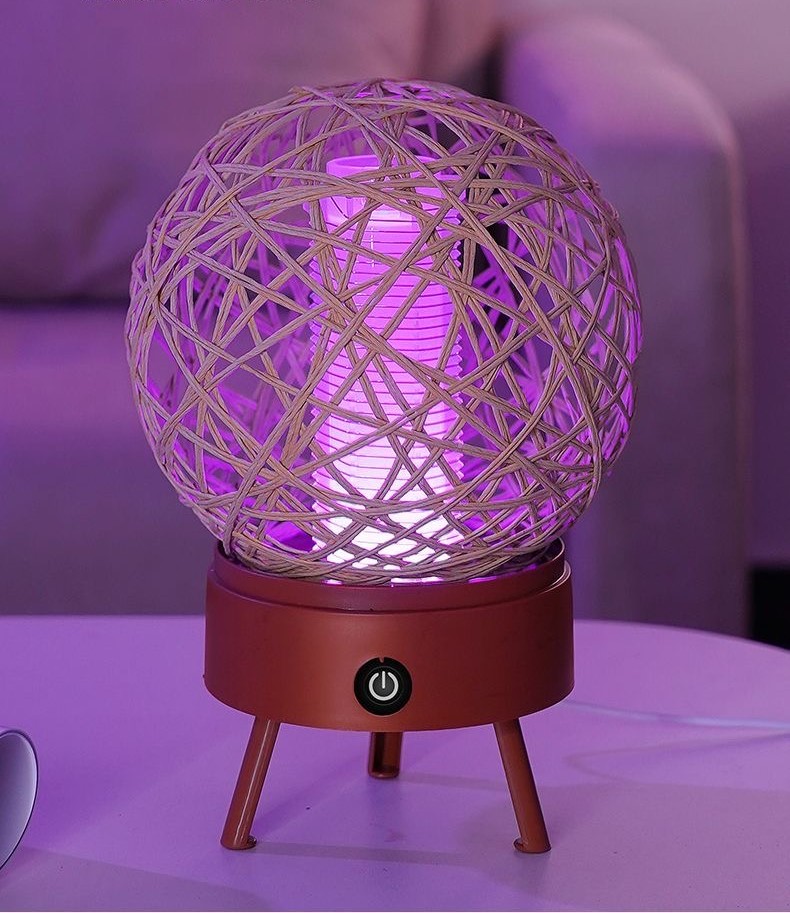
3. Misunderstanding Clarification: Not All Blue-Violet Light Can Kill Mosquitoes — The Key is "Wavelength"
Many people mistakenly believe that any blue-violet light can be used as a mosquito lamp, but this is not the case. The core of blue-violet light in mosquito lamps lies in "precise wavelength", not "color" — only blue-violet light in the 360-400nm range can effectively attract mosquitoes; while some blue lights we see daily (such as computer keyboard lights and decorative lights) have a wavelength mostly between 400-450nm. Although the color is similar, their attraction to mosquitoes is extremely low, and they cannot achieve the effect of killing mosquitoes at all.
Most high-quality mosquito lamps on the market adopt a dual-band design of "main wavelength 365nm + auxiliary wavelength 470nm", which can not only ensure a mosquito attraction efficiency of about 90% but also make blue-violet light more perceptible to humans, facilitating the judgment of whether the mosquito lamp is working normally. In contrast, inferior mosquito lamps often use ordinary blue-violet LED lamp beads with inaccurate wavelengths, which not only have poor mosquito killing effect but may also attract other small flying insects due to messy light.
4. Extension: Why Can't Mosquito Lamps Use White Light or Yellow Light?
Since blue-violet light is so effective, why not choose softer white light or yellow light? The answer is actually very simple — these two types of light either "do not attract" mosquitoes or "repel" them.
White light has a wide wavelength range (400-760nm), among which the blue-violet component that is attractive to mosquitoes is very small. Most of the light is "meaningless" to mosquitoes, and even may interfere with mosquitoes' judgment of blue-violet light signals due to excessive light intensity, reducing the effect of the mosquito lamp. On the contrary, yellow light (570-590nm) is the opposite. Mosquitoes are born to dislike light of this band and will actively avoid it. It cannot lure mosquitoes at all, but can instead play a certain role in repelling mosquitoes (this is why many mosquito repellent lamps use yellow light).
In summary, the reason why mosquito lamps prefer blue-violet light is essentially "catering to their preferences" — accurately matching the visual and physiological characteristics of mosquitoes, balancing mosquito attraction efficiency and usage safety, which is the optimal choice verified by science. Next time you see the blue-violet light emitted by a mosquito lamp, you will know that it is not "on randomly" but a "fatal trap" specially set for mosquitoes. If you want to kill mosquitoes efficiently in summer, in addition to choosing the right blue-violet mosquito lamp, remember to place it in a dark corner far from people, so that blue-violet light becomes the only "target" for mosquitoes, and the mosquito killing effect will be doubled~
Detailed Explanation of Mosquito Swatter SKD
How to Get Rid of Mosquitoes Inside the House
Related Article

If you’re struggling with annoying mosquitoes, flies, and other flying pests indoors and outdoors, upgrading from traditional manual tools to anElectric Mosquito Swatter is the most efficient solution. Many homeowners and renters search where to buy fly swatter online to find durable, safe, and high-performance electric models that deliver instant pest control.
Where to Buy Fly Swatter
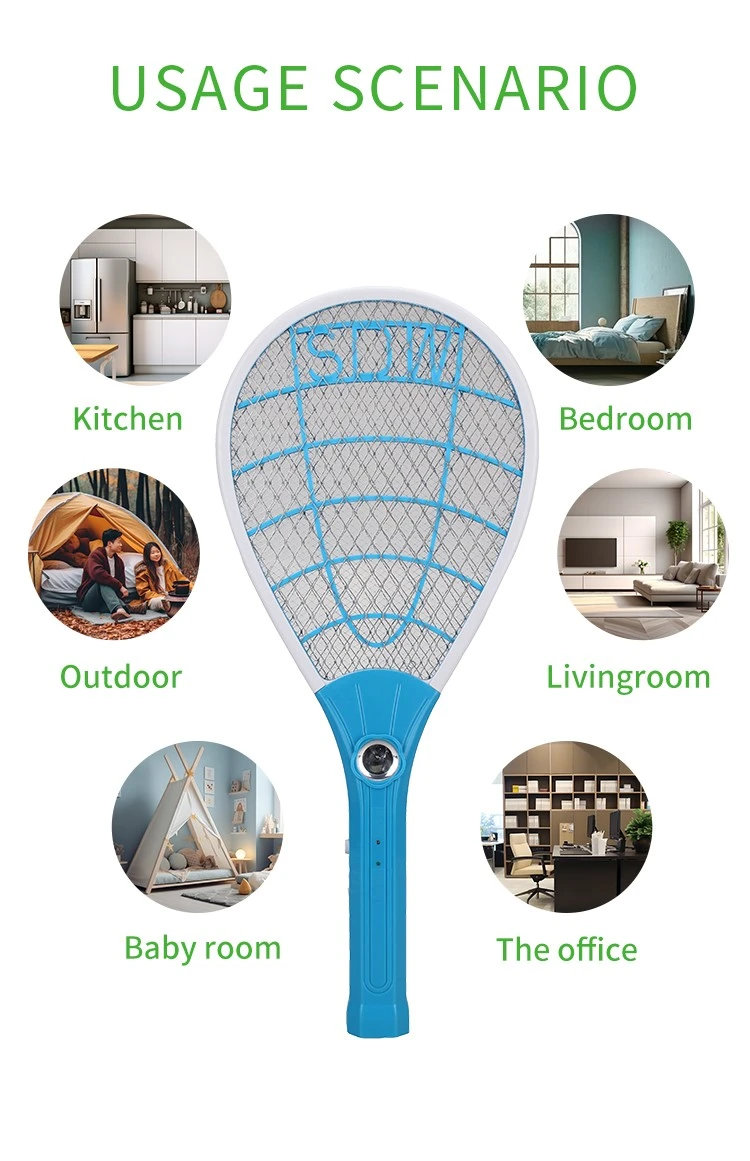
Most importers of electric mosquito swatters obsess over the first order: samples requested, factories vetted, a pre-shipment inspection booked. Then the reorder arrives eight months later and something is off. The grid feels softer. The charge port is a slightly different shade of black. The carton thickness dropped from 350 gsm to 300 gsm. Nothing is catastrophic — but the product no longer matches what your retail customers approved, and quietly, your return rate starts climbing.
How to Keep Mosquito Swatter Quality Consistent Across Repeat Orders
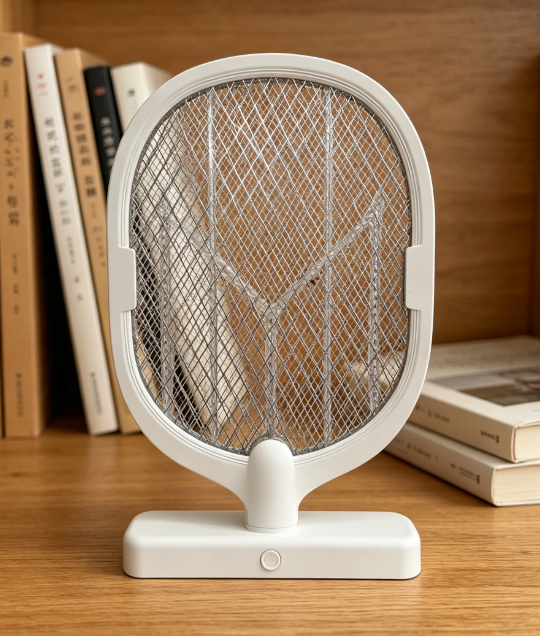
Warranty returns are the silent margin killer in the mosquito control category. A distributor who buys a swatter at $1.80 FOB and retails it at $9.90 can absorb a 1% return rate without noticing — but at 5%, the combined cost of replacement units, reverse logistics, and refund processing erases most of the line's profit.
Common mosquito swatter killer lamp failure modes wholesale spec guide

Digital bathroom scales rank as the second-highest-volume consumer weighing product category, only behind kitchen scales, with distinct market and product characteristics that set them apart from other scale types in importers’ product portfolios.
Digital bathroom body fat-bia-scale wholesale buyers guide