
Why Do Mosquitoes Still Exist on High Floors
2026-05-31
Why Do Mosquitoes Still Exist on High Floors? The Truth Explained
Most people hold a common belief when buying or renting a house: the higher the floor, the fewer mosquitoes. While residents on lower floors suffer constantly from mosquito bites, those on high floors are supposed to enjoy a bug-free home. However, many people living on the 20th, 30th floors or even the top floor are confused. Even hundreds of meters above the ground, far away from ground weeds and stagnant water, their homes are still plagued by buzzing mosquitoes in summer.
Can mosquitoes really fly dozens of floors high on their own? The answer is no. We have always misunderstood mosquitoes. Mosquitoes do not reach high floors by sheer effort. There are several overlooked reasons behind this common phenomenon, and this article will clear up all your doubts.
1. Fact Check: Mosquitoes Cannot Fly to High Floors on Their Own
Scientifically speaking, mosquitoes are low-altitude insects with extremely limited flying capabilities. In calm and windless conditions, their maximum vertical flight height is only 10 to 20 meters, equivalent to the 6th to 7th floors of a building. This perfectly explains why mosquitoes are most dense on lower floors.
Thanks to their tiny size and ultra-light weight, mosquitoes cannot withstand the strong and unstable air currents at high altitudes. They are physically incapable of flying to upper floors relying solely on their wings. Almost all mosquitoes found in high-rise homes reach there with external help.
2. Four Main Ways Mosquitoes Invade High Floors
1. Elevators: The Most Common High-Altitude Passage
Elevators are the primary and most convenient access for mosquitoes to enter high-rise buildings, acting as their exclusive high-speed lifts. When people enter and exit the community, corridors and elevators, mosquitoes will quietly attach to their clothes, backpacks, skin or personal belongings.
With the up and down movement of elevators, mosquitoes can reach any high floor effortlessly. They wait opportunistically near elevator doors and corridor vents, and fly indoors instantly through door gaps. This is the core reason why high-floor residents encounter mosquitoes all year round.
2. Riding Wind: Reaching Hundreds of Meters High Easily
Though weak in independent flight, mosquitoes are experts at hitching wind rides. In summer, urban areas are prone to convective winds and updrafts. Combined with the venturi effect between buildings, stable upward air currents are formed, easily lifting mosquitoes to high altitudes.
Research shows that with the help of wind, mosquitoes can easily reach160 meters above the ground, with an extreme limit of 290 meters — equal to the height of a 73-story building. Mosquitoes are far more likely to drift into high-rise rooms on muggy summer evenings and humid rainy days when high-altitude air currents are active.
3. Layer-by-Layer Reproduction: High-Rise Breeding Grounds
This is the most easily neglected factor. Mosquitoes have extremely strong reproductive abilities. A female mosquito only needs a small amount of blood and a bottle cap of stagnant water to hatch thousands of offspring. Mosquitoes breed upward layer by layer: mosquitoes hatched on the 5th floor can reach the 10th floor, and their offspring can fly to the 15th floor, gradually spreading to the entire building.
Moreover, high-rise buildings themselves provide ideal breeding environments for mosquitoes. Rooftop fire water tanks, waterlogged corridor grooves, air conditioner external unit trays, stagnant water in flower pot trays and window gap water can all become aerial breeding bases for mosquitoes, leading to endless mosquito infestations on high floors.
4. Corridors and Pipes: Hidden Invading Routes
Sewage pipes, ventilation ducts, electrical wells and corridor gaps running through the entire building serve as hidden passages for mosquitoes. These dark, humid and poorly ventilated spaces maintain a constant temperature all year round, making them perfect habitats for mosquitoes.
Mosquitoes can crawl and fly upward along pipe gaps from lower floors, basements and underground garages, sneaking into high-rise homes undetected.
3. Why High Floors Have Fewer Mosquitoes Than Lower Ones
After learning how mosquitoes reach high floors, you may wonder why high floors are still considered less mosquito-infested. The key lies in mosquito density.
Lower floors are close to the ground, surrounded by dense mosquito breeding sources such as vegetation, green belts, puddles and garbage bins, resulting in a huge mosquito population and rapid reproduction. In contrast, mosquitoes on high floors all migrate upward or reproduce layer by layer. Without large-scale natural breeding grounds, their overall number is far lower than that on lower floors — though complete elimination is impossible.
4. Practical Mosquito Prevention Tips for High-Floor Residents
There is no need to worry about floor height. Follow these tips to greatly reduce mosquito troubles and avoid summer bites:
1. Eliminate indoor stagnant water: Regularly clean stagnant water in flower pot trays, air conditioner trays, bathroom corners and water dispenser trays. Replace water for indoor plants weekly to cut off mosquito breeding sources fundamentally.
2. Prevent mosquitoes when entering home: Enter and exit elevators and doors quickly to avoid leaving doors open for long. Pat your clothes lightly when entering at night to shake off hidden mosquitoes.
3. Protect doors and windows: Install fine mesh window screens and repair damaged gaps in time. Close window and door gaps before sleeping to block wind-carried mosquitoes.
4. Keep corridors clean regularly: Maintain hygiene near doorways and pipe openings, remove sundries and accumulated water to reduce mosquito hiding spots.
Conclusion
There are no completely mosquito-free floors, only relatively less mosquito-prone environments. Mosquitoes do not fly to high floors by themselves; they arrive via elevators, wind currents, layer-by-layer reproduction and building pipelines. Rather than obsessing over floor height, regular stagnant water removal and daily entry protection are the most effective and fundamental ways to get rid of mosquito troubles.
Why Fewer Mosquitoes Exist in Hotter Places
Mosquito Infestation in Plum Rain Season
Related Article

If you’re struggling with annoying mosquitoes, flies, and other flying pests indoors and outdoors, upgrading from traditional manual tools to anElectric Mosquito Swatter is the most efficient solution. Many homeowners and renters search where to buy fly swatter online to find durable, safe, and high-performance electric models that deliver instant pest control.
Where to Buy Fly Swatter
Most importers of electric mosquito swatters obsess over the first order: samples requested, factories vetted, a pre-shipment inspection booked. Then the reorder arrives eight months later and something is off. The grid feels softer. The charge port is a slightly different shade of black. The carton thickness dropped from 350 gsm to 300 gsm. Nothing is catastrophic — but the product no longer matches what your retail customers approved, and quietly, your return rate starts climbing.
How to Keep Mosquito Swatter Quality Consistent Across Repeat Orders
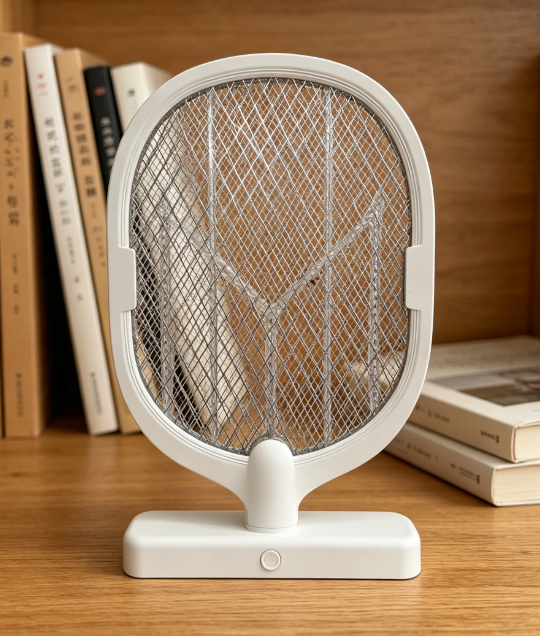
Warranty returns are the silent margin killer in the mosquito control category. A distributor who buys a swatter at $1.80 FOB and retails it at $9.90 can absorb a 1% return rate without noticing — but at 5%, the combined cost of replacement units, reverse logistics, and refund processing erases most of the line's profit.
Common mosquito swatter killer lamp failure modes wholesale spec guide

Digital bathroom scales rank as the second-highest-volume consumer weighing product category, only behind kitchen scales, with distinct market and product characteristics that set them apart from other scale types in importers’ product portfolios.
Digital bathroom body fat-bia-scale wholesale buyers guide