
Why Does the Light of an Electric Mosquito Swatter Attract Mosquitoes
2025-10-24
Why Does the Light of an Electric Mosquito Swatter Attract Mosquitoes? Unveiling the Science Behind Insects' "Light-Chasing" Behavior
Every summer and autumn, electric mosquito swatters become a "mosquito-killing essential" in many households. When you press the switch, the pale purple light emitted from the grid seems to have a magical pull—it always lures mosquitoes to "throw themselves into the trap," and finally, they are electrocuted with a crisp "crack." But have you ever wondered: mosquitoes clearly prefer hiding in dark corners, so why do they take the initiative to fly towards the light of an electric swatter? Behind this phenomenon lies a "dual code" combining mosquitoes' physiological instincts and the properties of light.
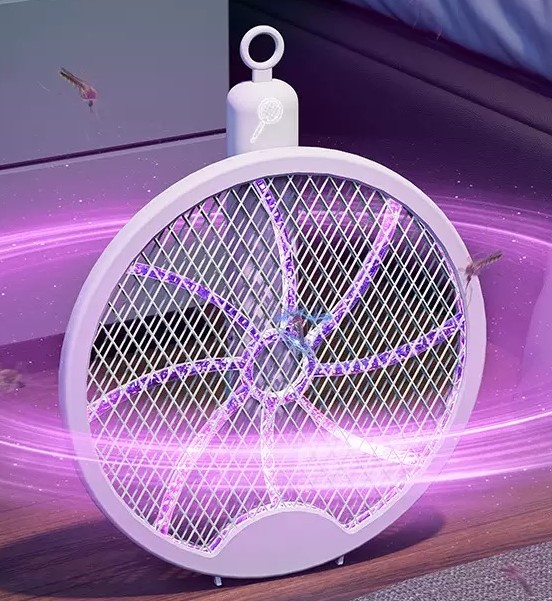
1. Mosquitoes Don't "Like Light"—They Are Attracted to Specific Light
Many people mistakenly believe that mosquitoes "like light," but in reality, most mosquitoes are typical "photonegative insects"—they hide in dark places like grass, wardrobes, and wall corners during the day, and only become active at dusk or night. So why can the light of an electric swatter "hook" them? The key lies in this: the light emitted by an electric mosquito swatter is not ordinary light, but ultraviolet (UV) light with a specific wavelength that mosquitoes "cannot resist."
The light from an electric swatter that we can see with our naked eyes is actually a mixture of UV light and a small amount of visible light. Among them, the core "mosquito-luring component" is UVA (long-wave ultraviolet light) with a wavelength between 365-380 nanometers. Unlike UVB in sunlight, which is highly harmful, this type of light can accurately trigger mosquitoes' "sensory switches"—and to understand this, we need to start with mosquitoes' "navigation systems."
2. Mosquitoes' "Survival Instinct": Treating UV Light as a "Navigation Signal"
The reason why mosquitoes are attracted to the UV light of electric swatters is essentially that they mistake this light for a "natural signal" necessary for survival—an instinct formed through long-term evolution:
1) UV Light Serves as Mosquitoes' "Flying Compass"
When mosquitoes are active at night, they rely on external light to determine their direction. In nature, the light from the moon and stars contains stable UV light. Mosquitoes' compound eyes are more than 10 times more sensitive to UV light than human eyes. They can determine their flight path (such as avoiding obstacles and finding distant hosts) by sensing the intensity and angle of UV light. The UV light from electric swatters simulates this "natural navigation light," making mosquitoes mistake it for a "signal for safe flight" and thus take the initiative to approach.
2) UV Light Is Linked to "Food Sources"
Mosquito larvae (wrigglers) live in water, while adult mosquitoes need to feed on plant sap (male mosquitoes) or blood (female mosquitoes). For mosquitoes, areas with strong UV light are often associated with "abundant food": for example, plant leaves reflect UV light under sunlight, attracting male mosquitoes to feed on their sap; under dim light, human or animal skin also indirectly reflects a small amount of UV light (combined with body temperature and the smell of sweat), which serves as an "auxiliary signal" for female mosquitoes to find hosts. The UV light from electric swatters just amplifies this "food cue," making mosquitoes have the illusion that "there is food here."
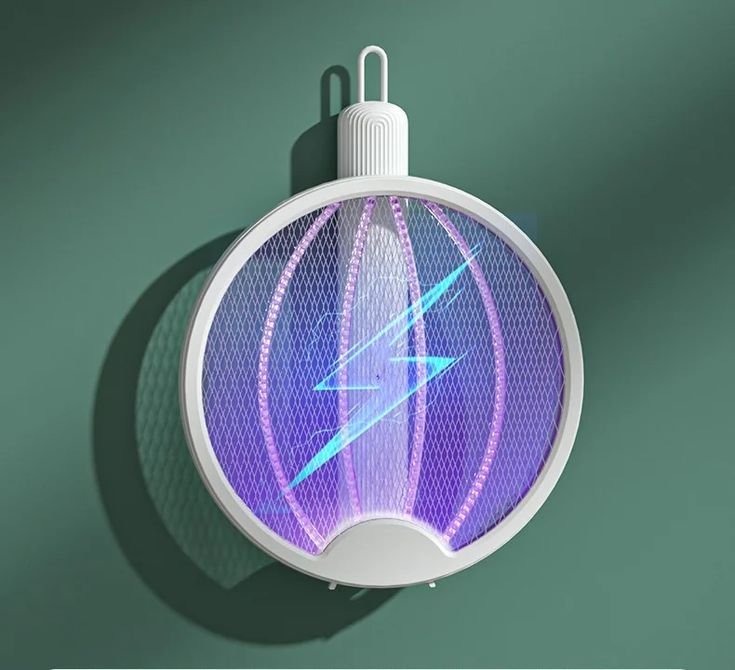
3. Why Is the Light "Pale Purple"? Not All Light Can Lure Mosquitoes
You may have noticed that the light from electric mosquito swatters is mostly pale purple or blue-purple. This is actually a visual effect of "UV light + visible light"—UV light itself is invisible to the naked eye, but when the tube of an electric swatter emits UV light, it also releases a small amount of blue-purple visible light with a wavelength of 400-450 nanometers. That's why we can see the "pale purple glow."
However, the key point is: only UV light can effectively lure mosquitoes; ordinary white light or yellow light is almost useless. Scientists have conducted experiments: in the same environment, mosquitoes hardly approach areas with only white light on; while in areas with UV lights (simulating the light of electric swatters) turned on, a large number of mosquitoes can be attracted within 10 minutes. The reason for this is that in mosquitoes' compound eyes, the number of "light-sensitive cells" dedicated to perceiving UV light is much greater than that of cells that perceive other types of light. For mosquitoes, UV light is like a "lighthouse in the dark," while other lights are just "irrelevant background."
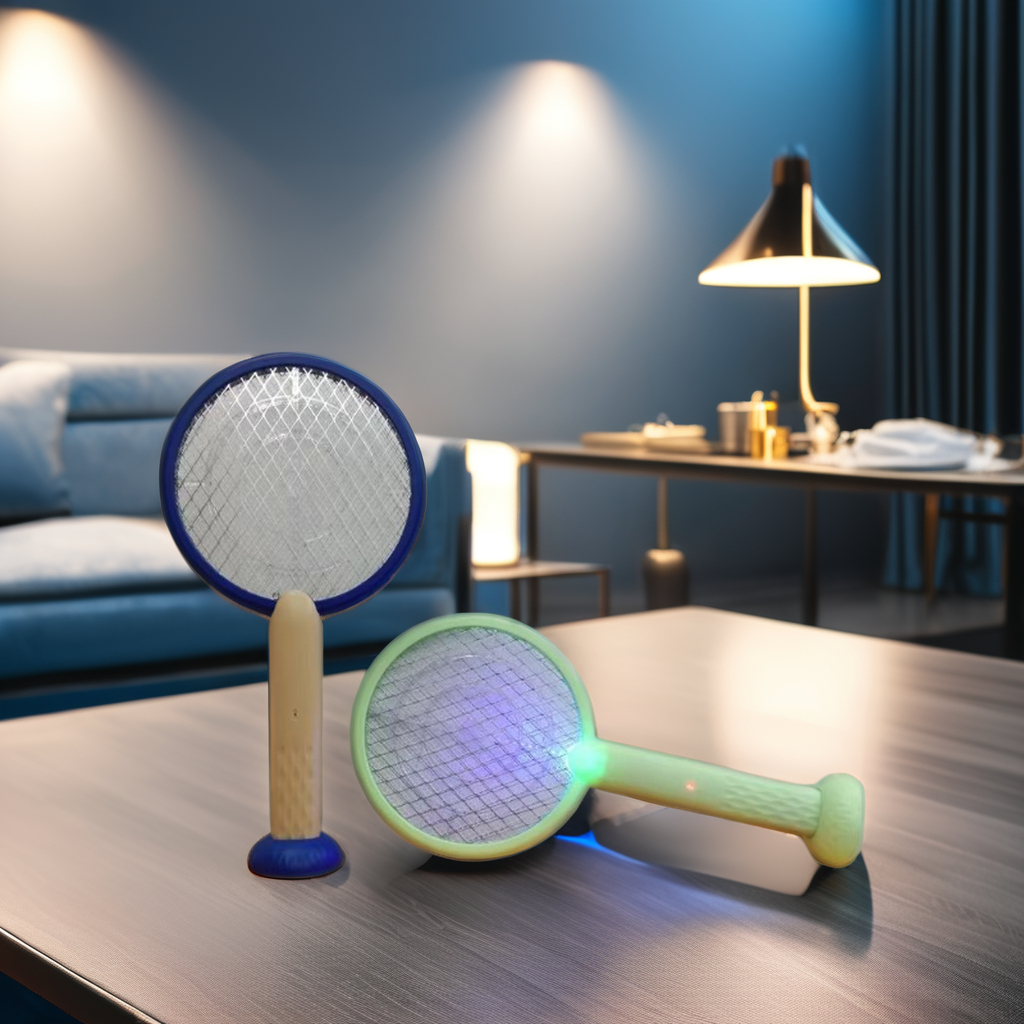
4. A Small Tip: 2 Things to Note to Make Your Electric Mosquito Swatter More "Mosquito-Luring"
Now that we understand the principle, we can make electric mosquito swatters more effective:
1) Use It in a "Dark Environment"
During the day or under strong light, the UV light in the environment (such as sunlight) will mask the UV light from the electric swatter, reducing its mosquito-luring effect. At night, if you turn off the main lights and only turn on the electric swatter, mosquitoes will be more accurately attracted by the UV light.
2) Don't Get Too Close to Mosquitoes
Mosquitoes fly slowly and have a certain vigilance against "sudden strong light." If you hold the electric swatter and get too close to a mosquito directly, it may be frightened and escape instead. It is recommended to place the electric swatter in corners where mosquitoes often appear (such as beside the bed or on the windowsill), allowing the UV light to slowly "lure" the mosquitoes closer before swinging the swatter to catch them.
In fact, the "mosquito-luring principle" of electric swatters is essentially humans taking advantage of mosquitoes' "evolutionary instincts"—using UV light that simulates nature to disrupt their "navigation systems." Next time you use an electric mosquito swatter and see mosquitoes actively flying towards that pale purple glow, you will know: it's not that mosquitoes are "stupid," but that they can't escape their own physiological instincts.
Do Your Own Pest Control
Is a Larger Electric Mosquito Swatter Better
Related Article

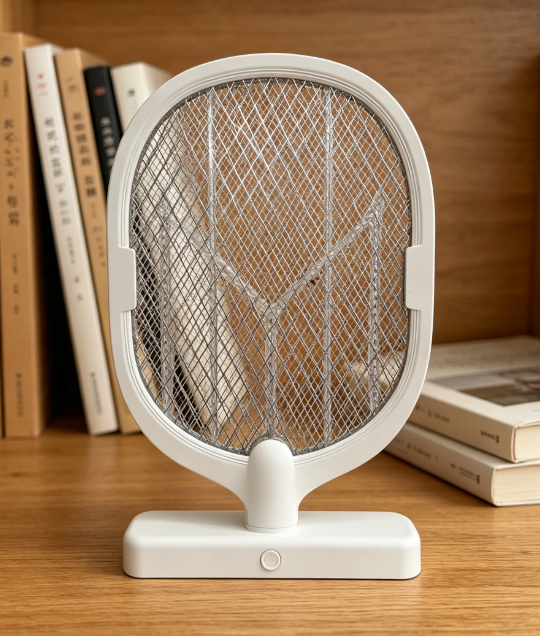
If you’re struggling with annoying mosquitoes, flies, and other flying pests indoors and outdoors, upgrading from traditional manual tools to anElectric Mosquito Swatter is the most efficient solution. Many homeowners and renters search where to buy fly swatter online to find durable, safe, and high-performance electric models that deliver instant pest control.
Where to Buy Fly Swatter
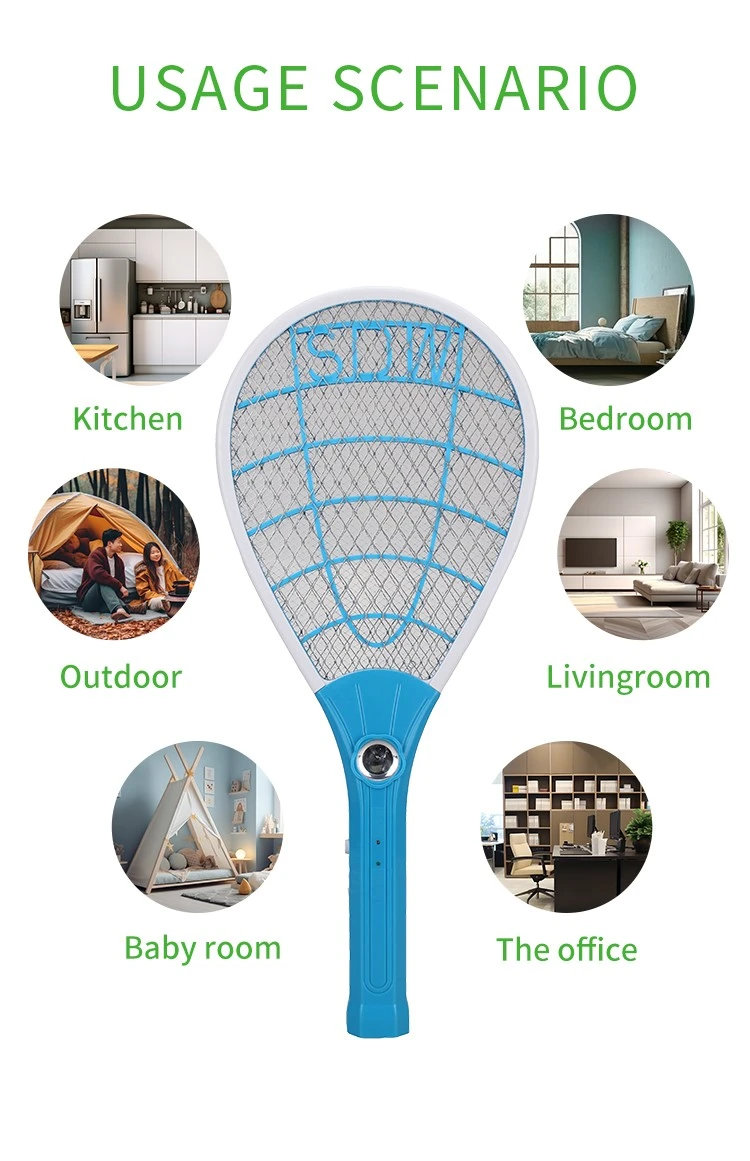
Most importers of electric mosquito swatters obsess over the first order: samples requested, factories vetted, a pre-shipment inspection booked. Then the reorder arrives eight months later and something is off. The grid feels softer. The charge port is a slightly different shade of black. The carton thickness dropped from 350 gsm to 300 gsm. Nothing is catastrophic — but the product no longer matches what your retail customers approved, and quietly, your return rate starts climbing.
How to Keep Mosquito Swatter Quality Consistent Across Repeat Orders
Warranty returns are the silent margin killer in the mosquito control category. A distributor who buys a swatter at $1.80 FOB and retails it at $9.90 can absorb a 1% return rate without noticing — but at 5%, the combined cost of replacement units, reverse logistics, and refund processing erases most of the line's profit.
Common mosquito swatter killer lamp failure modes wholesale spec guide

Digital bathroom scales rank as the second-highest-volume consumer weighing product category, only behind kitchen scales, with distinct market and product characteristics that set them apart from other scale types in importers’ product portfolios.
Digital bathroom body fat-bia-scale wholesale buyers guide