
Why Fewer Mosquitoes Exist in Hotter Places
2026-05-31
Popular Science: Which Is the Hottest Country on Earth? Why Fewer Mosquitoes Exist in Hotter Places?
As summer arrives, the overwhelming heat makes people sigh with exhaustion. Most of us hold a common belief: the hotter the weather gets, the more rampant mosquitoes become. Meanwhile, many people wonder how extreme the heat can be in the world’s hottest countries, considering we struggle intensely with summer temperatures around 30 to 40 degrees Celsius.
This article will answer two counter-intuitive science questions with easy-to-understand logic: Which country ranks first as the hottest place on Earth? What is the exact relationship between high temperatures and the number of mosquitoes? After reading this guide, you will completely break your long-standing misunderstandings about summer heat and mosquitoes.

1. Common Misconception: Two Different Standards for the “Hottest Country”
Most people have a vague understanding of the hottest country in the world, mainly because they confuse two core meteorological concepts: instant extreme high temperature and annual average temperature. Some countries witness short-term record-breaking heatwaves, while others endure persistent extreme heat all year round. These two evaluation criteria lead to entirely different answers.
1.1 The Record Holder of Extreme Temperature: Libya
When it comes to the highest single-day temperature ever recorded, Libya in North Africa undoubtedly tops the list and is recognized as the “hottest land on Earth”. Located deep in the heart of the Sahara Desert, most of Libya’s territory is covered by endless deserts, with scarce vegetation and no water bodies to regulate the climate. Desert rocks and sand absorb and store heat intensely. Under direct sunlight, heat accumulates rapidly with no way to dissipate, creating extreme scorching weather.
In 1922, an extreme temperature of 57.8°C was recorded in Aziziya, Libya. Officially certified by the World Meteorological Organization, this remains the highest surface temperature record for any country worldwide. In regular summers, temperatures in most parts of Libya easily exceed 50°C, while ground temperatures can soar above 70°C—hot enough to cook eggs and scorch road surfaces. Outdoor activities are nearly impossible for extended periods, with heat far beyond what humans can endure in ordinary summer weather.
1.2 The Year-Round Hottest Nations: Mali and Burkina Faso
While Libya suffers from short-term extreme heat, Mali and Burkina Faso in Africa experience non-stop scorching weather all year long, ranking as the world’s hottest countries by annual average temperature. Bordering the Sahara Desert, these two nations are dominated by a tropical continental climate, with no distinct four seasons and barely any cool periods throughout the year.
Boasting an annual average temperature of 28.8°C, Mali consistently ranks first globally in yearly average temperature. Its northern region is part of the Sahara Desert, and the southern area belongs to the arid Sahel zone. The lengthy dry season dominates most of the year, with daily maximum temperatures frequently hitting over 46°C. There is no cold winter or cool summer, with high humidity and heat persisting year-round. Closely following Mali, Burkina Faso has an annual average temperature of 29.96°C. Sweeping dry harmattan winds blow across the country all year round, bringing arid and rainless conditions, making it a veritable year-round “furnace country”.
1.3 Misunderstandings About Viral Hot Countries
Famous Middle Eastern countries such as Qatar, Kuwait, and the UAE also suffer from sweltering summers with regular temperatures above 50°C and suffocating outdoor heat. However, few people know that these countries have a distinct climate feature: hot summers and mild winters. Temperatures drop sharply and turn comfortable in winter, greatly lowering their annual average temperature. Therefore, they are only typical extreme high-temperature countries in summer, not the hottest countries year-round.

2. Major Science Myth: Do Higher Temperatures Mean More Mosquitoes?
It is almost universal to assume that hotter summers bring more mosquitoes, as biting insects always seem to swarm on muggy summer nights. However, the truth defies common sense: pure dry high heat does not breed mosquitoes; instead, it kills and sun-scalds them. This perfectly explains why extreme hot countries like Libya and Mali have almost no mosquitoes.
Mosquitoes have extremely strict requirements for temperature and humidity to survive, reproduce, and hatch. High temperatures do not always suit their survival, and their activity varies drastically across different temperature ranges.
2.1 The Optimal Breeding Temperature for Mosquitoes: 25°C–32°C (Humid and Hot Environment)
This temperature range is the perfect living zone and peak breeding period for mosquitoes. Between 25°C and 32°C, mosquitoes reach their maximum metabolic activity, biting frequency, and egg-laying efficiency. Meanwhile, this temperature range corresponds to spring and summer, with increased rainfall and high air humidity, leaving abundant standing water in puddles, flower pots, sewers, and green belts.
Mosquito larvae (wigglers) can only survive, grow, and mature in still water. The combination of warm temperatures, sufficient standing water, and humid air creates an ideal breeding ground for mosquitoes. A batch of mosquito eggs can complete incubation and growth in just one week, which is why mosquitoes breed rampantly and bite frequently in muggy spring and summer weather.
2.2 Temperatures Above 35°C: Mosquito Activity Drops Sharply
When the continuous summer temperature rises above 35°C, mosquitoes’ survival conditions deteriorate drastically. High temperatures inhibit their physiological functions, sharply reducing the activity of their nervous and metabolic systems. At this temperature, mosquitoes become sluggish, fly slowly, and lose their desire to bite humans.
To survive, most mosquitoes hide in cool, ventilated, and shaded areas such as building shadows, dense greenery, and dark indoor corners to avoid heat. Hardly any mosquitoes are active outdoors under direct sunlight, which is why people are rarely bitten at noon in hot summer.

2.3 Temperatures Above 40°C: Mass Mosquito Deaths and Near Extinction
Sustained heat above 40°C is a fatal temperature threshold and a survival forbidden zone for mosquitoes. Extremely small in size and lacking a water-locking skin layer, mosquitoes lose internal water rapidly in dry and scorching environments, dying of dehydration and exhaustion in a short time.
More importantly, prolonged temperatures over 40°C quickly evaporate all surface standing water, completely drying up the water source that mosquitoes rely on for reproduction and fundamentally cutting off their breeding chain. With no new larvae hatching and adult mosquitoes dying from extreme heat, extremely hot and arid regions have almost no mosquitoes. This is the core reason why there are barely any mosquitoes in hot countries around the Sahara Desert.
3. Ultimate Summary: The Core Logic of High Temperature and Mosquito Survival
✅ Country with the highest extreme temperature: Libya, with a record high of 57.8°C and surface temperatures exceeding 70°C
✅ Year-round hottest countries: Mali and Burkina Faso, with persistent extreme heat and no cool winters
✅ Core truth of mosquito survival: afraid of dry heat, fond of humid heat
In short: High temperature + drought = no mosquitoes (desert hot countries); High temperature + humidity + standing water = rampant mosquitoes (southern China summers, rainforest regions).
Therefore, next time you get bitten by mosquitoes in summer, do not blame the hot weather itself. The real culprit is muggy and humid heat. Dry and blazing high temperature has always been the natural enemy of mosquitoes.
The Hidden Dangers of Summer Mosquito Bites
Why Do Mosquitoes Still Exist on High Floors
Related Article

If you’re struggling with annoying mosquitoes, flies, and other flying pests indoors and outdoors, upgrading from traditional manual tools to anElectric Mosquito Swatter is the most efficient solution. Many homeowners and renters search where to buy fly swatter online to find durable, safe, and high-performance electric models that deliver instant pest control.
Where to Buy Fly Swatter

Most importers of electric mosquito swatters obsess over the first order: samples requested, factories vetted, a pre-shipment inspection booked. Then the reorder arrives eight months later and something is off. The grid feels softer. The charge port is a slightly different shade of black. The carton thickness dropped from 350 gsm to 300 gsm. Nothing is catastrophic — but the product no longer matches what your retail customers approved, and quietly, your return rate starts climbing.
How to Keep Mosquito Swatter Quality Consistent Across Repeat Orders
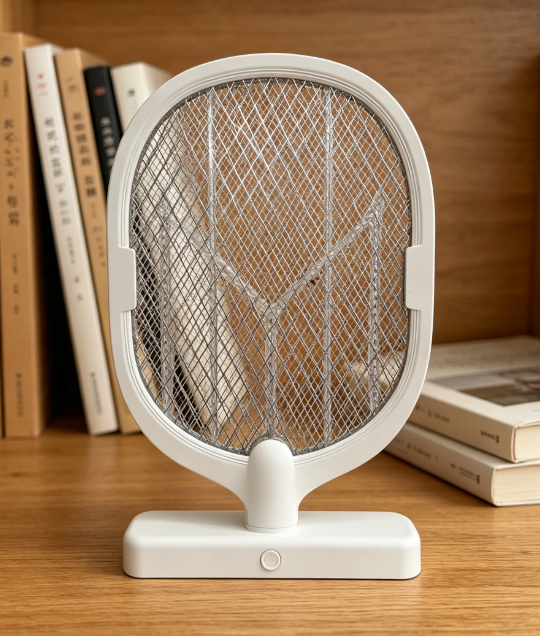
Warranty returns are the silent margin killer in the mosquito control category. A distributor who buys a swatter at $1.80 FOB and retails it at $9.90 can absorb a 1% return rate without noticing — but at 5%, the combined cost of replacement units, reverse logistics, and refund processing erases most of the line's profit.
Common mosquito swatter killer lamp failure modes wholesale spec guide

Digital bathroom scales rank as the second-highest-volume consumer weighing product category, only behind kitchen scales, with distinct market and product characteristics that set them apart from other scale types in importers’ product portfolios.
Digital bathroom body fat-bia-scale wholesale buyers guide