
Why Is Killing Pests Considered Immoral in Some Countries
2026-04-28
Why Is Killing Pests Considered Immoral in Some Countries?
When we see cockroaches at home, ants in the corner, or locusts eating crops in the fields, our first reaction is often to "eliminate them" — after all, these creatures we define as "pests" seem to always invade our lives and damage our interests. But in many countries around the world, killing pests has been given strong ethical controversy and even regarded as immoral by some people. Behind this difference lies different views on life and ecology, which also makes us rethink: how should humans coexist with these "uninvited guests"?
I. The Definition of "Pests": Never Absolute
First, we need to clarify a core question: what is a "pest"? In fact, this concept itself carries a strong anthropocentric color — the so-called "harm" is essentially an infringement on human interests: those that eat crops are pests, those that spread diseases are pests, and those that damage the home environment are pests. But in the natural ecosystem, no creature is "redundant"; their existence has an irreplaceable value, which is the core logic why many countries oppose killing pests arbitrarily.
In countries that attach great importance to ecological protection, such as Germany and Japan, people are more inclined to believe that "there are no absolute pests in nature, only species misunderstood by humans". For example, the 28-spotted ladybug, which we regard as an agricultural pest, in the ecological concept of these countries, its behavior of eating plants is part of the natural cycle, which can control the over-reproduction of plants and make room for other species; even the abhorred cockroach can decompose organic matter in nature and promote material circulation. This respect for the symbiotic relationship of all things in nature makes "killing pests" no longer a matter of course, but rather regarded as a damage to ecological balance, thus being given an immoral attribute.
II. The Core of the Controversy: The Game Between the Right to Life and Human Interests
The ethical controversy over killing pests is essentially a game between "the right to life of organisms" and "human interests", and how different countries balance this game determines their moral judgment on "killing pests".
In some European and American countries, with the deepening of understanding of insects, people have begun to re-examine the value of insect life. Recent scientific research has found that although insects do not have as complex brain structures as mammals, they have nociceptors (pain receptors) that can respond to harmful stimuli by avoiding them. Some social insects (such as bees) even show simple emotions and consciousness — bees will endure slight high temperatures to obtain sugar, and fruit flies will show a state similar to human depression. These evidences make people no longer ignore their "pain perception". Therefore, in these countries, killing pests arbitrarily is regarded as a lack of respect for life, just like hurting other animals at will, and is labeled as "immoral".
More representative is the medieval European tradition of "animal trials", which has indirectly influenced the view of life in some modern countries. At that time, farmers would sue these "pests" in church courts because weevils destroyed vineyards and mice spoiled crops. The courts would hire lawyers for them, follow formal trial procedures, and often give a verdict of "exile" rather than "execution" — for example, in the 1545 weevil case in the town of St. Julie in the Alps, the judge finally ordered the villagers to provide an exclusive piece of land for the weevils, which not only protected the vineyards but also respected the right to life of the weevils. The concept behind this tradition is: humans are not the only masters of the earth; other creatures also have the right to life, and arbitrarily depriving them of their lives is unjust and immoral.
But on the other side of the controversy, some "pests" do pose a serious threat to human survival. For example, Anopheles mosquitoes that spread malaria cause nearly 400,000 deaths worldwide every year; the larvae of tsetse flies feed on the living tissues of warm-blooded animals, bringing great pain to livestock and humans. A study by Texas A&M University pointed out that in such cases, selectively eliminating some harmful species is "occasionally acceptable", but it must go through strict ethical considerations and cannot be done arbitrarily. This attitude of "treating special cases specially" also makes the controversy more complex.
III. Practices in Different Countries: The Transformation from "Elimination" to "Coexistence"
Based on different moral perceptions, many countries have jumped out of the "either kill or be killed" thinking and explored more ethical pest control methods, which also indirectly confirms why "killing pests arbitrarily" is regarded as immoral in these countries.
Germany is a pioneer in ecological agriculture. Its farms no longer regard pests as "enemies", but control pest populations through natural methods such as planting diverse crops and introducing natural enemies of pests. For example, intercropping clover in wheat fields to attract ladybugs to prey on aphids, and using physical barriers and pheromone traps instead of chemical pesticides. Data show that the pesticide usage of German ecological farms is only 10% of that of traditional farms, which not only protects crops but also maintains ecological balance. This "coexistence" model is regarded as a more moral and sustainable choice.
Japan's forest protection better reflects the tolerance for "harmful organisms". In Japan, even pine wood nematodes that damage pine trees are not completely eliminated. The forestry department achieves population regulation through natural forces by planting nematode-resistant tree species and protecting natural enemies such as woodpeckers. This concept of "minimum intervention" has effectively protected the biodiversity of forests and conveyed the moral concept of "respecting every kind of life".
In contrast, behaviors such as over-reliance on chemical pesticides and arbitrary killing of pests are not only regarded as immoral in these countries but also subject to legal and social public opinion constraints. For example, the United States once caused bald eagles and other birds of prey to be on the verge of extinction due to the large-scale use of DDT insecticides. This behavior that damages the ecology was later severely banned, making people deeply realize that arbitrarily killing pests is not only a lack of respect for life but also a harm to the living environment of human beings themselves.
IV. Conclusion: The Boundary of Morality Is Awe of Nature
There is never a unified answer to whether killing pests is immoral — it depends on a country's cultural traditions, ecological concepts, and understanding of life. In those countries that regard "equality of life" and "ecological symbiosis" as core values, killing pests arbitrarily is considered immoral because it is a damage to the natural order and a neglect of other lives; but in the face of serious threats to human survival from pests, moderately and selectively controlling pest populations is endowed with certain ethical rationality.
In fact, the essence of this controversy is human reflection on their own positioning: are we the masters of nature, or part of nature? When we jump out of the "human interests first" thinking, we will find that the so-called "pests" are just partners sharing the earth with us. Killing them may solve temporary troubles, but respecting their lives and finding ways to coexist is a more long-term choice — this is not only the moral pursuit of some countries but also an ecological proposition that all human beings need to think about. After all, awe for every kind of life is ultimately protection for human beings themselves.
Can You Replace the Tube of a Mosquito Lamp Yourself
Where to Buy an Electric Mosquito Swatter
Related Article

If you’re struggling with annoying mosquitoes, flies, and other flying pests indoors and outdoors, upgrading from traditional manual tools to anElectric Mosquito Swatter is the most efficient solution. Many homeowners and renters search where to buy fly swatter online to find durable, safe, and high-performance electric models that deliver instant pest control.
Where to Buy Fly Swatter
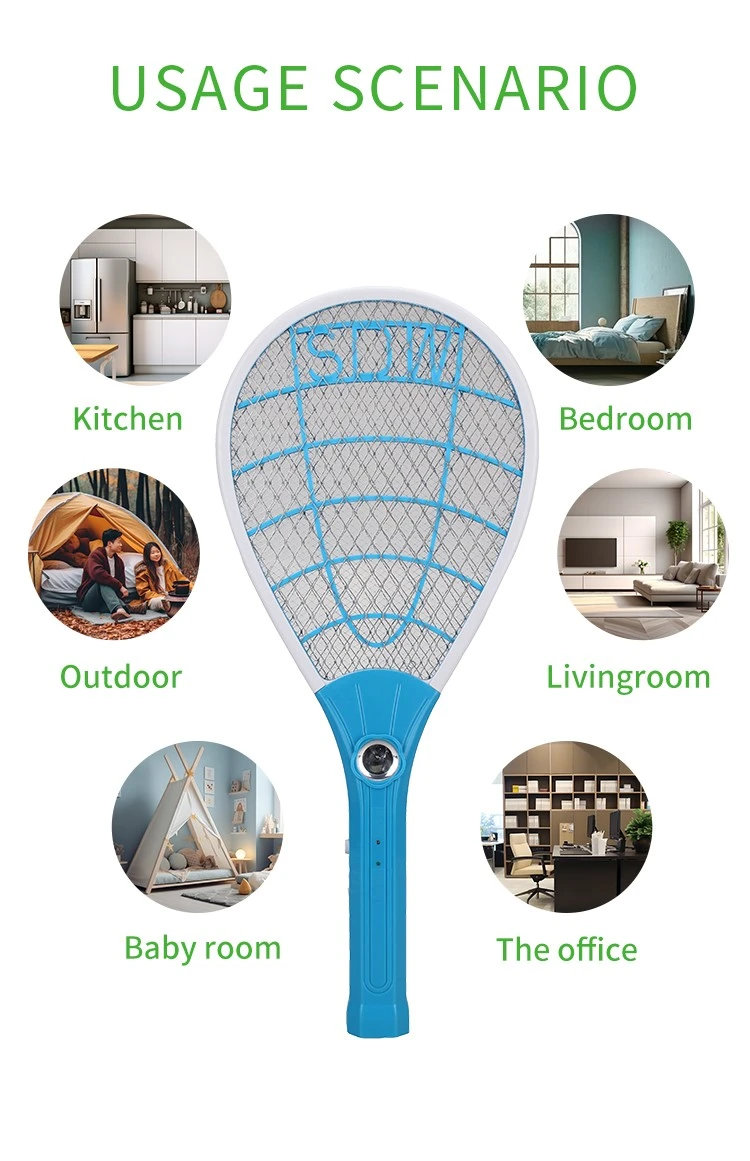
Most importers of electric mosquito swatters obsess over the first order: samples requested, factories vetted, a pre-shipment inspection booked. Then the reorder arrives eight months later and something is off. The grid feels softer. The charge port is a slightly different shade of black. The carton thickness dropped from 350 gsm to 300 gsm. Nothing is catastrophic — but the product no longer matches what your retail customers approved, and quietly, your return rate starts climbing.
How to Keep Mosquito Swatter Quality Consistent Across Repeat Orders

Warranty returns are the silent margin killer in the mosquito control category. A distributor who buys a swatter at $1.80 FOB and retails it at $9.90 can absorb a 1% return rate without noticing — but at 5%, the combined cost of replacement units, reverse logistics, and refund processing erases most of the line's profit.
Common mosquito swatter killer lamp failure modes wholesale spec guide

Digital bathroom scales rank as the second-highest-volume consumer weighing product category, only behind kitchen scales, with distinct market and product characteristics that set them apart from other scale types in importers’ product portfolios.
Digital bathroom body fat-bia-scale wholesale buyers guide