
Why Is There a Huge Price Gap in Electric Mosquito Swatters
2025-09-04
Why Is There a Huge Price Gap in Electric Mosquito Swatters?
As mosquito season arrives, electric mosquito swatters become a "must-have tool" for many households. However, a quick look on shopping apps reveals a surprising price disparity—some cost just a few yuan, while others are over 100 yuan, or even more. For a tool that essentially "zaps mosquitoes," why is the price difference nearly 10 times?

I. Core Components: Cheap Models "Cut Corners," Premium Models "Prioritize Quality"
The performance of an electric mosquito swatter depends entirely on its internal components, and the material and craftsmanship of these components are the first factors that widen the price gap.
1. Power Grid: Plastic Mesh vs. Metal Mesh, a World of Difference in Durability
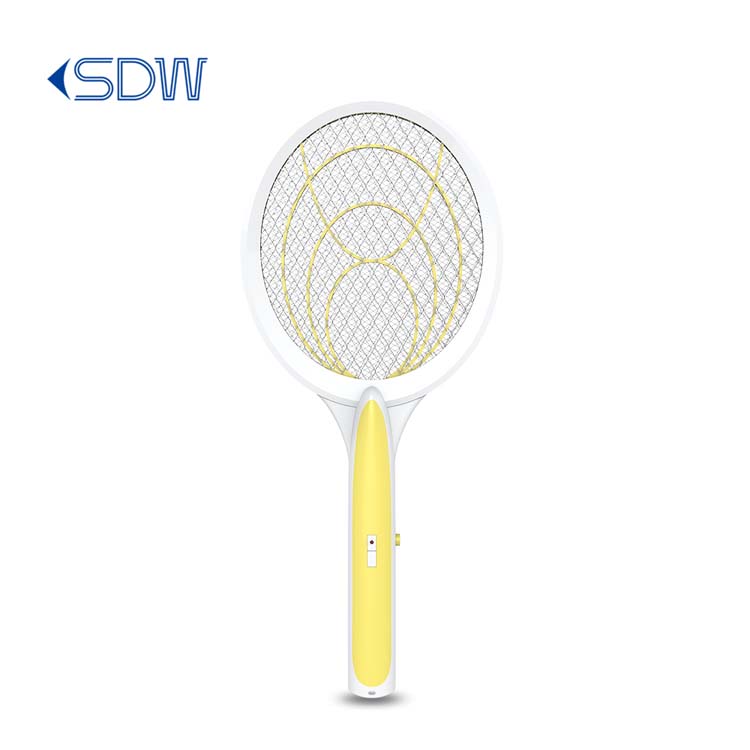
To cut costs, low-priced electric mosquito swatters mostly use a power grid made of a combination of plastic grids and thin iron wires. This type of grid not only has low hardness (easily deforming or breaking after long-term use) but also features poor conductivity stability in the thin iron wires—leading to situations where "mosquitoes touch it but aren’t electrocuted." Worse still, the iron wires may rust and cause electric leakage.
In contrast, electric mosquito swatters priced above 100 yuan generally adopt 304 stainless steel or titanium alloy power grids. These grids have higher density and better toughness, so they won’t easily break even if accidentally dropped. More importantly, metal grids have uniform conductivity, ensuring higher mosquito-killing efficiency. Their surfaces also undergo anti-rust treatment, giving them a service life of 3–5 years—2–3 times that of low-priced models.
2. Battery: Inferior Lithium Batteries vs. Branded Cells, a Stark Contrast in Battery Life and Safety
The battery life and safety of an electric mosquito swatter depend on its battery. Low-priced models often use unknown inferior lithium batteries with severe capacity mislabeling—for example, a battery labeled "2000mAh" may actually only have a capacity of 1000mAh, meaning it can’t last more than 3 days on a single charge. Additionally, these batteries lack overcharge and over-discharge protection, which may cause bulging, leakage, or even fires with long-term use.
Premium electric mosquito swatters, however, use branded battery cells with accurate capacity labeling. A single charge usually lasts 1–2 weeks. At the same time, the battery pack is equipped with multiple protection chips to prevent overcharging, short circuits, and other issues, ensuring greater safety.
3. Voltage Boost Module: Simple Circuits vs. Stable Chips, Half the Difference in Mosquito-Killing Efficiency
Electric mosquito swatters "electrocute mosquitoes" by using a voltage boost module to convert low-voltage DC power into high-voltage electricity. Low-priced models use simple discrete component circuits for their voltage boost modules, resulting in unstable voltage—sometimes the voltage is too high, damaging the power grid, and sometimes it’s too low to kill mosquitoes. Moreover, such circuits consume a lot of energy, accelerating battery loss.
Premium electric mosquito swatters adopt integrated voltage boost chips, which control voltage more precisely. This not only guarantees mosquito-killing effectiveness but also avoids excessive power consumption. Some high-end models even add an "intelligent voltage regulation" function that automatically adjusts the voltage based on the size of the mosquito, preventing unnecessary power waste.
II. Safety Standards: Low-Priced Models "Barely Meet the Minimum," Premium Models "Fully Comply"
Electric mosquito swatters are "electrified tools," so safety standards are the bottom line. However, many people don’t know that low-priced electric mosquito swatters may not even meet the most basic safety standards.
1. Anti-Electric Shock Design: Low-Priced Models "Lack Protection," Premium Models "Have Multiple Safeguards"
National standards require electric mosquito swatters to have a "double insulation" design for their power grids to prevent accidental electric shock from human contact. To save costs, low-priced models often omit this step—either the gap in the outer protective grid of the power grid is too large (allowing children’s fingers to reach in) or the insulation layer is made of inferior plastic (which cracks after long-term use, exposing the electrified power grid).
Premium electric mosquito swatters strictly comply with GB 4706.1-2005 "Safety of Household and Similar Electrical Appliances – Part 1: General Requirements". They not only have a high-density protective grid on the outer layer of the power grid but also add an "anti-misoperation switch" on the handle—only when both the power button and the trigger button are pressed will the power grid be energized, fundamentally avoiding the risk of accidental contact.
2. Quality Control: Low-Priced Models "Skip Inspections," Premium Models "Test Every Unit"
Most low-priced electric mosquito swatters come from small workshops with almost no quality control during production—parts are assembled randomly, and no power-on tests are conducted before leaving the factory. This means the probability of buying a "defective product" (e.g., a non-functional power grid or a faulty switch) is very high.
In contrast, branded premium electric mosquito swatters have a complete quality control system. Every step—from parts storage to finished product delivery—is inspected, including testing the stability of the power grid voltage, the charge-discharge performance of the battery, and the safety of the insulation layer. This ensures every product meets the standards.
III. Functional Design: Basic Models "Just Work," Upgraded Models "Are More Convenient"
Beyond core performance and safety, differences in functional design also affect prices. Low-priced electric mosquito swatters only meet the basic need of "swatting mosquitoes," while premium models add more user-friendly designs to enhance the user experience.
1. Battery Life and Charging: Low-Priced Models "Slow Charging + Short Battery Life," Premium Models "Fast Charging + Long Battery Life"
Most low-priced electric mosquito swatters use a "Micro-USB charging port" with a charging power of only 5W. It takes 4–6 hours to fully charge, and the battery life is only 3–5 days—requiring frequent charging in summer, which is very inconvenient.
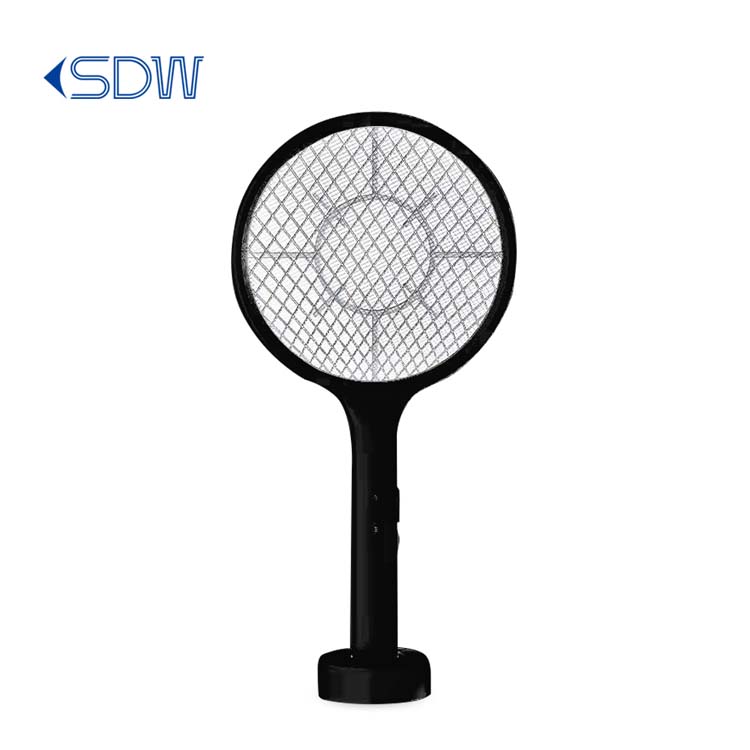
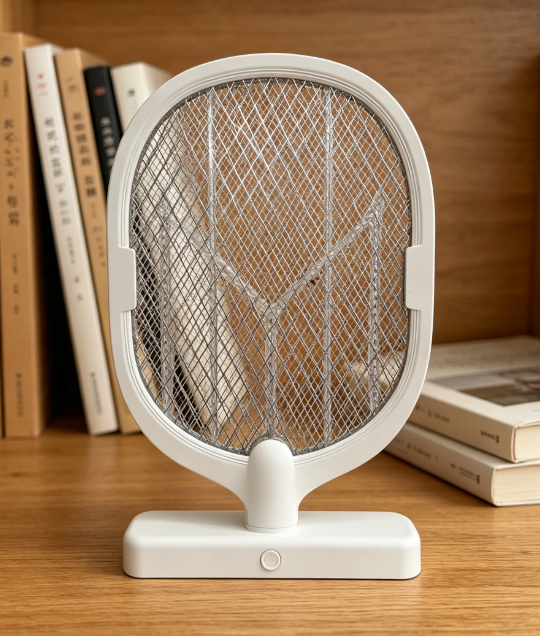
Premium electric mosquito swatters are upgraded to a "Type-C charging port" that supports 10W fast charging, allowing a full charge in 1.5–2 hours. Some high-end models even support "wireless charging"—you can simply place the swatter on the charging base to replenish power, making it more convenient. At the same time, they have larger battery capacities (usually over 2500mAh), with a battery life of 1–2 weeks.
2. Additional Functions: Low-Priced Models "No Extras," Premium Models "Multi-Functional Integration"
Many premium electric mosquito swatters now integrate a "mosquito killer lamp + electric swatter" dual function: during the day, you can use it as an electric swatter to actively kill mosquitoes; at night, you can turn on the mosquito killer lamp mode, which attracts mosquitoes with ultraviolet light and then zaps them—no need to wave the swatter manually, making it more hassle-free.
Some models also add an "LED lighting" function, which can be used as a night light when getting up at night, serving two purposes. There are even designs with a "mosquito trap box"—killed mosquitoes fall into the box, eliminating the need for manual cleaning and making it more hygienic.
IV. Brand and After-Sales Service: Low-Priced Models "No After-Sales Support," Premium Models "Have Guarantees"
Finally, brand and after-sales service are also important factors contributing to the price gap. Most low-priced electric mosquito swatters are "three-no products" (no brand, no manufacturer, no quality certificate) with no after-sales support—if they break, you can only throw them away, and there’s no way to get them repaired.
In contrast, premium electric mosquito swatters are backed by mature brands, ensuring not only more reliable product quality but also better after-sales service. For example, many brands offer services like "1-year replacement, 3-year warranty." If problems arise during use, you can get free repairs or replacements. Customer service is also more responsive, ensuring quick solutions to problems.
Conclusion: Should You Choose Cheap or Expensive? It Depends on Your Needs, But Don’t Neglect Safety
In fact, there’s no "absolute good or bad" for electric mosquito swatters—only "whether they suit you." Based on your needs, it’s recommended to choose branded models priced between 20–50 yuan. They offer more durable materials, safer designs, and more convenient functions, helping you avoid safety hazards and the trouble of frequent replacements. After all, safety comes first.
How to Reduce Mosquito Control Costs
Electric Mosquito Swatters is Low-Cost Eco-Friendly Living
Related Article

If you’re struggling with annoying mosquitoes, flies, and other flying pests indoors and outdoors, upgrading from traditional manual tools to anElectric Mosquito Swatter is the most efficient solution. Many homeowners and renters search where to buy fly swatter online to find durable, safe, and high-performance electric models that deliver instant pest control.
Where to Buy Fly Swatter
Most importers of electric mosquito swatters obsess over the first order: samples requested, factories vetted, a pre-shipment inspection booked. Then the reorder arrives eight months later and something is off. The grid feels softer. The charge port is a slightly different shade of black. The carton thickness dropped from 350 gsm to 300 gsm. Nothing is catastrophic — but the product no longer matches what your retail customers approved, and quietly, your return rate starts climbing.
How to Keep Mosquito Swatter Quality Consistent Across Repeat Orders
Warranty returns are the silent margin killer in the mosquito control category. A distributor who buys a swatter at $1.80 FOB and retails it at $9.90 can absorb a 1% return rate without noticing — but at 5%, the combined cost of replacement units, reverse logistics, and refund processing erases most of the line's profit.
Common mosquito swatter killer lamp failure modes wholesale spec guide

Digital bathroom scales rank as the second-highest-volume consumer weighing product category, only behind kitchen scales, with distinct market and product characteristics that set them apart from other scale types in importers’ product portfolios.
Digital bathroom body fat-bia-scale wholesale buyers guide