
Why Most Flies Die From Electric Swatters
2025-10-26
Why Most Flies Die From Electric Swatters?
If you’ve ever stood in your kitchen, swatting at a persistent fly with an electric swatter, you’ve probably wondered: Can that tiny insect actually survive the zap? It’s a common question, and the answer isn’t as simple as a yes or no—instead, it depends on how electric swatters work, a fly’s biology, and even a little bit of luck. Let’s break down the science to find out if flies can cheat death when faced with that buzzing, electrified mesh.

To understand if a fly can survive, we need to start with the tool itself. Electric swatters (also called bug zappers or electric fly swatters) don’t just “hit” flies like a traditional swatter—they use high-voltage electricity to disable or kill insects. Here’s the basics:
- Inside the swatter, a small battery (usually AA or AAA) powers a circuit that boosts the voltage from a few volts to 2,000–4,000 volts (or even higher in some models).
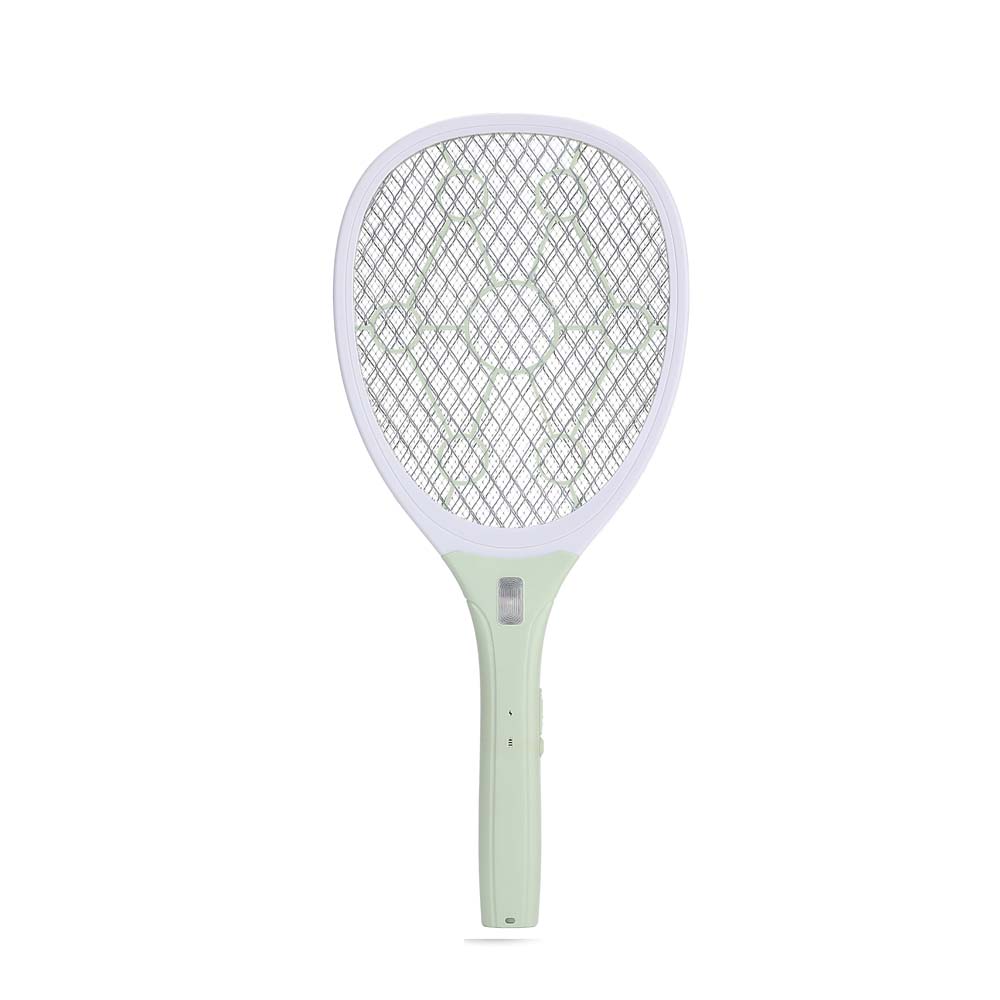
- The swatter’s mesh has two layers of metal grids: one with a positive charge and one with a negative charge. When a fly flies between them, it bridges the gap, creating a short circuit.
- This short circuit releases a sudden burst of electric current—enough to damage the fly’s body in two key ways:
-
- Electrical burns: The current heats the fly’s exoskeleton and internal tissues, similar to how a small spark burns paper.
-
- Neurological damage: The shock disrupts the fly’s nervous system, stopping its ability to move, breathe, or function.
For most insects, this one-two punch is fatal. But flies are tiny, fast, and built differently than humans—so could some survive?
When Might a Fly Survive the Zap?
While electric swatters are designed to kill, there are a few rare scenarios where a fly might escape (or at least not die immediately):
1. The Fly Only Touches One Grid
Electricity needs a “path” to flow—if a fly lands on just one grid (not both), no current passes through its body. This happens more often than you think: a fly might dart near the swatter, brush a single wire, and fly away unharmed. Since the mesh gaps are small (usually 1–2mm), it’s easy for a tiny fly (which is often 3–6mm long) to only make contact with one side.
2. The Swatter’s Battery Is Low
A weak battery means less voltage—and less current when the fly is zapped. If the battery is almost dead, the shock might only stun the fly instead of killing it. You might see the fly fall to the ground, twitch for a few seconds, then take off again once it recovers.
3. The Fly Is “Lucky” (or Has a Thick Exoskeleton)
Flies have a hard outer shell (exoskeleton) that can act as a weak insulator. In rare cases, the exoskeleton might block just enough of the current to keep the fly alive—especially if the zap is brief (e.g., the fly pulls away quickly). Larger flies (like houseflies) might have a slight advantage here over smaller ones (like fruit flies), but it’s still a long shot.
Why Most Flies Don’t Survive
Let’s be clear: survival is the exception, not the rule. Here’s why electric swatters are still one of the most effective ways to kill flies:
- Speed: Flies are fast (they can fly up to 5 mph), but electric swatters act instantly. The moment the fly bridges the two grids, the current flows—faster than the fly can react to escape.
- Targeted Damage: The high voltage doesn’t just “shock” the fly—it destroys its cells. Even if a fly isn’t killed on the spot, the internal burns or nerve damage will usually kill it within hours.
- Design: Modern electric swatters have a double mesh (an outer grid and an inner grid) to prevent humans from getting shocked—but this design also makes it harder for flies to avoid touching both grids.
Tips to Make Sure Flies Don’t Survive
If you want to maximize your electric swatter’s effectiveness, try these tricks:
- Keep the Battery Charged: A full battery means maximum voltage. Replace or recharge batteries regularly—weak batteries are the #1 reason flies escape.
- Swing Smoothly (Don’t Rush): Rushing can cause you to miss, or only graze the fly. Instead, move the swatter slowly toward the fly, then snap it shut quickly—this increases the chance the fly will be caught between both grids.
- Target Resting Flies: Flies spend most of their time resting (on walls, countertops, or food). Swatting a stationary fly is easier than chasing a flying one—you’ll have a better chance of getting a direct hit.
Final Verdict: Can a Fly Survive an Electric Swatter?
Yes—but only in very specific, rare cases. If the fly only touches one grid, the battery is low, or it gets a lucky break with its exoskeleton, it might escape. But for the vast majority of flies, the electric swatter’s high voltage and instant current will mean a quick end.
Next time you pick up your electric swatter, rest easy: you’re not just chasing flies—you’re using science to make sure most of them don’t survive the zap.
Common Types of Electric Fly Swatter Ports
A Concise Guide to MOQ
Related Article

If you’re struggling with annoying mosquitoes, flies, and other flying pests indoors and outdoors, upgrading from traditional manual tools to anElectric Mosquito Swatter is the most efficient solution. Many homeowners and renters search where to buy fly swatter online to find durable, safe, and high-performance electric models that deliver instant pest control.
Where to Buy Fly Swatter
Most importers of electric mosquito swatters obsess over the first order: samples requested, factories vetted, a pre-shipment inspection booked. Then the reorder arrives eight months later and something is off. The grid feels softer. The charge port is a slightly different shade of black. The carton thickness dropped from 350 gsm to 300 gsm. Nothing is catastrophic — but the product no longer matches what your retail customers approved, and quietly, your return rate starts climbing.
How to Keep Mosquito Swatter Quality Consistent Across Repeat Orders
Warranty returns are the silent margin killer in the mosquito control category. A distributor who buys a swatter at $1.80 FOB and retails it at $9.90 can absorb a 1% return rate without noticing — but at 5%, the combined cost of replacement units, reverse logistics, and refund processing erases most of the line's profit.
Common mosquito swatter killer lamp failure modes wholesale spec guide

Digital bathroom scales rank as the second-highest-volume consumer weighing product category, only behind kitchen scales, with distinct market and product characteristics that set them apart from other scale types in importers’ product portfolios.
Digital bathroom body fat-bia-scale wholesale buyers guide