
Why Red Light Is a No-Go for Mosquito Traps
2025-09-14
Why Red Light Is a No-Go for Mosquito Traps: The Science Behind Light Choices
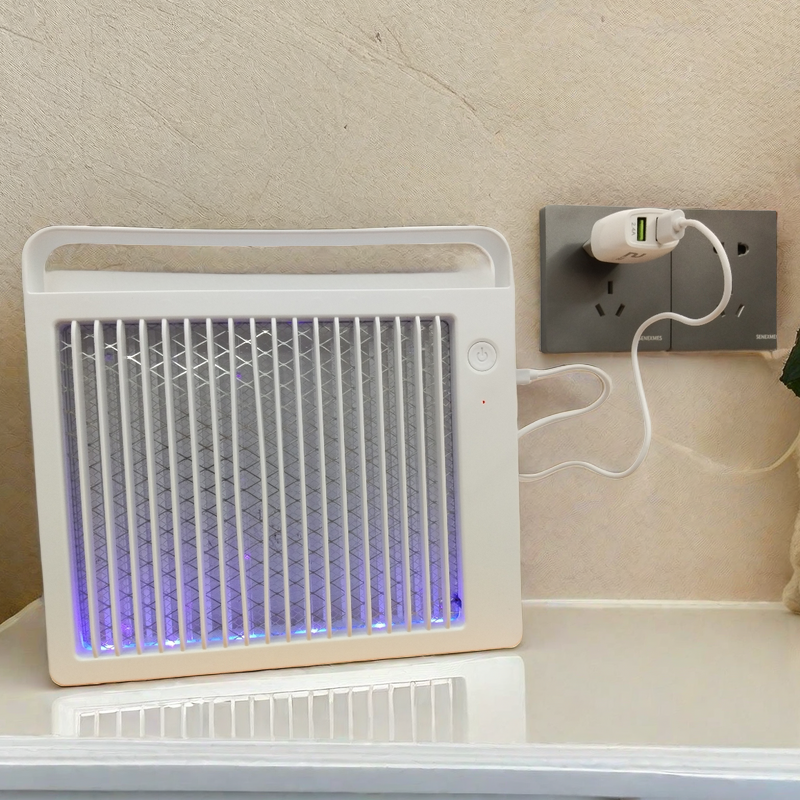
When choosing mosquito control devices, many people wonder: most mosquito traps on the market use blue-purple light, ultraviolet light, or similar, but red-light models are rarely seen. Does red light simply have no appeal to mosquitoes? To answer this question, we need to analyze from three perspectives—mosquitoes' visual systems, their behavioral habits, and the design logic of mosquito traps. Only then can we understand that "not using red light" is not a random choice, but an inevitable one based on scientific principles.
I. First, Understand: What Light Can Mosquitoes "See"?
To determine what kind of light a mosquito trap should use, we first need to clarify mosquitoes' visual range—they perceive light wavelengths entirely differently from humans. The visible light wavelength range for humans is 400-760 nanometers (nm), while mosquitoes' visual systems are more "shortwave-sensitive," primarily capable of detecting light between 300-650 nm. Their responses to light of different wavelengths also vary significantly:
- Sensitive Range: Blue-Purple Light (400-480 nm) and Ultraviolet Light (300-400 nm)
A mosquito's compound eyes consist of thousands of ommatidia, and the "rod cells" within them—specialized for light detection—are particularly sensitive to shortwave light. This is because mosquitoes are most active during dusk and nighttime in natural environments. During these periods, the ambient light (such as the afterglow of sunset or the ultraviolet component in moonlight) is dominated by blue-purple and ultraviolet light. Mosquitoes use this type of light to navigate and locate hosts (e.g., humans or animals). Therefore, blue-purple light and ultraviolet light act like "navigation signals" for mosquitoes, quickly luring them closer.
- Insensitive Range: Red Light (620-760 nm)
Red light falls into the "longwave" category, which happens to be on the "edge" of mosquitoes' visual perception. Experimental data shows that mosquitoes react extremely weakly to red light above 620 nm—bordering on "invisibility." When only red light is present in the environment, mosquitoes' flight paths are barely disrupted, and they do not actively move toward the red light source. Simply put, red light's "appeal" to mosquitoes is far weaker than that of blue-purple light, and even less than that of ordinary white light (which contains blue-purple components).
More importantly, when seeking hosts, mosquitoes rely not only on light but also on scents (e.g., carbon dioxide exhaled by humans, lactic acid in sweat) and heat. However, the core logic of a mosquito trap is "light-based luring and capture." If the light itself cannot attract mosquitoes, even with additional features, the trap will fail to work effectively—and this is the core reason red light is excluded.
II. The "Dual Disadvantages" of Red-Light Mosquito Traps: They Neither Attract Mosquitoes nor Suit Human Use
Even setting aside mosquitoes' visual traits, red light is unsuitable as a light source for mosquito traps from a practical usage perspective, due to two unavoidable issues:
1. Extremely Low "Capture Efficiency" for Mosquitoes
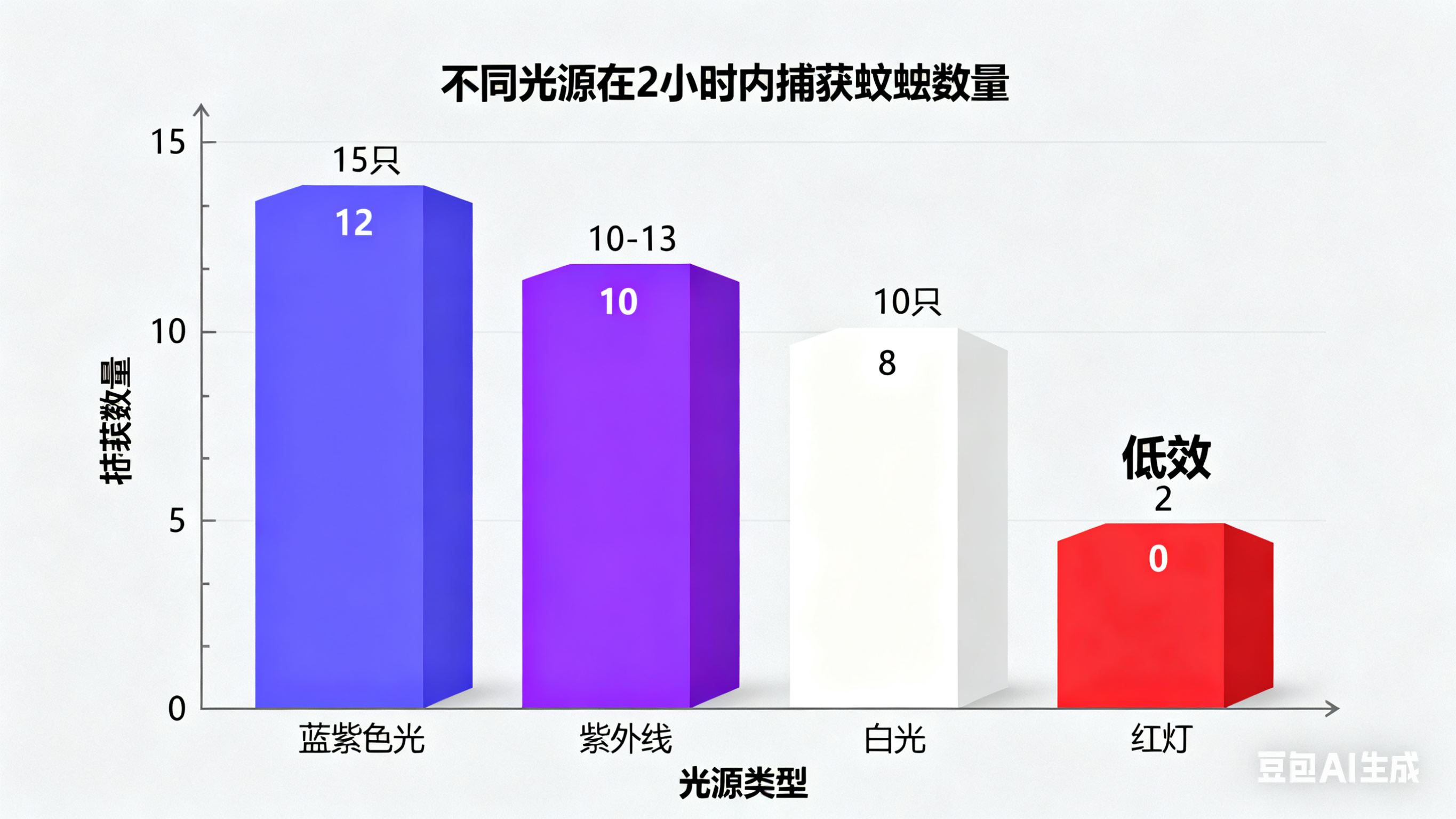
The core goal of a mosquito trap is to "efficiently attract and kill mosquitoes," yet red light's ability to lure mosquitoes is almost negligible. We can understand this through a comparative experiment: in the same enclosed environment (e.g., a 10-square-meter room) with the same number of mosquitoes (20 female Aedes mosquitoes, the most common blood-sucking species), the capture efficiency of different light sources was tested over 2 hours:
- Blue-purple light mosquito trap: 12-15 mosquitoes captured on average
- Ultraviolet light mosquito trap: 10-13 mosquitoes captured on average
- White light mosquito trap (with blue-purple components): 8-10 mosquitoes captured on average
- Red light mosquito trap: 0-2 mosquitoes captured on average
Clearly, the capture efficiency of red light is far lower than that of other light sources—even comparable to the "no-light control group" (relying solely on scent luring). If a mosquito trap uses red light, it essentially becomes a "decorative item" and fails to reduce the mosquito population.
2. Poor "User Experience" for Humans
Mosquito traps are mainly used in indoor spaces such as bedrooms and living rooms, especially at night—when people need a "light source that does not disrupt sleep." Unfortunately, red light's properties directly contradict this need:
- Strong Visual Disturbance: Red light is highly noticeable in darkness, and humans are very sensitive to it (e.g., red traffic lights instinctively draw attention at night). If a red-light mosquito trap is placed in a bedroom, the constant red glow throughout the night will irritate the eyes, interfere with melatonin secretion, and lead to difficulty falling asleep or lighter sleep—making the trap more of a hassle than a help.
- Conflict with "Nighttime Mosquito Control" Needs: Mosquito traps work best in "dark environments" (since other light sources can interfere with mosquitoes' ability to detect the trap's light). However, red light itself brightens the surroundings; even if mosquitoes could perceive it, they might be confused by the "mixed signal" of red light and other ambient light, further reducing capture efficiency.
In contrast, blue-purple light and ultraviolet light are more "human-friendly": while blue-purple light is visible in darkness, it is not as harsh as red light; ultraviolet light is even "invisible to humans." Some mosquito traps also feature "anti-leakage designs," making them barely noticeable during nighttime use—another key reason these light sources have become mainstream.
III. Myth Debunking: "Red Light Repels Mosquitoes" Is a Rumor—It’s Nothing Like "Killing Mosquitoes"
Some users may have heard the claim that "red light repels mosquitoes," and even mistakenly believe that "mosquito traps don’t use red light because it drives mosquitoes away." This confuses the concepts of "repelling mosquitoes" and "killing mosquitoes," and the idea of "red light repelling mosquitoes" itself lacks scientific basis.
The rumor of "red light repelling mosquitoes" stems from early studies showing that mosquitoes’ activity levels slightly decrease when only red light is present. However, this is not "repulsion by red light"; instead, red light fails to provide mosquitoes with "activity signals," causing them to enter a "low-activity state"—not active avoidance. More importantly, this "low activity" is temporary: once other attractants (e.g., human scent or heat) are present, mosquitoes will still actively bite, meaning red light does nothing to "repel" them.
The core function of a mosquito trap is to "actively lure and kill mosquitoes," which requires "attraction" rather than "calming mosquitoes." Since red light can neither attract nor repel mosquitoes, it naturally fails to meet the functional needs of a mosquito trap.
IV. Conclusion: The "Core Principles" for Choosing Light in Mosquito Traps
From the above analysis, we can clearly conclude that mosquito traps do not use red light, essentially due to the need to "scientifically match mosquitoes’ visual traits" and "balance human user experience." When choosing a mosquito trap, there’s no need to worry about "whether red-light models exist"; instead, focus on two key points:
- Light Type: Prioritize models with "blue-purple light (400-480 nm)" or "a combination of ultraviolet and blue-purple light," as these have the highest mosquito-luring efficiency;
- Application Scenario: For indoor use, choose "low-light-leakage" models (to avoid disrupting sleep); for outdoor use, select "high-power ultraviolet" models (to counteract interference from complex ambient light).
In short, the choice of light source for mosquito traps is never "based on preference," but on the biological traits of mosquitoes. Red light is excluded precisely because it neither aligns with mosquitoes’ visual needs nor suits human usage scenarios—it’s a "double mismatch."
Why Foreign Buyers Flock to the 138th Canton Fair
Do I Need to Turn My Bug Zapper on and Off Each Time I Use It
Related Article

If you’re struggling with annoying mosquitoes, flies, and other flying pests indoors and outdoors, upgrading from traditional manual tools to anElectric Mosquito Swatter is the most efficient solution. Many homeowners and renters search where to buy fly swatter online to find durable, safe, and high-performance electric models that deliver instant pest control.
Where to Buy Fly Swatter
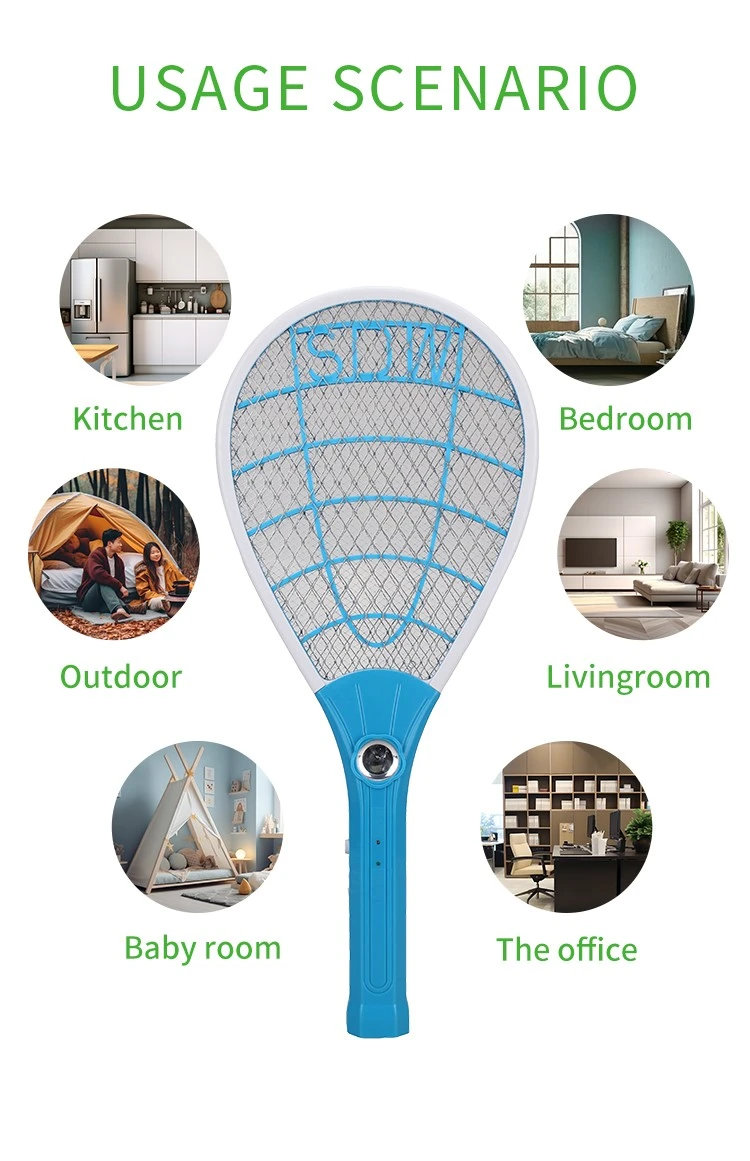
Most importers of electric mosquito swatters obsess over the first order: samples requested, factories vetted, a pre-shipment inspection booked. Then the reorder arrives eight months later and something is off. The grid feels softer. The charge port is a slightly different shade of black. The carton thickness dropped from 350 gsm to 300 gsm. Nothing is catastrophic — but the product no longer matches what your retail customers approved, and quietly, your return rate starts climbing.
How to Keep Mosquito Swatter Quality Consistent Across Repeat Orders
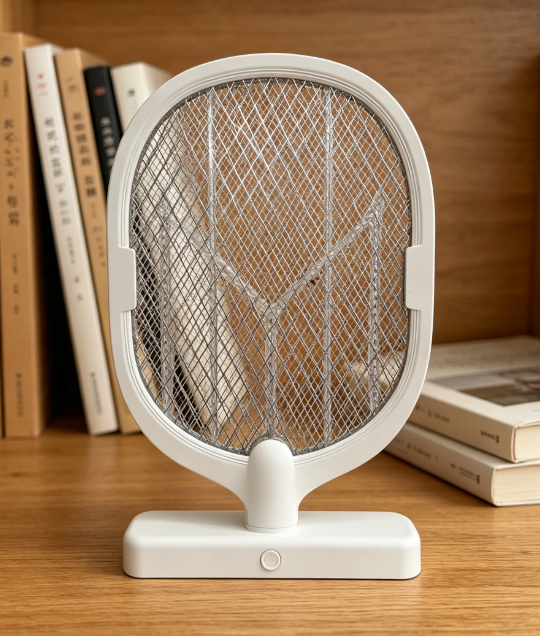
Warranty returns are the silent margin killer in the mosquito control category. A distributor who buys a swatter at $1.80 FOB and retails it at $9.90 can absorb a 1% return rate without noticing — but at 5%, the combined cost of replacement units, reverse logistics, and refund processing erases most of the line's profit.
Common mosquito swatter killer lamp failure modes wholesale spec guide

Digital bathroom scales rank as the second-highest-volume consumer weighing product category, only behind kitchen scales, with distinct market and product characteristics that set them apart from other scale types in importers’ product portfolios.
Digital bathroom body fat-bia-scale wholesale buyers guide