
Why USB Ports Stay Universal for Electronics
2025-11-10
Why USB Ports Stay Universal for Electronics? Key Perks
Nowadays, we are surrounded by more and more electronic devices—smartphones, tablets, headphones, power banks, printers... But have you noticed that almost all of them, whether it's a newly bought laptop, an old desktop computer, or even the central control panel of a car, rely on one common interface: the USB port. With technology evolving constantly, why has the USB port remained the "top-tier interface" in the industry? Today, let's talk about its core advantages, and after reading this, you'll understand why it has dominated the market for so many years.

1. "Plug-and-Play Universality": Solving the Pain Point of "Interface Chaos"
Before the popularization of USB ports, the interfaces of electronic devices were like a "blooming garden" of variety: cameras used Mini USB, early Android phones used Micro USB, printers used parallel ports, and external hard drives used serial ports... Back then, when going out with devices, you had to carry five or six different data cables in your bag. If you forgot one, the corresponding device would become useless. The emergence of the USB port put an end to this chaos—now, whether you're charging a smartphone, transferring data to headphones, connecting a USB flash drive, or using an external keyboard, a single USB cable can handle it all.
This universality has been taken to the next level with the popularization of USB Type-C ports: they are reversible (no more fumbling around trying to align the port) and compatible with a variety of devices such as smartphones, computers, and tablets. For example, a single USB-C data cable can fast-charge an Android phone, transfer files to a laptop, and even charge a Nintendo Switch, truly achieving "one cable for all" and greatly reducing the burden of carrying accessories.
2. "Fast Charging + High-Speed Transfer": Outperforming Traditional Interfaces in Efficiency
For users, "speed" has always been a core demand, and the evolution of USB ports has perfectly aligned with our usage habits. The transmission speed of the early USB 2.0 interface was about 480 Mbps, which was faster than serial ports but still took several minutes to transfer a 4GB movie. However, the current mainstream USB 3.2 interface can reach a maximum transmission speed of 20 Gbps—transferring the same 4GB movie takes only a dozen seconds. For people who often handle large files (such as designers and video editors), this represents a significant efficiency boost.
Charging speed is another major advantage of USB ports. The charging power of traditional Micro USB interfaces is mostly less than 10W, taking 2-3 hours to fully charge a smartphone. In contrast, USB-C interfaces that support PD (Power Delivery) fast charging can reach a power of 65W or even 120W. A smartphone can recover more than 60% of its battery in just half an hour, and a thin and light laptop can be fully charged in about an hour. This "fragmented charging" experience eliminates the anxiety of running out of battery.

3. "Unlimited Expansion": From Single Function to "All-Round Interface"
Many people think that USB ports can only be used for charging or data transfer, but in fact, their expansion capabilities are far beyond imagination. With a USB hub, a single USB port can be "transformed" into multiple interfaces: connecting an HDMI cable to an external monitor, a network cable for wired internet access, USB flash drives or external hard drives for simultaneous data reading, and even external sound cards or game controllers...
This expandability is particularly beneficial for laptop users. To prioritize portability, many thin and light laptops now only have 1-2 USB-C ports. However, with a USB hub, users can easily connect various peripherals to meet the needs of different scenarios such as work, entertainment, and content creation. For example, designers can connect a drawing tablet via a USB port, video bloggers can use an external microphone, and gamers can connect a mechanical keyboard—all supported by a single USB port, forming a complete "work and entertainment system."
4. "Low Cost + High Compatibility": A "Win-Win Choice" for Manufacturers and Users
From a manufacturer's perspective, USB interfaces have high technical maturity and low production costs. They are also compatible with old devices, eliminating the need to redesign entire production lines just to replace interfaces. For users, old data cables and peripherals (such as USB flash drives and keyboards with USB interfaces) don't need to be discarded when replacing devices. This not only saves money but also reduces electronic waste.
This "backward compatibility" makes USB interfaces a model of "transition interfaces." Although there are faster interfaces (such as Thunderbolt) available today, USB interfaces remain the mainstream. The reason is that they balance the needs of "old users with existing devices" and "new users with new demands," avoiding "compatibility gaps" caused by interface upgrades.
5. "Export-Friendly": Breaking Adaptation Barriers in the Global Market
For foreign trade enterprises that produce electronic accessories (such as data cables, chargers, and docking stations), USB ports are like a "key to unlocking the global market." Unlike some regional interfaces (such as Japan's Type-B interface and special charging interfaces in some European countries), USB interfaces follow a unified global standard. Whether exporting to North America, Europe, Southeast Asia, or Africa, products with USB ports do not require adjustments to interface specifications for different countries—they can directly adapt to local electronic devices.
This "universal adaptation" significantly reduces the export costs of foreign trade enterprises: no need to open separate molds for different markets, no extra applications for regional interface certifications, and fewer return disputes caused by "interface incompatibility." For example, a USB-C fast-charging cable produced by a Chinese factory can adapt to Apple devices in Europe and America, Android phones in Southeast Asia, and even in-car devices in the Middle East—truly realizing "one product for the global market."
In addition, USB interfaces have high international recognition and comply with the electronic device safety standards of most countries (such as the EU's CE certification and the US's FCC certification), eliminating the need for enterprises to invest a lot of energy in meeting different regional compliance requirements. For buyers, choosing USB interface products also means "reducing inventory pressure"—there's no need to stock accessories with different interfaces separately, further enhancing the competitiveness of USB products in the global market.
Conclusion: The "Secret to the Longevity" of USB Ports
In fact, the reason why USB ports have remained popular for so many years is that their evolution has always centered on "user needs." From solving "interface chaos" to improving "speed and efficiency," expanding "functional boundaries," and even helping foreign trade enterprises break global market barriers, every upgrade has precisely addressed the pain points of different groups. Although more advanced interfaces have emerged, USB ports still remain the "standard configuration" for electronic devices, thanks to their "universality, convenience, high compatibility, and export-friendliness."Next time you charge your phone with a USB cable, connect a peripheral via a USB port, or see USB accessories from around the world on store shelves, you might realize: this seemingly ordinary interface embodies the most precious trait of technological products—turning complex technology into an experience that everyone can easily use and that enables enterprises to expand globally with ease.
Is It Dangerous If a Pregnant Woman Gets Shocked by an Electric Mosquito Swatter
Why Do Electric Fly Swatters Zap Mosquitoes But Not Humans
Related Article

If you’re struggling with annoying mosquitoes, flies, and other flying pests indoors and outdoors, upgrading from traditional manual tools to anElectric Mosquito Swatter is the most efficient solution. Many homeowners and renters search where to buy fly swatter online to find durable, safe, and high-performance electric models that deliver instant pest control.
Where to Buy Fly Swatter

Most importers of electric mosquito swatters obsess over the first order: samples requested, factories vetted, a pre-shipment inspection booked. Then the reorder arrives eight months later and something is off. The grid feels softer. The charge port is a slightly different shade of black. The carton thickness dropped from 350 gsm to 300 gsm. Nothing is catastrophic — but the product no longer matches what your retail customers approved, and quietly, your return rate starts climbing.
How to Keep Mosquito Swatter Quality Consistent Across Repeat Orders
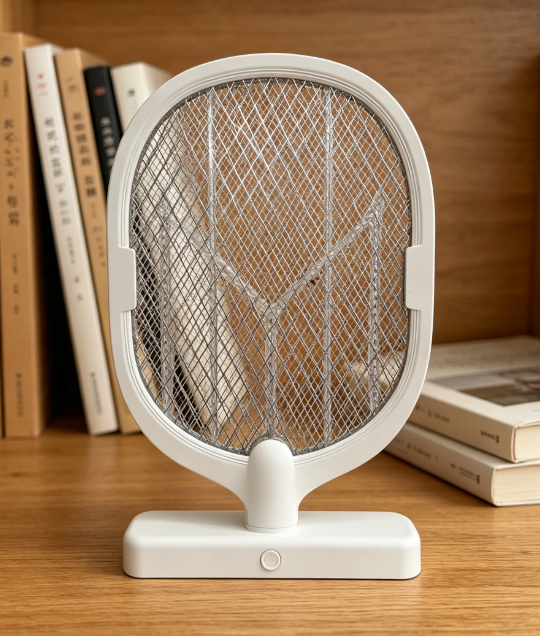
Warranty returns are the silent margin killer in the mosquito control category. A distributor who buys a swatter at $1.80 FOB and retails it at $9.90 can absorb a 1% return rate without noticing — but at 5%, the combined cost of replacement units, reverse logistics, and refund processing erases most of the line's profit.
Common mosquito swatter killer lamp failure modes wholesale spec guide

Digital bathroom scales rank as the second-highest-volume consumer weighing product category, only behind kitchen scales, with distinct market and product characteristics that set them apart from other scale types in importers’ product portfolios.
Digital bathroom body fat-bia-scale wholesale buyers guide