
How to Verify a Chinese Small Appliance Factory
2026-08-14
How to Verify a Chinese Small Appliance Factory: 10 Questions to Ask Before You Order
Sourcing small appliances from China is a mainstream cost-effective solution for global importers, retailers and brand owners. Chinese manufacturers dominate the global small appliance market with mature industrial chains, flexible customization and competitive pricing. However, sourcing risks persist widely, including fraudulent trading companies posing as direct factories, fake certifications, unstable product quality and unguaranteed after-sales service. For cross-border buyers, verify Chinese factory credentials and complete standard China supplier verification before bulk orders is essential for supply chain security. Mastering professional factory audit questions helps screen qualified suppliers, avoid economic losses and build long-term stable partnerships.
1. Core Importance of Pre-Order Supplier Verification
Why Supplier Verification Is the #1 Risk Management Step for Importers
Most cross-border sourcing failures result from inadequate pre-order due diligence. Many buyers overly focus on unit price and delivery speed while ignoring factory qualification verification, leading to common risks: batch product defects triggering customer returns, invalid certifications causing customs detention, delayed deliveries disrupting sales, and cooperation with unqualified middlemen with no production capacity.
Supplier verification is the top priority of import risk management for three key reasons. First, it eliminates information asymmetry, restoring the real operating status of suppliers that often overstate their strengths online. Second, it ensures product compliance with regional electrical safety standards, avoiding unqualified products from entering mainstream markets. Third, it supports long-term cooperation: formal direct factories have standardized production, complete QC systems and sustainable R&D capabilities, far more reliable than temporary trading company suppliers.
Bulk small appliance orders involve high inventory, logistics and time costs. Thorough factory verification effectively avoids repeated trial-and-error losses and screens suppliers matching your customization, quality and delivery needs. The following 10 core factory audit questions cover all key dimensions of China supplier verification, from qualification and capacity to after-sales service.
2. 10 Essential Factory Audit Questions to Verify Chinese Small Appliance Suppliers
Question 1: Can you share your business license and export license?
Official legal documents are the first threshold to verify Chinese factory authenticity and distinguish manufacturers from trading companies. Unqualified middlemen usually lack formal production qualifications and forge or borrow others’ documents to defraud buyers.
When checking business licenses, focus on three key points: business scope, registration years and registered capital. Qualified factories must include “electrical product manufacturing” and “processing” in their scope; pure sales and trade scopes indicate trading companies. Factories with over 5 years of operation have more stable production systems and lower operational risks.
Valid export licenses are mandatory for smooth global customs clearance. Buyers must verify the license’s validity, product coverage and authenticity via official enterprise platforms. Formal factories actively provide complete document copies, while middlemen often make excuses to delay or refuse document provision.
Question 2: What certifications does your factory hold?
As safety-related electrical products, small appliances require strict regional market access certifications, which are core proof of product compliance in China supplier verification. Buyers must verify the authenticity and validity of all factory and product certifications before ordering.
Reliable factories hold ISO 9001 quality management and ISO 14001 environmental management system certifications. For product-level certifications, different regions have mandatory standards: CE/RoHS/REACH for Europe, FCC/UL/ETL for North America, TISI for Thailand and ANATEL for Brazil.
Avoid expired, forged or transferred certifications. Always check certification numbers, validity periods and applicable models via official institutions. Complete certifications prevent customs detention, product recalls and fines, ensuring smooth market sales.
Question 3: Can we do a live video tour of your production line?
Paper documents can be forged, but real production scenes cannot. Live uncut video tours are the most effective real-time factory audit method for overseas buyers unable to conduct on-site inspections, directly reflecting factory scale, equipment and management level.
The video tour must cover raw material warehouses, production workshops, QC workshops and finished product warehouses. Professional automated production and aging test equipment, standardized operation processes and tidy workshops mark qualified factories. Simple manual tools and chaotic environments indicate unqualified small workshops.
In addition, you can randomly ask the anchor to shoot the production status of orders in progress, the inventory of raw materials and finished products, and the daily working status of workers. Trading companies without factories can only shoot other people’s workshops or use pre-recorded videos to fake. If the supplier refuses live video inspection on the grounds of “factory confidentiality”, “inconvenient shooting” and other reasons, it is a typical red flag, and buyers need to terminate the cooperation intention in time.
Question 4: Who are your current export clients? (References)
The factory’s existing export customer resources are the most intuitive proof of its product strength and service capability. Excellent small appliance factories will have stable long-term cooperative customers in multiple global markets, while new or unqualified suppliers often lack high-quality customer cases. Asking for export client references is an important part of verify Chinese factory comprehensive strength.
You can ask suppliers to provide customer regions, cooperative brands, long-term cooperation cycle, and order scale. Focus on checking whether their cooperative customers cover the target markets you are about to enter. For example, if your main market is Europe and the United States, suppliers with stable European and American customer groups prove that their products meet local certification and quality standards, and have rich experience in serving Western buyers. In addition, you can ask for customer evaluation feedback, cooperative case videos, and batch order delivery records.
It should be reminded that suppliers may provide false customer cases. You can verify the authenticity of the cases by asking for order packing lists, customs declaration forms, and customer signed delivery documents. Regular factories are willing to show their mature customer system and market layout, and can even provide customer recommendation letters (after customer authorization). On the contrary, suppliers who cannot provide effective customer references or only have scattered small-batch orders have unstable production and service capabilities, and cannot support buyers’ large-scale market development.
Question 5: What's your monthly production capacity and current utilization?
Production capacity determines whether the factory can meet your order demand and ensure on-time delivery, which is a key index that cannot be ignored in China supplier verification. Many buyers encounter delivery delays and order backlogs after placing orders, mostly because they do not verify the factory’s real monthly production capacity and capacity utilization rate in advance.
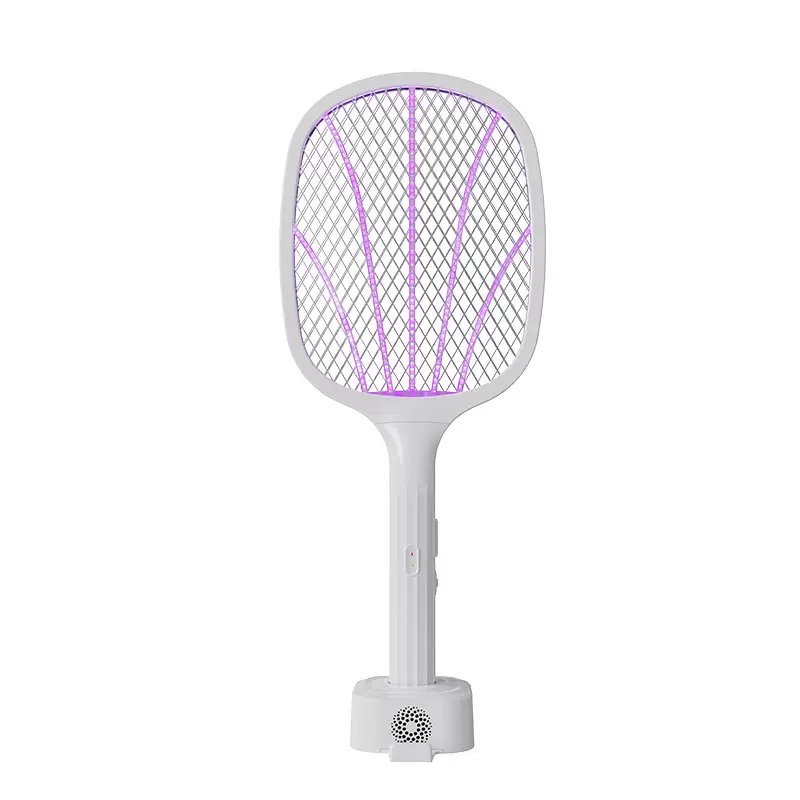
First, ask the supplier to provide the specific monthly production capacity of the target small appliance products, including the maximum daily output, monthly maximum output, and adjustable production cycle. Different small appliances have different production processes and capacity standards. For example, electric mosquito swatters, as mature mass-produced small appliances, have higher automated production capacity, while customized special small appliances have relatively lower capacity. Then, focus on the current capacity utilization rate. If the utilization rate is too high (more than 90%), it means the factory’s production line is fully loaded, and new orders are prone to delayed delivery; if the utilization rate is too low (less than 30%), it may reflect unstable factory orders and insufficient market competitiveness.
In addition, you need to confirm the factory’s production flexibility: whether it can expand production lines in a short time to meet your peak order demand, whether there is a standby production equipment and worker team, and how to arrange the production sequence of new orders. Formal factories will provide detailed capacity data, production shift arrangements, and order scheduling plans, and can reasonably promise delivery cycles according to order quantity. Unqualified suppliers often exaggerate production capacity blindly, resulting in subsequent delivery delays and breach of contract.
Question 6: Show us your quality control process from raw material to shipment
Product quality is the core of cross-border sourcing, and a complete whole-process quality control system is the fundamental guarantee for stable product quality. Most small appliance quality problems (such as circuit failure, poor safety performance, and short service life) come from missing quality control links. Therefore, auditing the full-link QC process is a key core of factory audit questions.
A standardized small appliance factory’s quality control system covers four core links: incoming material inspection, in-process inspection, finished product inspection, and pre-shipment inspection. First, raw material incoming inspection: the factory needs to inspect all raw materials such as circuit boards, batteries, plastic shells, and wires, check the supplier qualification of raw materials, material safety reports, and batch sampling test to eliminate unqualified raw materials. Second, in-process quality control: arrange special QC personnel to conduct random inspections and full inspections of key processes such as product assembly, welding, and debugging, record process data in real time, and correct irregular operations in time.
Third, finished product inspection: after the product assembly is completed, conduct full performance tests, safety tests, aging tests, and appearance inspections to screen out defective products. For electrical small appliances, aging test is particularly important, which can effectively detect potential circuit faults. Fourth, pre-shipment inspection: before packaging and shipment, conduct random inspection of finished products again in accordance with international AQL sampling standards, check product packaging, labeling, and accessory completeness, and ensure that all shipped products meet customer standards.
You can ask suppliers to provide QC process documents, inspection records of recent orders, defective product handling plans, and quality problem improvement reports. Regular factories have complete written QC systems and standardized inspection records, while informal factories often have no fixed quality control processes, relying entirely on workers’ experience, resulting in uneven product quality.
Question 7: What's your R&D team size and new product development cycle?
In the fiercely competitive global small appliance market, product iteration speed and innovation capability determine the long-term competitiveness of buyers’ brands. A factory with independent R&D capabilities can support buyers’ product differentiation customization and market iteration, while assembly factories without R&D capabilities can only provide homogeneous conventional products. Therefore, R&D strength verification is an important part of in-depth verify Chinese factory.
Ask suppliers to introduce the scale of the R&D team, including the number of professional engineers, product designers, and structural developers, as well as the team’s industry experience and successful development cases. Excellent small appliance factories have independent R&D laboratories and professional technical teams, and can independently complete product structure design, circuit optimization, appearance innovation, and functional upgrading. Then, confirm the new product development cycle: understand the time required from customer demand confirmation, prototype design, sample production, test verification to mass production.
For conventional product upgrades, the mature R&D team can complete iteration within 1-2 weeks; for customized new product development, the cycle is usually 3-4 weeks. In addition, you can ask about the factory’s annual new product launch quantity, patent certifications (utility model patents, appearance patents), and product innovation achievements. Factories with strong R&D strength can continuously provide customers with new product solutions, help buyers seize market opportunities, and avoid homogeneous price competition. On the contrary, factories without R&D teams can only copy existing products, with low product competitiveness and no customized innovation capability.
Question 8: Can you handle our custom packaging and labeling requirements?
Cross-border small appliance sales have strict personalized requirements for packaging and labeling, which are not only related to brand image building, but also directly affect overseas customs clearance and shelf sales. Many importers have encountered customs detention or market sales failures due to non-compliant packaging and labeling. Therefore, verifying the factory’s customization capability of packaging and labeling is an indispensable link in China supplier verification.
First, confirm whether the factory supports personalized customized services, including custom brand logo printing, color box packaging design, gift box customization, carton outer packaging customization, etc. Then, focus on labeling compliance capabilities: different countries have mandatory labeling standards for imported small appliances, including product parameter labels, safety warning labels, certification mark labels, origin labels, and language labels (English, Korean, Italian, Portuguese, Thai and other multilingual labels).
You need to ask suppliers whether they are familiar with the labeling rules of your target sales market, whether they can provide one-stop design, printing and pasting services, and whether they can adjust packaging and labeling solutions according to customer brand requirements and local regulatory standards. In addition, verify the factory’s packaging customization process and quality control standards to avoid problems such as blurred printing, wrong label information, and irregular packaging. Formal export factories have rich experience in cross-border packaging customization, can accurately meet various personalized requirements, and ensure that packaging and labeling fully comply with international standards.
Question 9: What payment terms do you accept?
Payment terms are not only related to capital safety, but also an important reflection of the factory’s operating strength and credibility. Regular formal factories have standardized and flexible international payment methods, while fraudulent suppliers or small informal factories often have single and risky payment terms. Verifying payment terms is a key risk prevention step in factory audit.
Mature export small appliance factories usually support mainstream international payment methods, including T/T (Telegraphic Transfer), L/C (Letter of Credit), and Western Union. The most common and safe term is 30% deposit + 70% balance payment before shipment, which balances the interests of both buyers and sellers: the deposit ensures the factory’s production arrangement, and the balance payment before shipment ensures that buyers can inspect the goods and confirm the quality before payment, avoiding full payment fraud risks. Some large regular factories also support flexible terms such as 20% deposit for long-term cooperative customers.
It is necessary to be alert to suppliers who require 100% full payment in advance or only support private transfer methods such as Alipay and WeChat. Such payment terms have extremely high risks, and once the other party defaults, it is difficult for buyers to recover losses. In addition, confirm whether the factory can provide formal export invoices and complete foreign exchange settlement procedures, to ensure that the payment process is compliant and legal. Standard payment terms and formal financial processes are important symbols of reliable regular factories.
Question 10: What's your after-sales and warranty policy?
Perfect after-sales and warranty policy is the core guarantee of long-term cooperative stability, and also an important standard to distinguish high-quality suppliers from inferior ones. Small appliances are electrical products with certain after-sales failure rates. Factories without perfect after-sales system will bring huge after-sales pressure and customer loss risks to importers. Therefore, verifying after-sales service policy is the final key link of verify Chinese factory.
First, ask for the official product warranty period. Regular small appliance factories usually provide a 12-month global warranty service. Within the warranty period, if the product has non-human quality faults such as circuit failure and functional damage, the factory provides free repair or replacement services. Then, confirm the after-sales processing process: how to feedback quality problems, how to verify fault causes, the cycle of replacement and repair, and the solution for batch defective products.
In addition, understand the factory’s after-sales compensation mechanism for batch quality problems and delivery errors. Excellent factories will take the initiative to bear the losses caused by factory-side quality problems, such as free replacement of defective products, compensation for logistics costs, and order discount compensation. On the contrary, unreliable suppliers often have no clear warranty terms, evade after-sales responsibilities after product problems, and refuse to compensate for losses, bringing huge after-sales troubles to buyers. Formal export factories have professional after-sales teams and complete service processes, which can effectively solve various after-sales problems for global customers.
Red Flags Summary: Signs a Supplier Is Actually a Trading Company
In the process of China supplier verification and factory audit, many buyers are easily confused by trading companies disguised as direct factories, resulting in high procurement costs and no quality guarantee. Based on the above 10 verification questions, we summarize the typical red flags of fake factory suppliers, helping buyers quickly identify risks:
1. Unqualified core documents: The business scope of the business license only includes sales and trade, without production and manufacturing qualifications; unable to provide valid export licenses and factory certification documents, or the documents are inconsistent with the company name.
2. Refuse real-time factory inspection: Make various excuses to refuse live video tour and on-site factory inspection, or only provide pre-recorded fixed videos and stolen factory pictures, unable to shoot real-time production status at will.
3. Exaggerated and unstable capacity data: The monthly production capacity is inconsistent with the actual workshop scale, the capacity utilization rate data is vague, and there is no clear production line and worker allocation plan, unable to support large-scale orders.
4. No independent R&D and QC system: Unable to provide complete quality control process documents and inspection records; no professional R&D team and new product development cases, only able to sell homogeneous conventional products.
5. Vague customer cases: Unable to provide effective overseas customer reference cases and order records, the cooperative customer information is vague, and no long-term stable large customer resources.
6. Unreasonable payment and after-sales terms: Require full advance payment, refuse standardized international payment terms; no clear product warranty policy, evade after-sales responsibilities, and have no formal after-sales service process.
7. Unprofessional customization capability: Unfamiliar with international packaging and labeling standards of various countries, unable to provide personalized customized services, and the product compliance is poor.
Our Professional Factory Strength & Cooperation Invitation
If you are looking for a reliable, experienced, and compliant Chinese small appliance factory focusing on electric mosquito swatters, our factory is your ideal cooperative partner. We are a professional electric mosquito swatter manufacturer with more than ten years of production and export experience. Adhering to strict production standards and quality control systems, our products have been successfully sold to the United States, South Korea, Italy, Brazil, Thailand and many other countries and regions around the world, accumulating rich cross-border export experience and market operation experience.
We are fully familiar with the international certification standards and market access rules of various countries, and our products have complete CE, FCC, RoHS and other mainstream international certifications, which can fully meet the customs clearance and sales requirements of global markets. While ensuring conventional product quality, we support comprehensive personalized services, including product structural customization, functional upgrading, brand logo printing, personalized packaging and labeling customization, to help global buyers create differentiated brand products and expand market share.
With standardized production workshops, complete production and testing equipment, a professional R&D team and QC team, we have stable monthly production capacity and perfect pre-sales and after-sales service systems, which can ensure on-time delivery and stable product quality for every order. We sincerely welcome global importers, brand merchants and distributors to consult us online at any time for product samples, factory audit materials, customization solutions and quotation details. We also warmly welcome you to visit our factory for on-site inspection and negotiation to establish long-term win-win cooperative relationships.
Mosquito Killer Lamp Wholesale
Mosquito Swatter Packaging Design Guide
Related Article

If you’re struggling with annoying mosquitoes, flies, and other flying pests indoors and outdoors, upgrading from traditional manual tools to anElectric Mosquito Swatter is the most efficient solution. Many homeowners and renters search where to buy fly swatter online to find durable, safe, and high-performance electric models that deliver instant pest control.
Where to Buy Fly Swatter

Most importers of electric mosquito swatters obsess over the first order: samples requested, factories vetted, a pre-shipment inspection booked. Then the reorder arrives eight months later and something is off. The grid feels softer. The charge port is a slightly different shade of black. The carton thickness dropped from 350 gsm to 300 gsm. Nothing is catastrophic — but the product no longer matches what your retail customers approved, and quietly, your return rate starts climbing.
How to Keep Mosquito Swatter Quality Consistent Across Repeat Orders

Warranty returns are the silent margin killer in the mosquito control category. A distributor who buys a swatter at $1.80 FOB and retails it at $9.90 can absorb a 1% return rate without noticing — but at 5%, the combined cost of replacement units, reverse logistics, and refund processing erases most of the line's profit.
Common mosquito swatter killer lamp failure modes wholesale spec guide

Digital bathroom scales rank as the second-highest-volume consumer weighing product category, only behind kitchen scales, with distinct market and product characteristics that set them apart from other scale types in importers’ product portfolios.
Digital bathroom body fat-bia-scale wholesale buyers guide