
The Impact of the Current US-Iran International Situation on Export-Oriented Enterprises
2026-03-01
The Impact of the Current U.S.-Iran International Situation on Export-Oriented Enterprises
Currently, the confrontation between the United States and Iran has escalated from high-pressure games to actual military conflicts. The joint U.S.-Israeli air strikes on Iran and Iran's strong counterattacks have led to a sharp surge in geopolitical risks in the Middle East. This situation is not limited to a regional conflict, but spreads like ripples to various global fields such as energy, logistics, finance, and supply chains, exerting an all-round and multi-level impact on export-oriented enterprises. It brings not only short-term cost and logistics pressures, but also long-term market and compliance challenges. Although the impact varies among enterprises in different industries and with different market layouts, all are generally facing great operational uncertainty.

I. Short-Term Core Impacts: Skyrocketing Costs and Logistics Paralysis, Squeezing Enterprise Profit Margins
The most direct impact of the U.S.-Iran conflict on export-oriented enterprises is concentrated in the two core areas of costs and logistics, and the impact is "explosive", directly compressing enterprise profits and even leading to losses on some low-margin orders.
(I) Skyrocketing Energy and Raw Material Costs, Significant Industrial Chain Transmission Effect
Iran is a key participant in the global energy market, with crude oil reserves accounting for 9% of the world's total. Its daily output in 2025 was about 3.3 million barrels, accounting for 3.3% of global supply. More importantly, it guards the "lifeline" of global energy - the Strait of Hormuz. The strait transports about 20 million barrels of oil every day, accounting for 20% of global oil trade, and also undertakes 30% of global seaborne oil and 20% of liquefied natural gas (LNG) trade. The current conflict has drastically increased the risk of navigation in the strait. Even without an actual blockade, market panic has driven international oil prices to rise sharply. As of February 27, 2026, the price of Brent crude oil futures has risen to $72.48 per barrel. Institutions predict that if transportation through the strait is blocked, Brent oil prices may quickly rush to $80 per barrel, and even soar to $120-150 per barrel in extreme scenarios.
The rise in oil prices has directly triggered a chain reaction: on the one hand, the logistics fuel costs of export-oriented enterprises have increased significantly, especially for enterprises highly dependent on maritime transportation, where fuel surcharges have become a heavy burden; on the other hand, the rise in oil prices has transmitted downward along the industrial chain, pushing up the prices of various raw materials. Iran is not only an oil-producing country, but also the world's second-largest methanol producer, with production capacity accounting for 9.2% of the world's total. China relies on Iran for about 60% of its methanol imports. If supply is interrupted, methanol prices will rise structurally, which in turn will push up the costs of downstream products such as plastics and chemical fertilizers. In addition, Iran is also an exporter of important industrial raw materials such as indium, tungsten, and neon gas. The restriction of its supply will further push up the prices of semiconductors and other products, affecting export industries such as electronics and automobiles, leading to a comprehensive increase in enterprise production costs, continuous compression of gross profit margins, and even direct losses on some low-margin orders.
According to institutional estimates, for every $10 increase in oil prices, the global inflation rate may rise by about 0.5 percentage points. This inflationary pressure will further transmit to the entire production and circulation links, and the production costs and operating costs of export-oriented enterprises will rise simultaneously, with profit margins continuing to shrink.

(II) Logistics Obstacles and Skyrocketing Costs, Surging Risk of Delivery Default
The Persian Gulf and Red Sea routes are major trade arteries connecting Europe and Asia, carrying a large amount of global import and export cargo transportation. The U.S.-Iran conflict directly threatens the safety of these two routes, leading to a triple dilemma in the logistics link: "extended voyage, soaring freight rates, and surging insurance premiums". To avoid the navigation risk of the Strait of Hormuz, cargo ships are forced to detour around the Cape of Good Hope in Africa, resulting in an extension of the Europe-Asia route voyage by about 15-20 days, a freight rate increase of more than 250%, and a surge in war insurance rates by 300%-500%. The daily rental of very large crude carriers (VLCCs) on the Middle East to China route has nearly quadrupled compared with the beginning of the year, setting a new high since April 2020.
The impact of logistics difficulties on export-oriented enterprises is specifically reflected in three aspects: first, the logistics costs have increased significantly, and the freight bill of a cargo ship has doubled, directly eroding enterprise profits; second, the delivery cycle has been greatly prolonged, and the original short-term order delivery cycle may be extended by 2-3 months, leading to enterprises being unable to perform contracts on time and facing the risk of customer order cancellation and claims. Especially for products with high timeliness requirements such as fresh food and high-value-added products, there may be problems such as cargo deterioration and order invalidation; third, the logistics uncertainty has increased, with frequent route chaos, port detention and container detention. Enterprises are difficult to accurately predict the arrival time of goods, unable to reasonably plan production and inventory, and further exacerbate operational pressure.
II. Medium-Term Impacts: Market Pattern Restructuring and Demand Contraction, Enterprises Facing Differentiation in Operations
With the continuous escalation of the U.S.-Iran conflict, the global trade logic has shifted from "pursuing the lowest cost" to "ensuring basic safety". Market demand and trade patterns have undergone structural changes. Export-oriented enterprises are facing dual challenges of market contraction and layout adjustment, and the differentiation within the industry has intensified.
(I) Differentiation of Target Market Demand, Partial Market Restrictions Directly
The impact of the U.S.-Iran conflict on different regional markets is significantly different, showing a "growing differentiation" characteristic:
1. Middle East and Iran market: Directly stagnant. The escalation of U.S. sanctions against Iran, coupled with the security risks brought by the conflict, has basically reduced export-oriented enterprises' orders to Iran to zero. Even if there was a previous cooperation foundation, it is impossible to continue to perform contracts due to sanction red lines and payment obstacles; other countries in the Middle East have successively reduced import demand due to the turbulent situation and rising risk aversion, especially the purchase willingness for non-essential goods has dropped significantly, involving many export fields such as home appliances, textiles, and consumer goods, which has the most direct impact on enterprises deeply rooted in the Middle East market.
2. European and American markets: Superposition of demand contraction and cost pressure. Europe is highly dependent on Middle Eastern energy. The U.S.-Iran conflict has pushed up energy prices, further exacerbating the pressure of inflation and economic recession in Europe, and the consumer market has continued to shrink. Export-oriented enterprises' mid-to-high-end orders and non-essential goods orders may be significantly reduced; the North American market, as the core market for some export-oriented enterprises, has been hit by both declining order volume and gross profit margins due to U.S. inflation pressure and weak consumption. At the same time, the fluctuation of the U.S. dollar exchange rate has intensified, further increasing the settlement risk of enterprises.
3. Other markets: Alternative demand and increased competition. Some enterprises have tried to shift to markets less affected by the conflict, such as Southeast Asia and Latin America, but these markets have limited capacity, and a large number of similar export-oriented enterprises have poured in, leading to increased market competition. Enterprises may be forced to reduce quotations, further compressing profit margins; at the same time, some countries have begun to promote "localized production" to reduce dependence on imported products to ensure supply chain security, which also brings new challenges to export-oriented enterprises.
(II) Supply Chain Restructuring, Enterprises Facing "Chain Breakage" and Alternative Cost Pressure
The U.S.-Iran conflict has made global enterprises realize the importance of supply chain security. Export-oriented enterprises are facing an urgent need for supply chain restructuring, and at the same time bear the pressure of rising alternative costs. On the one hand, if an enterprise's upstream raw materials and components are dependent on supply from Iran or the Middle East, it may face the risk of "chain breakage" and need to urgently find alternative supply sources. Finding alternative suppliers not only takes time, but also may face problems such as differences in raw material quality and rising procurement costs. For example, after facing sanctions pressure, India began to turn to Russia, China and other countries to find alternative sources of Iranian methanol, pushing up the procurement costs of related raw materials; on the other hand, export-oriented enterprises need to adjust their supply chain layout, shifting from a "single supply chain" to a "diversified supply chain". By arranging suppliers and overseas warehouses in different regions, they can reduce geopolitical risks, but this requires enterprises to invest a lot of funds and manpower. For small and medium-sized export-oriented enterprises, it is difficult, and they may face the problem of tight capital chains.
III. Long-Term Challenges: Compliance Risks and Rule Changes, Rising Thresholds for Enterprise Operations
The U.S.-Iran conflict not only brings short-term cost and logistics pressures, but also will have a long-term impact on global trade rules and compliance requirements. Export-oriented enterprises are facing significantly increased compliance risks and further raised operational thresholds.

(I) Intensified U.S. "Long-Arm Jurisdiction" and Stricter Compliance Reviews
U.S. sanctions against Iran are "comprehensive and refined", and extend to global related enterprises through "long-arm jurisdiction". Any supply chain link or transaction behavior directly or indirectly related to Iran may trigger U.S. sanction red lines, leading to serious consequences such as enterprise account freezes, cargo seizures, and restricted market access. Export-oriented enterprises need to comprehensively investigate whether upstream and downstream associated parties are on the U.S. sanctions list, sort out compliance risk points in transaction processes, and avoid violations due to negligence; at the same time, they need to strictly abide by U.S. export control regulations. For the export of sensitive technologies and products, relevant licenses need to be handled in advance, and compliance costs have increased significantly. Especially for small and medium-sized export-oriented enterprises, which lack professional compliance teams, it is difficult to meet complex compliance requirements and face higher risks of violations.
(II) Changes in the Trade Settlement System and Intensified Exchange Rate Risks
The U.S.-Iran conflict has strengthened the determination of some countries to reduce their dependence on the U.S. dollar. The demonstration effect of RMB settlement for Iranian oil has expanded, and countries such as Saudi Arabia have also begun to use RMB to settle part of their oil exports. The traditional "oil-dollar" binding mechanism has been loosened, and the global trade settlement system has undergone diversified changes. For export-oriented enterprises, this is both an opportunity and a challenge: on the one hand, RMB settlement can avoid the risks brought by U.S. dollar exchange rate fluctuations, reduce currency conversion fees, and improve enterprise settlement efficiency; on the other hand, the diversification of settlement currencies has also increased the difficulty of enterprise exchange rate management. Enterprises need to cope with the exchange rate fluctuations of multiple currencies. If there are no effective exchange rate hedging tools, they may face exchange rate losses. Especially for small and medium-sized export-oriented enterprises, it is difficult to bear the cost of exchange rate hedging, and exchange rate risk has become an important hidden danger in long-term operations.
(III) Restructuring of the Industry Competition Pattern and Increased Pressure on Enterprise Transformation
In the long run, the cost pressure and compliance pressure brought by the U.S.-Iran conflict will accelerate the reshuffling of the export industry. Enterprises with weak competitiveness may be eliminated, while enterprises with strong supply chain resilience, strong compliance capabilities, and diversified market layouts will gain more development opportunities. Export-oriented enterprises need to take the initiative to transform and enhance their core competitiveness: on the one hand, they need to increase R&D investment, optimize product structure, and improve product added value to get rid of dependence on low-cost competition and cope with the pressure brought by rising costs; on the other hand, they need to accelerate the diversification of market layout, reduce dependence on a single market, and build a resilient supply chain to improve the supply chain's anti-risk capabilities; in addition, they need to strengthen compliance management and establish a professional compliance team to cope with complex international sanctions and trade rules. All these put higher requirements on enterprises' funds, technology, and talents, and the transformation pressure has increased significantly.
IV. Differences in the Impact on Different Types of Export-Oriented Enterprises
The impact of the U.S.-Iran conflict on export-oriented enterprises is not equal. Enterprises in different industries, with different scales, and different market layouts have significantly different degrees of impact:
1. By industry: Export-oriented enterprises with high energy consumption and dependence on Middle Eastern raw materials (such as chemicals, plastics, steel, auto parts, etc.) are the most affected, facing both skyrocketing raw material costs and the risk of supply chain breakage; export-oriented enterprises with high dependence on maritime transportation (such as furniture, home appliances, textiles, etc.) are the second, mainly facing logistics costs and delivery risks; while industries such as new energy and high-end manufacturing may gain certain development opportunities due to global energy structure adjustment and alternative demand driven by geopolitical risks. For example, photovoltaic enterprises may benefit from the accelerated construction of large-scale photovoltaic bases in the Middle East, and export demand may increase.
2. By scale: Large export-oriented enterprises have advantages in funds and resources, and can cope with risks by adjusting logistics routes, arranging diversified supply chains, and using financial tools to hedge risks, with strong anti-risk capabilities; while small and medium-sized export-oriented enterprises have weak capital strength, a single supply chain, and insufficient compliance capabilities, making it difficult to cope with multiple pressures such as skyrocketing costs, logistics obstacles, and compliance reviews, facing the risk of order loss and capital chain breakage, and the survival pressure has increased significantly.
3. By market layout: Export-oriented enterprises deeply rooted in the Middle East, Iran, Europe and the United States are the most affected; while enterprises mainly facing markets less affected by the conflict, such as Southeast Asia and Latin America, are relatively less affected, but need to cope with the pressure of increased market competition; enterprises with a global layout and diversified supply chains are less affected by the situation in a single region and have stronger anti-risk capabilities.
V. Conclusion
The geopolitical storm triggered by the escalation of the current U.S.-Iran conflict has an all-round and multi-level impact on export-oriented enterprises. The short-term core is skyrocketing costs and logistics paralysis, the medium-term is market contraction and supply chain restructuring, and the long-term is compliance risks and transformation pressure. For export-oriented enterprises, this situation is not only a severe challenge, but also an opportunity to optimize the layout and enhance core competitiveness. Enterprises need to take the initiative to respond: in the short term, focus on logistics adjustment, cost locking, and compliance investigation to avoid immediate risks; in the medium term, accelerate the diversification of supply chains and the optimization of market layout to reduce dependence on a single region; in the long term, strengthen compliance management and product innovation to improve anti-risk capabilities, so as to stabilize the business position in the turbulent international situation and achieve sustainable development.
2026 Industrial Electric Mosquito Swatter Selection Guide
Grand Opening
Related Article

If you’re struggling with annoying mosquitoes, flies, and other flying pests indoors and outdoors, upgrading from traditional manual tools to anElectric Mosquito Swatter is the most efficient solution. Many homeowners and renters search where to buy fly swatter online to find durable, safe, and high-performance electric models that deliver instant pest control.
Where to Buy Fly Swatter
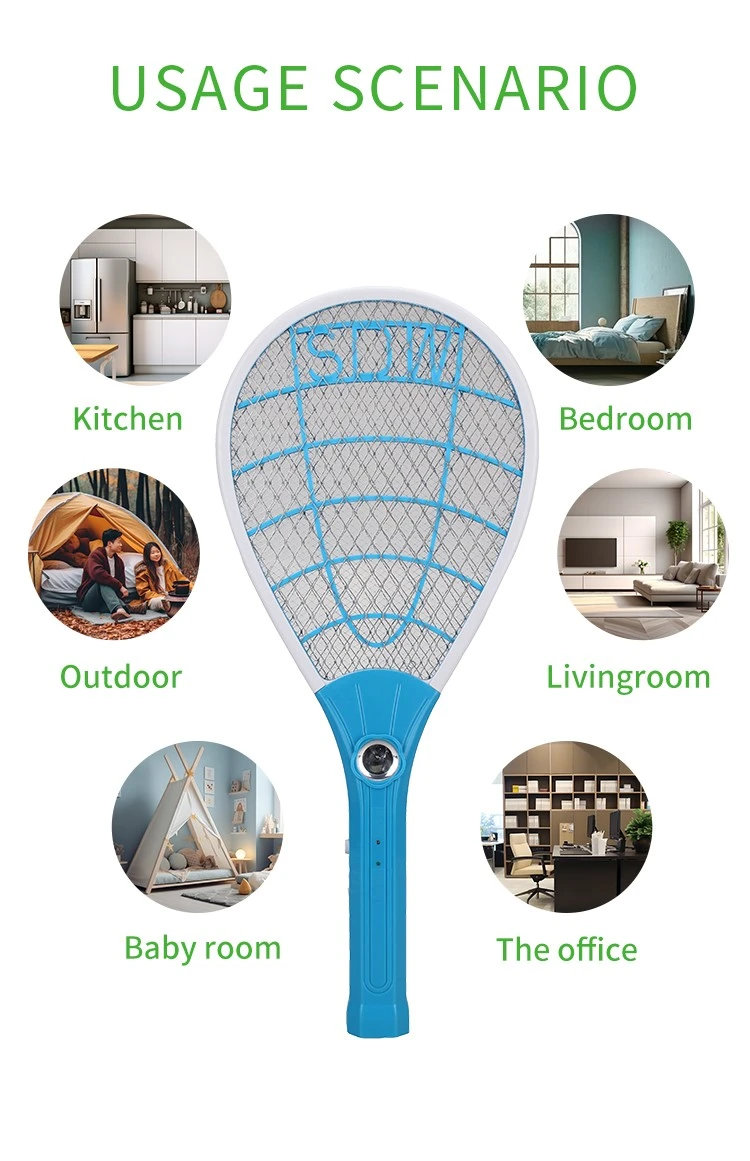
Most importers of electric mosquito swatters obsess over the first order: samples requested, factories vetted, a pre-shipment inspection booked. Then the reorder arrives eight months later and something is off. The grid feels softer. The charge port is a slightly different shade of black. The carton thickness dropped from 350 gsm to 300 gsm. Nothing is catastrophic — but the product no longer matches what your retail customers approved, and quietly, your return rate starts climbing.
How to Keep Mosquito Swatter Quality Consistent Across Repeat Orders

Warranty returns are the silent margin killer in the mosquito control category. A distributor who buys a swatter at $1.80 FOB and retails it at $9.90 can absorb a 1% return rate without noticing — but at 5%, the combined cost of replacement units, reverse logistics, and refund processing erases most of the line's profit.
Common mosquito swatter killer lamp failure modes wholesale spec guide

Digital bathroom scales rank as the second-highest-volume consumer weighing product category, only behind kitchen scales, with distinct market and product characteristics that set them apart from other scale types in importers’ product portfolios.
Digital bathroom body fat-bia-scale wholesale buyers guide