
What Does FOB Mean
2025-10-26
What Does FOB Mean? A Comprehensive Guide to This Core International Trade Term
In international trade communications, "FOB" is a highly frequently used term. Whether you’re a new foreign trade practitioner handling order contracts or a seasoned professional reviewing logistics clauses, you’ll encounter this abbreviation regularly. However, many only understand it as a "price term" without grasping the underlying responsibility division, risk transfer rules, or how to avoid losses from misunderstandings. This article systematically answers "What does FOB mean?" to help you master this core term, while integrating our factory’s reality — all our FOB terms specify Shenzhen ports as loading ports — for more practical reference.
I. Basics: Literal Meaning and Core Definition of FOB
FOB stands for "Free On Board," commonly translated as "Shipment at the Loading Port (Named Port of Shipment)." Its core lies in "loading goods onto the ship at the loading port" — it’s not just a price expression, but a key node for dividing responsibilities, costs, and risks between buyers and sellers.
Per the International Chamber of Commerce’s Incoterms 2020, FOB’s official definition has two key parts:
- Seller’s Responsibilities: Load goods onto the buyer’s designated ship at the contracted loading port, notify the buyer promptly, complete export customs clearance, and bear all pre-loading costs (e.g., factory-to-port transport, export declaration fees, port surcharges) and risks (e.g., in-transit damage, declaration failure). For our factory, if you sign an FOB contract, we’ll transport goods from our factory to designated Shenzhen ports (e.g., Yantian, Shekou), handle export clearance, and cover related costs and risks.
- Buyer’s Responsibilities: Designate the shipping company, sign the transport contract, pay freight; after loading, all risks (e.g., ship sinking, cargo loss, transport delays) and subsequent costs (e.g., marine insurance, destination clearance fees, duties, inland delivery) fall to the buyer. In short, once our goods are loaded onto your designated ship at Shenzhen Port, risks and costs transfer fully to you.
The core risk transfer point for FOB is "when goods cross the ship’s rail" (or "when loaded onto the ship"; wording varies by Incoterms version but core is consistent): seller liable pre-loading, buyer liable post-loading. For our factory, this point is clearly at the designated ship in Shenzhen Port.
II. Avoid Pitfalls: 3 Core FOB Elements to Clarify
Many foreign trade disputes stem from vague FOB terms (e.g., only "FOB Shanghai" without details). To use FOB correctly, clarify these 3 elements in contracts — critical for customers cooperating with us:
1. Clarify the "Loading Port" to Avoid Ambiguity
FOB must be followed by a specific port (e.g., "FOB Shenzhen Yantian Port"), not just "FOB China." Our factory’s FOB terms are based on Shenzhen ports, so contracts will specify "FOB Shenzhen Yantian Port" or "FOB Shenzhen Shekou Port." Different Shenzhen ports have slight differences in surcharges and efficiency (e.g., Yantian for ocean routes, Shekou for near-sea routes). Clarifying the port ensures clear cost and time expectations, avoiding disputes.
2. Clarify "Goods Loading" Requirements
Specify "who transports goods to the ship’s side" and "who arranges hoisting onto the ship." Typically, sellers deliver to the port warehouse; buyers arrange hoisting. Our factory follows this: we deliver goods safely to the designated Shenzhen port warehouse, then your chosen shipping company handles hoisting. Note: Some Shenzhen ports include "hoisting fees" in surcharges, others charge separately. We’ll clarify this pre-contract to avoid fee disputes.
3. Clarify "Notification Obligation" Timing
Sellers must notify buyers promptly after loading — buyers need this info to arrange marine insurance (usually buyer’s responsibility under FOB). Delayed notification leading to uninsured cargo damage may make the seller liable. After loading at Shenzhen Port, we’ll send loading details (ship name, voyage, B/L number, loading date) via email within the contracted timeframe to ensure you have time for insurance.
III. FOB vs. CIF: Easily Confused Terms for Newcomers
Newcomers often confuse FOB and CIF, thinking "CIF = FOB + freight + insurance." This is partially true, but the key difference is the "risk transfer point," which defines responsibility boundaries. Comparing with our factory’s FOB Shenzhen:
|
Comparison Dimension
|
FOB (Our Factory’s FOB Shenzhen)
|
CIF (Cost, Insurance, Freight)
|
|
Risk Transfer Point
|
After loading onto buyer’s designated ship (Shenzhen Port)
|
After loading onto seller’s designated ship
|
|
Transportation Responsibility
|
Buyer contacts shipping company, pays Shenzhen Port freight
|
Seller contacts shipping company, pays freight
|
|
Insurance Responsibility
|
Buyer buys marine insurance for Shenzhen shipments
|
Seller buys basic marine insurance (minimum coverage)
|
|
Applicable Transport
|
Sea and inland waterway only
|
Sea and inland waterway only
|
|
Quotation Content
|
Goods cost + Shenzhen local transport + export declaration + Shenzhen port pre-loading surcharges
|
Goods cost + export declaration + port surcharges + sea freight + basic insurance
|
Summary: Signing an FOB contract with us lets you choose your shipping company and control Shenzhen-origin transport, but risks transfer post-loading. Under CIF, you avoid transport/insurance hassle, but risk still transfers post-loading — sellers aren’t liable until the destination port (a key point to note).
IV. Practical FOB Tips: Must-Read for Newcomers
Based on our factory’s FOB Shenzhen experience, these tips apply to our customers and other FOB users:
1. Seller’s Perspective (Our Factory): Control Pre-Loading Risks, Keep Key Docs
- Choose reliable Shenzhen inland transport (we have long-term partners ensuring safe factory-to-port transport) to avoid short-distance damage.
- Coordinate with Shenzhen port customs brokers in advance to ensure complete export docs (commercial invoice, packing list, declaration authorization) to avoid loading delays.
- Keep "shipping advice," "B/L copy," and "port surcharge payment proof" post-loading at Shenzhen Port — these prove delivery and resolve potential disputes.
2. Buyer’s Perspective (Our Customers): Confirm Shipping Company Qualifications, Buy Insurance Promptly
- Choose qualified, reputable shipping companies with stable Shenzhen Port operations (we can provide a reference list of common Shenzhen shipping companies) to avoid fraudulent NVOCCs.
- Buy marine insurance for Shenzhen shipments immediately after receiving our loading notice (recommend "all risks" to cover most transport risks: fresh water damage, breakage, etc.).
- Request Shenzhen port surcharge details (terminal handling fees, declaration fees) pre-contract to calculate costs and avoid unexpected charges post-arrival.
Conclusion: FOB’s Essence — A "Clear Responsibility Boundary"
Returning to "What does FOB mean?" It’s not just a price term, but an international trade tool for "dividing rights and responsibilities." For our factory, FOB means Shenzhen Port as the boundary: we handle pre-loading matters, you bear post-loading risks and costs. For you, FOB means more transport initiative, but you must clarify your responsibilities.
Accurately understanding FOB’s core (post-loading risk transfer) and contract details (our fixed Shenzhen loading port, loading requirements, notification time) avoids disputes and ensures smooth trade. If you’re new to foreign trade, our team will help review FOB terms and provide Shenzhen Port guidance for a smooth first cooperation.
A Concise Guide to MOQ
Understanding CE Certification
Related Article

If you’re struggling with annoying mosquitoes, flies, and other flying pests indoors and outdoors, upgrading from traditional manual tools to anElectric Mosquito Swatter is the most efficient solution. Many homeowners and renters search where to buy fly swatter online to find durable, safe, and high-performance electric models that deliver instant pest control.
Where to Buy Fly Swatter
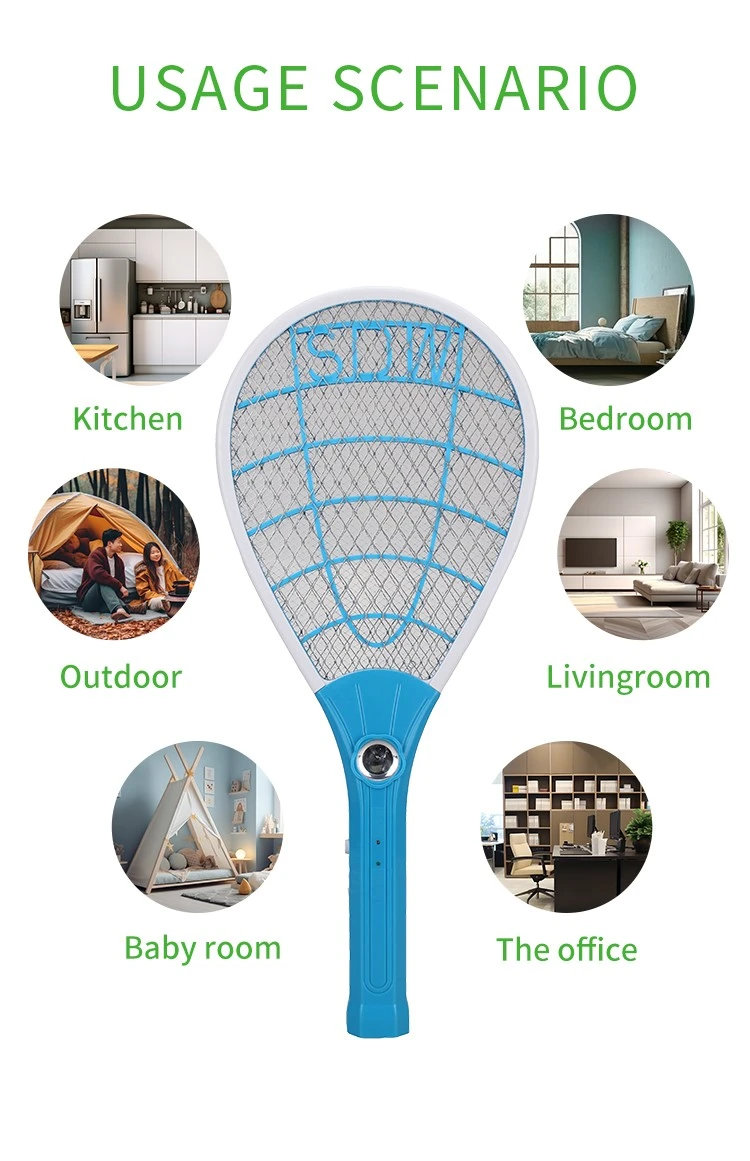
Most importers of electric mosquito swatters obsess over the first order: samples requested, factories vetted, a pre-shipment inspection booked. Then the reorder arrives eight months later and something is off. The grid feels softer. The charge port is a slightly different shade of black. The carton thickness dropped from 350 gsm to 300 gsm. Nothing is catastrophic — but the product no longer matches what your retail customers approved, and quietly, your return rate starts climbing.
How to Keep Mosquito Swatter Quality Consistent Across Repeat Orders

Warranty returns are the silent margin killer in the mosquito control category. A distributor who buys a swatter at $1.80 FOB and retails it at $9.90 can absorb a 1% return rate without noticing — but at 5%, the combined cost of replacement units, reverse logistics, and refund processing erases most of the line's profit.
Common mosquito swatter killer lamp failure modes wholesale spec guide

Digital bathroom scales rank as the second-highest-volume consumer weighing product category, only behind kitchen scales, with distinct market and product characteristics that set them apart from other scale types in importers’ product portfolios.
Digital bathroom body fat-bia-scale wholesale buyers guide